You're in the snack aisle, holding a box that looks wholesome because it has oats on the front, almonds in the corner, and words like “natural” and “energy” splashed across the top. Then you pick up the next box, and it says “protein,” “whole grain,” and “made with real fruit.” A third one promises “plant-based goodness.”
At that point, shopping for healthy granola bar brands can feel less like buying a snack and more like taking a quiz you didn't study for.
I see this confusion all the time. People don't usually need more rules. They need a simple way to tell which bar will keep them full, support steady energy, and fit their goals. Once you know how to read a bar like a nutritionist does, you won't need an “approved brands” list that goes out of date the next time packaging changes.
The Granola Bar Aisle Is Designed to Confuse You
A parent grabs a box before school drop-off. An office worker tosses one into a bag before a long meeting. A gym-goer buys a bar after a workout because there isn't time for a full meal. In all three cases, the same thing happens. The front of the package does most of the talking.
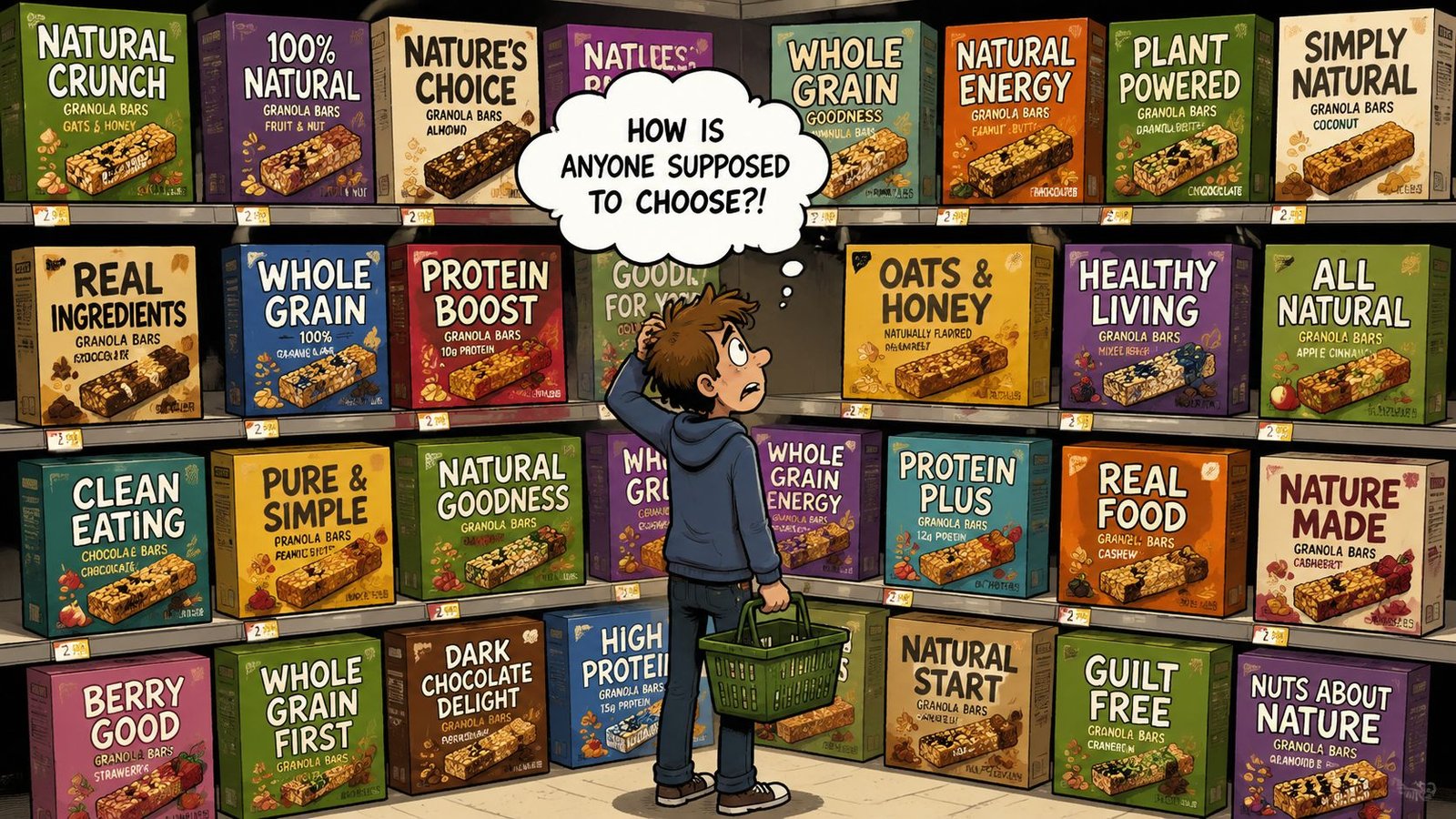
That's where people get tripped up. The front panel is advertising. The back panel is information. Those aren't the same thing.
Why the front of the box feels persuasive
Words like whole grain, organic, protein, and gluten-free can all describe a real feature of the product. But none of those words automatically tell you whether the bar is balanced. A bar can be organic and still be very sweet. A protein bar can still feel heavy and candy-like. A granola bar with fruit on the wrapper may contain more sweetener than fruit.
That's why smart shoppers learn to treat front-of-package claims like movie trailers. They can be interesting, but they don't tell you the whole plot.
The healthiest-looking box on the shelf is often just the best-designed one.
A better goal than finding one perfect brand
Many articles try to solve this problem by naming a few “best” bars. That's helpful for a week, maybe a month. Then formulas change, new products launch, and old favorites disappear.
A better skill is learning how to judge any bar in your hand.
Consider it akin to learning to drive rather than memorizing a single route. Once you know what the road signs mean, you can go almost anywhere. The same is true for healthy granola bar brands. The brand matters less than the label.
Here's the shift I want you to make:
- Stop asking which brand is always healthy
- Start asking what features make this specific bar a smart choice
- Judge the bar by its job, not by its marketing
That one habit makes the snack aisle much less noisy.
What Does a Healthy Granola Bar Actually Look Like
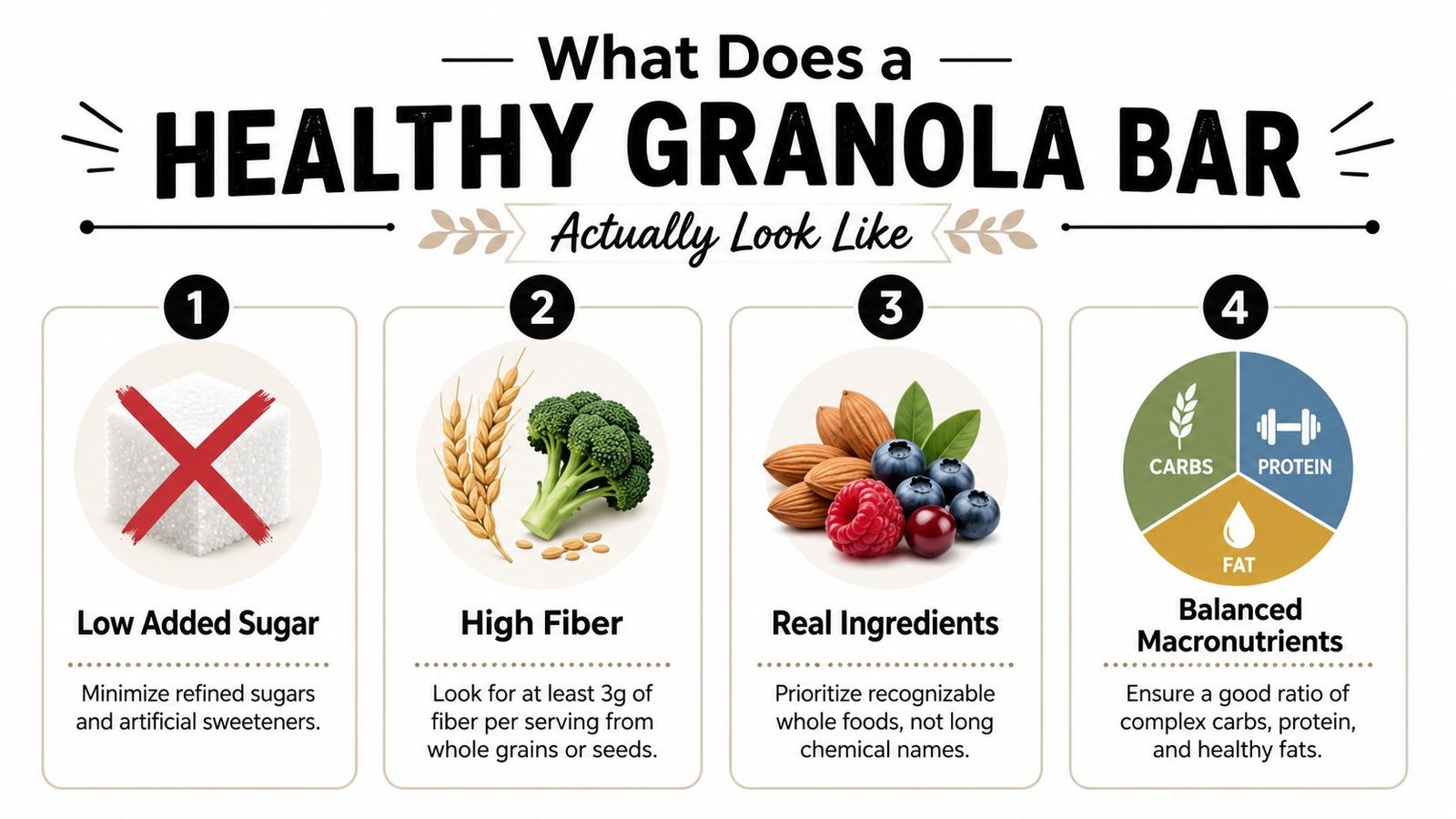
A healthy granola bar isn't one magic product. It's more like a small nutritional blueprint. When the blueprint is solid, the bar is more likely to give you steady energy instead of a quick rise and drop.
Think of a bar as a tiny bridge between meals. If that bridge is built mostly from sweeteners and refined starches, it doesn't hold you for long. If it's built with fiber, some protein, and real food ingredients, it's sturdier.
The four pillars that matter most
The first pillar is low added sugar. A little sweetness isn't typically an issue. The issue is when sweetness becomes the main structure of the bar. Then the bar acts more like a dessert with a health halo.
The second is fiber. Fiber slows things down in a good way. It helps a snack feel more satisfying and less like kindling tossed into a fire. If you've ever wondered how fiber fits into the body's energy picture, this guide on whether fiber has calories explains the basics in plain language.
The third is protein. Protein gives a snack more staying power. You don't need every bar to be a bodybuilder bar, but a bar with some protein usually holds you better than one built mostly from syrup and puffed grains.
Later in the section, it helps to see the framework visually.
The fourth pillar is recognizable ingredients. That doesn't mean every ingredient must sound rustic or homemade. It means the ingredient list should mostly read like food, not like a chemistry vocabulary test. Oats, nuts, seeds, dried fruit, peanut butter, egg whites, and cocoa are all easy to place in your mind.
What “balanced” looks like in real life
A useful bar often includes some mix of:
- A base ingredient like oats or nuts
- A source of texture and fullness such as seeds, nut butter, or whole grains
- A source of sweetness like dried fruit or a modest amount of sweetener
- A support nutrient such as protein from nuts, seeds, or egg whites
That balance matters at home, and it matters at work too. If you're stocking snacks for a shared office or break room, a practical guide on how to fuel your team with healthy vending can help you think beyond candy-and-soda defaults.
Practical rule: A good granola bar should look like a snack that came from food, not a dessert that borrowed health language.
What a healthy bar doesn't need to be
It doesn't need to be perfect. It doesn't need to be sugar-free. It doesn't need to fit every eating style.
Some bars are great for a lunchbox. Some work better after a workout. Some are simple nut-and-fruit bars that work best when paired with yogurt or fruit. The key is that the bar should help you, not trick you.
How to Read a Nutrition Label in 15 Seconds
When you flip a bar over, don't try to read everything at once. You might get overwhelmed if you look at the whole panel like it's one giant test. It's easier if you scan in a set order.
I teach a quick screen that many shoppers remember as the 5-5-3 rule. Aim for a bar with about 5 grams of protein, about 5 grams of fiber, and ideally low added sugar, often around the lower single digits when possible. It's a rule of thumb, not a law. Some excellent whole-food bars fall a bit outside it, especially if dried fruit is doing some of the sweetening.
Start with the three numbers that matter most
Before anything else, find protein, fiber, and added sugar.
| Nutrient | Target per Serving | Why It Matters |
|---|---|---|
| Protein | Around 5 grams or more | Helps the snack feel more filling and supportive between meals |
| Fiber | Around 5 grams is a strong target | Supports slower digestion and steadier energy |
| Added sugar | Keep it modest when possible | Helps you avoid bars that act more like candy |
If you want a refresher on the layout of the panel itself, this walkthrough on how to read nutrition labels is useful.
Then check the ingredient list like a detective
The ingredient list tells you what the product is mostly made from. Ingredients appear in descending order by weight, so the first few items matter the most.
Look closely at the first three ingredients. They usually reveal the bar's true identity.
Here's what you'd like to see early in the list:
- Whole-food anchors like oats, peanuts, almonds, cashews, dates, seeds, or nut butter
- Supportive extras such as egg whites, quinoa, or dried fruit
- A short enough list that you can quickly understand what the bar is built from
And here's what should make you pause:
- Multiple forms of sugar clustered near the top
- Syrups that appear before any meaningful whole-food ingredient
- A long list of sweeteners that makes the bar sound more engineered than nourishing
Hidden sugar names to recognize quickly
You don't need to memorize every sweetener on earth. Just train your eye to catch patterns.
Watch for words like these in the ingredient list:
- Words ending in “-ose” such as glucose or fructose
- Syrups such as brown rice syrup or corn syrup
- Concentrates like fruit juice concentrate
- Sweet add-ins like honey, molasses, or cane sugar
A bar can still be a reasonable choice if one of these appears. The question is where it appears and what else surrounds it. If oats, nuts, or seeds lead the list, that tells a different story than a bar where syrup starts the sentence.
If the first ingredients read like a pantry, that's usually a better sign than if they read like a sweetener catalog.
Don't get stuck on one “perfect” threshold
Nutrition labels are tools, not report cards. A bar with great ingredients but slightly less protein may still be a smart snack for a desk drawer or a school bag. A higher-protein bar may make sense after exercise. Use the quick scan to narrow the field, then use common sense.
That's how you stop guessing and start choosing.
Choosing Your Tool Protein Bars vs Whole Food Bars
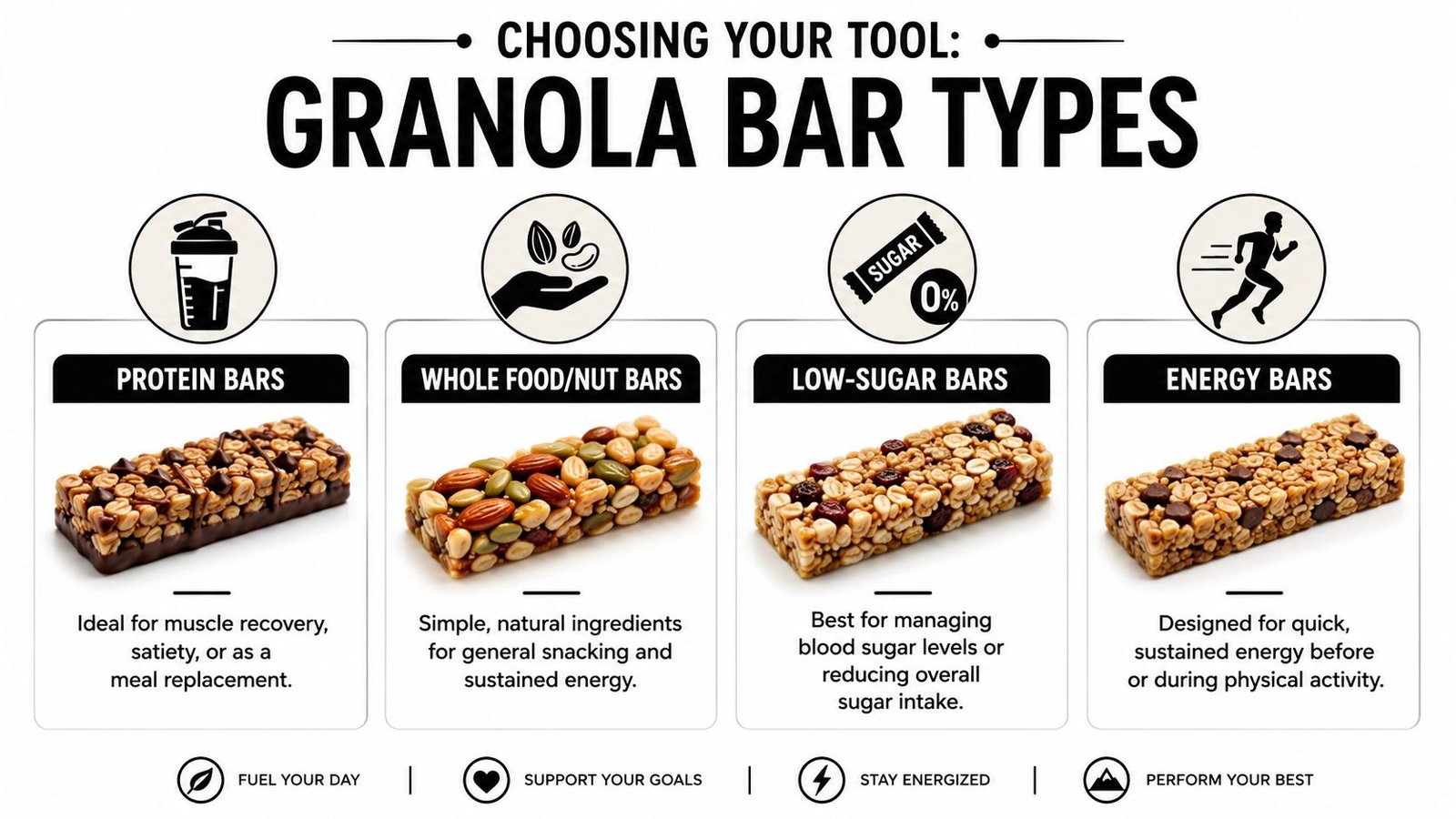
Not all bars should do the same job. A protein bar, a nut-and-fruit bar, a low-sugar bar, and an energy bar are like different shoes. You wouldn't wear hiking boots to a wedding or sandals on a trail. Bars work the same way.
Protein bars when you need more staying power
A protein bar is often the right tool after a workout, during a long afternoon with no meal break, or when you need a more substantial snack. These bars usually lean harder on protein ingredients such as whey, soy, pea protein, or egg whites.
That can be helpful. It can also make the texture dense or dessert-like, depending on the formula.
Good questions to ask:
- Does it satisfy hunger, or does it just taste like a candy bar with protein added?
- Are the ingredients still food-forward?
- Would this work as a snack, or is it trying to act like a meal replacement?
Whole-food and nut bars for everyday snacking
A whole-food bar usually looks simpler on the ingredient list. Think dates, nuts, seeds, oats, peanut butter, or fruit. These bars often make excellent general snacks because they feel closer to real food and less like a fortified product.
They're especially useful for:
- Busy mornings when breakfast ran short
- Lunchboxes that need something portable
- Travel days when options are limited
The tradeoff is that some of these bars can be sweeter if dried fruit does a lot of the binding. That doesn't make them bad. It just means you should know what job they're doing.
Low-sugar bars for people who dislike the crash
Some shoppers feel better when they keep sweetness low. A low-sugar bar can be helpful if you want a snack that feels steadier and less candy-like.
But this category deserves a closer look. Sometimes low sugar comes from a thoughtful recipe built on nuts and seeds. Sometimes it comes from heavy use of alternative sweeteners and fibers that don't work well for every stomach.
A low-sugar label isn't a free pass. You still need to ask what replaced the sugar.
Energy bars for active moments
An energy bar is often designed for movement. That might mean a hike, a long bike ride, or a pre-workout snack when quick fuel matters more than perfect balance.
These bars can be useful. They're just easy to misuse. If you're sitting at a desk all afternoon, a bar meant for endurance activity may feel too sweet or too large for the moment.
Here's a simple match-up:
- Protein bar for recovery or a more filling snack
- Whole-food bar for an everyday grab-and-go option
- Low-sugar bar if you want a less sweet profile
- Energy bar before or during sustained activity
The smartest shoppers don't ask which type is best. They ask which type fits the situation.
Smart Shopping Habits for the Savvy Snacker
Knowing how to read labels is half the skill. The other half is buying bars in a way that protects your budget, your appetite, and your expectations.
Shop with skepticism, not cynicism
You don't need to assume every package is lying. But it helps to assume the front is selling and the back is explaining.
That one habit changes everything. When you pick up a box, turn it over first. If the back looks solid, then the front can join the conversation.
Here are the shopping habits I recommend most often:
- Buy one before buying twelve. A bar can look perfect on paper and still have a texture you hate.
- Compare bars side by side. Looking at two labels at once makes the differences much easier to spot.
- Don't pay extra for buzzwords alone. “Natural,” “clean,” and “wholesome” aren't nutrition facts.
- Pair smartly. A bar plus an apple, yogurt, or a handful of nuts often works better than the bar alone.
Build a better snack, not just a better bar
A granola bar doesn't have to carry the whole load. If you treat it like one piece of a mini-meal, your options open up.
A simple bar can work well when paired with:
- Greek yogurt for extra protein
- Fruit for volume and freshness
- Nuts for crunch and lasting fullness
- Milk or a soy beverage if you need more substance
That approach is often cheaper and more satisfying than chasing the single “perfect” bar.
The best snack choice is often a decent bar plus one real food, not an expensive bar trying to do everything.
Watch for the health halo
The snack aisle loves a halo. Earthy colors, leaves on the box, words like “ancient grains,” and a few berries on the wrapper can make an ordinary product seem exceptional.
Don't pay for the costume. Pay for the ingredients and the nutrition panel.
That's how savvy shoppers find healthy granola bar brands without getting pulled around by trends.
Log Your Choice to Master Your Goals with PlateBird
Choosing a better bar is useful. Seeing how that choice fits into your whole day is even more useful.
A lot of people make solid snack decisions and still feel confused about why they aren't hitting their goals. Usually the missing piece is context. A bar might be a smart post-workout option, but not the best fit if the rest of the day already ran low on protein or high on snack foods.
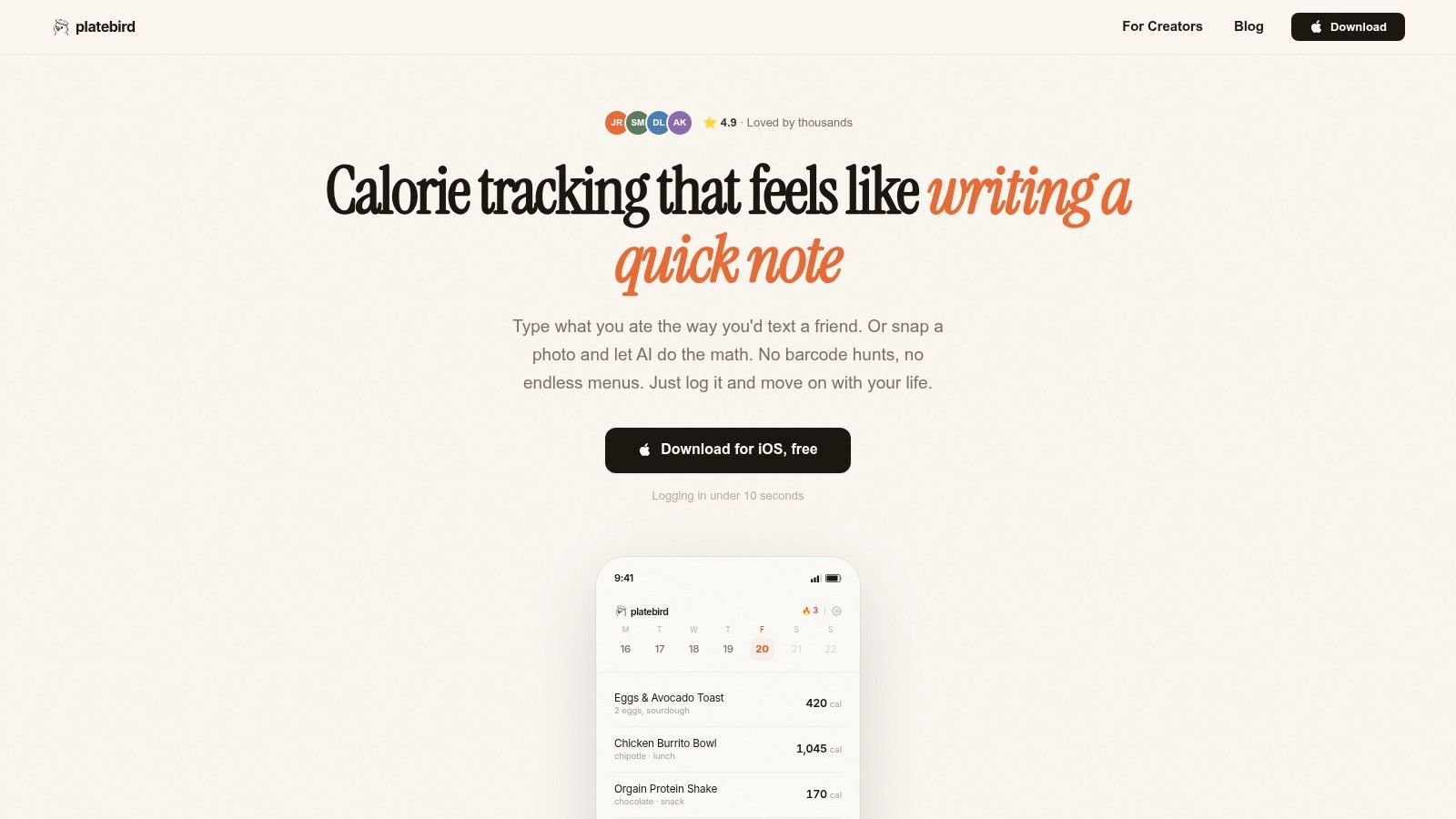
Turn one snack into useful feedback
Tracking proves helpful, especially when it's simple enough that you'll do it. Instead of guessing whether your granola bar choice supported your day, you can log it and see the bigger picture.
For people who prefer visual logging over typing, a photo food diary app makes that process feel much lighter. A quick snapshot is often easier than scrolling through endless food menus.
Why this matters for consistency
The snack itself isn't the whole story. The pattern is.
When you can quickly record what you ate, you start spotting things that are hard to see in your head alone. Maybe your “healthy” snacks are still leaving you short on protein. Maybe your afternoon bar keeps turning into a second snack because it wasn't filling enough. Maybe one brand works beautifully for busy workdays while another is better saved for active weekends.
That kind of feedback builds confidence. You stop eating by packaging promise and start eating by pattern recognition.
A healthy granola bar should make your day easier. Tracking helps you confirm whether it did.
If you want snack choices to fit your calorie or macro goals without turning logging into homework, try PlateBird. You can type what you ate or snap a photo, then get a fast view of calories and macros so your smarter bar choices add up over time.