You bought the groceries, cooked the chicken, and stacked six clean containers in the fridge. By Tuesday night, one lunch got split across two meals, the oil in the pan never made it into the log, and the “same as yesterday” snack turned into a handful of random bites you never counted. That's usually where meal prep macros fall apart, not because people don't know the rules, but because the system asks them to calculate, cook, portion, and log as if those are separate jobs.
The fix is to treat the whole week like one workflow. Build the numbers once, cook by batch, portion by recipe, and keep logging so light that it survives a rushed lunch break. If the plan can't make it from Sunday to Wednesday, the math isn't the only thing that needs work.
Why Meal Prep Macros Break Down by Wednesday
Sunday looks organized on paper. The groceries are on the counter, the chicken is seasoned, the rice is steaming, and every container has a label that feels like a promise. Then real life shows up, and the plan starts leaking at the edges.
The problem is usually friction, not discipline
By Tuesday, portions drift. Someone scoops a little extra rice because the container looked sparse. A sauce gets poured “just a little heavier.” A snack gets eaten while standing up, then forgotten in the log because it never had a home in the prep plan. Hidden calories are a common error source in meal prep, which is exactly why the most accurate workflow is to build macros from the ingredient level, including oils, sauces, marinades, and condiments, then total the batch and divide by servings, instead of guessing from the plate. That approach reduces undercounting and keeps the math standardized at the batch level, so every portion is just the total divided by servings, the same way every week should work in theory and in practice. macro-balanced recipe workflow
Practical rule: if an ingredient touches the pan or the bowl, it belongs in the math.
The deeper issue is that many run four separate habits. They shop on one day, cook on another, portion later, and log whenever they remember. That creates room for drift at every step. A better system makes those steps feel like one chain.
The week gets easier when every part shares the same standard
Macro plans tend to collapse when the prepper is still deciding what each container means at the moment of eating. If the batch was built in grams and divided by servings, the answer is already there. If the batch was built by feel, every meal becomes a small investigation.
That's why the rest of this guide starts with the numbers, then moves into the kitchen rhythm, then ends with the logging loop. If you can make those three pieces talk to each other, the plan stops depending on willpower alone. The fridge still gets full of food, but the food has a job, and every container can be traced back to the same calculation.
Setting Daily Macro Targets That Work
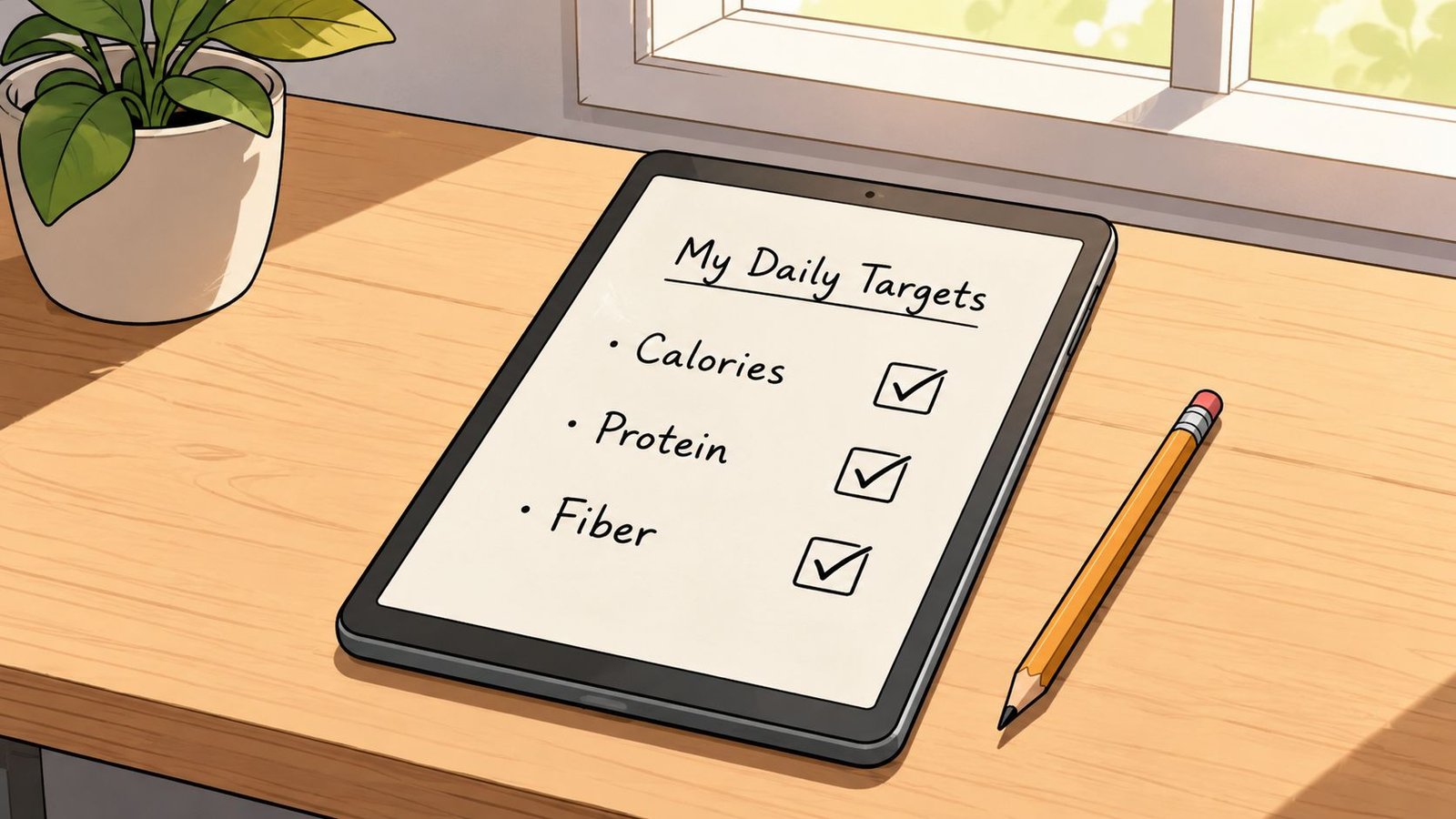
Before you cook a single ounce of rice, set a target that fits your body, your training, and your schedule. The right numbers are not the ones that look impressive in a screenshot. They are the ones you can repeat without wrecking your energy or forcing a late-night rescue meal.
Start with calories, then anchor protein and fats
A practical way to set up meal prep macros is to pick a calorie target first, then lock in protein, set a fat floor, and let carbohydrates fill the rest. For active lifters, a common protein anchor is roughly 1.6 to 2.2 grams per kilogram of bodyweight, and fat often lands around 0.6 to 1 gram per kilogram. Once those pieces are in place, carbohydrates become the flexible lever that supports training, recovery, and adherence.
For a 70 kg intermediate lifter trying to lose fat while holding onto muscle, a sensible working target might look like about 2200 kcal, 165 g protein, 70 g fat, and 235 g carbs. That is not a magic formula, it is a usable starting point. If your sleep falls apart, training feels flat, or the plan becomes impossible to follow, the target was wrong for your real life, not just for the calculator.
A good macro target should survive ordinary weeks. It should let you train hard, avoid constant hunger, and stay consistent long enough to learn what your body does with the food. If you want a practical way to sanity-check your setup before you start cooking, use this macro target guide as a reference point and compare it against your actual routine.
Use the numbers you can live with, not the numbers someone else posted
It is easy to copy a fitness influencer's macros and assume they will work for you. They usually will not, because your workday, appetite, and training schedule are not theirs. A better check is whether the numbers support consistency for at least several weeks.
Ask three plain questions. Can you hit protein without forcing meals you hate? Does the fat target leave enough room for the foods you cook? Does the carb allotment line up with the way you train?
One simple way to judge the target is this.
Your target is right when it is boring enough to repeat.
That sounds plain, but it saves a lot of wasted prep. If your daily numbers require constant negotiating, the containers will not save you. If the numbers feel ordinary and manageable, the batch work starts doing the heavy lifting for you.
Turning Daily Targets into Batch-Level Math
Once the daily numbers are set, the next move is to stop thinking in plates and start thinking in batches. That change matters because batch math removes the guesswork that creeps in when you're trying to eyeball one meal at a time. The pot, not the plate, is where the precision lives.
Build from the meal, then the batch, then the serving
Take the example above, 165 g protein per day. If you eat three main meals, that's about 55 g protein per meal. If your lunch prep makes four meals for the workweek, you're not just making “chicken and rice,” you're making a batch that needs about 220 g of protein total across those four servings, before you even think about carbs and fats.
That's where the recipe-level workflow becomes essential. List every ingredient, including the oil on the tray, the sauce on the chicken, and the condiment in the container. Weigh each ingredient in grams on a digital scale, use macros per 100 g, then total protein, carbs, and fat for the whole recipe before dividing by servings. That's the cleanest way to avoid hidden calorie loss, especially in meal prep where the little extras are what usually distort the log. batch-level macro recipe method
Make the batch the unit of truth
A practical batch could look like chicken, rice, vegetables, and a measured oil or sauce. The exact food doesn't matter as much as the math structure. If the recipe yields four lunches, each lunch gets one quarter of the total macro count, and that number is what you save, reuse, and repeat.
The 100 g reference point helps. Once you standardize ingredients around the same unit, the math stays predictable across future prep cycles. You're not rebuilding the recipe from scratch every week. You're checking the same ingredient list against the same serving count and making minor adjustments when the food or goal changes.
Practical rule: weigh the full batch once, divide it once, and stop renegotiating the portion on the plate.
If you want a calculator-style companion for that workflow, the logic in this meal prep calorie calculator fits the same idea. It's not about doing more math, it's about doing the right math in the right place. After that, the container becomes a repeatable unit instead of a daily puzzle.
A simple chicken and rice batch makes the point
Suppose lunch is built around chicken, rice, a little oil, and vegetables. You weigh the chicken raw, weigh the rice dry or cooked in a consistent way, log the oil in grams, and add the vegetables by weight. Then you divide the batch by the number of lunches it produced.
That single habit does more for consistency than many expect. It cuts out the “close enough” thinking that turns one meal into two different macro totals depending on who served it. When the batch math is tight, the week gets easier because every container already knows what it is.
The Sunday Prep Workflow That Lasts
A prep session works when it has a rhythm, not when it has ambition. The fastest kitchens I've seen do not try to make everything from scratch at once. They move through the same order every week, so the hands already know what the eyes are about to ask for.
Start with the proteins and let the oven do the work
A realistic Sunday session can run in blocks. Protein gets a first pass on sheet pans, the carbs and vegetables cook while that is happening, then everything gets portioned while the scale is still on the counter. That order matters because the biggest time sink is not cooking, it is hesitation.
A clean rotation keeps variety high without multiplying work. Two proteins, two carb sources, and a few vegetables are enough to keep meals from feeling repetitive, especially if you are mixing textures and sauces. If you also need to keep food moving through the fridge safely, some prep guides recommend holding only a few days of food in the refrigerator and freezing the rest, which is one more reason not to overplan the whole week at once. meal prep timing and fridge storage guide
Portion while the containers are open
The best shortcut is simple. Portion the food immediately after cooking. The scale is already out, the batch is already visible, and the math has not been interrupted by cleanup yet.
That is also the moment to use labels that tell you what is in each box. If you rotate foods across the week, disposable labels for food rotation can keep lunches from turning into mystery containers by Thursday. Clear labels sound minor until you are staring at three similar-looking meals and trying to remember which one had extra sauce.
Repeat a simple menu instead of rebuilding one every week
The strongest prep menus borrow from the same few building blocks. One protein gets used in a rice bowl. Another protein gets used in a salad. The carb base shifts between rice, potatoes, or a similar staple. Vegetables stay easy because they are prepped in the same style, not reinvented with every batch.
The point is not culinary excitement. The point is a kitchen rhythm that makes next Sunday feel familiar instead of expensive in time and attention. When the workflow is steady, the work stops feeling like a project and starts feeling like maintenance, which is exactly what it needs to be.
Build the workflow around the logging step
A Sunday prep plan should end where the week begins, with a meal that can be logged without a second guessing session. If the batch portions are consistent, the log becomes a quick check rather than a reconstruction job. That is where the prep math pays off, because the container and the entry match instead of drifting apart by midweek. For a tighter version of that process, this Sunday meal prep workflow for hitting macros shows how to keep the prep loop compact without losing control of the numbers.
The trade-off is variety versus speed. A more complex menu can feel better for a day or two, but it usually creates extra chopping, more containers, and more decisions when energy is low. A repeatable workflow wins because it cuts the number of things that can go wrong.
Troubleshooting the Five Macro Mistakes That Sink Most Plans
Most macro failures do not come from one dramatic bad day. They come from the same small mistakes repeating until the numbers stop matching the containers. The fix for each one is practical, and none of them requires scrapping the whole system.
Count the hidden grams before you blame your appetite
Mistake 1, undercounting protein. The pattern is familiar. The log says protein is on target, but the actual batch falls short because the chicken breast was sliced thinner than expected, the turkey was portioned by eye, or the yogurt and cottage cheese servings were larger on the spoon than in the scale.
The fix is a food scale and one rule, if it matters, weigh it. That means every batch, not just the days that feel strict. It matters most with recipe-based prep, because the batch only stays accurate when the ingredients were measured before cooking, not guessed after the fact. The recipe meal prep guide from Macro Balance Lab lays out the same basic principle for keeping prep math consistent.
Mistake 2, free-pouring fats. Oil, butter, nut butters, and dressings can push a meal off target fast when they are added casually. A lunch that looked balanced on the plate can end up far denser than planned once the pan gets coated twice and the sauce gets poured without measuring.
The fix is to measure fats in grams, not by feel. A spray oil can help in some kitchens, but the correction is to keep the pour out of the pan and the guess out of the log. Once that habit sticks, the batch math starts reflecting what was cooked.
Practical rule: the fattier the ingredient, the less your eyes can be trusted.
Stop letting sauces and skipped produce do the damage
Mistake 3, ignoring condiments and sauces. This usually shows up as carbs creeping higher than expected or a meal that looks right but logs wrong. A chicken bowl with teriyaki, a burrito bowl with extra salsa, or a salad drowned in dressing can all look harmless until the numbers are checked.
The fix is to treat sauces like real ingredients, because they are. Read the label, weigh the serving, and keep them in the same recipe file as the rest of the batch. If a sauce changes the meal, it changes the macro count.
Mistake 4, fiber starvation. The symptom is hunger that does not match the calories on paper. The usual cause is a prep plan that leans too hard on protein and starch while vegetables get pushed aside, then the first afternoon snack run starts because the meal never had enough bulk.
The fix is to build produce into the container instead of hoping to add it later. A tray of roasted broccoli, peppers, or green beans does not need to be exciting to work. It just needs to be there, because volume is often the difference between a lunch that holds and one that sends you looking for something else an hour later.
Mistake 5, weekend derailment. Friday night is where the system often slips. A restaurant burger, a birthday dinner, a couple of drinks, or an unlogged handful of chips while standing in the kitchen can leave Monday feeling like a rescue mission. The week is not ruined, but the numbers are now cloudy enough that people start guessing instead of tracking.
The fix is to make the next planned meal the reset point. If Saturday turns into a patio brunch and late-night takeout, do not try to compensate with a punishing restriction cycle on Sunday. Log the meals you can account for, leave out what you cannot verify, and return to the normal prep rhythm at the next batch. That keeps the plan honest without turning one loose weekend into a full collapse.
Run the same diagnostic when the week goes sideways
If the numbers stop lining up, ask four questions. Did I weigh the protein? Did I count the fats? Did I log the sauces? Did I eat enough produce to stay full? If the answer to any of those is no, the problem is probably there, not in some mysterious metabolic shift.
That kind of troubleshooting keeps the plan alive. It also keeps you from turning one off week into a full restart, which is where a lot of momentum gets lost.
Logging Your Prep in Under a Minute
Logging is where a lot of otherwise solid plans break, because nobody wants to build a spreadsheet at lunch. The trick is to make the act of recording food lighter than the act of eating it. If logging feels harder than cooking, the app or system is the problem.

Choose the logging method that matches the meal
For a recurring prep meal like chicken, rice, and broccoli, typing the meal once and saving it as a shortcut is usually fastest. For a new restaurant bowl or a mixed plate you didn't prep yourself, snapping a photo can be quicker than typing every ingredient. PlateBird supports both text and photo logging, and it turns repeated meals into one-tap shortcuts after they've been logged once.
| Meal Scenario | Fastest Logging Method | Why It Works |
|---|---|---|
| Repeated meal prep lunch | Type once, then reuse the saved meal | The batch doesn't change much, so the shortcut stays accurate |
| New restaurant meal | Photo log | Visual identification is faster than naming every ingredient |
| Homemade bowl with custom sauce | Type the base, then add the sauce | The structure is familiar, the variable is the part that needs attention |
| Standard breakfast you eat often | Saved meal shortcut | Repetition removes the need to rebuild the entry |
| Messy mixed plate | Photo log first, edit if needed | The image captures what's on the plate before memory starts filling gaps |
The point isn't to force one method for everything. It's to choose the fastest method that still gives you a usable macro estimate.
Keep the logging loop short enough to survive lunch break
A good workflow is plain. Type what you ate when the meal is routine. Snap a photo when the plate is new. Save meals that repeat so you can tap them again tomorrow. PlateBird's model is built around that kind of friction reduction, where food logging becomes something you can do in a few seconds instead of a chore you avoid until bedtime.
Practical rule: log at the edge of the meal, not at the edge of memory.
If you're choosing between perfection and speed, speed wins more often than people admit. The macros only help if the log gets done, and a slightly imperfect entry is usually better than an abandoned one.
A Sample Week and Your Next Macro Moves
A stable week doesn't need endless variety. It needs a few dependable meals that you can rotate without thinking, plus a simple rule for what to change when your training or appetite changes. Once that part is working, the prep stops feeling like a daily project and starts acting like a quiet system in the background.
Build the week around two recipes, then shift the pairings
A practical five-day setup might use the same chicken batch for lunch and dinner, but pair it with different carb and vegetable combinations. One day leans heavier on rice, another leans on potatoes, another keeps the plate lighter and pushes vegetables higher. The recipe stays mostly the same, but the meal feels different enough to avoid boredom.
That approach works because the base recipes are doing the heavy lifting. You're not starting from zero every night, and you're not asking yourself to become a different cook on Wednesday. The batch already knows its numbers, so the only real choice is which container to reach for.
Use the next layer only after the basics are steady
Once the basic prep is automatic, the next refinements become easier to manage. Some people move calories slightly up or down on training and rest days. Others shift more carbohydrates around workouts because that fits how they perform. Some keep a fallback photo log for the lunch they forgot to weigh, then return to the regular plan at the next meal.
The key is not complexity for its own sake. It's using the same foundation to support different days without rebuilding the whole plan. When the base meals are stable, small adjustments become useful instead of confusing.
Keep one fridge checklist nearby
- Protein source: one or two cooked options that can be weighed and reused.
- Carb base: one or two staples that divide cleanly into servings.
- Vegetables: enough volume to keep meals filling.
- Sauces and fats: measured, not guessed.
- Logging shortcut: a saved meal or photo workflow for repeats and one-offs.
That list fits on a fridge note because it's meant to be used, not admired. If you can keep those five pieces in view, the plan becomes much harder to derail.
Meal prep macros work when the numbers, the containers, and the log all point to the same place. If you want a tool that helps turn typed meals and photos into fast macro tracking, visit PlateBird and try it with your next prep batch. Make the Sunday math once, then let the week run on saved meals, quick logs, and fewer guesses.