You've probably opened a keto app, typed in breakfast, and quit before lunch because the process felt clunky. That isn't a discipline problem, it's a friction problem. A keto macro tracker only works when logging is fast enough that you'll do it on a tired weekday, not just when you're feeling motivated.
The key difference with keto is that you're not just counting food. You're protecting a narrow carb range, keeping protein high enough to support your body, and using fat to fill the rest of the day's energy needs. That's why the best workflow isn't the fanciest one, it's the one that makes net carbs first the default and keeps every meal from turning into a mini spreadsheet.
Why Keto Tracking Demands a Different Mindset
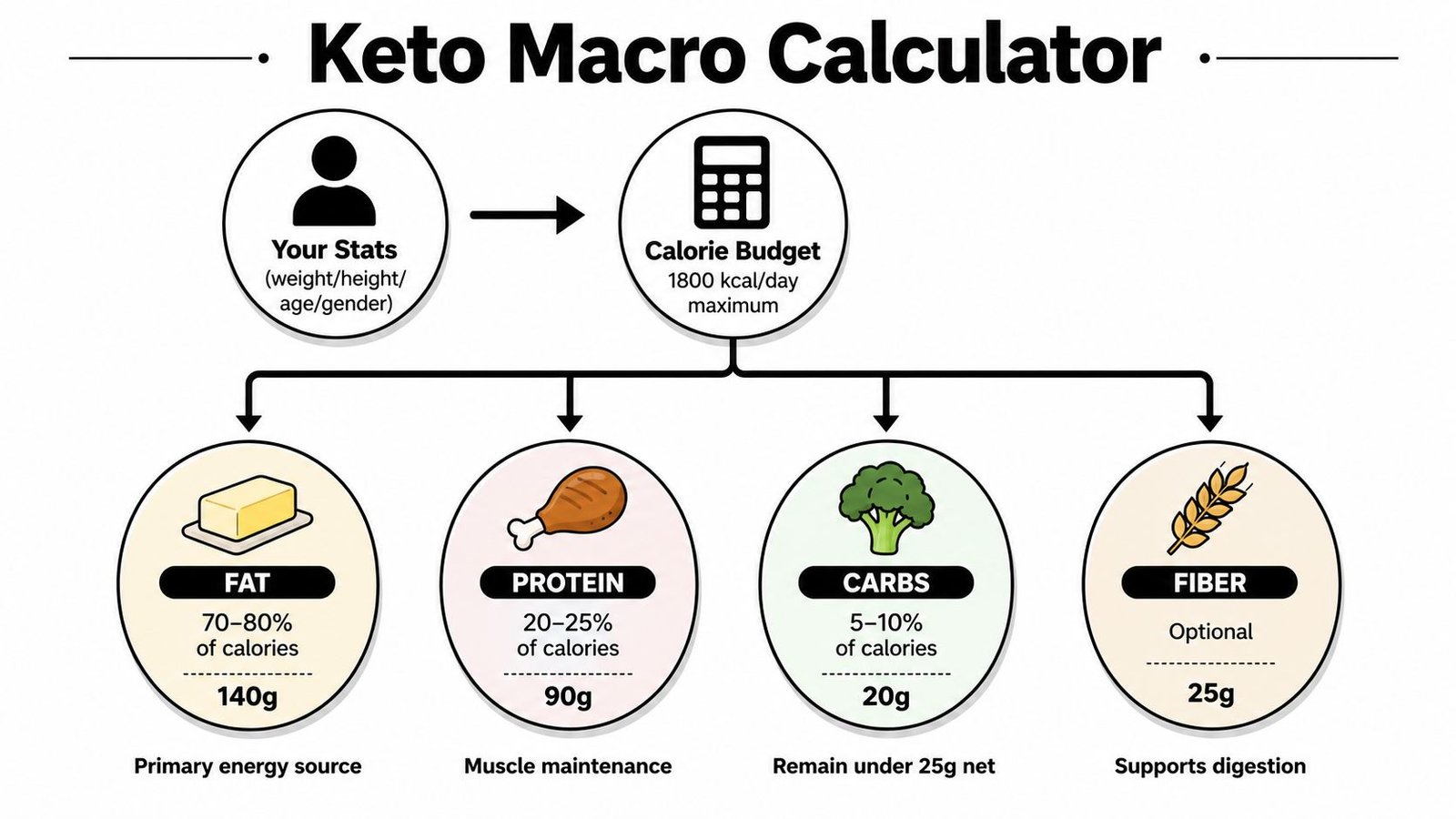
Generic calorie tracking rewards rough consistency. Keto tracking punishes sloppy guesses because the target isn't just weight loss, it's staying low enough in carbs to support ketosis. The common ketogenic framework keeps net carbs between 20 and 50 grams per day, with a macro split around 70%–75% fat, 20%–25% protein, and 5%–10% carbs (Abbott Nutrition guidance).
That changes how you should use any keto macro tracker. Instead of starting with calories and hoping the macros sort themselves out, you start with carbs, then build protein and fat around the remaining budget. The calorie math behind that is simple, 1 gram of carbohydrate equals 4 calories, 1 gram of protein equals 4 calories, and 1 gram of fat equals 9 calories (Abbott Nutrition guidance). Once people understand that structure, the app stops feeling like a burden and starts acting like a guardrail.
The real problem isn't the math
They don't abandon keto because they can't understand macro percentages. They abandon it because every entry feels annoying. If you have to search, scroll, compare labels, and manually correct every item, you'll start “eyeballing” lunch and dinner, then the carb total drifts.
That's why friction matters more than features you'll never use. A good tracker doesn't need to be complicated, it needs to be quick enough that your attention stays on the meal instead of the interface. If you already understand the calorie side of macro tracking, a practical primer like macro counting for fat loss can help you see why keto is a stricter version of the same habit, with more emphasis on carb control.
Practical rule: if logging a meal takes longer than eating it takes, the system is too slow for real life.
That's where generic calorie apps often fail on keto. They're built to record what happened, not to help you keep carbs low with minimal effort. A keto tracker has to reduce decision fatigue, because the people who stick with keto are usually the ones who make logging boring, repeatable, and nearly automatic.
Calculating Your Personal Keto Macro Targets
Start with the calorie budget that fits your goal, then set the carb ceiling first. On keto, net carbs between 20 and 50 grams per day is still the practical starting range, and the rest of the day gets divided across protein and fat using the standard keto ratio. That order matters because if you build fat first and treat carbs as an afterthought, you can overshoot the one number keto depends on most.
Use the calorie-to-macro math to make the targets concrete. Carbs and protein each count as 4 calories per gram, while fat counts as 9 calories per gram. A keto macro calculator from PlateBird can turn that calorie budget into gram targets, which is easier than guessing through the day.
Put carbs on top of the hierarchy
Before you log a single meal, write your net carb limit where you can see it. People stick to the plan more easily when the number is visible in the morning and checked again before dinner. The day becomes a simple question, “How many carbs do I have left?”, instead of “Did I stay keto somehow?”
Vague targets cause trouble fast. Saying “I'm doing low carb” does not help when one snack uses half your budget. A tracker built for keto should keep your carb target front and center, because that is the number that protects ketosis.
Then allocate protein and fat around the remainder
Protein should be high enough to support muscle and satiety, but not so low that you are hungry all day. Fat fills the rest of the calorie budget and helps meals feel sustainable, especially for people who are new to keto and still adjusting to lower carb intake. The ratio is less about chasing a perfect number than about preventing the common mistake of building meals that are all fat and no structure.
For athletes, the target can shift with training demands. A useful discussion of macro tracking for athletes can help you think about workout days versus rest days without losing sight of the keto ceiling. If you want a quick starting point calculator, the internal tool at PlateBird's keto calculator to lose weight can help you move from rough estimates to numbers you can enter.
Practical rule: do not fine-tune fat before you have settled your carb ceiling. Keto breaks most often when people reverse that order.
Write your targets down, then enter them into your tracker exactly once. The less time you spend recalculating, the more likely you are to keep using the system on ordinary days.
Logging Meals Without the Usual Friction
The fastest keto logger is the one you'll open without negotiating with yourself. That usually means using plain-language entry for simple meals, photo logging for messy plates, and shortcuts for anything you eat often. PlateBird is built around that idea, since you can type what you ate in plain English or snap a photo and get a nutrition breakdown without digging through menus.

Text entry works best when you keep it blunt. Instead of forcing yourself to log ingredient by ingredient from memory, type the meal the way you'd say it out loud, then correct only the parts that matter. That approach is useful for breakfasts, meal prep bowls, and repetitive lunches, because the app can turn a few words into a full macro estimate fast enough to feel effortless.
Use shortcuts for meals you repeat
The most sustainable logging habit is saving the foods you already eat. If breakfast is the same three ingredients most weekdays, it shouldn't take thirty seconds every time. PlateBird's habit learning turns recurring meals into one-tap shortcuts, which matters more than people think because repeated friction kills consistency long before motivation does.
Photo logging helps most when the meal is visually clear and time is short. It's useful for restaurant plates, meal prep containers, and mixed dishes where you'd rather not type every component. You're not trying to make the process perfect, you're trying to make it fast enough that you don't skip it.
The best logging workflow is the one you can finish before the food gets cold.
For a broader look at app selection and interface trade-offs, the overview at PlateBird's best macro tracking app guide gives a practical sense of how different tracker styles compare. That matters because some people need more structure, while others need almost none as long as entry is quick.
Build a two-step habit
First, log the meal. Second, check the running totals. That tiny sequence keeps you from discovering at night that lunch and dinner ate your carb budget. It also makes it easier to adjust the next meal before the day gets away from you.
If you're choosing between convenience and accuracy, choose convenience first, then improve accuracy where it counts. A frictionless tool that gets used every day beats a “better” tool that only gets opened on Sundays.
Common Tracking Mistakes That Break Ketosis
Most keto slipups aren't dramatic. They're small, boring, and repeated. A spoonful of sauce here, a handful of nuts there, and suddenly the day doesn't look keto anymore even though every meal seemed reasonable in the moment.
Hidden carbs and loose serving sizes
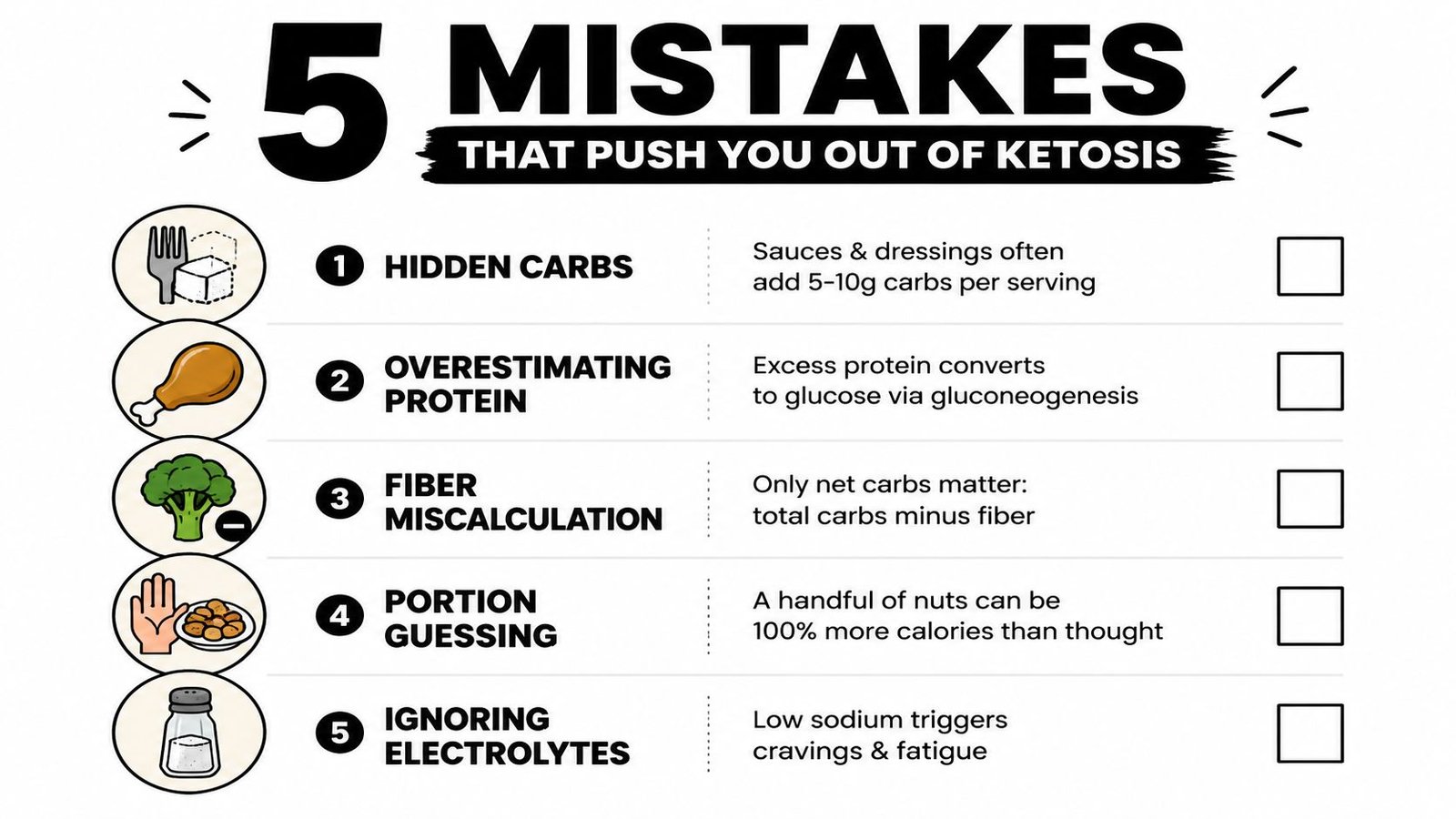
Sauces, dressings, and condiments are the usual offenders because they don't feel like “real food.” People often log the chicken and vegetables, then forget the sweet sauce, creamy dressing, or extra spoonful of aioli. The fix is simple, log the add-ons every time, especially when you're eating out or using a pre-made meal.
Portion guessing causes a different kind of drift. Nuts and cheese are easy to overpour because the hand looks smaller than the serving. A tracker can only be as good as the portion you give it, so if a food is calorie-dense, it deserves more attention than a salad leaf ever will.
Fiber, protein, and history checks
Keto tracking depends on net carbs, which means total carbs minus fiber. If your app or your own notes don't reflect that, the carb tally will look wrong from the start. PlateBird's explainer on what net carbs are is a useful reminder if you want a clean definition to work from.
Protein gets misunderstood too. People sometimes slash protein too hard because they're worried about “too much,” then end up hungry and snacking later. The better fix is to use your logged history and daily summary as a pattern check, not as a scorecard for perfection.
Practical rule: if a day looks off, review the last three meals before changing the whole plan. Most carb creep shows up in small repeats, not one huge mistake.
The best correction is to catch the drift early. Open your tracker before bed, scan the running totals, and notice where the extra carbs came from. That one-minute review is often enough to stop a pattern before it becomes a plateau.
Adjusting Your Macros as Your Body Adapts
Your targets on day one are a starting point, not a permanent contract. As your weight changes, your training changes, and your appetite settles down, the numbers that felt right at the beginning may stop matching your real life. A good keto macro tracker should support recalibration, not trap you in old settings.
Know when the numbers need a reset
A stall, persistent fatigue, or unexpected strength changes are all signs that the current setup may no longer fit. The important part is not to overreact to one rough day. Look for a pattern, then decide whether the issue is under-eating, overdoing carbs, or needing a different protein and fat balance.
Training days deserve special attention. If your lifts are moving up and you feel flat in the gym, the answer may not be “eat less.” It may be a small increase in protein on workout days, or a tighter carb ceiling if you've let snacks creep upward. The point is to adjust one lever at a time so you can see what changed.
Recalibrate with purpose
When progress stalls, don't rebuild your whole day from scratch. First, compare what you planned against what you consistently log. Then look for repeated misses, because the same hidden extras usually matter more than the macro target itself.
A simple weekly check is enough. If your logged meals are matching your goal but your energy is still poor, you may need to reconsider meal timing or the amount of fat you're using to fill the day. If your logs are messy, the problem is usually the workflow, not the macro formula.
Keto works better when tracking feels like a conversation with your body, not a punishment. Once you're honest about the signals, the tracker becomes a tool for adjustment instead of a system for guilt.
Building Habits That Keep You Tracking for Months
People who track for months usually aren't more motivated. They've made the process easier to repeat. That means fewer taps, fewer decisions, and fewer chances to forget what happened at lunch before dinner is on the table.
Make the app part of the routine
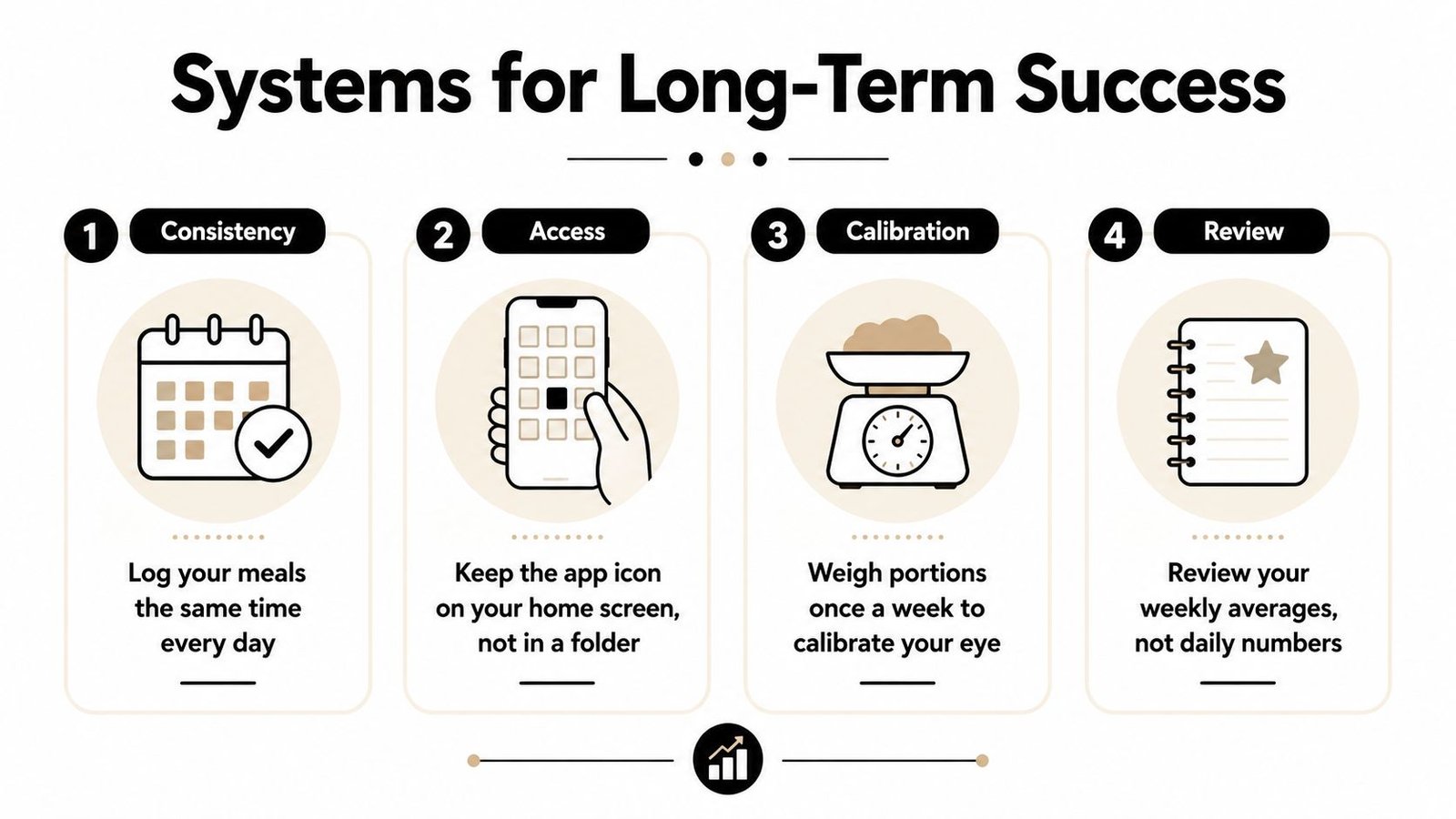
Log meals right after eating, not hours later. That timing keeps the record accurate and stops the “I'll do it tonight” trap that usually turns into forgetting. Keeping the app icon on your home screen helps too, because the less you have to hunt for it, the more likely you are to use it.
Calibration matters as much as convenience. Weighing a familiar meal occasionally gives your eye a reality check, which keeps your portions honest over time. Then use weekly averages instead of judging every single day, because keto success comes from patterns, not perfect evenings.
Practical rule: consistency beats intensity. A simple routine done daily will outlast a polished system you only use when life is quiet.
Know when tracking has done its job
Tracking isn't meant to last forever for every person. Once your meal choices are automatic and your portions are stable, you may not need the same level of detail. Some people eventually move toward a looser system after building enough awareness to recognize their own carb traps and portion habits without opening the app every hour.
PlateBird fits that early stage well because it makes the act of logging feel like a note, not an assignment. If you want a keto macro tracker that reduces friction instead of adding another chore to your day, PlateBird is worth trying. Open it, log a meal the way you'd speak, and see whether the workflow feels light enough to keep using tomorrow.