You've probably done some version of this already. You open three tabs about keto, one says keep carbs ultra low, another says protein matters more than people think, and a calculator on a different site spits out numbers that don't look anything like the first two. By the time you reach dinner, you're not sure whether to eat more fat, less fat, or stop trying to understand the math.
That's where people usually get stuck. Not because they lack motivation, but because they're trying to lose weight with a plan that still feels foggy.
A keto calculator to lose weight helps clear that fog. It gives you a starting set of numbers based on your body and your goal, so you're not guessing. But getting the numbers is only part of the job. Living them out, especially when meals are mixed, restaurant portions are messy, and life moves fast, is where the true challenge begins.
Your Starting Line for Keto Weight Loss
A new client once told me, “I'm willing to be disciplined. I just need to know what I'm aiming at.” That's the right instinct.
People typically don't begin keto because they love tracking. They begin because they want change. Their clothes feel tighter, energy feels uneven, cravings feel louder, or weight has crept up in a way that no longer feels random. If that sounds familiar, it can also help to zoom out and look at the bigger picture behind weight changes. Dr. Jenny Root's guide to weight gain is useful for that broader context, especially if you've been blaming yourself for something that may be more layered.
A keto calculator to lose weight isn't magic. It's a roadmap. It takes broad keto advice and turns it into numbers that fit your body instead of someone else's.
That matters because “eat low carb” is too vague to follow well for long. You need a calorie target. You need macro targets. You need to know what counts as on-plan for you.
Practical rule: A good starting plan beats a perfect fantasy plan you can't follow for more than two days.
The goal isn't to make keto feel complicated. The goal is to make it specific enough that your choices get easier. Once you know your targets, breakfast stops being a debate. Lunch stops being a guess. A restaurant meal becomes something you can work with instead of something that knocks you off track.
That's the shift. You move from reacting to food to using a plan.
How a Keto Calculator Finds Your Calorie Target
It's often assumed a calculator is just throwing out a rough number. A solid one isn't.
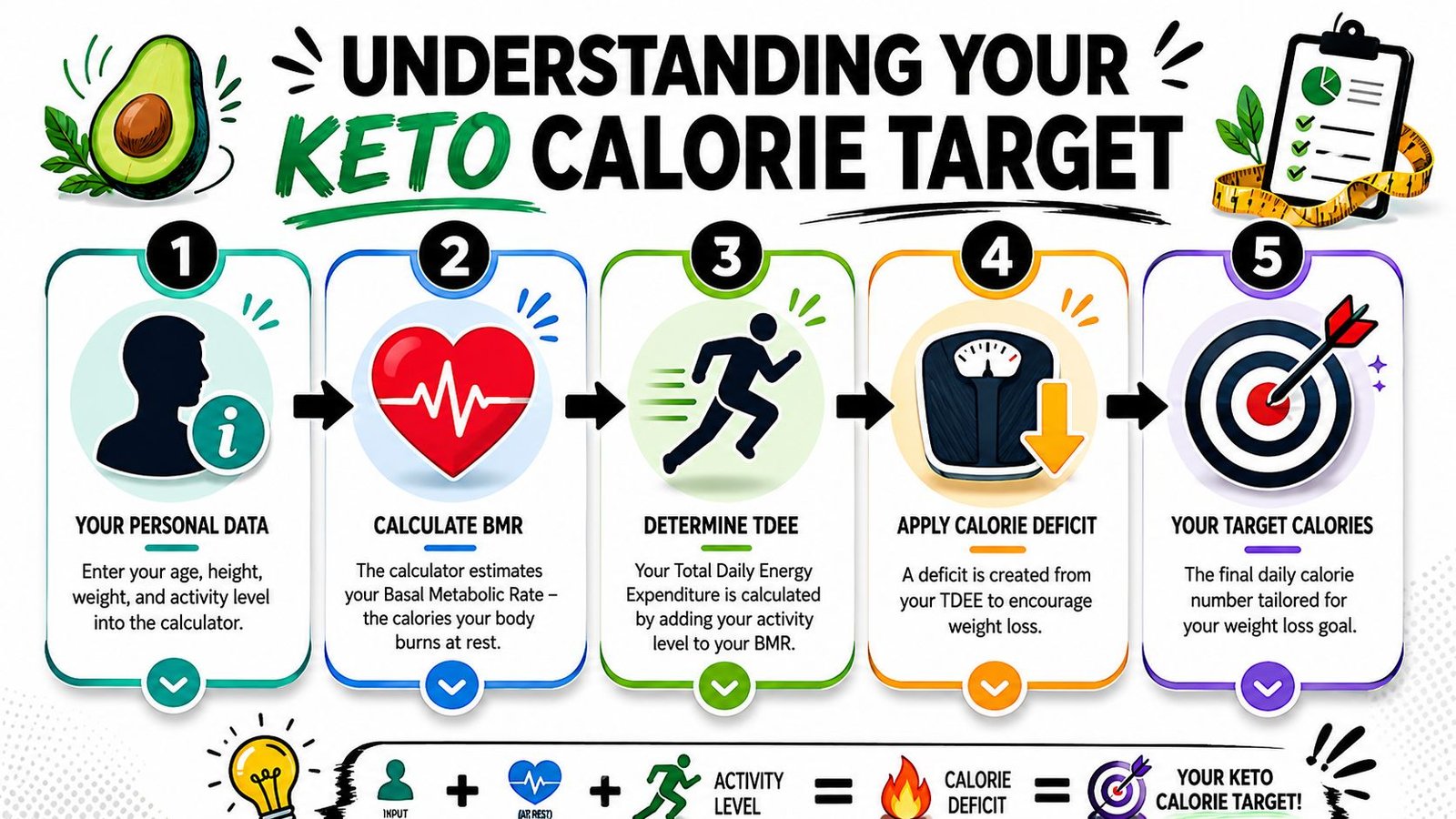
It starts by estimating how much energy your body uses at rest, then builds upward based on how active you are. A technically sound keto calculator for fat loss should begin with the Mifflin-St Jeor equation, then convert that into total daily energy expenditure with an activity multiplier. One published guide lists multipliers ranging from 1.2 for sedentary users to 1.9 for extra-active users, and it also points out that your calorie target is the main control knob for weight loss, while keto macro percentages mainly determine how that deficit is distributed across fat, protein, and carbs (BodySpec's guide to keto macro targets).
What the calculator asks for
Most calculators request a handful of personal details. Each one has a job.
- Age: Helps estimate baseline energy needs.
- Sex: Used in standard energy equations.
- Height and weight: Give the calculator the body-size information it needs.
- Activity level: Changes your maintenance calories more than many people expect.
- Sometimes body-fat percentage: Some tools use it to personalize the estimate further.
If you enter “moderately active” when your days are mostly sitting, your result can come out too high. If you underreport activity when you're on your feet all day, it can come out too low. Be honest, not aspirational.
From maintenance to fat loss
The calculator first estimates your maintenance level, which is the amount you'd eat to stay around your current weight. Then it creates a deficit below that level so weight loss can happen.
If you've never used one before, consider it this way:
- Resting needs come first. Your body burns energy even when you're doing nothing.
- Movement gets added. Walking, workouts, chores, and a physical job all count.
- A deficit gets applied. That creates the conditions for fat loss.
- Your daily target appears. That becomes the number your macros need to fit inside.
If the phrase calorie deficit still feels abstract, this plain-English explainer on what a calorie deficit is can help connect the idea to actual eating decisions.
The calculator isn't deciding whether keto “works.” It's deciding how much fuel your body likely uses, then giving your weight-loss goal a structure.
That's why two people can both be “doing keto” and get very different results. If one person is in a steady deficit and the other isn't, the first person has the better setup for weight loss, even if both are eating low carb.
Translating Calories into Your Daily Keto Macros
Once you have a calorie target, the next question is usually, “Fine, but what do I eat?”
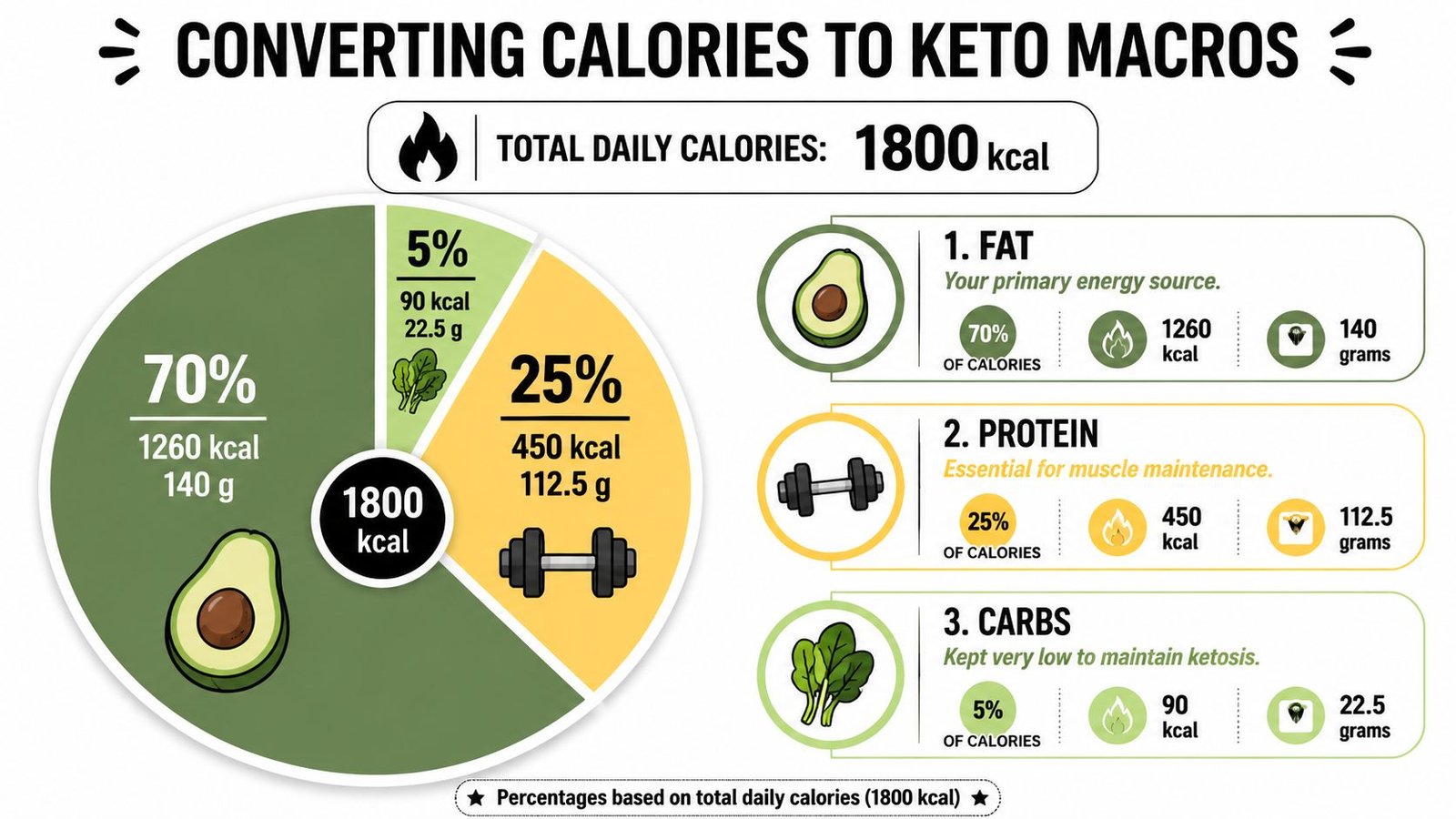
Your target gets split into fat, protein, and carbohydrates. A foundational reason keto calculators are used for weight loss is that they translate body and goal data into a calorie target and macro split. That split typically means more than 50% of calories from fat and less than 5% from carbohydrates, and many keto plans also keep net carbs in the 20 to 50 grams per day range. Because fat provides 9 calories per gram while protein and carbohydrates provide 4 calories per gram, a calculator can convert grams into daily calorie totals and help users maintain the deficit needed for weight loss (Ruled.me keto calculator guide).
What each macro is doing
A lot of confusion disappears when you stop treating macros like abstract nutrition terms and start seeing their roles.
| Macro | What it does in your plan | Why it matters |
|---|---|---|
| Carbs | Stay low | Helps keep the diet aligned with keto eating |
| Protein | Supports your body day to day | Makes meals more substantial and helps with consistency |
| Fat | Fills in most of the remaining calories | Becomes the main energy source in the plan |
The key practical point is this. You don't track percentages while making lunch. You track grams.
Why grams matter more than percentages in daily life
Let's say your calculator gives you a daily calorie target and then converts it into grams for each macro. That's useful because food labels, logging apps, and serving sizes all work in grams.
This is also where net carbs enter the conversation. Many beginners see total carbs on a label and panic, even when part of that amount comes from fiber. If you need a clearer breakdown, this guide on what net carbs are makes the distinction easier to use in real meals.
Here's the simple mental model I teach clients:
- Carbs are a ceiling. You don't want to drift above them.
- Protein is a target. Try to hit it consistently.
- Fat helps complete the plan. It rounds out the rest of your calories.
If your macro numbers feel strict on paper, that's normal. They get easier once you start seeing the same foods repeat in your routine.
Turning numbers into actual meals
A breakfast of eggs cooked in butter with avocado already gives you a pattern. A lunch built around salmon and a low-carb vegetable gives you another. A dinner with chicken thighs, olive oil, and salad starts to create muscle memory.
You don't need endless variety at first. You need repeatable meals you can recognize and adjust. Once you can glance at a plate and roughly understand where the protein, fat, and carbs are coming from, the calculator stops feeling like a math assignment and starts feeling like a guide.
The Bridge from Plan to Plate with Effortless Tracking
Getting your keto numbers is the clean part. Living them out is the messy part.
A second underserved angle is how to track keto macros accurately in mixed meals, restaurant food, and busy daily life without a lot of friction. That gap matters because one prominent guide recommends revisiting the calculator as weight changes and using a calorie tracking app to figure out meal macro content, which suggests the harder problem isn't calculation. It's the daily work of logging and updating (Trifecta Nutrition's keto macro calculator guide).
Where most people lose momentum
People rarely quit because they forgot keto basics. They quit because the routine becomes annoying.
One meal is easy enough to estimate. But then real life shows up:
- Mixed dishes: Chili, casseroles, stir-fries, tacos in bowls.
- Restaurant meals: Sauces, oils, and portions are harder to judge.
- Busy schedules: You mean to log later, then later never comes.
- Decision fatigue: Too many taps, searches, and corrections wear you down.
A good plan has to survive Tuesday lunch, not just Sunday meal prep.
What practical tracking should feel like
Tracking should be quick enough that you'll still do it when you're tired, in a rush, or eating something that isn't perfectly portioned.
That's why the best systems reduce friction. Instead of turning every meal into a research project, they help you capture the essentials fast, then move on with your day. If you want to compare options built for that kind of low-friction use, this roundup of the best macro tracking apps is a strong place to start.
Your calculator gives you the destination. Your tracking habit decides whether you actually get there.
One helpful approach is to keep a short personal library of repeat meals. If breakfast is usually eggs, avocado, and coffee, save it. If your work lunch rotates between two or three defaults, save those too. Repetition isn't boring when it removes decision stress.
A quick visual demo can help if you're more of a see-it-than-read-it person.
How to make keto tracking livable
The people who stay consistent usually do a few simple things well:
- They log close to the meal. Memory gets fuzzy fast.
- They build around repeat foods. Familiar meals are easier to track accurately.
- They estimate calmly when needed. Imperfect logging is still more useful than giving up.
- They review patterns, not single meals. One dinner doesn't define the week.
That's the bridge from theory to results. Not better intentions. Better follow-through.
When to Readjust Your Keto Calculator Numbers
Your first set of macros isn't your forever set.
Most modern keto calculators are built around established energy-expenditure equations rather than guesswork. They commonly ask for sex, age, height, weight, activity level, and sometimes body-fat percentage, then estimate basal metabolic rate using the Mifflin-St Jeor formula and total daily energy expenditure from that baseline. Some tools also let users set a calorie deficit of up to 30% for losing weight. One example calculator shows how a moderately active 45-year-old woman at 5'4" and 170 lb with 30% body fat could be assigned about 1,530 calories per day, including 20 g net carbs (BetterMe's keto calculator article).
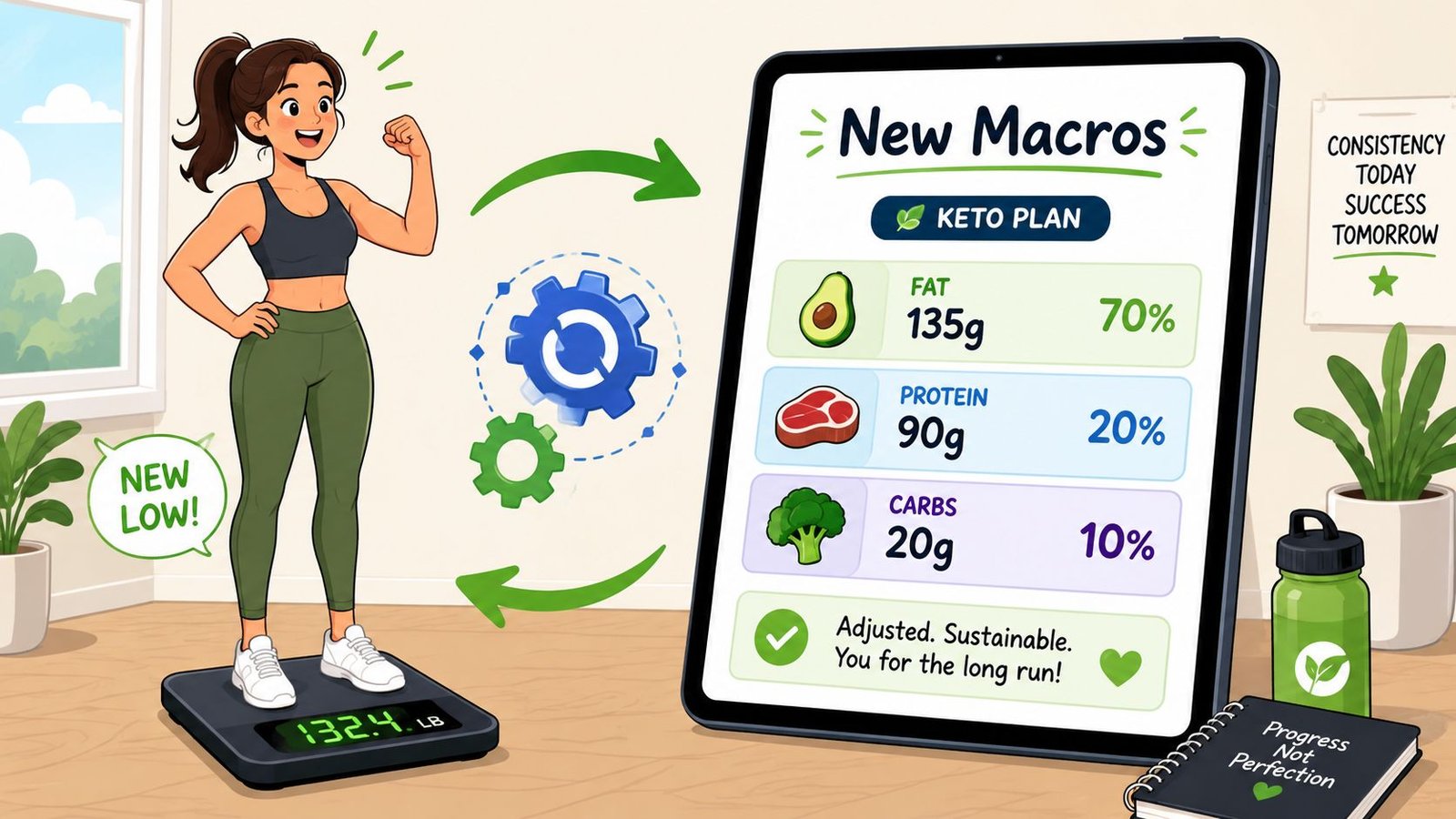
Signs your numbers need a refresh
If your body changes, your numbers usually should too. That doesn't mean adjusting every other day. It means recognizing when your original setup no longer fits your current reality.
A recalculation often makes sense when:
- Your weight has changed noticeably: Smaller bodies usually need different calorie targets than larger ones.
- Your activity changed: A desk-heavy month and a training-heavy month don't burn the same amount.
- You feel unusually hungry or drained: Your current setup may need review.
- Progress has flattened for a while: A stale target can keep you stuck.
How to respond without overcorrecting
The common mistake is panic. People slash food too fast, add unnecessary restrictions, or assume keto stopped working.
Try this instead:
| Situation | Better response |
|---|---|
| Scale progress slowed | Recheck your current weight and activity in the calculator |
| You're hungry all the time | Review whether your logging has been accurate before changing targets |
| You started exercising more | Update activity level and compare the new target |
| You've drifted from tracking | Tighten consistency first, then decide if recalculation is needed |
Progress usually doesn't need a dramatic fix. It needs a more current set of numbers and a more honest look at daily habits.
Use the calculator as a living tool
Think of your keto calculator the way you'd think about adjusting a workout plan. You wouldn't keep the exact same settings forever and expect them to match your body perfectly.
Revisit it when your body, routine, or results change enough that the old numbers feel stale. That keeps the plan responsive instead of rigid. And responsive plans are the ones people can stick with.
Final Thoughts on Your Keto Journey
Keto gets easier when you stop treating it like a mystery and start treating it like a system. Your calculator gives you a calorie target and macro framework. Your meals turn that framework into habits. Your tracking keeps those habits honest.
That's progression. Not perfection. Clarity, repetition, and adjustment.
If you're exploring weight-loss options more broadly, including medication-based approaches, it can also help to understand how those tools differ from nutrition-based strategies. This overview of understanding GLP-1 weight loss drugs offers useful context if you're comparing paths or discussing options with a clinician.
You don't need to know everything before you begin. You just need a starting number you trust, a small set of meals you can repeat, and a way to keep up with your intake when life gets busy. That's enough to build momentum.
And if the process has felt overwhelming before, that doesn't mean you failed. It usually means the plan wasn't practical enough for real life. When your numbers are clear and your tracking is simple, keto becomes much more doable.
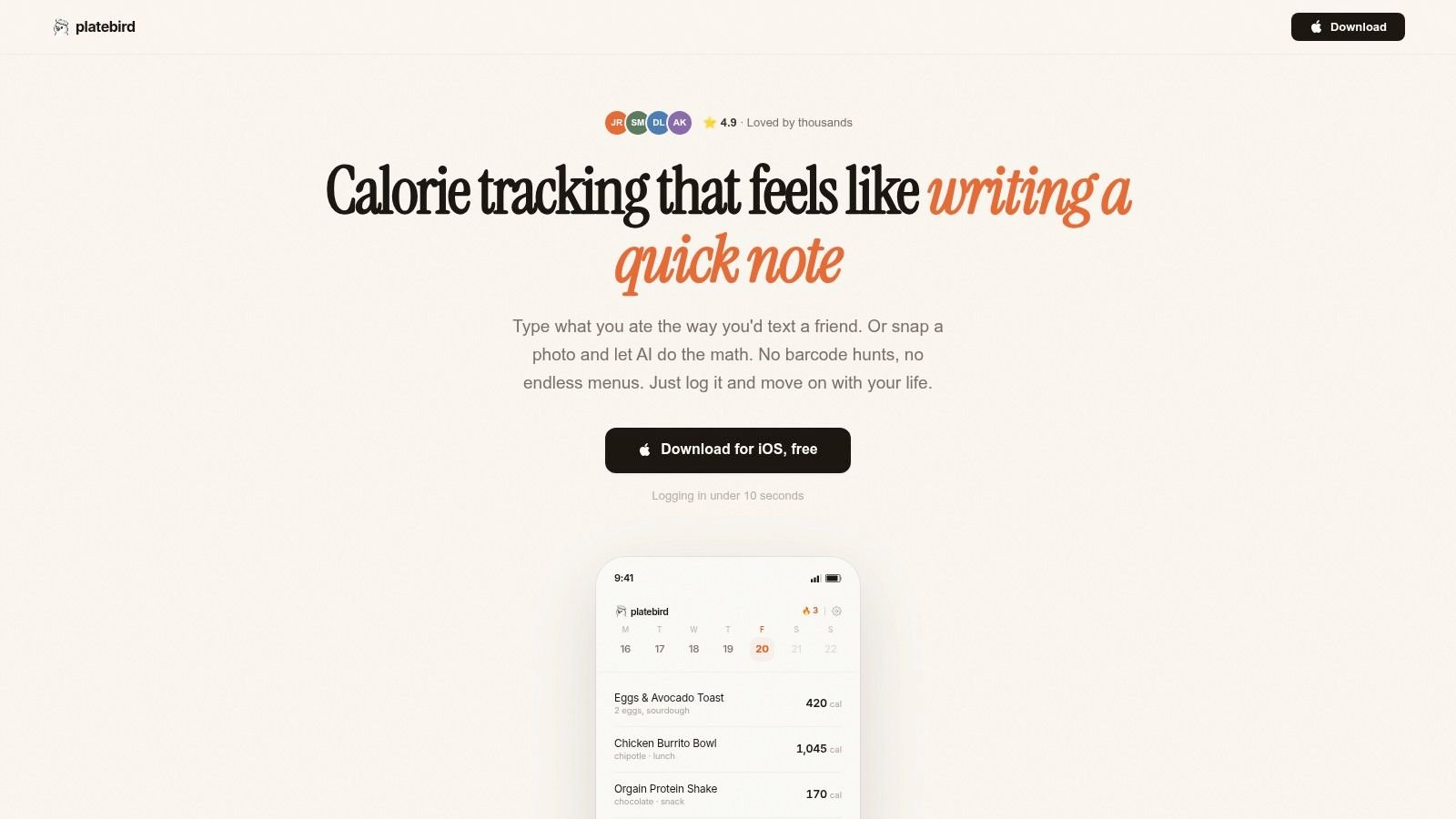
PlateBird makes daily macro tracking feel manageable when you're using a keto calculator to lose weight. Instead of wrestling with food databases, you can log meals quickly by typing what you ate or snapping a photo, which makes it much easier to stay aligned with your calorie and macro targets. If you want a simpler way to turn your keto plan into a consistent daily habit, try PlateBird.