
Most advice on how to track protein intake starts with a food scale, a barcode scanner, and the expectation that you'll log every bite perfectly. That approach can work in a controlled routine, but it falls apart when breakfast happens in the car, lunch comes from a restaurant, or dinner is a recipe nobody has entered correctly in an app. The problem usually isn't discipline. It's a tracking method with too much friction.
A more useful system gives you a clear target, captures the important foods, and tolerates imperfect meals. You're trying to make better decisions consistently, not recreate a laboratory analysis of everything you eat.
Why Most Protein Tracking Advice Fails in Real Life
Perfect logging feels productive because it produces detailed numbers. Yet detailed numbers aren't useful if you abandon the process as soon as your schedule changes. Weighing every ingredient, checking multiple database entries, and recording food before eating can turn a simple nutrition habit into a second job.
Protein tracking works better when you prioritize repeatable accuracy over theoretical precision. A typed note such as “eggs, yogurt, toast” gives you a useful record. A restaurant photo gives you something to review later. A saved meal template prevents you from starting from zero each morning. These methods won't remove all uncertainty, but they preserve the habit when ideal conditions disappear.
Start with a body-weight target
A practical starting point is the adult reference level of 0.8 grams of protein per kilogram of body weight per day, which is also about 56 grams daily for a 70-kilogram adult, according to the American Heart Association's protein guidance. The European Food Safety Authority uses a very similar population reference intake of 0.83 g/kg/day, as outlined in the review of protein recommendations.
Convert your weight to kilograms, multiply it by an appropriate target, and treat the result as a range rather than a pass-or-fail test. If you're unsure which protein foods fit your eating style, you can find protein options and build a short list of foods you'll eat.
Practical rule: A sustainable estimate you use most days beats a flawless log you use briefly.
The first week of tracking should teach you where protein already appears in your meals. Look for recurring gaps, such as a breakfast with almost no protein or a lunch built mostly from grains and vegetables. Fixing one predictable gap often matters more than making every entry more exact.
Setting a Protein Target That Fits You
A useful protein target is a range you can apply on ordinary days, not a precise figure that forces you to weigh every ingredient. Set it according to body weight, training demands, age, health status, and dietary context. The standard adult reference is 0.8 g/kg/day. Some older adults may need approximately 1.0–1.2 g/kg/day, while active-oriented guidance often uses 1.2–1.6 g/kg/day. These figures are starting points, not automatic prescriptions. People managing kidney disease or another condition affecting nutrition should seek individualized advice before increasing protein or using supplements.
Use this calculation:
- Divide body weight in pounds by 2.2 to estimate kilograms.
- Choose a range that matches your activity, age, and health needs.
- Multiply kilograms by grams of protein per kilogram.
- Round the result to a practical daily range.
Someone weighing 150 pounds weighs roughly 68 kilograms. The traditional adult reference places that person near 55 grams per day. An active-oriented range of 1.2–1.6 g/kg/day comes to roughly 80–110 grams daily. Those are different planning targets, not competing truths. Training volume, age, medical needs, and the rest of the diet determine which range is appropriate.
Use ranges instead of a single magic number
| Body Weight (lbs) | Sedentary / General Health (g) | Active / Training (g) | Calorie Deficit / High Activity (g) |
|---|---|---|---|
| 120 | 44–48 | 65–87 | Individualize with professional guidance |
| 150 | 55–60 | 82–109 | Individualize with professional guidance |
| 180 | 65–72 | 98–131 | Individualize with professional guidance |
| 210 | 76–84 | 115–153 | Individualize with professional guidance |
Use the table for planning, then adjust for your real meals and constraints. A medically guided meal plan can help fit a target around medications, symptoms, allergies, or a prescribed eating pattern.
For a calculation walkthrough, use this daily protein needs guide. Once you have a range, choose a simple milestone such as “about 90 grams.” That target leaves room for restaurant meals, changing portions, and imperfect estimates without turning tracking into a daily weighing exercise.
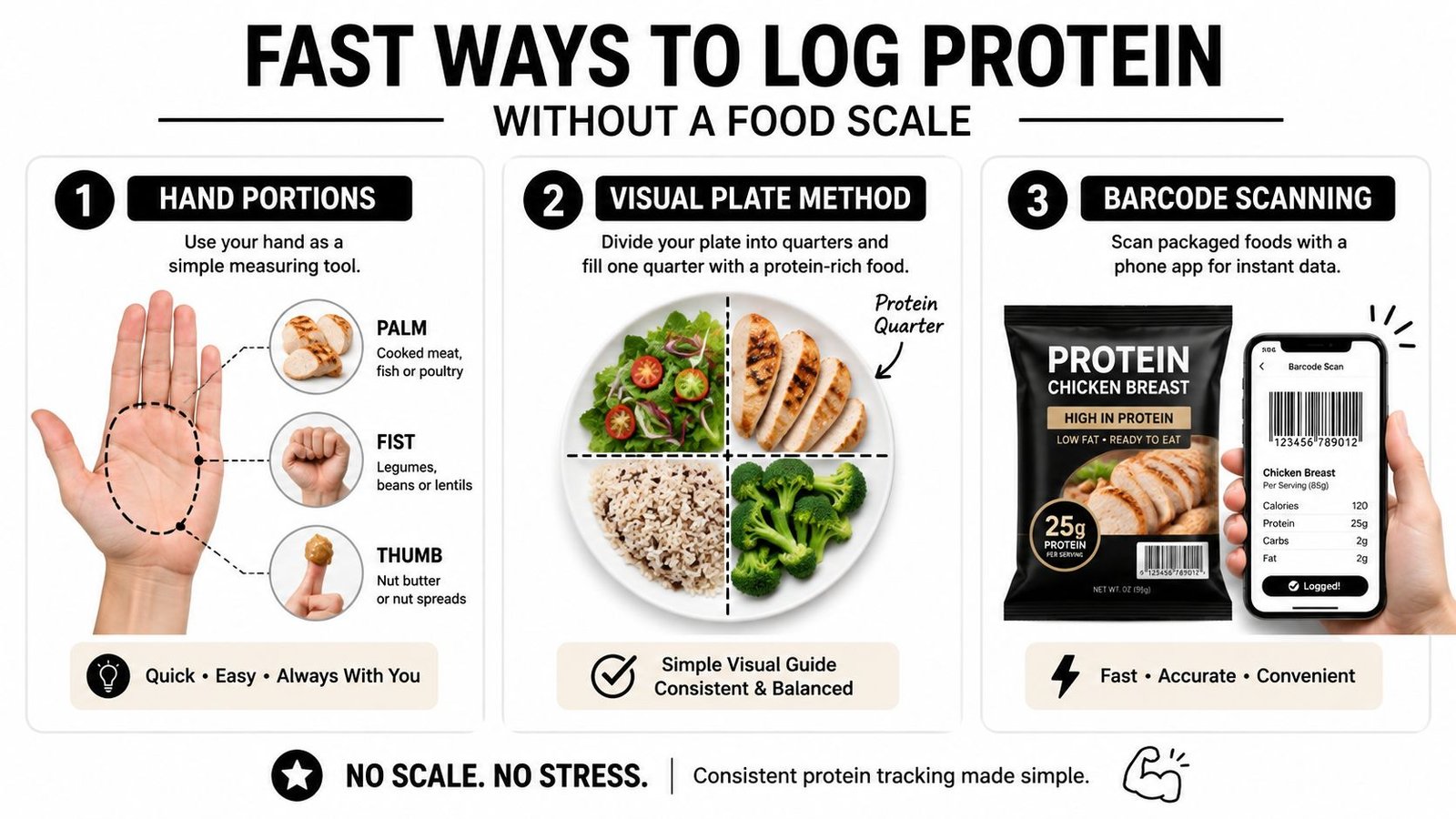
Fast Ways to Log Protein Without a Food Scale
The fastest system is the one you can use during an ordinary day. A food scale can improve precision, but it shouldn't be the only way you know whether you're eating enough protein. Portion size, database quality, recipe differences, and omitted ingredients create error even when you're conscientious.
Research on self-reported protein intake found that manual calculations underestimated biomarker-based intake by 0.18 ± 0.02 g/kg, while computerized reanalysis reduced the difference to +0.05 g/kg, according to the controlled comparison of protein intake assessment methods. The lesson is practical. Spend your accuracy effort on the foods that contribute most of your protein, rather than obsessing over every garnish.
Type the meal in shorthand
Open a notes app or tracker and record the meal in ordinary language:
- Home breakfast: “2 eggs, Greek yogurt, berries.”
- Quick lunch: “Chicken sandwich, milk.”
- Meal prep: “Turkey chili, rice, vegetables.”
You can estimate the protein immediately or review the entry later. Typed shorthand keeps you moving, and it captures the foods that matter without forcing you to search through multiple generic database entries.
Take a photo when the meal is messy
Photo logging works particularly well for restaurant plates, shared dishes, and meals assembled by someone else. Take the picture before eating, then identify the main protein source and estimate its portion when you have time. You'll preserve the information without interrupting the meal or pretending you know the recipe's exact ingredients.
For a more detailed explanation of visual portions, use this portion size estimation guide. Visual estimates become more useful as you compare them with occasional weighed portions, but you don't need to weigh every meal to build that familiarity.
Save meals you repeat
If breakfast is usually the same, create a meal template. Record the ingredients once, verify the protein contribution, and reuse it. Do the same for a regular lunch, smoothie, or batch-cooked dinner.
PlateBird is one option for this style of logging. It lets users type meals in plain language or submit a food photo, then displays estimated calories and macros, including protein. Other apps, a notes file, or a spreadsheet can serve the same purpose. The key is reducing repeated decisions.
The coach's shortcut: Verify high-protein anchor foods first. Small errors in a chicken serving, dairy portion, legume recipe, or protein powder can matter more than an unmeasured teaspoon of sauce.
Estimating Protein in Restaurant Meals and Meal Prep
Restaurant meals do not have to become a tracking black hole. Start with the main protein, estimate its portion, then account for how it was prepared. Chain restaurants may publish nutrition information on their websites or apps. Independent restaurants require a practical estimate based on the dominant ingredient, as explained in this restaurant protein tracking guide.
A cooked chicken breast may provide roughly 35–50 grams of protein, while a salmon fillet may provide about 35–40 grams, according to that guide. Use these figures as reference points, not promises. A smaller fillet, substantial breading, or a dish containing less fish than expected can change the result.
Use the main protein as your anchor
At the table, ask three questions:
- Which food supplies most of the protein?
- Is the portion small, medium, or large?
- Is it a single protein or a mixed recipe?
For a chicken bowl, estimate the chicken separately from the rice, beans, cheese, and dressing. For curry, identify whether chicken, tofu, seafood, or legumes provide most of the protein. A menu description that includes a protein ingredient does not make the entire dish high in protein.
| Food Item | Typical Serving Size | Estimated Protein (g) |
|---|---|---|
| Cooked chicken breast | Typical cooked breast | 35–50 |
| Salmon fillet | Typical fillet | 35–40 |
| Restaurant chicken-based entrée | Main protein portion | Estimate from menu or anchor food |
| Batch-cooked lentil or bean dish | Recipe serving | Calculate from recipe total |
The chicken and salmon estimates come from the restaurant protein tracking guide. Mixed dishes have no universal value, so calculate them from their ingredients instead of assigning false precision.
Make meal prep math simple
For batch cooking, record the total amount of raw protein ingredients and divide the finished recipe into consistent portions. Check the label for packaged ingredients, then enter the quantity used. If a recipe contains several protein sources, add each contribution before dividing the total across servings.
Water loss and absorption change cooked weight, which can make raw-to-cooked comparisons confusing. Choose one method and repeat it. Consistency makes weekly comparisons more useful, even when the finished dish varies slightly.
A repeat recipe only needs one careful calculation. Save it as a reusable meal, using these high-protein meal prep ideas for practical starting points. Your estimate does not need laboratory precision. It needs to show whether your usual meals support your target without forcing you to weigh every plate.
How Often You Really Need to Track Protein
Daily tracking is useful for some people, but it isn't a permanent requirement for everyone. A recent practical guide recommends 3–5 non-consecutive days per week to establish a reliable average, while noting that daily logging can add burden without improving accuracy for many goals, as described in this protein intake tracking guide.
A lighter schedule works because protein intake usually follows patterns. Your breakfast repeats. Your workday lunch has a limited rotation. Your restaurant habits may be less predictable, but you can audit those meals separately. Once you've measured your regular meals, you can use templates and visual estimates on the days between audits.
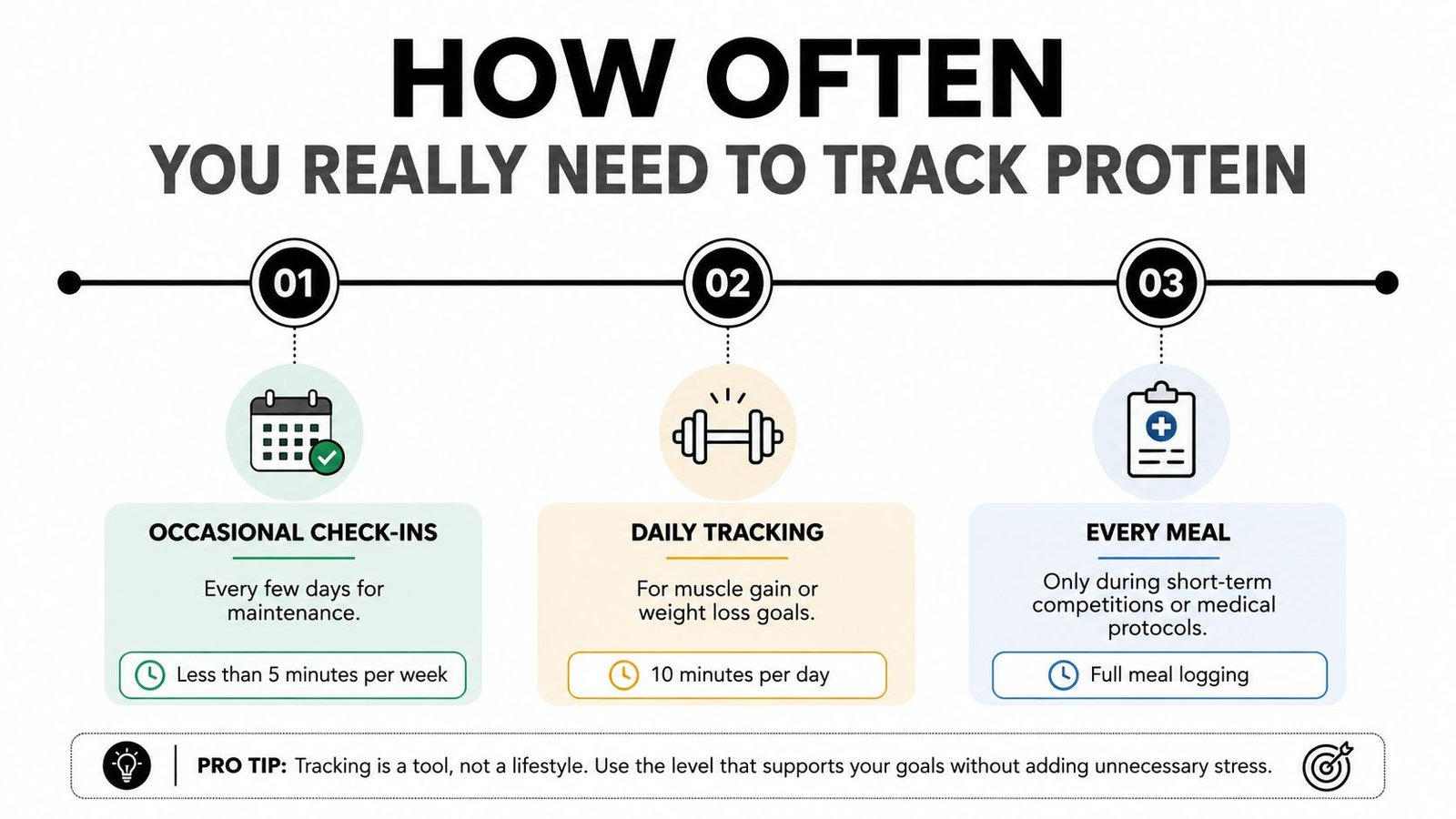
Match frequency to the question you're asking
- Building awareness: Log several non-consecutive days that include different routines.
- Maintaining a stable habit: Audit a few representative days, including both training and rest days.
- Troubleshooting a stalled goal: Track more closely for a short period until you identify the gap.
- Following a medical protocol: Use the schedule your clinician or dietitian gives you.
Protein reporting still has meaningful limitations. Pooled validation research found average under-reporting of about 5% for 24-hour recalls and about 10% for food-frequency questionnaires, while the OPEN biomarker study found larger under-reporting ranges in some groups, according to this protein reporting validation review. Short, current logs are generally more useful than trying to reconstruct an entire week from memory.
Tracking is a calibration tool. It should teach you how to eat, not require your attention forever.
If your training changes, your appetite shifts, or your progress stops matching your plan, temporarily increase logging. When the pattern becomes clear again, reduce the frequency.
Building a Simple Weekly Protein Tracking Routine
A workable routine can fit into a few short check-ins.
On Sunday, review the previous week and compare your rough average with your target. Choose two or three days to log in greater detail, such as a busy workday, a training day, and a social weekend day. Keep your five most common meals in a pinned note with their protein estimates, then reuse those entries instead of rebuilding them.
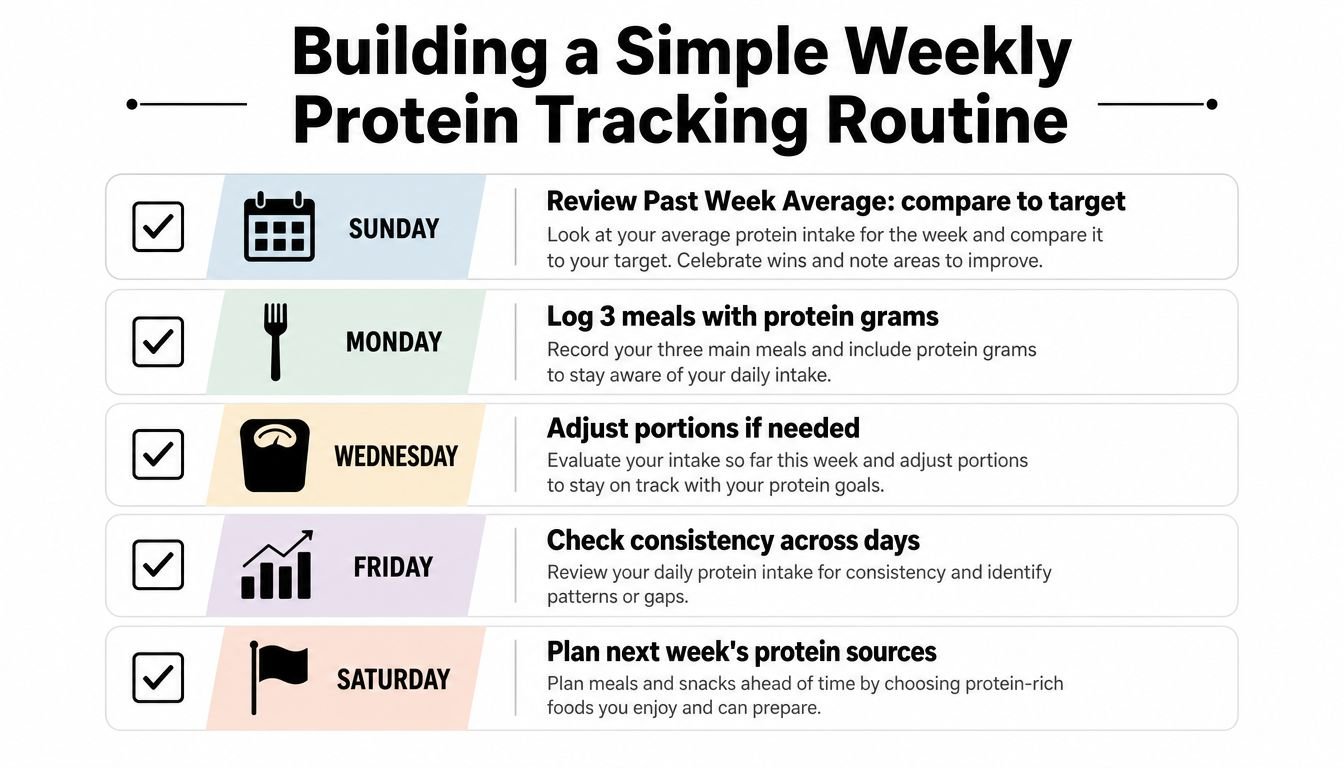
At the end of the week, answer two questions:
- Did most days land near the target?
- Did your energy, training, or appetite improve when meals included enough protein?
Adjust the meal templates before changing the entire plan. Add a protein-rich breakfast, increase the anchor portion at lunch, or keep a convenient option available for hectic evenings. If you have a medical condition or a prescribed diet, discuss target changes with a qualified clinician.
The best protein tracking system is the one that survives ordinary life. Start today by choosing your target, logging one meal in shorthand, and saving it for next time.
PlateBird lets you type a meal in plain language or log it with a photo, then review estimated protein alongside your other macros. Visit PlateBird and use it to build a faster tracking routine around the meals you already eat.