- 1. Simple Text-Based Food Log Entry
- 2. Photo-Based Food Log Entry With Computer Vision
- 3. Macro-Focused Log Entry With Protein First
- 4. Meal Prep Recipe Log Entry
- 5. Restaurant and Dining-Out Log Entry
- 6. Quick Packaged and Label-Based Log Entry
- 7. Flexible Shortcut Repeat Log Entry
- Comparison of 7 Food Log Examples
- Turn One Good Example Into a Repeatable System
Your day is already moving before breakfast. You drink coffee while answering messages, grab toast between meetings, and realize later that you can't remember whether lunch included dressing, oil, or the last few bites from someone else's plate. You want useful nutrition data, but you don't have time to search every ingredient in a database.
The best food log isn't the most elaborate one. It's the format you can keep using, with enough detail to reveal patterns without turning every meal into paperwork. These seven food log examples match common situations, from rushed breakfasts and training meals to batch cooking, restaurant orders, packaged snacks, and imperfect days.
Adapt portions, ingredients, and fields to your needs. Don't copy nutrition numbers blindly, especially for mixed dishes or restaurant food. With PlateBird, you can type a meal such as “eggs toast coffee” or photograph a plate, then review the suggested nutrition before saving it.
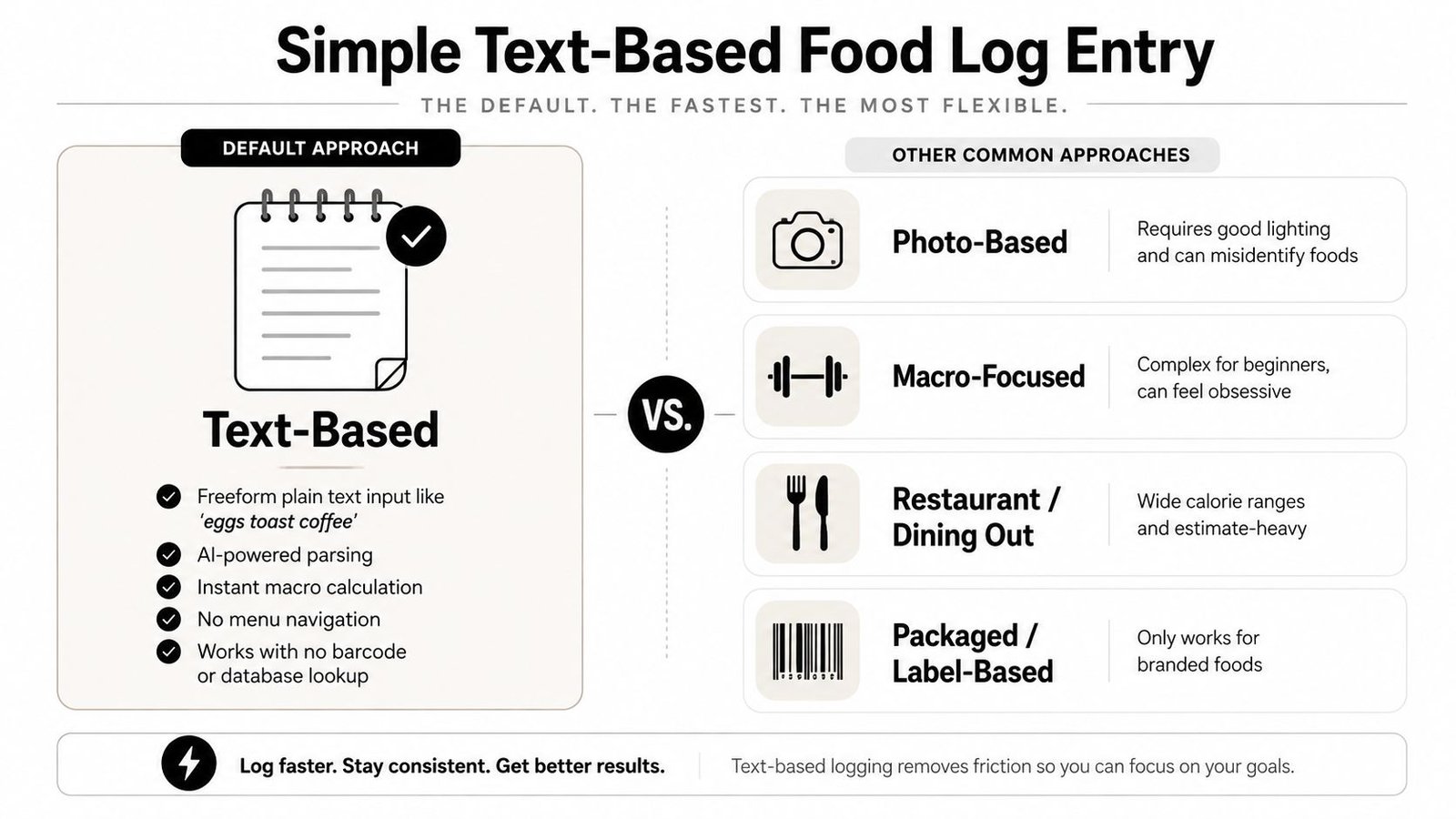
1. Simple Text-Based Food Log Entry
A plain-text entry is often the fastest way to capture a meal before the moment disappears. Instead of searching through menus, you describe the food in ordinary language and add the details you know. A useful starting entry might be:
Breakfast: oatmeal, banana, honey, coffee with milk
For a more precise version, write:
- Breakfast: oatmeal 60 g, banana 1 medium, honey 1 teaspoon, coffee with milk
- Lunch: grilled chicken 6 oz, rice 150 g, broccoli 100 g, olive oil 1 teaspoon
- Snack: Greek yogurt, blueberries, almonds
The short version protects consistency. The detailed version improves portion and ingredient clarity. Evidence from a six-month intervention linked clinically significant weight loss with logging on at least three days per week, while higher food-log frequency was also associated with greater weight loss across the study period (JMIR intervention findings). That makes a usable entry more valuable than an ambitious format you abandon.
PlateBird is suited to this approach because you can enter phrases such as “chicken rice broccoli” and then review the generated calories and macros. For more practical guidance on building a sustainable record, see this food diary approach for weight loss.
Make short entries more useful
Add weight or a recognizable portion when you can. “Chicken 200 g” gives the app more context than “chicken,” while “grilled salmon” distinguishes the preparation from fried salmon. Include sauces, dressings, cooking oils, spreads, and sweeteners, since hidden ingredients can change the estimate.
Save meals you repeat. “Turkey meatballs marinara zucchini noodles” can become a weekly shortcut, while “eggs toast coffee” can stay consistent enough to reveal your normal breakfast pattern without slowing you down.
2. Photo-Based Food Log Entry With Computer Vision
A photo works well when the meal has several visible components and you're standing at the table with no patience for manual entry. Photograph a post-workout bowl, a child's lunch box, a meal-prep container, or a restaurant plate before eating. PlateBird can identify visible foods and create a nutrition breakdown that you can inspect before saving it. The app's photo food diary workflow is designed for people who want a visual starting point rather than a long search session.
Start with a clear image:
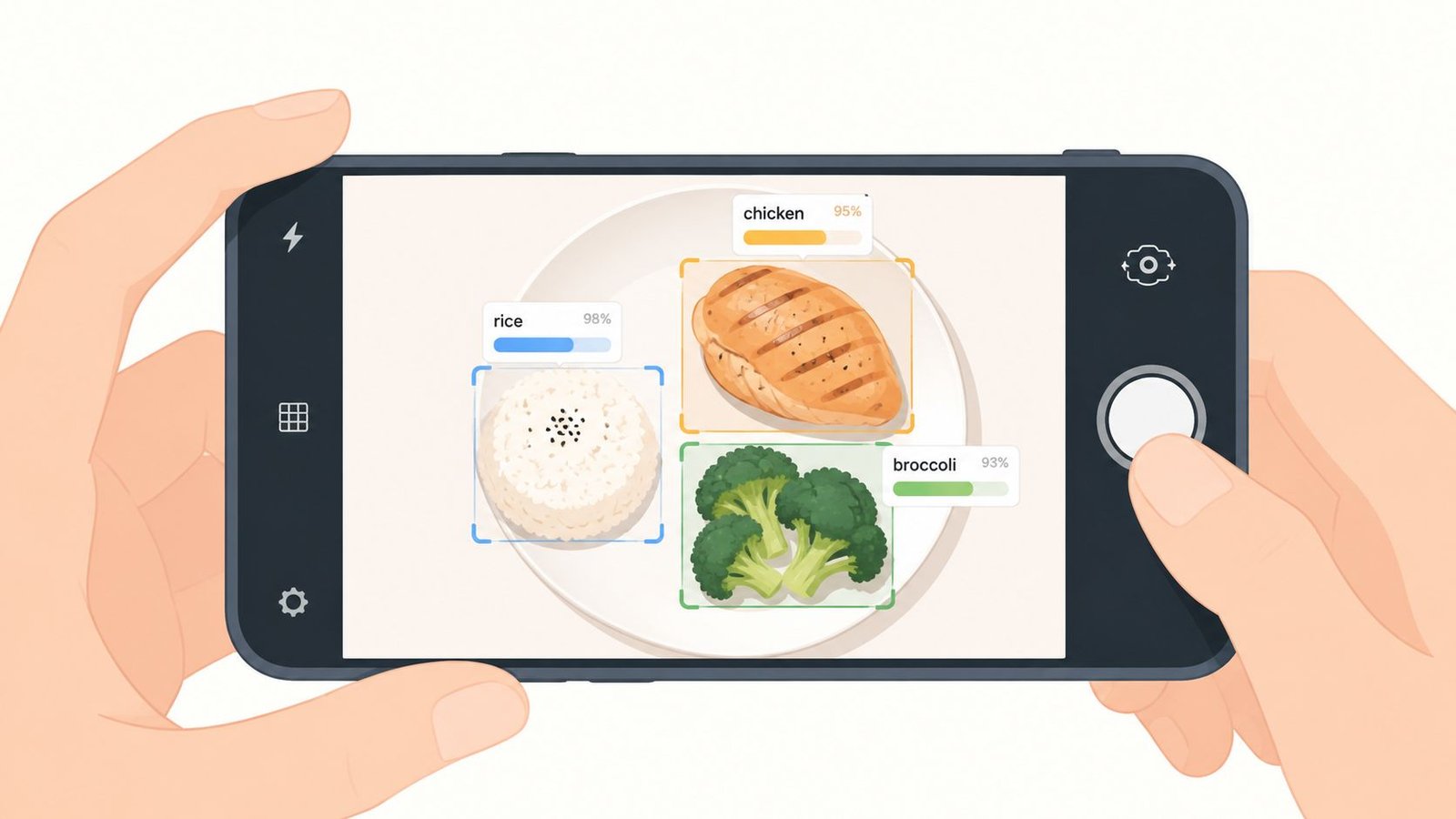
A practical photo entry might show grilled chicken, rice, broccoli, and a visible sauce. After recognition, check whether the serving sizes look reasonable and whether the app missed oil, dressing, butter, cheese, or ingredients mixed into the dish.
Improve the image before you improve the estimate
Natural light helps separate foods by color and texture. A slightly higher angle can make the plate easier to interpret, and distinct portions are easier to review than foods buried under sauce. Photograph the meal immediately, not after you've eaten half of it.
Photo logging is convenient, but it isn't permission to accept every result without review. Food-log errors often come from portion estimation and ingredient ambiguity, particularly with oils and fats, grains, nut butters, and protein foods (mobile-app accuracy review). Use the image to save time, then correct what you know.
For a restaurant meal, the photo preserves what arrived. For a home meal, text may be better when you know the recipe or the amount of oil used. The strongest system uses both methods instead of forcing every meal into one format.
3. Macro-Focused Log Entry With Protein First
Calories can tell you how much energy you logged, but they don't always answer the question a training-focused person is asking. A gym-goer may care first about protein, then about how carbohydrates and fats fit around training. A macro-focused entry makes those fields visible:
Meal: chicken breast 200 g, rice 150 g, broccoli 100 g
Fields to review: calories, protein, carbohydrates, fat
That entry is more useful than “chicken bowl” when you're trying to build a repeatable high-protein lunch. You can use the same structure for a post-workout meal, a packed office lunch, or a dinner that needs to fit the rest of the day.
Build the meal around the priority nutrient
Set targets with a qualified professional when your needs are medical or highly specific. For everyday fitness tracking, start with a protein target that matches your body, training, appetite, and goal rather than copying a rigid plan. The protein intake guide can help you organize the information you're reviewing.
Log protein-containing foods early enough to influence later choices. If breakfast and lunch contain little protein, dinner may become an uncomfortable scramble to compensate. If you log a solid protein serving at breakfast, you can shape the remaining meals around preference and hunger instead.
- Protein anchor: chicken, eggs, Greek yogurt, tofu, fish, lean beef, or legumes
- Carbohydrate support: rice, oats, potatoes, fruit, pasta, or bread
- Fat awareness: oil, nuts, avocado, cheese, sauces, or spreads
Don't judge the system by one day. Review whether your recurring meals provide a workable balance over time. A customized nutrition plan may be more appropriate when medical conditions, allergies, or performance demands require individualized guidance.
4. Meal Prep Recipe Log Entry
Sunday meal prep creates a different logging problem. You aren't eating one isolated food. You're cooking a recipe, dividing it into containers, and repeating the result throughout the week. Logging each ingredient as a separate meal every time creates unnecessary work and increases the chance that you'll forget an oil, sauce, or garnish.
Use one recipe entry:
Recipe name: Turkey Meatballs Marinara
Ingredients: ground turkey, breadcrumbs, egg, marinara, olive oil, seasoning
Portion: one measured serving from the finished batch
The same approach works for “chicken 200 g, rice 150 g, broccoli 100 g” or a family pasta bolognese. Enter the ingredients with quantities, record the actual cooked yield, and divide the recipe according to the servings you produced. A container filled more generously than the others shouldn't automatically count as an identical serving.
Treat the recipe as a reusable record
Weigh ingredients when practical, especially calorie-dense oils, grains, nut products, and sauces. Volume measures can vary, while a weight gives you a more consistent reference. Name the recipe clearly so you can find it later. “Turkey Meatballs Marinara” is easier to recognize than “Dinner.”
Practical rule: Log the batch once, then make the serving size match the container you actually eat.
Keep a small rotation of recipes you enjoy. You might reuse grilled chicken, rice, and broccoli during a busy workweek, then replace the vegetable or sauce when you want variety. The point isn't to make every week identical. It's to remove repeated decisions from the meals you already prepare.
Update a saved recipe when the brand of sauce changes, the meat becomes leaner, or your portion changes. A reusable log should reflect your kitchen, not a theoretical version of it. For more planning inspiration, browse these easy meal prep ideas.
5. Restaurant and Dining-Out Log Entry
A rushed lunch between meetings or a shared dinner rarely comes with a complete ingredient list. You may know the salmon was grilled without knowing how much oil entered the pan. Rice, vegetables, butter, and sauce can be visible or hidden. Record the meal accurately, while marking what remains uncertain.
Copyable entry:
Dinner: grilled salmon, rice, asparagus, butter sauce, side bread
Confidence notes: sauce included, portion estimated, bread partly eaten
For a business lunch, write “turkey sandwich, chips, side salad, dressing,” rather than only “sandwich.” At an Italian restaurant, include the pasta, cream sauce, garlic bread, and shared appetizer. Use the restaurant's matching nutrition item when available. Otherwise, take a photo and add a practical description.
Capture the meal before the first bite
A photo preserves the portion and helps you recall sauces, sides, and leftovers. Text records details a camera cannot show, such as “salmon grilled in butter” or “salad with dressing on the side.” PlateBird supports text and photo logging, but review the result before saving it.
Calorie: estimated total
Macros: protein, carbohydrate, fat when available
Portion note: full plate, half portion, shared dish, or leftovers
Restaurant entries often miss additions that are easy to overlook. Include stir-fry oil, salad dressing, butter on vegetables, and sauce beneath a protein. You do not need every gram for the record to help. A reasonable estimate gives you a clearer pattern than skipping the meal.
Ask about preparation when it is convenient. “Grilled” and “fried” point to different cooking methods, while “sauce on the side” helps estimate what reached your plate. Choose text when the meal is simple or the restaurant provides nutrition details. Use a photo when the plate is mixed, shared, or difficult to describe quickly.
If you forget to log before eating, record the meal afterward and mark the estimate. A missed photo is recoverable. Restaurant tracking should inform your pattern, not punish social eating. Record what happened, note the uncertainty, and return to your normal system at the next meal.
6. Quick Packaged and Label-Based Log Entry
Packaged foods are usually easier to identify than homemade dishes because the label gives you a defined serving size and nutrition panel. The main mistake is not failing to find the item. It's logging one serving when you ate the entire package, or choosing a serving size that doesn't match what you poured into the bowl.
Copyable entries might look like:
- Snack: Chobani plain Greek yogurt, 5.3 oz
- Pre-workout: Clif Bar Chocolate Chip, one bar
- Snack: Wonderful almonds, 1 oz
- Lunch component: rotisserie chicken, 4 oz
- Child's lunch: applesauce pouch, 100 g
Type the brand and product when you know it. If the package contains multiple servings, record the amount you ate rather than assuming the front-of-package portion applies. A label can't correct an entry that describes less food than you consumed.
Keep the label and the meal connected
Packaged ingredients often form only part of a meal. “Tortilla, deli turkey, cheese, mustard, apple” is more informative than logging the turkey alone. Combine branded foods with fresh foods in one text entry when you want a complete picture of lunch.
- Serving check: Compare the logged quantity with the label's serving size.
- Brand check: Match the exact product when formulas differ.
- Package check: Record the whole container if you finished it.
- Repeat check: Save common snacks as shortcuts once the amount is stable.
Nutrition databases can change when manufacturers reformulate products. If a saved entry looks different from the current package, compare the label and update the record. Speed matters here, but verification takes only a moment and prevents a convenient shortcut from becoming stale.
7. Flexible Shortcut Repeat Log Entry
Some meals don't need a fresh decision every day. Your weekday breakfast may always be oatmeal, banana, honey, and coffee. Your work lunch may rotate between chicken and rice or a tuna sandwich with fruit. Re-entering the same meal can make tracking feel like a chore, even when the meal itself is predictable.
Create a shortcut:
Shortcut name: Morning Bowl
Saved entry: oatmeal 60 g, banana 1 medium, honey 1 teaspoon
Other useful shortcuts include:
- Post-workout: protein shake, berries, milk
- Work lunch: tuna sandwich, apple, almonds
- Meal prep: grilled chicken 200 g, rice 150 g, broccoli 100 g
- Dinner rotation: turkey meatballs, marinara, zucchini noodles
Make repetition work for you
Start with one meal you eat often. Save it only after checking the ingredients and portion, then use the shortcut the next time it appears. PlateBird can turn recurring meals into one-tap entries, which reduces the effort required to maintain a food log.
Evidence from large-scale digital tracking found a dose-response relationship between logging frequency and weight loss. Moderate-frequency loggers lost an additional 0.63% of body weight per month versus low-frequency loggers, while adherent logging periods were associated with an additional 1.35% per month (digital tracking analysis). The practical lesson isn't to chase entries for their own sake. It's to make accurate-enough logging easy to repeat.
Recovery tactic: If the shortcut is wrong today, edit today's entry instead of deleting the entire meal from your log.
Review saved meals when your ingredients or portions change. A shortcut is a living template, not a permanent fact. Use it for breakfasts, meal-prep containers, and familiar snacks, then switch to a photo or detailed text entry when the meal changes.
Comparison of 7 Food Log Examples
| Method | Implementation Complexity 🔄 | Resource Requirements 💡 | Speed / Efficiency ⚡ | Expected Outcomes ⭐📊 | Ideal Use Cases |
|---|---|---|---|---|---|
| Simple Text-Based Food Log Entry | Low, simple UI + NLP parsing | Low–Medium, NLP model & phrase mapping | Very fast, minimal input, one-tap shortcuts ⚡⚡⚡ | Good accuracy for clear descriptions; variable with ambiguity ⭐⭐️⭐️ | Busy professionals, first-time trackers, on-the-go logging |
| Photo-Based Food Log Entry with Computer Vision | High, CV pipelines and item segmentation | High, CV models, image storage, camera access | Fast for multi-component meals; slower if corrections needed ⚡⚡ | High engagement and visual clarity; accuracy depends on lighting/angle ⭐⭐️⭐️⭐️ | Visual learners, meal preppers, restaurant diners |
| Macro-Focused Log Entry (Protein-First Tracking) | Medium, macro targets + visualization | Medium, macro database, target algorithms | Moderate, requires more detailed entry than freeform ⚡⚡ | Excellent for hitting macro goals and body-composition plans ⭐⭐️⭐️⭐️ | Athletes, bodybuilders, fitness-focused users |
| Meal Prep Recipe Log Entry | Medium–High, recipe scaling & per-serving math | Medium, ingredient database, recipe storage | Very efficient after setup; upfront effort required ⚡⚡⚡ | High consistency and accurate per-serving macros ⭐⭐️⭐️⭐️ | Meal preppers, nutrition coaches, families |
| Restaurant / Dining Out Log Entry | Medium, estimation tools & restaurant matching | Low–Medium, restaurant DB, portion guides | Moderate, requires estimation and review ⚡⚡ | Lower precision (wide ranges) but practical for social eating ⭐⭐️ | Frequent diners, social eaters, business lunches |
| Quick Packaged / Label-Based Log Entry | Low, barcode/OCR integration | Medium, branded nutrition database | Extremely fast for packaged items, scan or select ⚡⚡⚡⚡ | Highest accuracy for labeled foods (manufacturer data) ⭐⭐️⭐️⭐️ | Snackers, convenience-focused users, on-the-go professionals |
| Flexible Shortcut Repeat Log Entry (Habit-Based Tracking) | Low, shortcut UI + pattern learning | Low, usage data & simple ML heuristics | Instant, one-tap logging for repeated meals ⚡⚡⚡⚡ | Very high for consistency and long-term adherence ⭐⭐️⭐️⭐️ | Users with predictable routines, meal preppers, habit builders |
Turn One Good Example Into a Repeatable System
Choose the format that removes your biggest obstacle. Use a text entry when speed matters and the meal is easy to describe. Choose a photo for a complex visible plate, especially when several foods arrive together. Use a macro-focused entry when protein, carbohydrates, and fats guide your training decisions.
A recipe log suits batch cooking because one ingredient list can support repeated portions. A restaurant entry should record what you know, what you estimated, and what may be hidden in sauces or cooking fats. A label-based log works best for packaged snacks and branded foods, provided the serving size matches what you ate. A shortcut is the obvious choice for meals that repeat often.
Start with one recurring meal rather than redesigning your entire day. Log the food in plain language, add a portion or weight where practical, and include preparation details when they affect the estimate. If you use a photo or AI-generated result, review the items, serving sizes, sauces, and oils before saving the entry.
Logging doesn't need to be equally detailed at every meal. A weekday breakfast may deserve a one-tap shortcut, while a homemade curry may need an ingredient-based recipe entry. A restaurant dinner may remain an estimate. That variation isn't a flaw. It reflects the conditions under which people eat.
A 2022 review of digital self-monitoring found that lighter approaches, including photo-based logging and checklists, can work better than detailed calorie-by-calorie records in some settings (systematic review of calorie-tracking accuracy). Detailed diaries can still contain omissions, particularly for busy users, so adding more fields isn't automatically the same as creating better data.
Save entries that work. Correct them when your portions change. Return to the next meal after an imperfect day instead of trying to reconstruct every detail from memory. The useful food log is the one that gives you repeatable patterns, supports your goal, and stays simple enough to use when life gets busy.
PlateBird lets you type meals such as “eggs toast coffee,” photograph a plate, review calories and macros, and save recurring meals as shortcuts. Visit PlateBird to make your next food log faster, easier to review, and more consistent.