- The Unmistakable Allure of Movie Theater Popcorn
- What's Actually in Your Popcorn Bucket
- A Nutritional Breakdown by Theater and Size
- Unseen Dangers Lurking in the Butter and Bags
- Logging Movie Popcorn Without Derailing Your Goals
- Making Healthier Choices at the Concession Stand
- The Final Verdict on Your Favorite Film Snack
- Frequently Asked Questions About Popcorn
You know the moment. You walk into the theater telling yourself you might skip snacks this time, then the smell hits. Warm, salty, buttery, unmistakable. Suddenly the popcorn line feels less like an option and more like part of the ticket.
That’s why people keep asking the same question in different ways. Is movie theater popcorn healthy? Is it better than candy? Can it fit into a fat-loss phase? Can you log it without wrecking your day?
The honest answer is more useful than a simple yes or no. Popcorn itself can be a solid snack. Movie theater popcorn is a different animal. The kernel is a whole grain, but what theaters do to it with oil, salt, and butter-style topping can turn it into a very heavy concession food. The good news is that you don't need to treat it like a forbidden food. You just need to know what you’re buying, how to track it, and when it makes sense.
The Unmistakable Allure of Movie Theater Popcorn
I never blame anyone for loving movie popcorn. It’s one of the few foods where the smell starts the experience before the first bite does. People don't just buy it because they're hungry. They buy it because it feels tied to the whole ritual of previews, dim lights, and settling into the seat.

That’s what makes this topic tricky. People often hear “healthy” and assume the answer has to be all-or-nothing. It doesn’t. Plenty of clients I work with aren’t trying to eat perfectly at the movies. They just want to enjoy the snack without feeling blindsided later when they realize the bucket wasn’t a light side item.
Why this food gets a pass so easily
Popcorn sounds harmless. It’s corn. It’s airy. It feels lighter than nachos or a giant dessert. In a home kitchen, plain popcorn can absolutely be a smart snack. The trouble starts when the theater version borrows the healthy reputation of popcorn while being prepared more like a high-fat, high-sodium indulgence.
Movie popcorn isn’t automatically a diet disaster, but it’s rarely the “light” choice people assume it is.
The real question to ask
A better question than “is movie theater popcorn healthy” is this: what version of movie popcorn are you eating? Size matters. Oil matters. Butter topping matters. Even which chain you go to matters.
That’s where people gain control. Not by pretending they’ll never want popcorn again, but by getting specific enough to make a deliberate choice.
What's Actually in Your Popcorn Bucket
A movie theater bucket is a mixed food, not a single ingredient. For tracking purposes, break it into three parts: the popcorn itself, the popping oil, and the toppings. That approach gives you a much better estimate in an app than logging a vague “movie popcorn” entry and hoping it’s close enough.
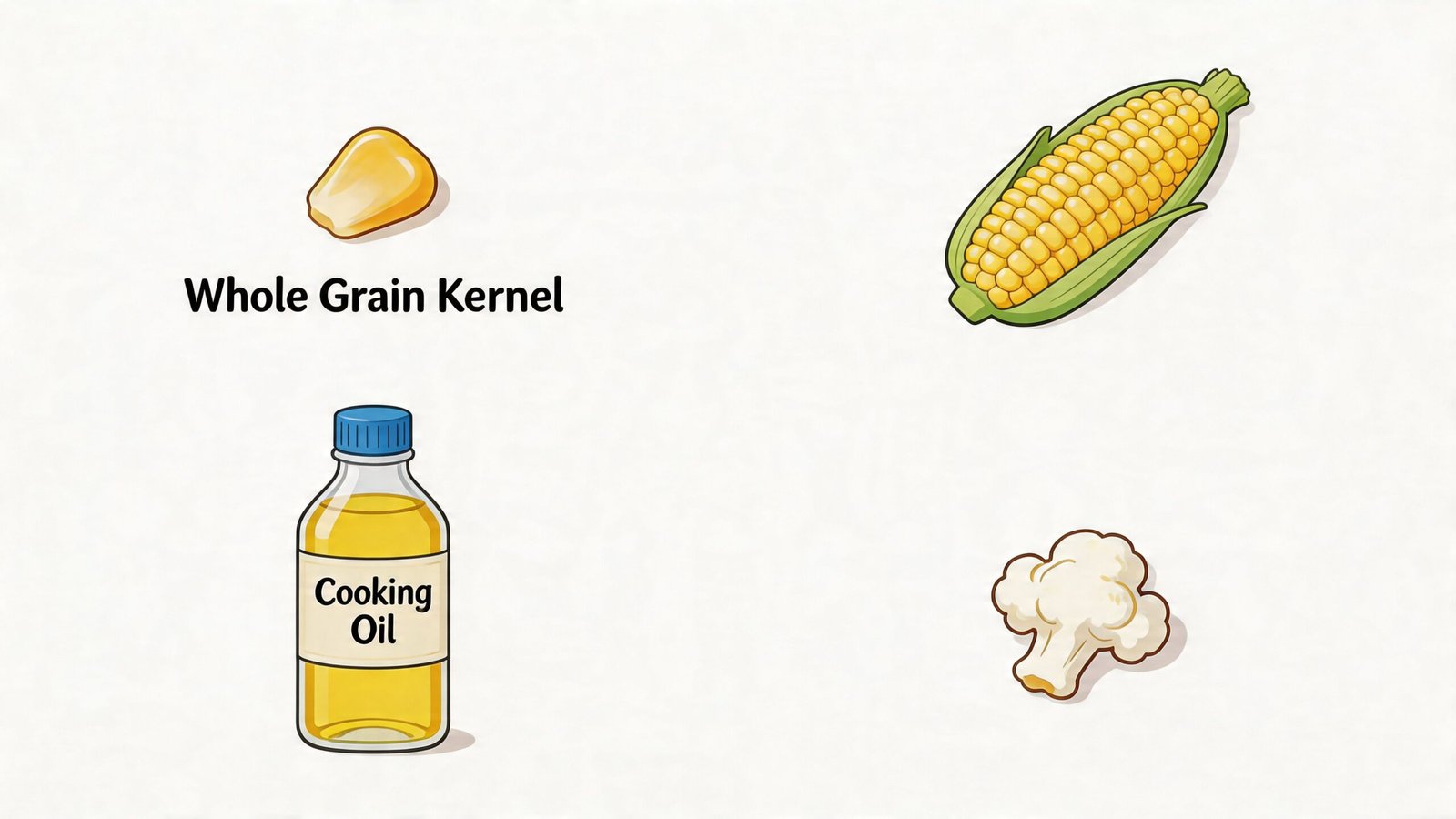
The popcorn base has real nutritional value
Plain popcorn starts in a good place. It is a whole grain, which means it can contribute fiber and volume for relatively modest calories before oil and butter-style topping enter the picture. If you want a refresher on how fiber contributes to fullness and energy intake, that piece helps explain why air-popped popcorn at home feels very different from a theater tub.
That distinction matters. The kernel is doing one job. The preparation can turn it into a very different food.
The oil changes the math fast
The biggest calorie jump usually happens in the kettle, not at the butter station. The Center for Science in the Public Interest brought national attention to this issue years ago when it reported that some movie popcorn cooked in coconut oil delivered extremely high saturated fat, a finding discussed in CSPI's account of the movie popcorn controversy. That history still matters because many people log theater popcorn as if it were plain popped corn.
From a nutrition coaching perspective, estimates often become inaccurate. Clients often remember the whole grain part and miss the cooking fat. Then they are surprised when their app total looks low compared with the theater’s posted nutrition info.
Here’s a quick visual explainer before we go deeper:
Toppings can turn a rough estimate into a bad one
Butter-style topping is easy to dismiss because it feels like a light pour. In practice, it can add a meaningful amount of fat and sodium, especially if the staff layers it through the bucket or you add extra at the self-serve station.
For practical logging, use this breakdown:
- Kernel: whole-grain base with fiber and volume
- Popping oil: one of the biggest drivers of calories and saturated fat
- Butter-style topping and seasoning: where sodium and added fat often climb fast
If you care about accuracy, this is a good place to borrow the habit of understanding nutrition facts ingredient by ingredient instead of treating the whole bucket like one simple food.
A better way to judge the bucket
Calling movie popcorn healthy or unhealthy misses the trade-off. The base ingredient is reasonable. The theater preparation can push it closer to a meal-sized indulgence.
That is useful news, because it gives you options. You can log the plain popcorn, add oil and topping if you used them, and make a deliberate call about portion size instead of guessing after the credits roll.
A Nutritional Breakdown by Theater and Size
If you want a practical answer, look at the theater and the size before you look at the word popcorn. Those two details tell you much more than the snack name does.
The oil choice changes the health picture
WebMD’s review of theater snacks notes that the high saturated fat in movie popcorn often comes from coconut oil, which is 90% saturated, and that chains like AMC and Regal have used it. The same review explains that a single large serving can provide 1 to 3 days’ worth of recommended daily saturated fat intake, while Cinemark’s move to canola oil lowers that saturated fat burden in their breakdown of movie snack choices.
That’s the practical dividing line. One chain’s popcorn may fit more comfortably into a flexible plan than another’s, even before portion size enters the equation.
Movie Theater Popcorn Nutritional Comparison Estimated
| Theater & Size | Calories | Total Fat (g) | Saturated Fat (g) | Sodium (mg) |
|---|---|---|---|---|
| AMC small plain, no butter | 300-420 | 13 | Not specified | Not specified |
| AMC standard tub | 970 | Not specified | Not specified | 630 |
| AMC refillable large plain, no butter | 1,080 | 48 | 35 | 2,650 |
| Cinemark small unbuttered | 225-400 | Not specified | Lower than coconut-oil chains | Not specified |
| Cinemark medium | 760 | Not specified | Lower than coconut-oil chains | Not specified |
| Cinemark large | 910 | Not specified | Lower than coconut-oil chains | 1,500 |
These figures pull together the verified chain-specific ranges already discussed in publicly available nutrition summaries from AMC, Cinemark, and analysis of theater popcorn. They’re best used as decision tools, not as permission to guess blindly.
Size is where people get into trouble
Individuals don’t order a large because they’re trying to eat a giant serving. They order it because it’s the default “movie size,” or because sharing seems likely, or because the value looks better. But nutritionally, the jump can be dramatic.
That’s why it helps to practice understanding nutrition facts in context rather than treating calories as the only number that matters. Popcorn can be high in fiber and still be a rough fit if the sodium and saturated fat are doing most of the work behind the scenes.
If fiber is one reason popcorn feels like a better pick than candy, it also helps to understand how fiber contributes to the overall food picture. This quick guide on whether fiber has calories is useful if you’re trying to make sense of macros without oversimplifying them.
A small plain popcorn and a large butter-loaded tub may share the same food name, but they don’t function like the same food in your day.
What works in real life
What works is choosing based on the theater’s oil and the smallest size that still feels satisfying. What doesn’t work is assuming all popcorn is created equal because it came from the same concession stand.
If you know you’re walking into AMC or Regal, the saturated fat issue deserves attention. If you’re at Cinemark, the canola oil is a meaningful improvement. That doesn’t make a giant bucket “health food,” but it can make it easier to fit popcorn into a plan without overshooting as hard.
Unseen Dangers Lurking in the Butter and Bags
Calories aren’t the only issue at the concession stand. If you get extra butter flavoring, you also need to think about what that topping is.
Why skipping butter matters for more than fat
One of the strongest reasons to say no to added butter topping has nothing to do with dieting. According to Dr. Axe’s review of popcorn safety, diacetyl, a chemical used in movie theater butter flavoring, can cause cryptogenic organizing pneumonia, often nicknamed popcorn lung, when its vapors are inhaled. The same review notes that it’s considered safe to ingest, but heating can release compounds that become risky to breathe in through this summary of diacetyl and popcorn lung.
That changes the conversation. The butter dispenser isn’t just a flavor station. It may also add an exposure you don’t need.
The risk you can actually control
You can't control every part of the theater environment, but you can control whether you add more butter-style topping. That’s the simplest move with the best payoff. It lowers extra fat, usually lowers the mess, and avoids adding more heated flavoring on top of an already rich snack.
A similar principle applies to food packaging in general. If you’re curious about what separates safer food wrapping from lower-quality options, this guide to choosing the perfect paper bag for food gives useful context around food-contact materials.
What to do when labels aren’t in front of you
Movie theaters are not ideal places for careful label reading. You’re dealing with combo menus, refill offers, and impulse decisions in low light. That’s why it helps to learn the basics of how to read nutrition labels before you’re standing at the counter.
Use that skill set in a simple hierarchy:
- First, skip added butter topping
- Second, choose plain popcorn over heavily flavored versions
- Third, keep packaging and prep in mind when possible
If a snack already tastes intensely buttery before you touch the butter pump, assume the flavor load is built in and act accordingly.
The point isn’t panic. It’s selectivity. If you’re going to enjoy popcorn, enjoy the version with fewer invisible downsides.
Logging Movie Popcorn Without Derailing Your Goals
People usually lose the thread at this stage. They mean to track the popcorn, but the app search results are messy, the serving names are inconsistent, and the bucket size in front of them doesn’t look anything like “1 serving.” So they either under-log it or skip logging it entirely.
That’s a mistake, especially if you’re trying to answer is movie theater popcorn healthy for your specific goals. A food can be “fine sometimes” and still be something you need to log accurately.
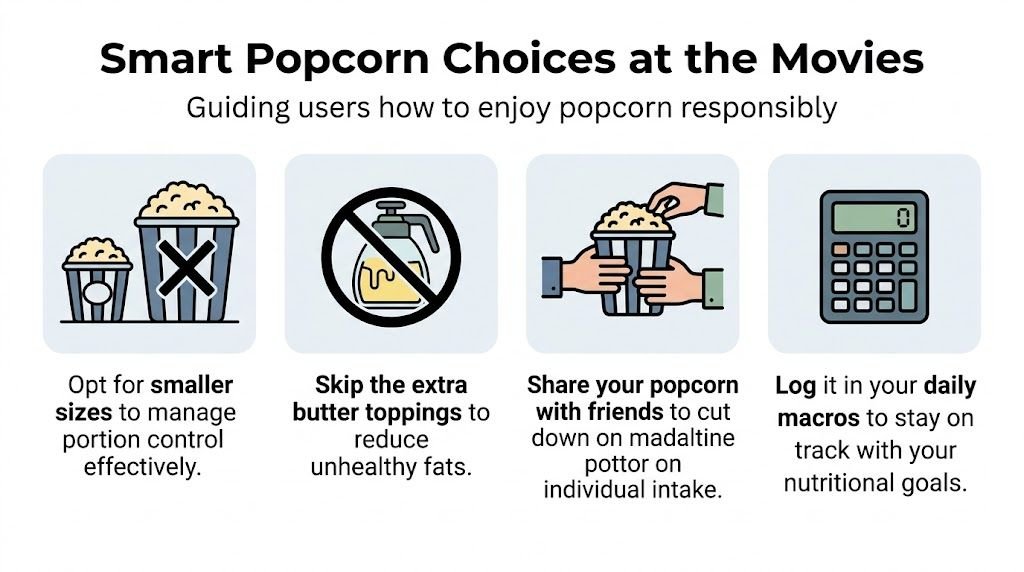
Start with the chain name and the words no butter
The most useful logging entry is usually the most specific one. Search by chain first, then size, then preparation. “Popcorn” is too vague. “AMC large plain popcorn no butter” is much better.
That matters because, for accurate tracking, an AMC large plain popcorn without butter is around 970 to 1080 calories, with 148g carbs, 28g fiber, and 48g fat, based on chain-specific summaries highlighted in this movie popcorn macro breakdown. If you leave out “no butter,” your estimate can drift in the wrong direction fast.
A practical logging method that works
Use this sequence when you’re at the theater:
- Take a quick photo before you start eating. This helps if you need to estimate later and keeps you from relying on memory after the credits roll.
- Log the chain-specific item immediately. Don’t wait until the next morning.
- Choose the closest plain version unless you know toppings were added.
- If you share it, log your portion, not the whole bucket. Be honest about whether you really shared evenly.
- Save it as a custom entry or shortcut for future movie nights.
If you’re building consistency in your food awareness overall, keeping a food diary for weight loss can make these higher-calorie events much easier to manage because you stop treating them as random exceptions.
What to do when the exact listing isn't available
Sometimes the exact theater item won’t appear, or the database entries will look unreliable. In that case, don’t force precision that doesn’t exist. Use the closest verified chain and size match, then stay conservative.
A good fallback approach looks like this:
- At AMC: log the plain chain-specific size and avoid adding a butter entry unless you used it
- At Cinemark: choose the nearest plain size and remember the oil profile may be more favorable than coconut-oil chains
- If you split a bucket: log half the serving from the start instead of trying to “mentally subtract” later
Reality check: The biggest tracking error isn’t usually choosing the wrong database entry. It’s pretending the popcorn was “just a few handfuls.”
How to fit it into a flexible day
If you know movie night is coming, make room. Keep earlier meals simpler and higher in protein. Don’t show up starving. Drink water. Treat the popcorn as a deliberate carb-and-fat choice rather than a bonus food that doesn’t count.
That’s the difference between using tracking as punishment and using it as planning. The goal isn’t to make popcorn disappear. The goal is to keep one enjoyable snack from gradually taking over the day.
Making Healthier Choices at the Concession Stand
A perfect concession strategy isn't necessary. They need a realistic one they'll use. The healthiest movie night choice is usually the one that lowers the biggest risks without making the outing feel joyless.
The easiest upgrades
Start with the moves that matter most:
- Go smaller than your impulse says. The smallest size usually gives you the movie experience without turning the snack into an oversized portion.
- Skip the butter topping. This is one of the cleanest wins available.
- Share when you can. If you’re with family or friends, splitting one order works better than everyone carrying their own tub.
- Bring water or buy water. Salty popcorn tends to pull you toward more snacking and sugary drinks.
These aren’t dramatic habits. They’re the kind that work repeatedly.
When popcorn is the better concession choice
Compared with many candy-heavy options, plain popcorn can still be the better-bad option because it starts as a whole grain and can offer more staying power than pure sugar snacks. That doesn’t make every theater bucket healthy. It just means the smart comparison isn’t popcorn versus homemade plain air-popped corn. It’s often popcorn versus candy, soda, or nachos at the same counter.
If you choose small and plain, popcorn can be the concession choice that does the least damage while still feeling fun.
Better options are showing up
Some theaters are making this easier. Cinemark, for example, offers certified organic, non-GMO popcorn popped in canola oil, and their own guidance also notes that policies on bringing your own 100-calorie snack packs may vary, with some locations allowing it if you check with a manager in their discussion of healthier movie popcorn choices.
That’s worth using. If your theater allows it, bringing a controlled snack can be a strong option for people who want the ritual without the guesswork.
A simple decision filter
When clients ask me what to do on the spot, I tell them to run through this checklist:
- Which chain am I in? Oil choice may differ.
- Am I hungry, or do I just want the experience? If it’s mostly the experience, a smaller portion usually delivers it.
- Will I log this? If the answer is no, scale the portion down.
- Am I adding butter because I want it, or because it’s there? Those are not the same thing.
Some nights the answer will be, “I’m having the popcorn and moving on.” That’s fine. Other nights, the better call is a smaller plain serving or a packed snack. Flexible nutrition works best when you stop acting like every outing needs the same answer.
The Final Verdict on Your Favorite Film Snack
So, is movie theater popcorn healthy?
Usually not in the typical purchased form. The popcorn kernel itself has real nutritional value as a whole grain. The problem is the commercial setup around it. Oil choice can push saturated fat way up. Salt can make sodium climb fast. Butter-style topping can add both nutrition and non-nutrition concerns that aren’t worth ignoring.
Still, I wouldn’t call movie popcorn off-limits. I’d call it a calculated indulgence. That’s a much more useful label. It leaves room for reality.
If you choose a smaller plain portion, pay attention to the theater, skip the butter topping, and log it accurately, popcorn can fit into a health-conscious plan much more easily than people think. If you buy the giant tub by default and treat it like air, you’ll probably underestimate it badly.
That’s the main takeaway. Control matters more than purity. You don’t need to fear the smell in the lobby or swear off movies to protect your goals. You just need to know when you’re eating whole-grain popcorn and when you’re eating a heavily engineered concession food that happens to start with corn.
The healthiest approach is the one you can repeat. Sometimes that means passing. Sometimes it means sharing. Sometimes it means enjoying the popcorn and counting it properly. All three can be smart choices when they’re made on purpose.
Frequently Asked Questions About Popcorn
Is homemade popcorn healthier than movie theater popcorn
Usually, yes. At home you control the oil, the amount of salt, and whether any butter-style topping gets added. That control is the main advantage. Theater popcorn tends to become less healthy because the preparation is heavier, not because popcorn itself is bad.
Is plain movie popcorn okay for weight loss
It can be, depending on the portion and the rest of your day. A small plain serving is much easier to fit into a calorie deficit than a large tub. The key is logging it accurately and not treating it like a free snack.
Is movie theater popcorn healthier than candy
Sometimes, especially if it’s plain and portioned modestly. Popcorn at least starts as a whole grain and can be more filling than straight candy. But once the serving gets very large or heavily buttered, that advantage shrinks fast.
Should I always skip the butter topping
From a practical health standpoint, yes. Skipping it helps reduce added fat and also avoids the butter-flavoring concerns discussed earlier. If you want one single habit that improves movie popcorn the most, this is it.
Can I bring my own snack to the movies
Sometimes. Policies vary by theater and even by location, so ask the manager or check the rules before you go. If your theater allows it, a pre-portioned snack can make tracking much easier.
What’s the best theater popcorn choice
The best choice is usually the smallest plain serving from a theater using a more favorable oil, especially if you share it and drink water with it. That gives you the experience without turning one snack into the nutritional centerpiece of the day.
If you want movie-night foods to fit your goals without obsessive guesswork, PlateBird makes logging much easier. You can type what you ate in plain language or snap a photo, get fast calorie and macro estimates, and save repeat foods for next time. That means you can enjoy the popcorn, log it, and move on with your life.