
You’re in the grocery store after work, trying to make one decent decision before dinner gets pushed to takeout. In one hand is a pack of boneless, skinless chicken breasts. In the other is a pack of thighs. One looks leaner. The other sounds more appealing for the meal you want to eat.
A common point of confusion for many is the white meat dark meat question. They’ve heard white meat is “healthier,” dark meat is “more flavorful,” and somehow both statements get repeated so often that neither feels complete. If you track calories, train hard, meal prep, or just want dinner to come out well, that kind of half-answer isn’t very useful.
The better question is simple. What does each cut do for you on the plate, in your body, and in your routine? Once you understand the biology behind the color, the nutrition starts making sense. Once the nutrition makes sense, the cooking differences do too. And once those pieces click, choosing between white meat and dark meat gets much easier.
The Chicken Counter Dilemma
A parent buying chicken for weeknight dinners often reaches for breasts because they seem safe. Lean, familiar, easy to label as the “good” choice. A lifter grabbing ingredients for meal prep might do the same, thinking more protein and fewer calories must automatically make it the winner.
Then dinner happens.
The chicken breast comes out dry, the family leaves half of it on the plate, and the meal prep containers feel like a chore by day three. Meanwhile, the thighs you almost bought would probably have reheated better and tasted better with less effort. That is the dilemma. People aren’t just choosing nutrients. They’re choosing how likely they are to enjoy and repeat the meal.
Why this choice feels confusing
Part of the confusion comes from the way chicken gets talked about in shortcuts:
- White meat equals healthy: That’s too simplistic.
- Dark meat equals indulgent: Also too simplistic.
- Protein is all that matters: Not if texture, satisfaction, and cooking success affect what you eat.
A helpful way to think about it is this. White meat and dark meat are both nutritious, but they solve different problems. One is especially useful when you want a leaner protein source. The other shines when you want more flavor, more moisture, and certain micronutrient advantages.
Practical rule: The best cut isn’t the one with the best reputation. It’s the one you’ll cook well, enjoy eating, and use consistently.
A lot of nutrition decisions improve when you stop asking, “Which one is best?” and start asking, “Which one fits this meal and this goal?” That shift turns the chicken aisle from a debate into a practical choice.
The Science Behind the Color Difference
The color difference isn’t random, and it isn’t just about fat. It starts with myoglobin, a protein in muscle that stores and carries oxygen. Muscles that work harder for sustained movement need more of it. More myoglobin means darker meat.
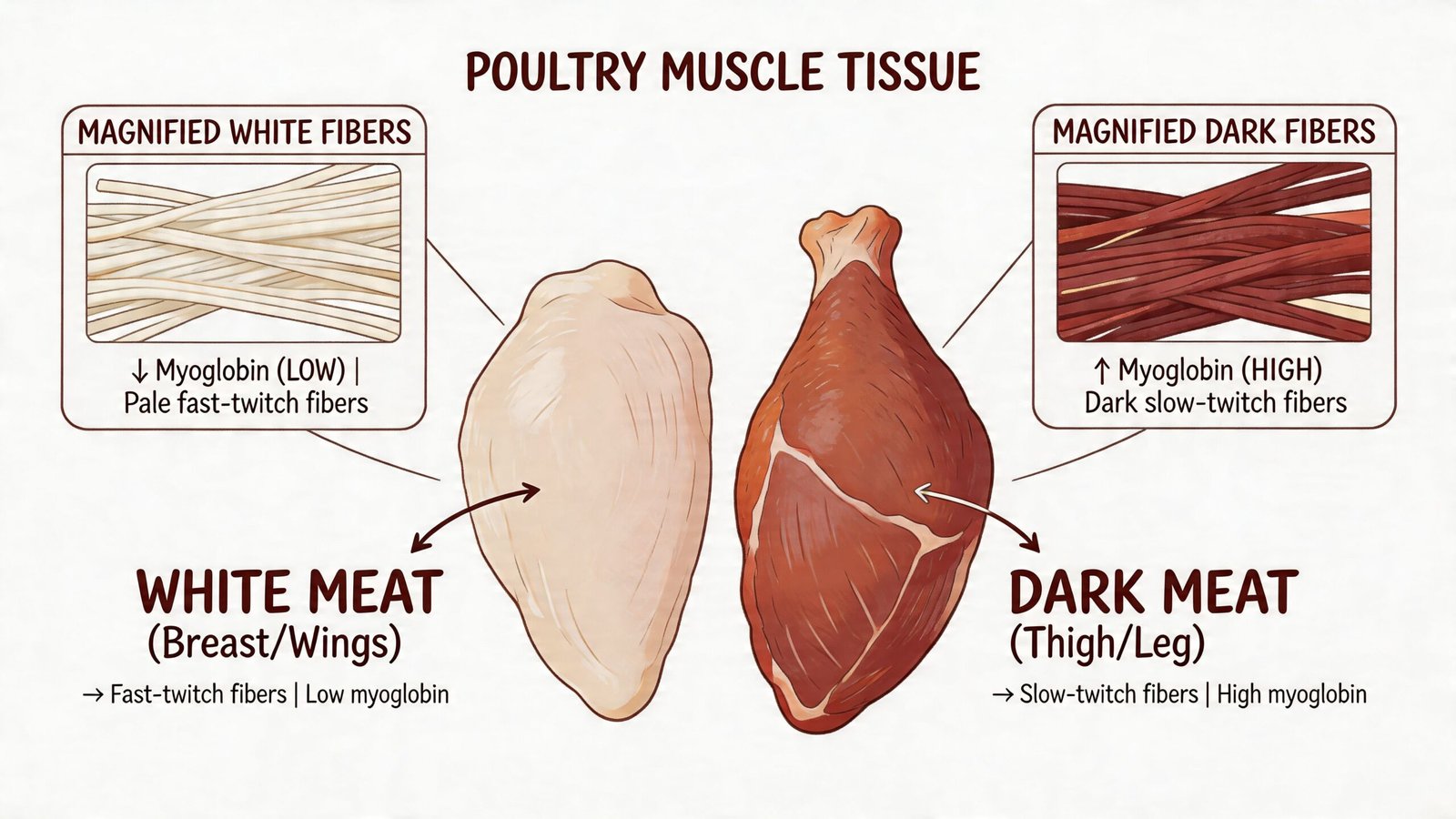
Why legs are dark and breasts are light
Think about what a chicken does all day. It stands, walks, and moves around on its legs. Those leg and thigh muscles handle regular, ongoing activity, so they rely more on oxygen-rich support. That’s why they contain more myoglobin and appear darker.
The breast muscles are different. Chickens don’t spend their day flying long distances. Those muscles are used for short bursts rather than steady endurance. Because they need less oxygen support, they contain less myoglobin and look pale.
Slow-twitch and fast-twitch fibers
Muscle type explains the difference. Dark meat comes from muscles with more slow-twitch fibers, built for sustained work. White meat comes from muscles with more fast-twitch fibers, built for shorter, quicker effort.
That one biological difference shapes almost everything people notice later:
- Color: More myoglobin means a darker tone.
- Nutrition: The muscles used for endurance tend to bring different micronutrient patterns.
- Texture and flavor: Muscles that work differently don’t cook and eat the same way.
Dark meat is dark because the muscle does a different job, not because it’s lower quality or less healthy.
Why this matters in the kitchen
A lot of readers get tripped up here. They assume color tells them only about appearance. In reality, color is a clue to function. Function helps explain nutrition. And nutrition often connects to cooking behavior.
That’s why white meat dark meat isn’t just a naming issue. It’s a biology issue first. Once you know that darker meat comes from more active muscles with more myoglobin, it becomes easier to understand why thighs and legs taste richer and why breasts are leaner and milder.
You don’t need to memorize muscle physiology to use this. You just need to remember one sentence: the color reflects how the muscle works. From there, the rest of the comparison gets much clearer.
A Detailed Nutritional Showdown
At the dinner plate, the choice often looks simple: breast for lean protein, thigh for more flavor. The nutrition gap is real, but it helps to read it as a function difference carried onto your plate, not as a “good” versus “bad” food choice.
Here is the clearest side by side view of skinless cuts per 100g, based on the nutritional breakdown from Chicken Farmers of Canada’s white meat and dark meat comparison.
| Cut per 100g | Calories | Protein | Total fat | Saturated fat |
|---|---|---|---|---|
| Skinless chicken breast | 146 kcal | 32.58g | 1.73g | 0.59g |
| Skinless chicken thigh | 175 kcal | 25.95g | 8.43g | 2.60g |
| Skinless chicken leg | 155 kcal | 23.84g | 6.59g | 1.90g |
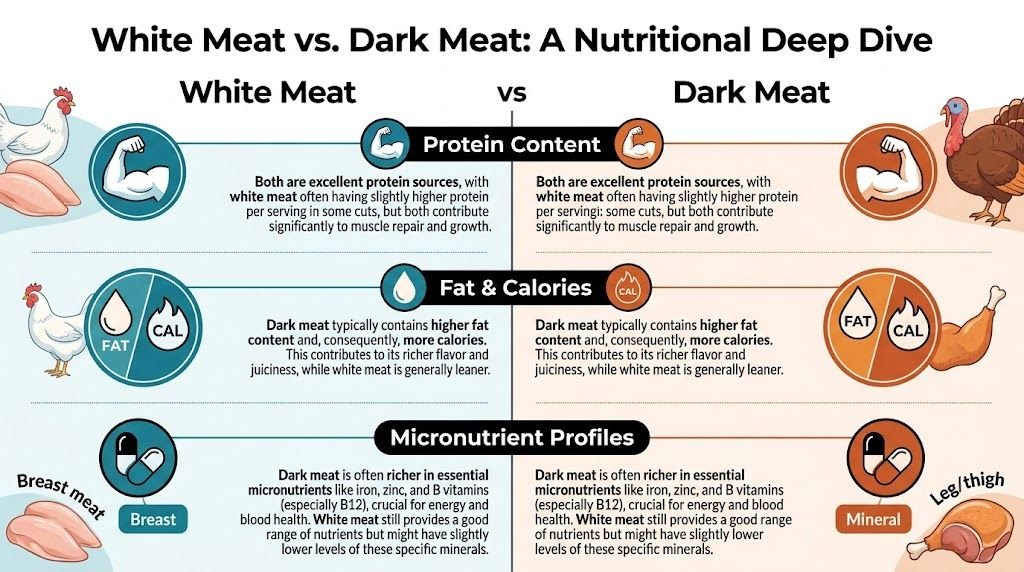
What the macro difference means
A useful way to read this table is to ask one question first: what job do you want this meal to do?
If your goal is high protein with fewer calories, breast stands out. In the same comparison, it delivers the most protein per 100g and the least fat. That makes it easier to fit into a calorie deficit, a high protein meal plan, or a post-workout meal where you want more protein without adding much energy from fat.
Thigh and leg shift the balance. They bring less protein per 100g, but more fat, which raises calories and usually increases satiety and cooking tolerance. Fat works like built-in insurance against dryness, which matters if you batch cook, reheat often, or prefer a more satisfying texture.
The 3 ounce serving comparison points in the same direction. White meat comes in leaner, while dark meat comes in a bit higher in calories with slightly less protein. If you want a quick practical reference for portions, this grilled chicken nutrition guide is a helpful shortcut.
Micronutrients where dark meat stands out
Macros are only part of the story.
Dark meat also tends to bring more iron and zinc, which fits the biology from the last section. Muscles that rely more on oxygen handling and sustained work often carry a different micronutrient pattern. In the same source, thighs also contain more B2 and B1 than breast.
Breast has a clear micronutrient advantage of its own. It provides more niacin, also called vitamin B3, than thigh in the same comparison.
That matters because different goals favor different trade-offs. Someone focused on cutting calories may care most about protein density. Someone who wants more iron-rich meals or feels more satisfied with richer cuts may prefer dark meat more often.
A practical way to use the numbers
Use the table like a decision tool, not a scorecard.
- Choose breast when: you want more protein for fewer calories, or you need a lean base for salads, bowls, wraps, and meal prep.
- Choose thigh or leg when: you want more richness, more staying power, or a cut that is easier to cook without drying out.
- Zoom out from macros: iron, zinc, and B vitamins can matter too, especially if you eat chicken often and want more nutritional variety.
Cooking method changes the final result as well. Skin, breading, oil, and sauces can easily matter more than the cut itself. A roasted thigh and a breast cooked in heavy sauce may end up closer than many people expect. If you are roasting a whole bird in a chicken roaster, tracking the cut and the preparation gives you a much more accurate picture.
White and dark meat both fit in a healthy diet. The better choice depends on whether your priority is lean protein, flavor, fullness, or micronutrient balance.
Flavor, Texture, and Culinary Uses
Diners don’t fall in love with chicken because of its spreadsheet. They care about whether dinner tastes good, reheats well, and doesn’t turn dry the second they look away from the pan.
That’s where white meat and dark meat really separate themselves.
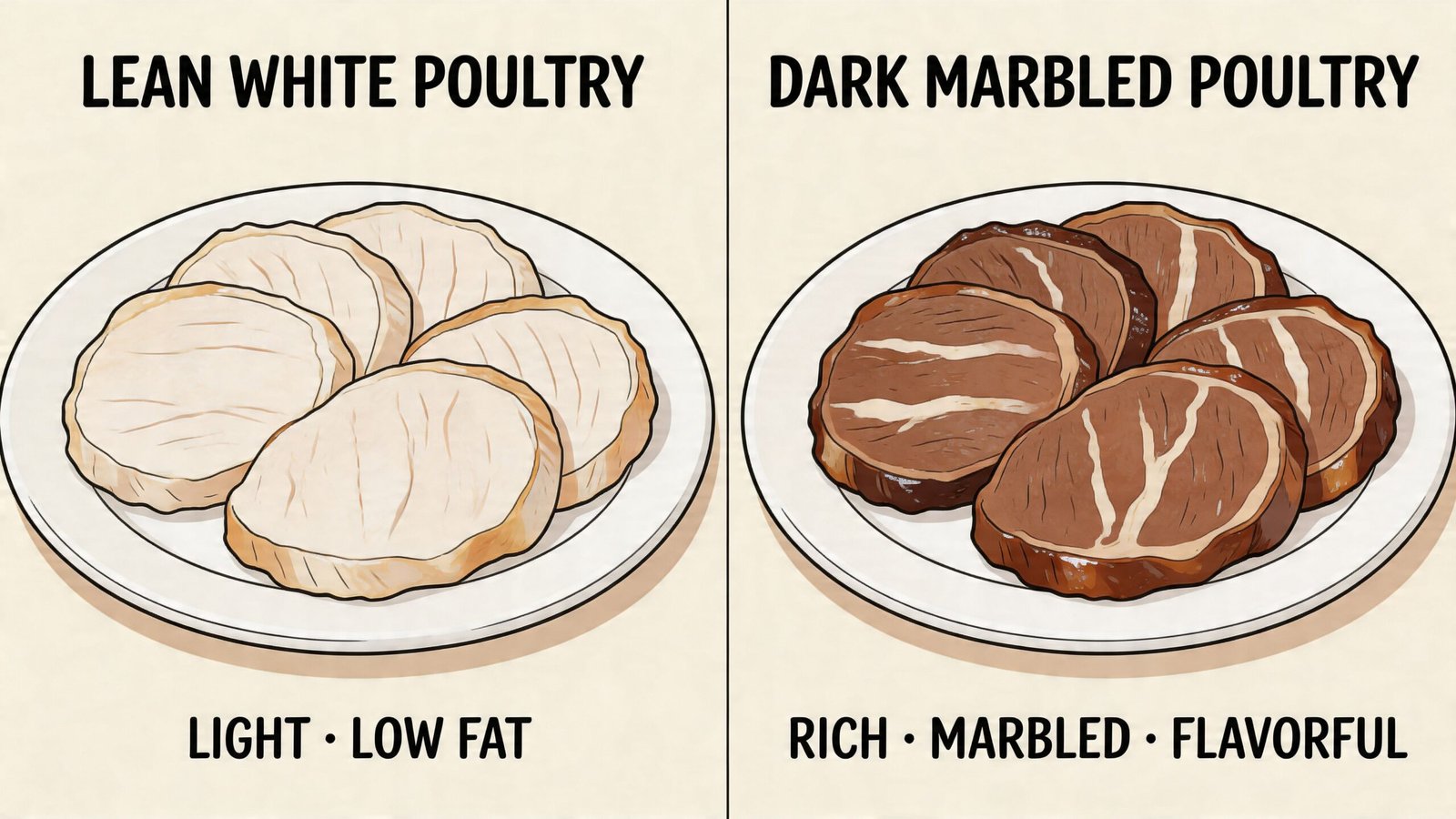
What white meat tastes like
White meat has a milder flavor and a firmer, more fibrous bite. Some people love that because it feels clean and neutral. It works especially well when the seasonings, sauce, or marinade are supposed to do the talking.
Think of sliced grilled chicken on a salad, chicken breast in a wrap, or small pieces in a stir-fry. In those dishes, you often want the meat to support the rest of the ingredients rather than dominate them.
The downside is familiar. Breast can go from tender to dry quickly. If you’ve ever eaten chicken that felt stringy and chalky, you already know the risk.
What dark meat tastes like
Dark meat brings a deeper, richer flavor. The texture is softer and juicier, and it tends to stay that way more easily during cooking. That makes it forgiving, especially for home cooks who don’t want dinner ruined by a few extra minutes of heat.
Thighs and legs fit naturally into dishes where you want savory depth. Curries, braises, sheet-pan meals, soups, barbecue, and slow-cooked recipes all benefit from that extra richness. If you roast chicken often, using a dedicated chicken roaster can help keep the bird upright for more even cooking and crisping, which is especially useful when you want both white and dark portions to come out well.
Match the cut to the cooking method
A quick decision guide helps:
- For grilling or pan-searing fast: breast works well if you watch it closely.
- For shredding into bowls or sandwiches: both can work, but thighs usually stay softer after reheating.
- For stews, curries, and roasting: dark meat often gives you more margin for error.
- For cold meal prep salads: breast is often easier to slice neatly and pair with lighter dressings.
A dry chicken breast doesn’t mean white meat is bad. It usually means the cooking method didn’t match the cut.
The practical kitchen truth
A lot of people think they dislike white meat when they really dislike overcooked white meat. The same goes for dark meat. Some say it feels “too rich,” but that usually depends on the recipe and what else is on the plate.
If your main goal is reliability, dark meat is easier. If your main goal is flexibility and a lighter eating experience, white meat is useful. Neither one is the better cook’s choice across every meal. The winning move is matching the cut to the job.
Matching Your Meat to Your Health Goals
Nutrition advice works best when it answers the question you’re asking. Not “Which cut is superior?” but “Which cut helps me do what I’m trying to do this month?”
For white meat dark meat, the answer shifts with your goal.
If your priority is weight loss
White meat often makes this easier. Its leaner profile means you can build meals around a strong protein base while keeping calories lower. That can be useful when you’re trying to stay in a calorie deficit without feeling like every meal is tiny.
That doesn’t mean dark meat is off the table. It means dark meat usually requires more awareness about portions and the rest of the meal. If the plate already includes a rich sauce, oil, or a heavier side, breast may fit the day more neatly.
Here's how to look at it:
- Use breast when: you want a lean default for meal prep.
- Use dark meat when: flavor and satisfaction will help you stay consistent.
- Watch the full plate: cooking fat, breading, and sauces can matter as much as the cut.
If your priority is muscle gain or performance
Both cuts can support muscle-building goals because both provide substantial protein. The difference is how they fit into your broader intake.
White meat is efficient when you want more protein relative to calories. Dark meat can be useful when you need a little more energy in the meal and want the added richness that makes eating enough easier. Some athletes also appreciate dark meat’s iron and zinc advantage as part of an overall nutrient-conscious diet.
If you’re not sure how much protein, fat, and carbohydrate you should be aiming for in the first place, a solid starting point is learning what your macros should be. Once your targets are clear, choosing breast or thigh becomes much more practical.
If your priority is overall balance
The all-or-nothing mindset often gets in the way. You don’t need to pledge allegiance to one cut forever. A balanced eater might use breast in lunches, thighs in family dinners, and a mix of both across the week.
That flexibility is often more realistic than trying to force every meal into the same mold.
Your healthiest choice is often the one you can repeat without boredom, resentment, or constant overeating later.
Don’t forget the final food product
People often compare plain breast to plain thigh, then end up eating something totally different. Breaded nuggets, heavily seasoned frozen strips, and processed chicken sausages can change the nutrition picture quickly. Sometimes a simple roasted thigh is less complicated than a “lighter” product with a long ingredient list.
That’s why it helps to evaluate the final meal, not just the raw cut. Ask yourself:
- How is it cooked?
- What’s added to it?
- Will this meal keep me satisfied?
- Can I make this consistently?
Those questions usually lead to better decisions than food labels like “clean” or “bad.” White meat and dark meat both have a place. The goal is using each one on purpose.
Effortless Tracking with PlateBird
Knowing the difference between breast and thigh is helpful. Logging it accurately is what turns that knowledge into something you can use day after day.
A lot of people fall off tracking because the process is annoying. They search for the wrong entry, guess at portions, or pick whatever result comes up first. That matters with chicken because white meat and dark meat don’t log the same way.
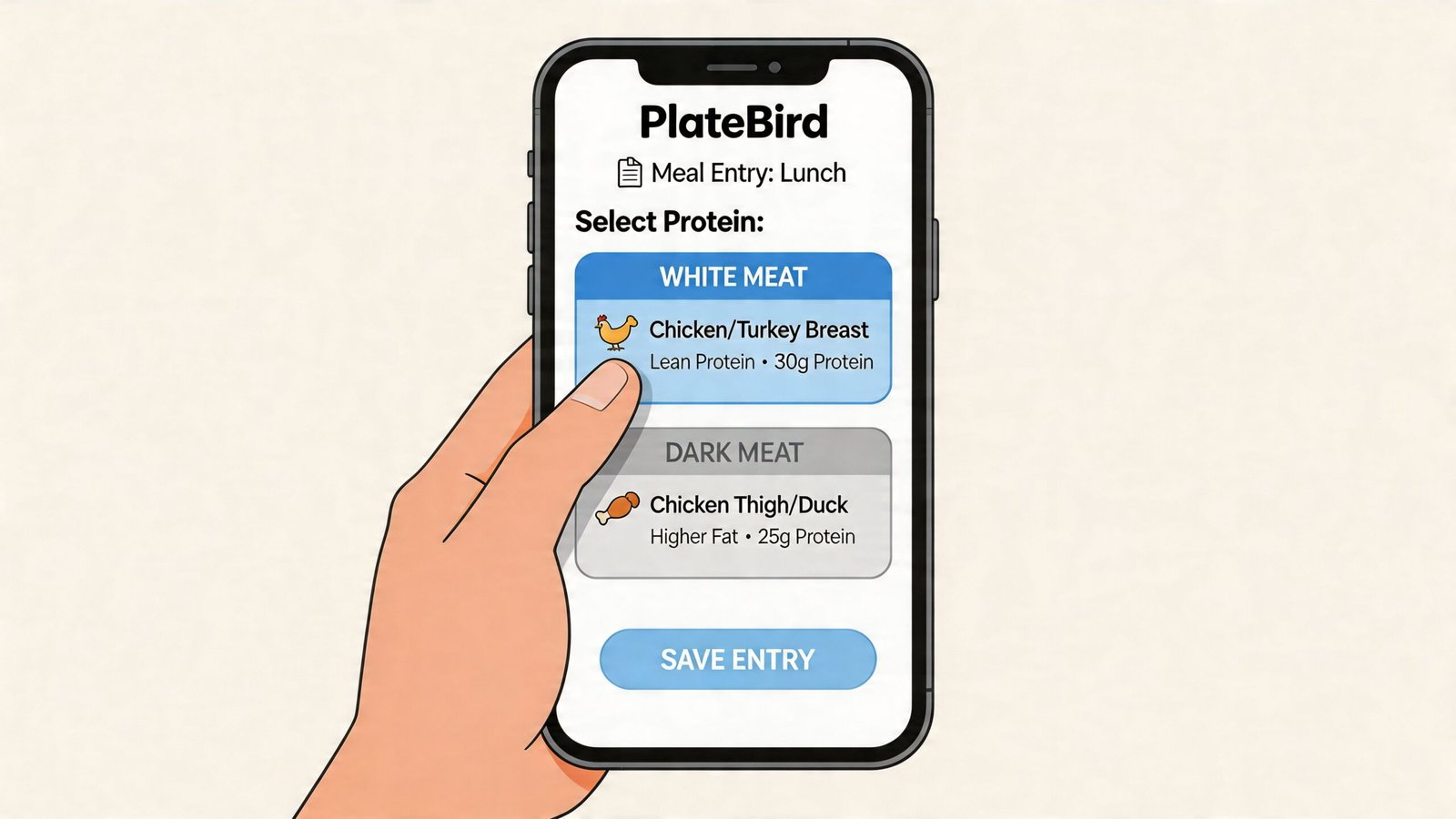
Type the meal the way you think about it
Instead of hunting through a database, you can enter meals in plain language. If you ate grilled chicken breast with rice and broccoli, type that. If dinner was roasted chicken thigh with potatoes, type that.
That small difference matters because it mirrors how people eat. You don’t think, “generic poultry item.” You think, “I had chicken thigh.” If you’re comparing tools, this guide to the best macro tracking app gives useful context on what makes logging feel fast enough to stick with.
Use photos when the dish is mixed
Chicken often shows up in meals where the cut isn’t neatly separated. Curry, tacos, bowls, salads, casseroles, and leftovers can make manual entry more tedious than it needs to be.
Photo logging helps in those moments. You snap the plate, review the result, and adjust if needed. That’s especially useful when you cooked a mixed meal and want your tracking to reflect whether you used white meat or dark meat.
Save repeat meals so the decision only happens once
Meal preppers benefit the most from shortcuts. If you make the same lunch several times a week, save it as a repeat meal. That way, your regular chicken breast bowl or shredded thigh taco plate becomes a one-tap entry instead of a daily task.
A simple routine looks like this:
- Breakfast and lunch repeat often: save them once.
- Dinner changes more: type or snap it.
- Review consistency: if your calories feel off, check whether you logged breast when you ate thigh.
The easier tracking gets, the more honest tracking becomes.
Why this matters in real life
People rarely miss their nutrition targets because they don’t care. More often, they get tired of friction. The best logging system is the one that fits the speed of your day.
With chicken, that means being specific enough to capture the difference between cuts without turning dinner into homework. If your plate changes, your log should be able to change with it just as easily.
So Which Chicken Should You Choose
Choose the one that matches the job.
If you want the leanest option with the highest protein for fewer calories, skinless breast makes sense. If you want richer flavor, a juicier texture, and the micronutrient strengths that come with darker cuts, thighs or legs may fit better. For many people, the smartest answer isn’t choosing a side. It’s using both strategically.
A simple framework helps:
- Weekday meal prep: white meat often works well.
- Roasts, braises, comfort meals: dark meat usually shines.
- Long-term nutrition: variety makes the diet easier to enjoy and maintain.
The white meat dark meat debate gets much less dramatic once you stop treating it like a contest. One cut isn’t virtuous and the other isn’t a cheat. They’re just different tools. If you’re also exploring meat substitute chicken options for variety, convenience, or dietary preferences, it can help to compare those choices with the same mindset: flavor, nutrition, and how well they fit your routine.
The best chicken is the one that supports your goal and tastes good enough that you’ll want to cook it again.
If you want tracking to feel as simple as choosing the right cut, PlateBird makes it easy to log meals by typing what you ate or snapping a photo. That means your grilled chicken breast, roasted thigh, or mixed dinner can fit into your day without the usual friction.