- What macros look like on a plant-based plate
- The foods that actually move the needle
- How to set your actual targets
- Building meals that hit the numbers without spreadsheets
- Where plant-based tracking gets difficult
- Tracking tools and how to use them for plant-based eating
- Adjusting as you go
- Frequently asked questions
Plant Based Macros: Ratios, Foods, and Tracking Tips
You switched to a plant-based diet three weeks ago. Dinner feels great. Lunch is fine. But somewhere around 3 p.m., you’re raiding the pantry, and you can’t figure out why. You’re eating plenty. You’re eating clean. Something is off.
The issue is usually the same. Plant foods mix protein, carbs, and fat in ways that animal foods don’t. A cup of lentils isn’t just protein. It’s also 40 grams of carbohydrates. Chickpeas bring fat along with their protein. Without a working picture of your plant based macros, you end up either under-eating protein or over-eating carbs without realizing it.
Getting this right isn’t about obsessing over numbers. It’s about understanding which foods do what, and how to combine them so your meals actually hold you. That’s what this guide covers.
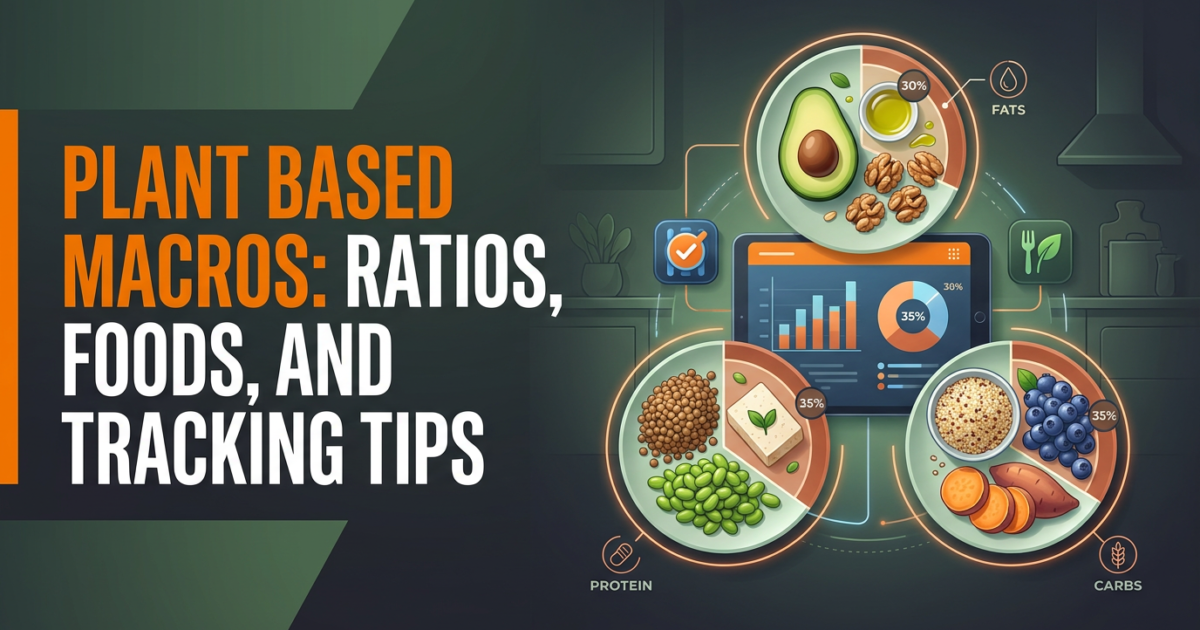
What macros look like on a plant-based plate
Protein, carbohydrates, and fat are the three macronutrients. Every food you eat is made of some combination of them. On an omnivore diet, the lines are fairly clean: chicken is protein, rice is carbs, butter is fat. Plants blur those lines.
Lentils are a good example. One cooked cup delivers 18 grams of protein alongside roughly 40 grams of carbohydrates and almost no fat. That’s not a protein food in the traditional sense. It’s a protein-and-carb food. If you log it only as protein and ignore the carbs, your totals drift.
This is why tracking macros on a plant-based diet requires a different mental model. You’re not sorting foods into neat buckets. You’re accounting for overlap.
The most common macro split for a general plant-based diet sits around 50% carbohydrates, 20% protein, and 30% fat. On a 2,000-calorie day, that works out to roughly 250 g of carbs, 100 g of protein, and 67 g of fat. Some whole-food plant-based approaches push carbs much higher, closer to 80%, with protein and fat each at 10%. A more flexible range that works for active people is 40-60% carbs, 20-25% fat, and the remainder from protein.
None of these splits is universally correct. The right one depends on your activity level, your goals, and how your body responds.
The foods that actually move the needle
You can’t hit your targets if you don’t know which foods carry which macros. Here’s a practical breakdown by category, with real numbers attached.
Protein sources worth building meals around
Seitan is the highest-protein plant food most people overlook. Three ounces delivers 21 grams of protein, with almost no carbs or fat. Tempeh comes in at 15 grams per half cup, and it’s fermented, which helps with digestion. Chickpeas offer 15 grams per cooked cup. Tofu lands at 10 grams per half cup, which is lower than people expect.
- Seitan delivers 21 g protein per 3 oz with minimal carbs. Good for stir-fries and wraps where you need a dense protein hit.
- Tempeh brings 15 g protein per half cup, plus 9 g of fat, so it counts toward your fat target too.
- Lentils provide 18 g protein per cooked cup, but also 40 g carbs, so they pull double duty as a carb source.
- Chickpeas deliver 15 g protein per cooked cup, with 45 g carbs and 4 g fat, making them a true mixed macro food.
- Tofu gives 10 g protein per half cup, low carb, versatile enough to appear at breakfast, lunch, or dinner.
Carbohydrate sources that also bring nutrients
Oats, quinoa, sweet potatoes, brown rice, and fruit handle most of your carbohydrate load. Quinoa is worth highlighting because it’s one of the few plant foods with a complete amino acid profile, and it adds about 8 grams of protein per cooked cup alongside 39 grams of carbs. That matters when you’re stacking up protein from multiple sources.
Fat sources that don’t require much planning
Avocado, walnuts, almonds, chia seeds, flaxseeds, and olive oil cover fat. Half an avocado brings roughly 11 grams of fat and 160 calories. A tablespoon of almond butter adds 9 grams of fat and 100 calories. These are calorie-dense. A little goes a long way, which is useful when you’re trying to hit a calorie ceiling.
| Food | Serving | Protein | Carbs | Fat | Calories |
|---|---|---|---|---|---|
| Seitan | 3 oz | 21 g | 4 g | 1 g | 108 |
| Tempeh | ½ cup | 15 g | 9 g | 9 g | 160 |
| Lentils (cooked) | 1 cup | 18 g | 40 g | 1 g | 230 |
| Chickpeas (cooked) | 1 cup | 15 g | 45 g | 4 g | 270 |
| Tofu (firm) | ½ cup | 10 g | 2 g | 5 g | 90 |
| Quinoa (cooked) | 1 cup | 8 g | 39 g | 4 g | 220 |
| Avocado | ½ fruit | 1 g | 9 g | 11 g | 120 |
How to set your actual targets
Generic macro splits are a starting point. Your actual targets depend on your body and your goal. A useful heuristic is to calculate protein based on lean body mass rather than total body weight, particularly if you’re carrying extra weight. Lean body mass is your total weight minus your estimated fat mass.
If you weigh 170 pounds and estimate 25% body fat, your lean body mass is about 128 pounds. A common protein target for muscle maintenance is 0.7 to 1 gram per pound of lean body mass. That puts your protein range at roughly 90 to 128 grams per day. A vegan-specific macro calculator can run these numbers for you once you input your body stats and goal.
From there, calories come first. Set a daily calorie target based on your maintenance needs and your goal (deficit for fat loss, surplus for muscle gain, maintenance for body composition). Then divide those calories across your macro split.
A worked example: 2,000 calories at a 50/20/30 split gives you 1,000 calories from carbs (250 g), 400 calories from protein (100 g), and 600 calories from fat (67 g). If you train hard three or four days a week, shifting to 55% carbs and 25% protein is reasonable. That would be 275 g carbs and 125 g protein on the same 2,000-calorie budget.
In my experience, the first week of tracking plant macros feels harder than it actually is. Once you know the numbers for your five or six most-used foods, the mental load drops sharply.
Activity matters. Higher-carb days around workouts help with energy and recovery. Rest days can sit closer to the lower end of the carb range. You don’t need to be precise about this on day one. Get the baseline working first.
Building meals that hit the numbers without spreadsheets
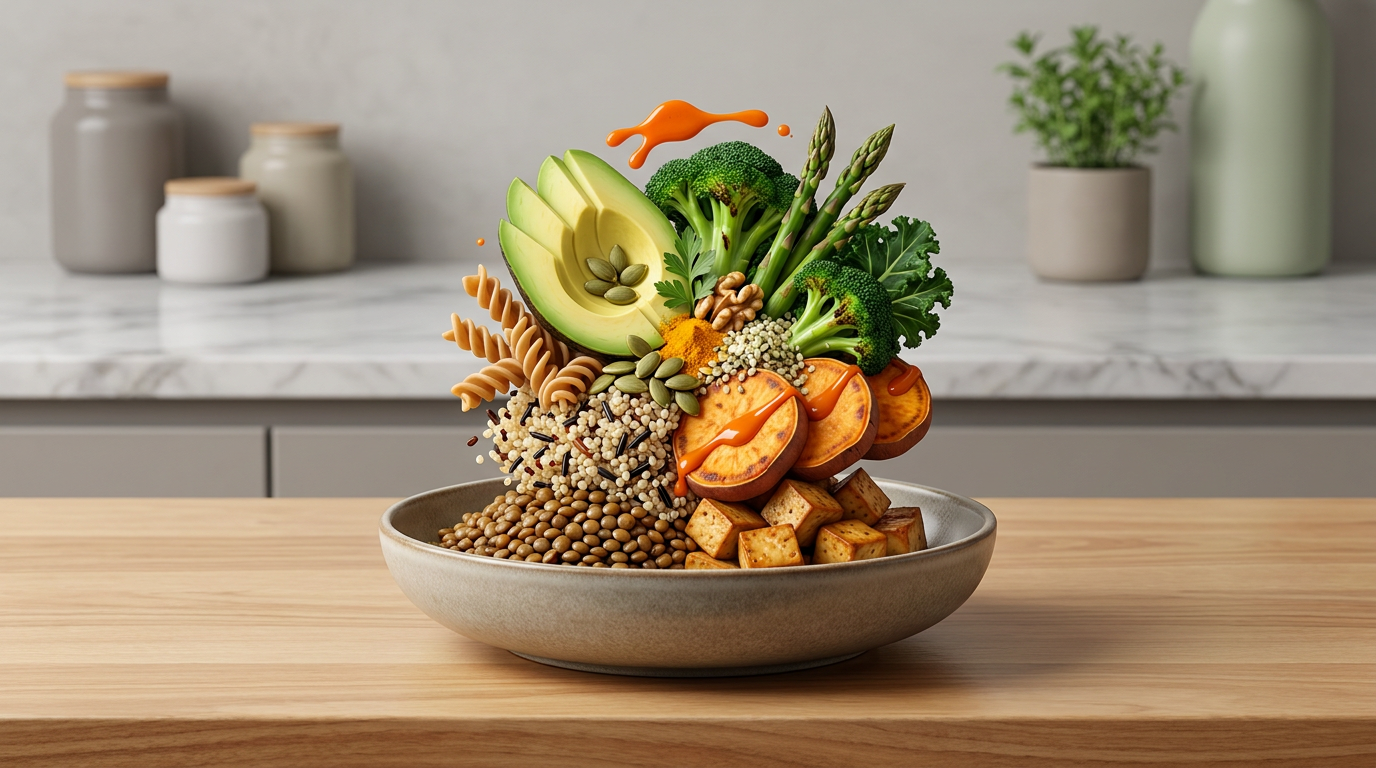
A simple meal formula works better than trying to engineer every plate from scratch. Start with a protein base, add a carbohydrate source, then layer in fat and vegetables. That’s it.
Start with the protein base
Pick one high-protein plant food as the anchor: tempeh, seitan, lentils, chickpeas, or tofu. This sets the floor for your protein count and gives you a reference point for the rest of the meal. A half cup of tempeh at dinner covers 15 grams of protein before you add anything else.
Add a carbohydrate source that doubles as fiber
Quinoa, brown rice, oats, or sweet potato work here. They bring carbs, some fiber, and a small protein contribution. A cup of cooked quinoa adds 39 grams of carbs and 8 grams of protein. That’s meaningful, especially if your protein base was tofu, which runs lighter.
Layer in fat deliberately, not by accident
Fat is where plant-based meals can quietly blow past a calorie target. A quarter cup of walnuts is 190 calories and 18 grams of fat. That’s not a problem if you planned for it. It is a problem if you added it on top of almond butter, avocado, and olive oil in the same meal. Pick one fat source per meal and size it intentionally.
The best plant-based meals aren’t complicated. They’re just built in the right order: protein first, then carbs, then fat, then vegetables to fill the rest of the plate.
Batch legumes and grains to make the week easier
Cooking a large pot of lentils or chickpeas on Sunday takes about 30 minutes and covers protein and carbs for four or five meals. Brown rice or quinoa adds another 20 minutes. With those two things ready, building a macro-balanced plate takes under 10 minutes at any meal. Meal prep for plant-based eating isn’t about cooking elaborate dishes. It’s about having the building blocks ready.
Where plant-based tracking gets difficult
The honest version of this topic includes the friction points. A few come up consistently.
Protein is harder to isolate
When your protein sources also carry 40 grams of carbs, hitting 100 grams of protein without overshooting your carb target takes planning. Combining lower-carb protein sources like tofu and seitan with higher-carb ones like lentils and chickpeas gives you more flexibility. Relying entirely on legumes makes the carb math harder.
- Seitan and tofu are the lowest-carb protein options. Use them when your carb budget is already full.
- Lentils and chickpeas are efficient but bring significant carbs. Count them as a combined protein-and-carb source, not just protein.
- Edamame is a useful middle ground: 17 g protein and 14 g carbs per cup, with a better protein-to-carb ratio than most legumes.
Processed plant foods can undermine the numbers
Plant-based burgers, vegan sausages, and packaged meat alternatives are convenient. The trade-off is obvious. Many are high in sodium (sometimes 600 to 900 mg per serving), contain added oils that push fat counts up, and deliver less fiber than whole food sources. They’re fine occasionally. Leaning on them daily makes it harder to stay within a fat and sodium budget while hitting protein targets.
Tracking mixed dishes takes more effort
A lentil curry with coconut milk, tomatoes, and spices isn’t a single ingredient. Manual tracking means logging every component separately. That’s where tracking tools designed for mixed meals save real time. Photo-based logging handles this better than barcode scanning, which is useless for home-cooked food.
Tracking plant meals manually works fine for simple plates. The moment you’re eating curries, grain bowls, or stews, manual entry becomes the bottleneck.

Tracking tools and how to use them for plant-based eating
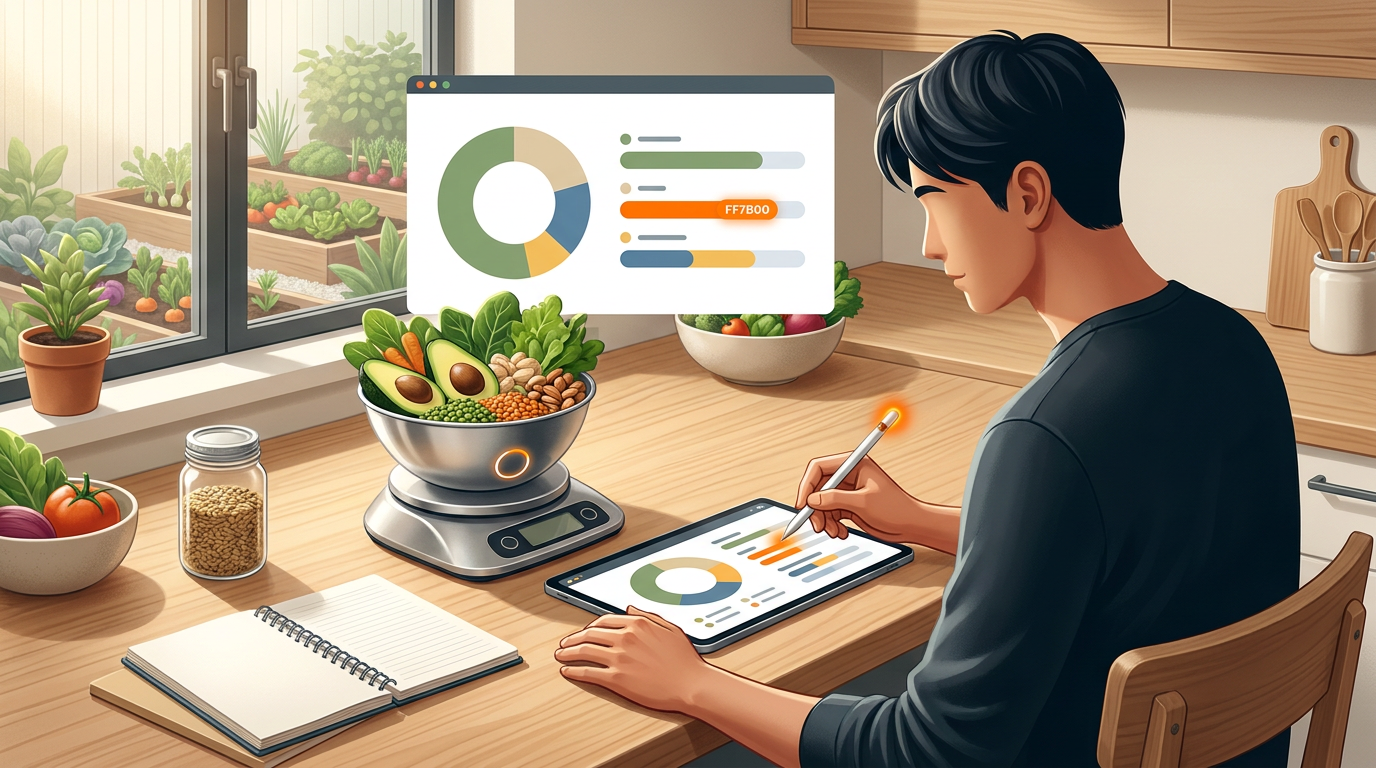
Spreadsheets work, but they don’t scale. Most people abandon them within two weeks because the data entry takes longer than the meal itself. Apps that let you describe a meal in plain language or photograph it cut the friction significantly.
For plant-based eaters specifically, the gap in most trackers is mixed dishes and restaurant meals. A tofu grain bowl from a local spot doesn’t have a barcode. Estimating from components is the realistic approach, and that’s where photo or text-based logging outperforms manual entry.
PlateBird handles this by letting you type what you ate or snap a photo. You describe your lentil bowl, and it calculates protein, carbs, and fat without requiring you to log each ingredient separately. For a grain bowl with five components, that’s a meaningful time difference. No barcode scanning, no manual lookup. Just the result.
The trade-off with any AI-based tool is accuracy on unusual combinations. A straightforward bowl of tempeh and quinoa will be estimated well. A complex recipe with regional spices and a homemade sauce will be less precise. Use it as a working approximation, not a laboratory measurement.
A useful heuristic: the more whole-food and simple your meals, the more accurate any tracking tool will be. Complexity in the recipe creates complexity in the estimate.
Adjusting as you go
No macro target is permanent. The 50/20/30 split you start with is a hypothesis. You test it for two to four weeks, observe how you feel, and adjust.
If you’re reliably hungry by mid-afternoon, protein or fat might be low. If your energy crashes before workouts, carbs might need to come up. If the scale isn’t moving and fat loss is the goal, total calories are the lever, not the macro ratios. Macro ratios for plant-based athletes differ from those for sedentary days, and your targets can flex accordingly.
A few signs your current split needs adjustment:
- Hunger that peaks two hours after a full meal usually points to insufficient protein or fat, not insufficient calories.
- Afternoon energy crashes often track with low-carb mornings, notably on days with a morning workout.
- Slow recovery from exercise can indicate protein is running below what your training demands.
- Feeling heavy and sluggish after meals sometimes means fat is higher than you realize, especially if you’re using a lot of oils and nut butters.
The numbers are a tool, not a verdict. Adjusting your vegan macro targets every few weeks based on real feedback is more useful than trying to get the perfect split on day one.
PlateBird
Try PlateBird to track your plant-based meals without the manual logging. Snap a photo of your grain bowl or type what you ate, and PlateBird calculates your protein, carbs, and fat automatically. Start logging your first plant-based meal today.
Frequently asked questions
How much protein do you actually need on a plant-based diet?
A working range is 0.7 to 1 gram of protein per pound of lean body mass per day. For someone with 130 pounds of lean mass, that’s 91 to 130 grams of protein. If you’re sedentary, the lower end is sufficient. If you train regularly, aim closer to the upper end. Spreading protein across three to four meals helps with absorption.
Is 80/10/10 a reasonable macro split for plant-based eating?
The 80% carb, 10% protein, 10% fat split associated with whole-food plant-based eating works for some people, notably those who are active and eating mostly whole fruits, vegetables, legumes, and grains. The trade-off is that 10% protein on 2,000 calories is only 50 grams, which is below what most active adults need for muscle maintenance. It’s worth testing, but watch protein closely.
What’s the easiest way to hit protein targets without meat?
Build at least two meals around high-protein anchors: seitan (21 g per 3 oz), tempeh (15 g per half cup), or lentils (18 g per cup). Add edamame as a snack at 17 g per cup. Combine tofu with a legume at the same meal to stack protein from two sources. Variety across the day is more effective than relying on a single food.
Do I need to track macros every day on a plant-based diet?
Not necessarily. Tracking for two to four weeks builds a working knowledge of your usual meals. After that, many people shift to periodic check-ins rather than daily logging. The main reason to track steadily is if you have a specific body composition goal or if you’re new enough to plant-based eating that you’re still learning which foods carry which macros.
Are there plant-based macro calculators designed specifically for vegan diets?
The Vegan Gym’s macro calculator accounts for plant-specific protein sources and can generate targets based on your body stats and goal. General calculators work too, but they may not flag the carb load that comes with legume-heavy protein intake, which is where plant-based tracking diverges most from omnivore tracking.