It's a familiar scene. Mid-afternoon hits, your focus drops, and you still have a workout ahead of you. A cold can in the fridge promises energy, appetite control, and maybe even a little help with fat loss. If the label says zero sugar, it can feel like a smart shortcut.
That's why energy drink weight loss is so appealing. The pitch sounds tidy. More energy, a faster metabolism, better workouts, less hunger. But real-life weight loss doesn't happen on a label. It happens in your full day. What you drink, what you eat, how you train, how you sleep, and how your body responds all matter.
As a nutrition educator, I think the best question isn't “Are energy drinks good or bad?” The better question is: What is the net effect for you? That's where many individuals get tripped up. They focus on the buzz and miss the bigger math.
The Alluring Promise of a Boost in a Can
You open the fridge at 3 p.m., see a can labeled “zero sugar” and “thermogenic,” and it feels less like a treat and more like a strategy.
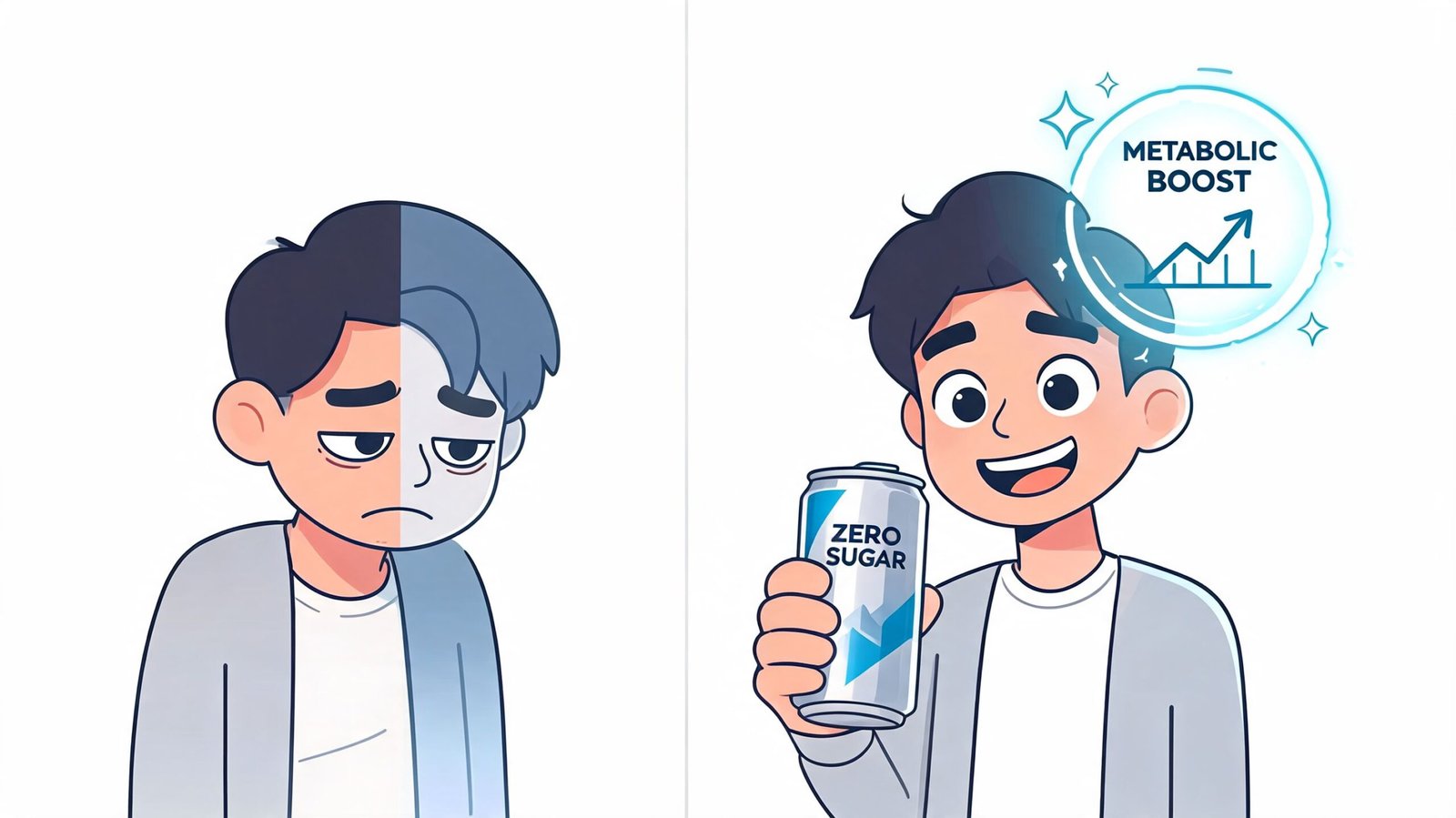
That feeling is powerful. Modern energy drinks are marketed less like convenience-store soda and more like fitness support. The can often signals discipline, performance, and appetite control. For someone trying to lose weight, that branding can make the choice feel almost pre-approved.
The tricky part is that a drink can help with one piece of the day and still hurt the full result. More alertness may help you train. A sweet taste with few calories may help you skip a dessert. The same drink may also lead to shaky hunger cues, poor sleep, or a second can later. Weight loss works like balancing a budget. A product is not helpful or harmful in isolation. It has to be counted inside the whole day.
That is why I encourage clients to stop asking whether an energy drink is “good” for fat loss and start tracking its net effect. A tool like PlateBird can help you log the drink, place it next to your meals and snacks, and see what happened after. Did it replace a 300-calorie coffee shop drink? Did it help you complete a workout? Did it push dinner later and lead to overeating at night? Those patterns matter more than the front label.
A quick note on confusion. People often mix up “feels effective” with “is effective.” Energy drinks are good at changing how your afternoon feels. That does not automatically mean they improve body composition.
Three questions usually clear up the hype:
| Question | Why it matters |
|---|---|
| Is the drink adding calories to your day, or replacing something with more calories? | Weight change depends on total intake, not the product category. |
| Are you using it for a specific purpose, such as before training? | Context helps you judge whether the drink supported performance or just became background stimulation. |
| What happens in the next several hours? | Later hunger, sleep quality, and extra snacking often decide the real outcome. |
If you want a simple backgrounder on caffeine and metabolic rate, coffee-focused explainers can help because they strip away some of the branding and focus on the mechanism.
The main takeaway is simple. An energy drink can be a tool, but tools need a job and a cost check. If you track the can inside your full daily intake instead of judging it by marketing alone, you get a much clearer answer about whether it is working for you.
How Stimulants Can Affect Your Metabolism
A can of energy drink can feel like a switch flipping on. Your mind gets sharper, your body feels more awake, and routine tasks suddenly seem easier to start. That feeling is real. The weight loss promise attached to it is where people get confused.
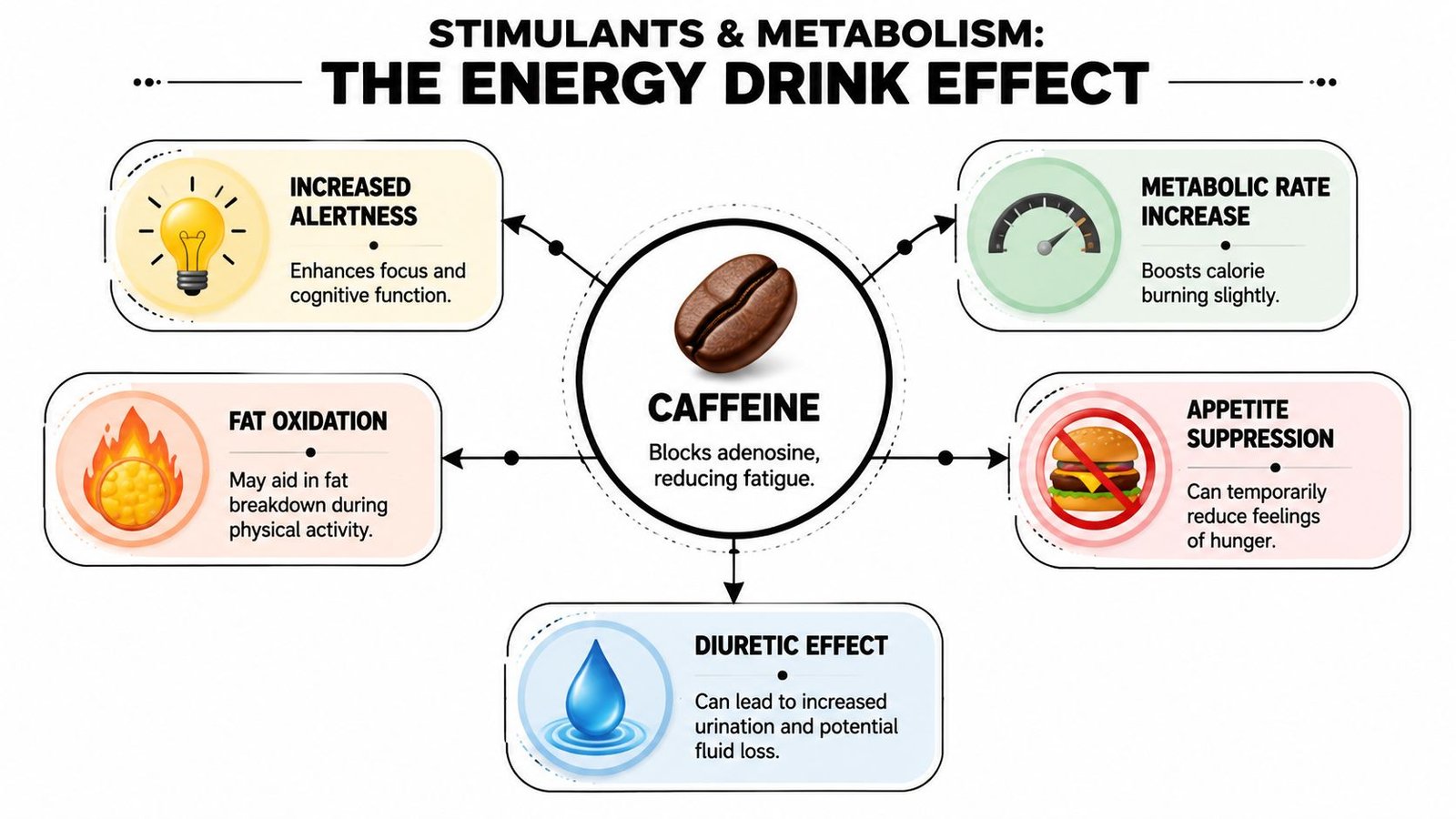
Most of that effect comes from caffeine. Some products also add green tea extract or guarana, which can add to the stimulant load. If you want a simple backgrounder on caffeine and metabolic rate, coffee-focused explainers can help because they strip away the branding and keep the focus on the mechanism.
Your metabolism works like an engine idling all day. Even at rest, your body is using energy to keep your heart beating, lungs working, and cells doing basic maintenance. Stimulants can turn that idle speed up for a while. The effect is usually modest and temporary, not a metabolic shortcut that changes the rules of fat loss.
That short-term rise matters less than people expect.
The bigger misunderstanding is the jump from “my body is using more energy right now” to “I am losing body fat.” Those are related, but they are not the same outcome.
A fireplace analogy makes this easier to see. Stored body fat is the pile of logs. Lipolysis is pulling logs off the stack so they are available. Oxidation is burning those logs for fuel. Fat loss happens only if, over time, you burn more fuel than you bring back in. A stimulant may help pull more logs into reach, especially during exercise, but your total daily intake still decides whether the pile shrinks.
This is why context matters so much. If an energy drink helps you complete a workout, train with better focus, or replace a higher-calorie pick-me-up, it may support your goal. If it makes you jittery, delays meals until you are overly hungry, or becomes an extra item on top of your usual intake, the metabolic bump can get canceled out fast.
A practical way to judge this is to track the drink the same way you would track a snack or coffee order. Log the can, note the caffeine amount, and compare what happened over the next several hours. Did you move more, eat less, or sleep worse later? If you need help decoding the can first, this guide on how to read nutrition labels makes the serving size, caffeine, and calorie details much easier to interpret.
That approach gives you a better answer than marketing claims. Instead of asking whether energy drinks “work,” ask whether this drink improved your day without unintentionally increasing your total intake. That is the frame that matters most for weight loss.
The Calorie Collision of Sugar vs Sugar-Free
A can of energy drink can fit into a weight-loss plan or, imperceptibly, work against it. The difference often starts with one line on the label: sugar.
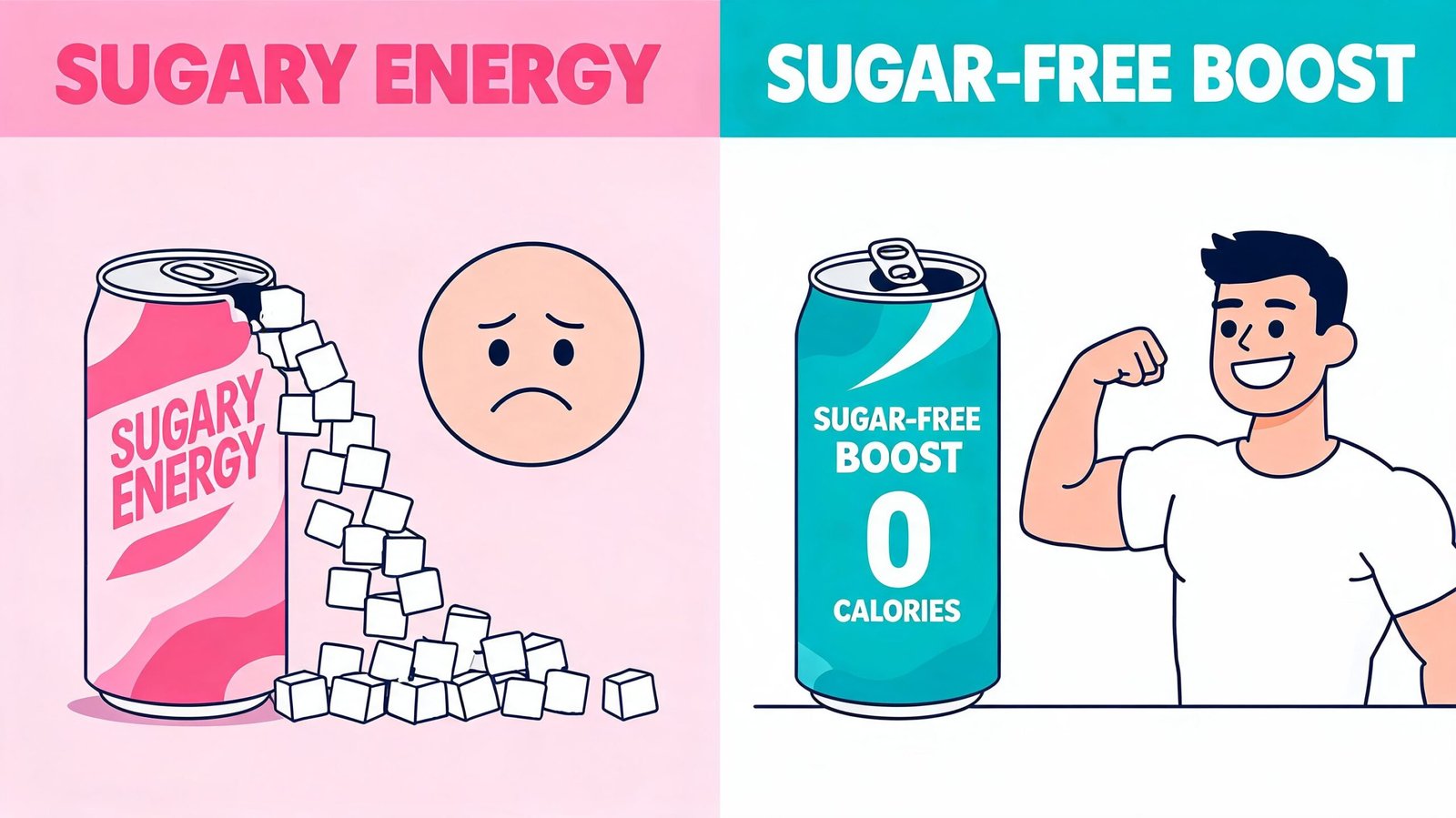
Sugar changes the math fast because liquid calories are easy to miss. You drink them in a few minutes, get little chewing or fullness from them, and may not adjust later meals enough to make up for them. For fat loss, that matters more than the “energy” language on the can.
The sugary can problem
A full-sugar energy drink gives you two things at once: stimulation and a dessert-sized calorie load. That combination can be confusing because the caffeine feels productive while the calories still count exactly the same as calories from soda, juice, or a sweet coffee drink.
A simple way to view it is to treat the can like a snack with caffeine added. If you would log a muffin, flavored latte, or sports drink, log this too. The label is your scoreboard. Learning how to read nutrition labels for calories, serving size, and caffeine makes that much easier.
Here is the tradeoff in plain terms:
| Drink type | What you get | What to watch |
|---|---|---|
| Full-sugar energy drink | Caffeine plus a meaningful calorie and sugar load | The drink can shrink or erase your calorie deficit |
| Zero-sugar energy drink | Caffeine with few or no calories | Calories improve, but your appetite, sleep, and later choices still matter |
Tracking proves more effective than guessing. PlateBird works best when you log the drink in the same place you log meals and snacks, then look at the whole day instead of judging the can in isolation. A sugary drink before training may still fit if you accounted for it. The same drink becomes a problem if it sits on top of your usual intake.
The zero-sugar version still needs context
Sugar-free options remove the biggest obvious obstacle. That is useful. If someone is choosing between two similar cans, the one without sugar usually creates less immediate calorie pressure.
But a zero on the label does not make the can neutral.
Some people do fine with sugar-free drinks. Others notice they get hungrier later, use the drink to push through fatigue instead of eating a real meal, or start chasing another hit of stimulation later in the day. The result is the same lesson from a different direction. You have to measure the net effect, not just the calories in the can.
That is also true for products marketed as thermogenic or fat-burning support. If you want a broader look at side effects and body responses, this guide explains how fat burners affect body alignment.
Same can, different outcome
Two people can choose the same sugar-free energy drink and get opposite results.
One logs it, uses it before a planned workout, eats regular meals, and stays within their daily target. For that person, the drink may be a useful tool.
The other drinks it to skip breakfast, gets overly hungry by late afternoon, eats past fullness at night, and assumes the can was harmless because it had no sugar. For that person, the drink helped create a rebound.
Practical rule: Judge the drink by its full-day effect. Check the calories on the label, log the can, and watch what happens to hunger, meals, and total intake by bedtime.
The short explainer below gives a useful visual overview of the tradeoffs people often overlook.
Beyond the Boost Unseen Risks and Side Effects
The reason I'm cautious with energy drink weight loss advice is simple. The upside is usually short-term. The downside can stretch into the rest of the day.
That starts with the obvious stuff. Some people get jittery, anxious, or irritable. Others feel fine at first and then hit a hard crash. Neither response is great for making steady food choices.
Sleep is part of the fat-loss equation
A lot of people treat sleep and caffeine as separate topics. They aren't. If a drink helps you crush a late workout but then leaves you wide awake at bedtime, your body still has to absorb that cost.
Poor sleep changes hunger, recovery, and stress response. That can show up as stronger cravings, worse impulse control, and more afternoon dependence on yet another can. The cycle can become self-reinforcing fast.
The psychological side needs more attention
There's also a more serious concern that rarely gets enough air time. A 2014 peer-reviewed study found that 68.4% of college students reported lifetime energy drink consumption and 30.2% reported use in the past 30 days, and it also found a significant correlation between energy drink consumption and disordered eating behaviors, including weight loss attempts, diet pill use, and use of vomiting or laxatives for weight management according to the PubMed study abstract.
That doesn't mean every energy drink user has an eating disorder. It does mean the product can sit inside an unhealthy mindset: “I'm too hungry, so I'll suppress it.” “I'm too tired, so I'll override it.” “I don't like my body, so I need a stronger shortcut.”
Those are red flags, not discipline.
If a drink is helping you avoid meals, ignore hunger, or feel less guilty about harsh restriction, the issue isn't the can alone. It's the pattern.
Why some women may feel the downside more
This part deserves plain language. Some women metabolize caffeine more slowly than men, and weight-loss marketing often doesn't account for that. A discussion of how fat burners affect body alignment can be a useful side read because it broadens the conversation beyond “Does it burn calories?” and toward “What does this do to the body over time?”
The concern isn't just feeling wired. Chronic high stimulant use can interact with stress, sleep disruption, and appetite regulation in a way that works against the result people want. If you already run stressed, sleep lightly, or notice a strong hormonal response to caffeine, the drink may be creating more friction than benefit.
A Practical Guide for Energy Drinks and Weight Loss
You finish lunch, feel your energy dip, and crack open a can because it sounds productive. By the end of the day, the primary question is not whether the drink had a metabolism ingredient on the label. The question is whether that can helped your full day work better, or made the math worse.
That is the frame that matters.
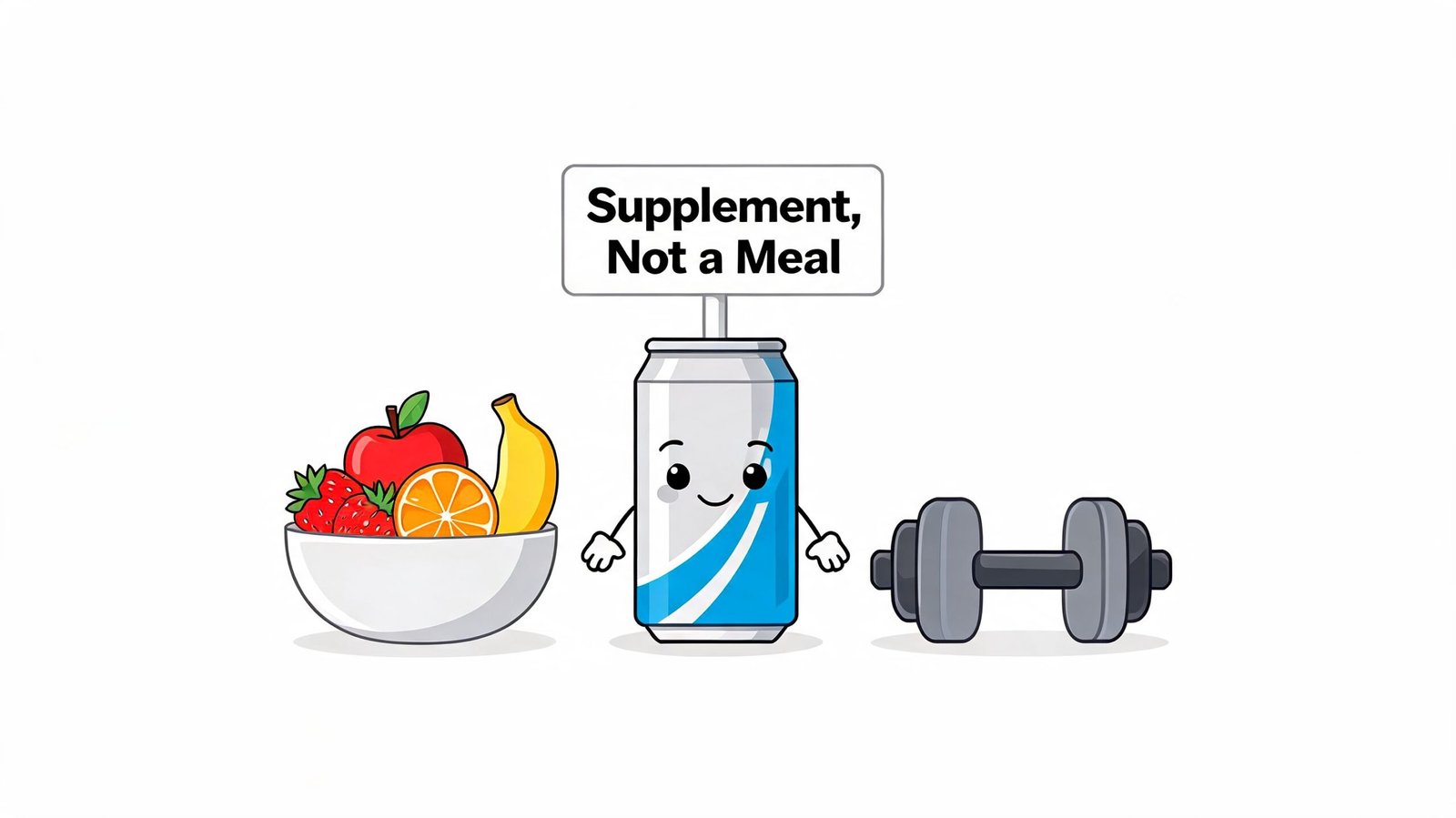
An energy drink can play a small supporting role. It cannot carry a weight-loss plan on its own. Earlier research discussed in this article found a pattern that matters here: these products may be more useful alongside exercise, while using them in isolation does little for body-composition change. So the practical test is simple. Judge the can by its net effect, not by the marketing on the front.
When an energy drink may fit
The best-case use is pretty narrow. You plan to train, you know caffeine sits well with you, the drink is low in calories, and it does not push food out of your day.
A poor use case looks different. You are exhausted, meals have been inconsistent, and the drink becomes a patch over low sleep and low fuel. That is like pressing harder on the gas pedal when the car is low on oil. You may move for a bit, but the system is not running better.
A practical filter looks like this:
- Better fit: Before a planned workout when the drink helps you train harder or stay focused
- Poor fit: As a stand-in for a meal or a way to ignore hunger
- Poor fit: During a random afternoon slump with no exercise ahead
- Usually a bad fit: Late in the day if caffeine tends to affect your sleep
How to tell if it is helping you
Readers often get stuck on this particular point. They want a yes-or-no answer, but the useful answer comes from tracking the full day.
Use a one- to two-week test. Keep everything else as steady as you can. Then compare what happens on days with the drink versus days without it.
Pick the lower-calorie version
If you use one, sugar-free or very low-calorie options usually create less friction in your daily intake.Tie it to a specific job
Use it before training, not as an automatic habit every time energy dips.Track it inside your whole day
Learn what a calorie deficit actually means so you can place the drink inside your total intake instead of treating it like a fat-loss shortcut. A can is one line in the budget, not the whole budget.Check the after-effects
Did you eat more later, sleep worse, or feel extra wired and hungry the next day? Those effects count.Look for the net result
Better training plus normal appetite and normal sleep is very different from better training followed by snacking, cravings, and a rough night.
Here is a simple way to read your results:
| If this happens | What it likely means |
|---|---|
| Better workout, normal hunger, normal sleep | The drink may have a useful place in your routine |
| Better workout, but higher evening intake | The calories you saved or burned may be getting paid back later |
| No workout, more jitters, worse sleep | The drink is probably creating more problems than benefits |
| Daily reliance just to function | Recovery, food, stress, or sleep likely need attention first |
Keep the boundaries clear
Earlier in the article, the caffeine research noted a common upper boundary for daily intake. That matters because energy drinks rarely exist alone. Coffee, pre-workout, soda, and tea can stack quickly, and many people underestimate the total.
That is why I tell clients to track patterns, not products. PlateBird can help you log the can next to your meals and snacks so you can see whether it supports your calorie target or nudges you away from it. That kind of context is far more useful than asking whether energy drinks are good or bad in the abstract.
If you want broader habit-based advice, this safe weight management guide is a helpful complement.
A useful energy drink fades into the background. It helps a workout, stays within your daily intake, and does not boomerang back as poor sleep, extra hunger, or dependence.
Smarter Fuel for Sustainable Energy
You wake up tired, grab an energy drink to get through the morning, and feel better for a while. Then the same pattern repeats the next day. For weight loss, that is usually a sign to look past the can and examine the routine underneath it.
A steadier plan starts with inputs your body can use predictably. Regular meals, enough fluids, consistent sleep, black coffee, and green tea usually create fewer side effects and less rebound hunger than highly stimulating drinks with long ingredient lists. Black coffee is a simple example. As noted earlier, it can give you alertness without the sugar load that turns a quick boost into extra daily calories.
Food matters here too. Caffeine can make you feel switched on, but it does not replace fuel. Carbohydrates refill the tank, protein helps hold you over, and balanced meals make your energy curve less jagged. If you want practical ideas, this list of foods for steady energy is a useful place to start.
The key is context. One can does not determine whether your plan is working. Your full day does.
That is why tracking beats guessing. If an energy drink helps you train, keeps your appetite stable, and still fits your calorie target, it may be workable for you. If it pushes you to skip meals, snack later, sleep poorly, or rely on caffeine just to feel normal, the net effect is probably negative even if the label looks diet-friendly.
For broader habit support, this safe weight management guide brings the focus back to repeatable basics.
If you want to see whether an energy drink is helping or hurting your results, PlateBird makes that easier to spot. You can log meals quickly, keep an eye on calories and macros, and review the whole day instead of judging one can in isolation. That gives you a clearer answer than marketing claims ever will.