- The fastest answer: what to eat before morning HIIT
- Best snack options by time before your workout
- How much to eat without feeling heavy
- What to avoid before HIIT if you get stomach issues
- Hydration and electrolytes before an early class
- A simple pre-HIIT snack checklist you can use all week
- Common mistakes that make morning HIIT feel worse
- Snack comparison: quick reference by timing window
- Frequently asked questions
Pre-Workout Snacks for Morning HIIT Sessions: Timing Guide
You set your alarm for 5:45 a.m., lay out your workout clothes the night before, and then lie awake wondering whether you should eat something before your 6:30 HIIT class. Pre-workout snacks for morning HIIT sessions are one of those topics where everyone has an opinion but nobody seems to agree. Banana? Oats? Nothing at all?
The confusion usually hits hardest when you have less than 60 minutes between waking up and warming up. Your stomach is not fully awake. Your appetite is low. But you know that going in flat will cost you in round three of burpees.
The answer is simpler than most fitness sites make it. It comes down to three things: how much time you have, what your stomach can handle, and how intense the session is going to be. This article works through each of those so you can make a fast decision on any given morning.
The fastest answer: what to eat before morning HIIT
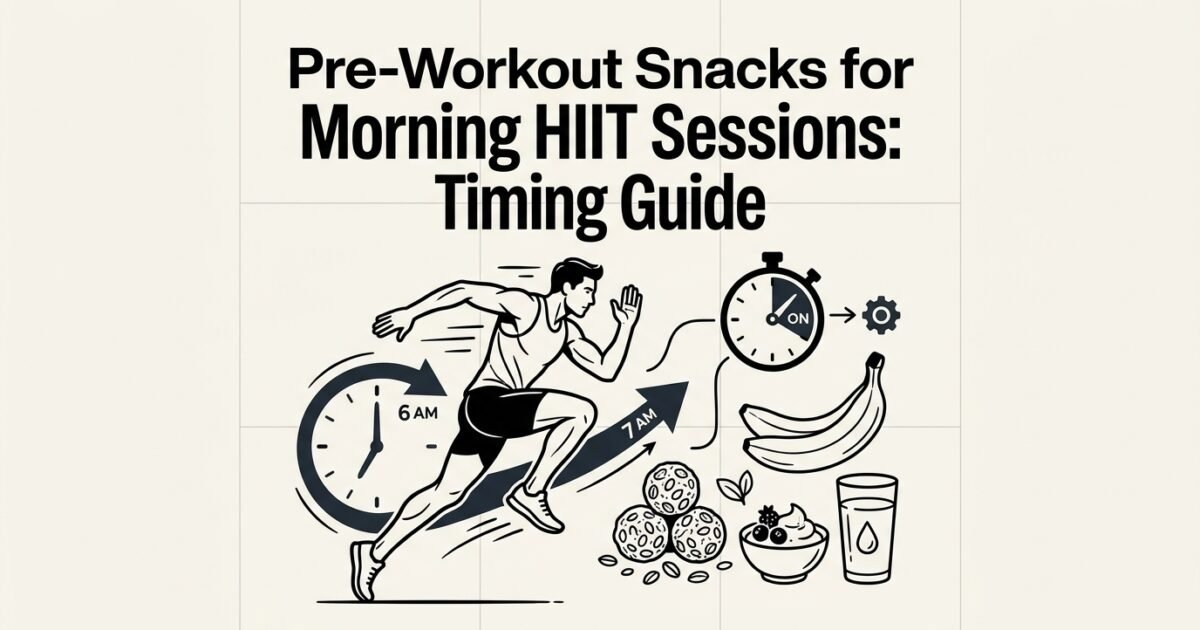
If you have 15 to 30 minutes before class, keep it small and carb-forward. Think half a banana, a few rice cakes, or a small handful of dried fruit. Fast-digesting carbohydrates are your best option here because they convert to usable energy quickly and sit lightly in your stomach.
If you have 45 to 60 minutes, you have slightly more flexibility. A whole banana with a tablespoon of peanut butter, a small bowl of oats, or a slice of toast with honey all work well. You can add a modest amount of protein without it slowing you down too much.
If you have 90 minutes or more, a fuller balanced meal makes sense. Scrambled eggs on toast, Greek yogurt with fruit, or overnight oats with a scoop of protein powder all give you sustained energy without the risk of feeling heavy mid-session.
The further out your workout, the more flexibility you have with protein and fat. The closer it gets, the simpler and more carb-focused your snack should be.
Heavy fat and high fiber are the two ingredients most likely to cause discomfort during HIIT. They slow gastric emptying, which means food stays in your stomach longer. That is fine for a slow morning walk. Less fine when you are doing jump squats.
Best snack options by time before your workout
15 to 30 minutes out: grab-and-go only
At this range, your only real goal is a small carbohydrate hit. Aim for around 100 to 150 calories and keep fat under 5 g. Options that work well:
- Half a medium banana delivers roughly 13 g of fast-digesting carbohydrates and takes zero prep time.
- Four rice cakes give you about 60 calories and digest quickly without any heaviness.
- A small handful of raisins, around 30 g, provides about 22 g of carbs and fits in your gym bag.
- A single medjool date is around 66 calories and gives you a quick sugar spike without much fiber load.
These are not meals. They are a fuel signal. The point is to prevent your blood sugar from bottoming out mid-session, not to replicate breakfast.
30 to 60 minutes out: small snack with optional protein
You have enough time for something slightly more substantial. According to Traverse Fitness, a carbohydrate-focused snack in this window helps sustain energy through the full session without sitting heavily. Good choices include:
- A whole banana with one tablespoon of almond butter adds around 200 calories and about 4 g of protein.
- One slice of white or sourdough toast with a thin layer of honey gives you roughly 130 calories and digests faster than whole grain.
- A small pot of low-fat Greek yogurt, around 100 g, delivers about 10 g of protein with minimal fat.
- Half a cup of instant oats made with water comes in around 150 calories and gives you steady carbohydrates over the next 45 minutes.
White or sourdough bread digests faster than whole grain here. That is not a general nutrition recommendation. It is a timing-specific one.
90 minutes or more: a proper small meal
With 90 minutes on the clock, you can eat something that resembles an actual breakfast. David Lloyd’s early-morning gym guide suggests pairing a carbohydrate base with a moderate protein source and keeping fat modest. Options that fit:
- Two scrambled eggs on one slice of toast gives you around 250 calories and 16 g of protein.
- Greek yogurt with half a cup of berries and a drizzle of honey sits around 200 calories and is easy to prepare the night before.
- Overnight oats with a half scoop of protein powder comes in around 300 to 350 calories depending on toppings and keeps you fueled through a longer or more intense class.
In my experience, the 90-minute window is where many people over-eat. A 350-calorie breakfast is enough. You do not need to front-load the whole day before a 45-minute session.
How much to eat without feeling heavy
Portion size matters more than food quality here
Even a nutritionally excellent food can ruin a HIIT session if the portion is too large. A full cup of oats with milk, nuts, and fruit is a solid breakfast. It is also around 500 to 600 calories and can feel like a brick if you eat it 20 minutes before sprints.
A useful heuristic: the closer your workout, the smaller the snack. Within 30 minutes, keep it under 150 calories. Within 60 minutes, stay under 250 calories. At 90 minutes or more, 300 to 400 calories is reasonable for most people.
Carbs first, protein second, fat last
For pre-HIIT timing, carbohydrates are your priority. They digest fastest and convert to energy most efficiently during high-intensity work. Protein is useful when you have more time, especially if you are also trying to preserve muscle. Fat is the slowest-digesting macronutrient and should be minimal when time is short.
This does not mean fat is bad. It means timing matters. A tablespoon of peanut butter at 60 minutes out is fine. Three tablespoons at 20 minutes out is a gamble.
What to avoid before HIIT if you get stomach issues
The usual suspects
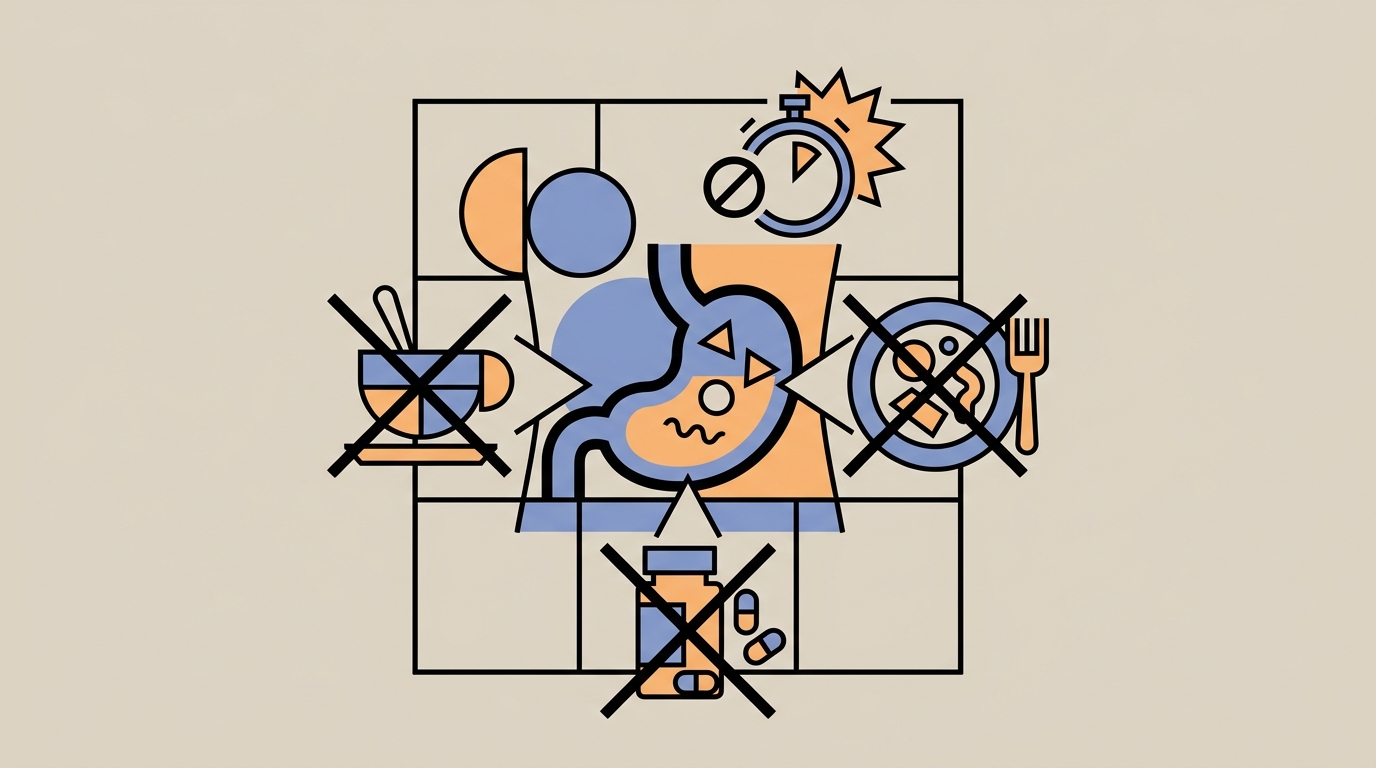
If you have ever felt nauseous or bloated mid-HIIT, the culprit is usually one of these. High-fiber foods like bran cereals, whole grain wraps, or raw vegetables slow digestion and can cause cramping during intense movement. High-fat foods like full-fat yogurt, avocado toast with a lot of avocado, or thick nut-butter portions do the same.
Very large protein portions, say 30 g or more within an hour of training, can also be hard to process quickly. Healthline’s pre-workout nutrition guidance notes that protein and fat both slow gastric emptying, which is the opposite of what you want right before HIIT.
Smoothies are not always the answer
A thick smoothie with protein powder, nut butter, oats, and frozen fruit sounds like a perfect pre-workout. It can be, at 90 minutes out. At 20 minutes out, it is often too much volume and too slow to digest. The blending does not change the macronutrient composition. You are still consuming significant fat and fiber.
If you love a smoothie before training, keep it simple: frozen banana, a splash of milk or water, and maybe a small scoop of protein. Under 300 calories, low fat, moderate fiber. That version works within 45 to 60 minutes for most people.
Test new foods on easy days first
Never try an unfamiliar pre-workout snack before a race, a hard training block, or a class you are paying for. Try it before a lighter session first. Digestion is individual. What works for your training partner may not work for you. BUBS Naturals’ pre-HIIT guide makes this point clearly: individual tolerance varies, and the only way to know is to test gradually.
Hydration and electrolytes before an early class
Start hydrating before you feel thirsty
You wake up mildly dehydrated every morning. Six to eight hours without fluid means your body starts the day in a small deficit. Drinking 400 to 500 ml of water within the first 20 to 30 minutes after waking gives your system a chance to rehydrate before you ask it to work hard.
Dehydration makes HIIT feel harder than it should. Even mild dehydration of around 2% of body weight can reduce performance noticeably. For a 70 kg person, that is only about 1.4 kg of fluid loss. You can hit that before you even leave the house on a warm morning.
When water is enough and when it is not
For sessions under 60 minutes in a cool environment, water is almost always sufficient. For sessions over 60 minutes, or any class where you sweat heavily, electrolytes become more relevant. Sodium, potassium, and magnesium are the main ones lost in sweat.
A simple option is adding a pinch of sea salt to your water bottle, or using a low-sugar electrolyte tablet. Crunch’s HIIT nutrition guide recommends starting hydration well before the session begins rather than trying to catch up during warm-up. That is the part most people skip.
Coffee counts toward your fluid intake, but it also has a mild diuretic effect. If coffee is your only morning drink before HIIT, add a glass of water alongside it.
A simple pre-HIIT snack checklist you can use all week
Build from a carb base
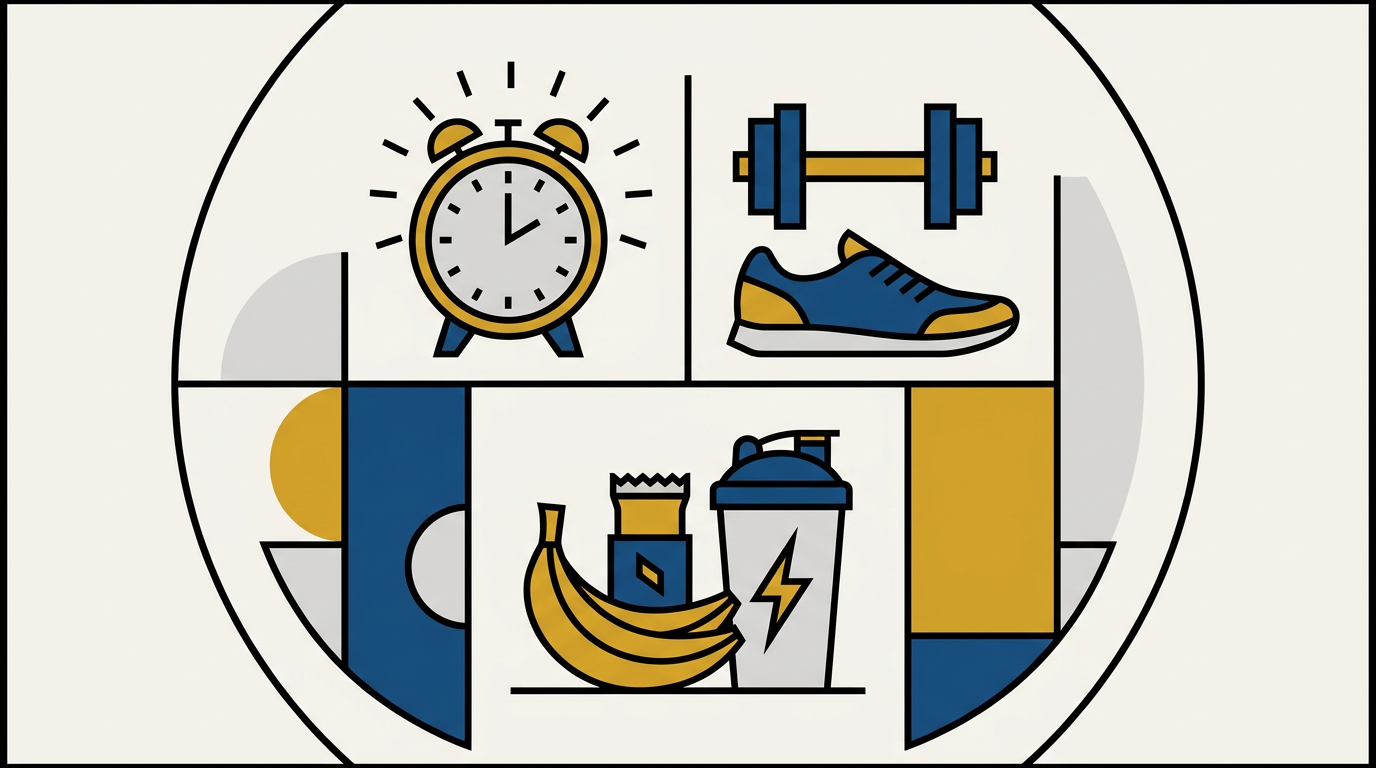
The simplest framework: pick one carb base, add a small protein if you have time, skip heavy fat. That covers most mornings without requiring any planning. Learn more in our article on Plant-Based Macros Guide: Ratios, Foods, and Ea….
- Carb base options: banana, rice cakes, oats, white toast, dates, a small bowl of cereal with low-fat milk.
- Optional protein add-ons: a small pot of Greek yogurt, a boiled egg, a thin spread of cottage cheese, or a half scoop of protein powder in water.
- Skip or minimize: nut butters in large amounts, full-fat dairy, high-fiber cereals, raw vegetables.
Reduce decision fatigue with a short rotation
Pick two or three snacks that work for you and rotate them. Decision fatigue at 5:50 a.m. is real. If you have to think too hard about what to eat, you will either skip it or grab something that does not serve the session.
A pattern that works well: banana on short-time mornings, toast with honey or yogurt on medium-time mornings, and overnight oats or eggs on longer-runway mornings. Three options. One decision based on how much time you have. Done.
For more ideas on snacks that are both macro-friendly and easy to prepare, the Macro Snack Ideas for Busy Pros: High-Protein, Easy Track guide covers high-protein options that fit busy schedules.
Common mistakes that make morning HIIT feel worse
Skipping food entirely on hard days
Fasted HIIT works for some people on low-intensity days. On hard days, skipping food entirely often means hitting a wall at the 20 to 25 minute mark. Your glycogen stores are already partially depleted from overnight fasting. Asking your body to sustain high-intensity intervals without any carbohydrate top-up is a gamble that usually pays off in fatigue, not performance.
If you genuinely cannot stomach food before early training, even half a banana or a few dates is better than nothing. The goal is a small glycogen signal, not a full meal.
Eating too much fiber or fat too close to class
This is the most common mistake. Avocado toast, a bran muffin, a large smoothie with nut butter, or a bowl of high-fiber granola all sound like healthy choices. They are, in most contexts. Before HIIT with 20 minutes on the clock, they are likely to slow you down or cause discomfort. Food Network’s HIIT fueling guide flags fat and fiber as the two macronutrients most likely to cause GI issues during intense exercise.
Trying something new right before a hard session
A new protein bar, a different brand of oats, a pre-workout supplement you have not used before. Any of these can cause unexpected GI distress. Save experiments for easy training days. Before a tough class or a session you care about, stick with what you know works for your stomach.
The snack that performs best is the one your stomach already knows. Novelty is fine in training. It is a risk in nutrition timing.
Snack comparison: quick reference by timing window
| Time before HIIT | Snack example | Approx. calories | Key benefit | Watch out for |
|---|---|---|---|---|
| 15 to 30 min | Half banana or 4 rice cakes | 60 to 100 kcal | Fast-digesting carbs, minimal GI load | Adding fat or dairy |
| 30 to 60 min | Toast with honey or small Greek yogurt | 130 to 200 kcal | Carbs plus light protein | Whole grain bread, large portions |
| 60 to 90 min | Banana with 1 tbsp peanut butter | 190 to 220 kcal | Sustained energy, some protein and fat | Eating too much fat if stomach is sensitive |
| 90 min or more | Overnight oats or eggs on toast | 280 to 380 kcal | Full fuel with balanced macros | Overeating, high-fat additions |
Frequently asked questions
Is a banana enough before a HIIT workout?
For sessions within 30 minutes of waking, yes. A medium banana provides around 27 g of carbohydrates and about 105 calories, which is enough to prevent a blood sugar dip without overloading your stomach. For longer or more intense sessions with more time available, pair it with a small protein source for better sustained energy.
Can coffee replace food before an early morning HIIT class?
Coffee can sharpen focus and reduce perceived effort during training, but it does not replace carbohydrates as a fuel source. If you train fasted with only caffeine, you may perform well on lighter days but struggle on harder ones. Use coffee as a complement to a small snack, not a substitute for one. Add water alongside it to offset the mild diuretic effect.
Does protein matter more than carbs before HIIT?
Carbohydrates are the priority for HIIT specifically. High-intensity interval training runs primarily on glycolytic pathways, meaning it burns carbohydrates fast. Protein matters more for recovery after the session. A small amount of protein in your pre-workout snack is useful, especially with more time available, but it should not come at the expense of carbohydrates. Traverse Fitness makes this distinction clearly in their HIIT nutrition breakdown.
What if I feel sick when I eat before morning exercise?
Start smaller and simpler. Many people who feel nauseous before early training are eating too much, too close to the session, or choosing foods that are too heavy. Try half a banana or three to four dates 20 minutes before class. If even that causes discomfort, experiment with eating nothing and focusing on hydration, then gradually introduce small carbohydrates over several weeks as your body adjusts to the routine.
Should I eat before a 6 a.m. HIIT class or train fasted?
It depends on session intensity and personal tolerance. Fasted training can work for moderate-intensity sessions. For hard HIIT with sprint intervals, jump work, or heavy conditioning, a small carbohydrate snack tends to produce better output and less mid-session fatigue. Healthline’s pre-workout guide notes that fasted training is more individual than the debate suggests. Test both approaches on similar sessions and compare how you feel at the 25-minute mark.
Knowing what to eat is only half the equation. The other half is knowing what you actually ate, how it fit your macros, and whether your fuel strategy is working over time. If you want that picture without building a spreadsheet at 6 a.m., try PlateBird free. Snap a photo of your pre-HIIT snack or type it in plain language, and your calories, protein, carbs, and fat are logged in seconds. That makes it easy to see patterns across your training week and adjust your morning routine based on what the numbers actually show. For a deeper dive, see Best AI Nutrition Tracking Apps: Photo-Log Macr….