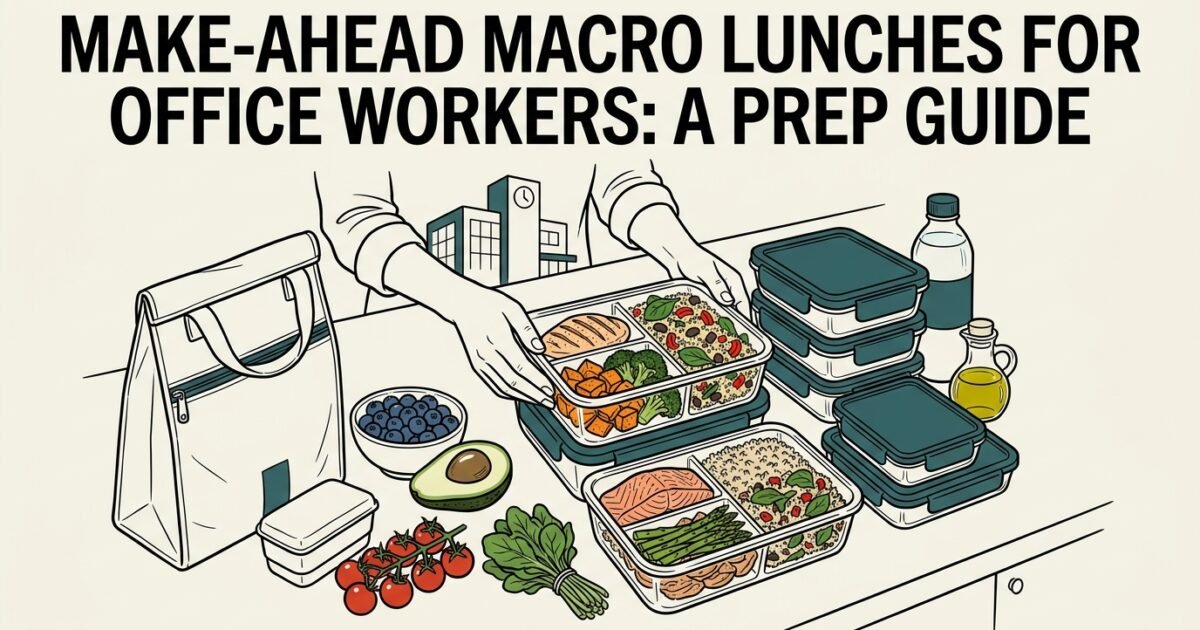
- Why office lunches are the hardest meal to keep on track
- The macro formula that works best for a workday lunch
- Best make-ahead lunch formats for the office
- High-protein ingredients that make prep easier all week
- A 5-day office lunch prep plan that saves time
- How to pack lunches so they actually taste good at noon
- Sample macro-friendly office lunches for different workdays
- Common macro lunch mistakes and how to fix them
- What to eat when lunch needs to be quick, flexible, and trackable
- Frequently Asked Questions
Make-Ahead Macro Lunches for Office Workers: A Prep Guide
You packed a solid lunch on Monday. By Wednesday, you grabbed a $14 wrap from the café downstairs because the fridge smelled weird and you had back-to-back calls until 1 p.m. Make-ahead macro lunches for office workers sound straightforward in theory, but the gap between Sunday prep and Thursday’s actual desk situation is where most plans fall apart.
The problem is not motivation. It is the small friction points: soggy containers, lunches that taste flat by day three, and no clear system for choosing what to pack based on how your day actually runs.
This guide fixes that. Not with a rigid meal plan, but with a repeatable framework that travels well, holds up in a fridge for four days, and keeps your protein, carbs, and fat in a range that makes afternoon meetings feel manageable.
Why office lunches are the hardest meal to keep on track
The workday creates specific failure points
Breakfast gets skipped. Lunch gets pushed to 2 p.m. The vending machine fills the gap. By the time dinner arrives, you are eating more than you planned because lunch never happened properly.
This is not a willpower problem. It is a logistics problem. The office environment removes the cues that make eating intentional: no kitchen, limited time, no real pause in the day to think about what you want.
A packed lunch removes the decision entirely. You already chose. That alone makes it easier to stay consistent.
What a good office lunch actually needs to do
Three things matter: it travels without becoming a mess, it stays safe and appetizing for at least three to four days in a fridge, and it keeps you full long enough to get through the afternoon without a second trip to the kitchen.
Recipe lists cover the first point. Few cover the second and third in a way that accounts for a real office schedule.
A lunch that travels well but tastes like cardboard by Tuesday is not a system. It is a one-day solution wearing a meal-prep label.
The macro formula that works best for a workday lunch
Build around protein first
A useful starting point is 30 to 40 grams of protein per lunch. That range keeps you full without making the meal feel heavy. Protein also slows digestion, which smooths out the energy curve that otherwise drops sharply around 3 p.m.
Carb-heavy desk lunches, like a large sandwich or pasta bowl, tend to spike and then crash. Not always, but often enough that it is worth noticing. If your afternoon is meeting-heavy, a protein-forward lunch is usually the better call.
The simple formula
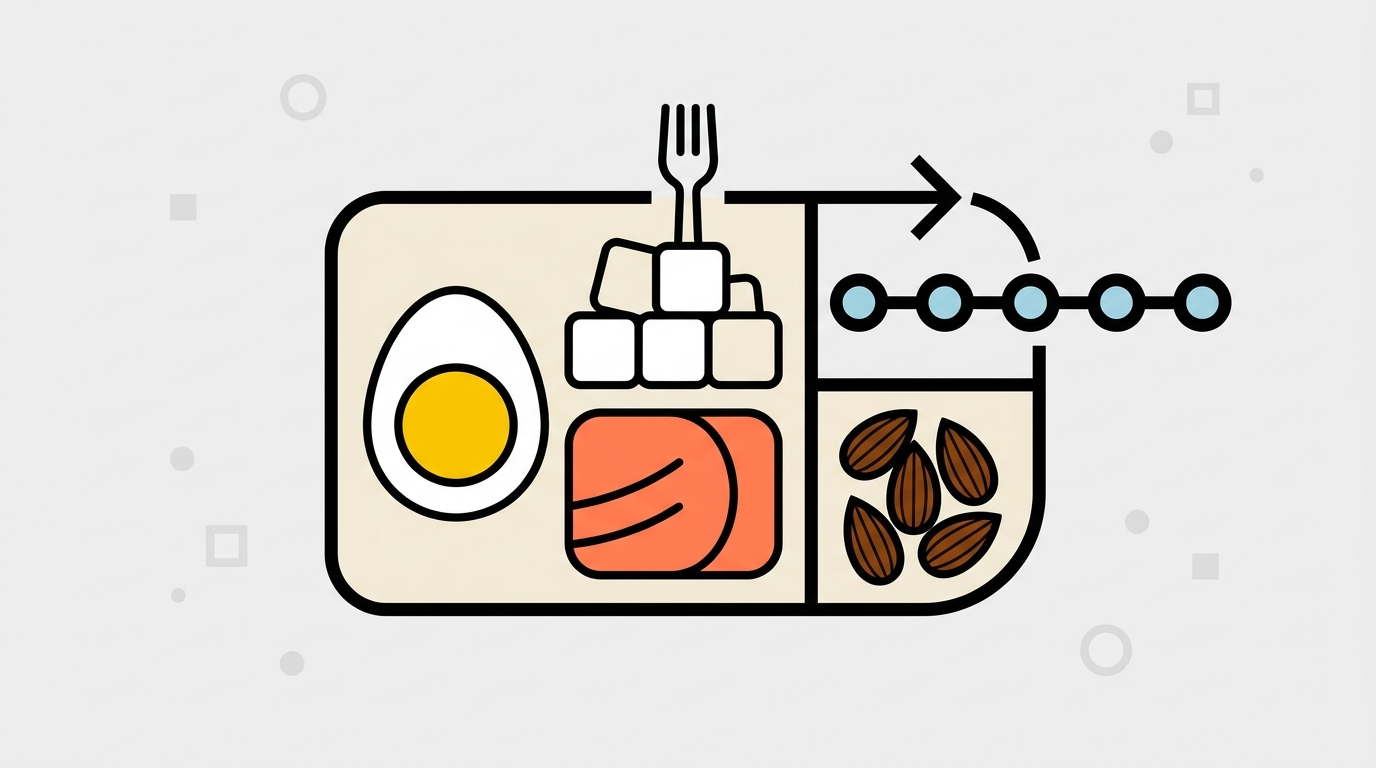
Think of every lunch as four components: a protein base, a carb source, a fat source, and a volume builder. The volume builder is usually a vegetable or legume that adds fiber and makes the meal feel larger without adding calories.
- Protein base (30-40 g): chicken breast, canned tuna, hard-boiled eggs, Greek yogurt, tempeh, or lean ground turkey.
- Carb source (30-50 g): brown rice, quinoa, whole-grain wraps, roasted sweet potato, or chickpeas.
- Fat source (10-20 g): olive oil, avocado, cheese, nuts, or tahini.
- Volume builder: roasted broccoli, cucumber, shredded cabbage, spinach, or black beans.
A lunch built this way typically lands between 450 and 600 calories, which is a reasonable range for desk-based workdays. Adjust the carb portion up or down depending on whether you have a gym session before or after work.
Lower-carb days versus balanced days
On days with long meetings and minimal movement, cutting the grain portion and doubling the vegetable base keeps total calories lower without sacrificing fullness. On days with a morning workout or walking commute, keeping the 40 to 50 grams of carbs helps with recovery and focus.
If you cannot predict your schedule, build the balanced version by default and adjust portions at the table rather than trying to prep two different lunches.
Best make-ahead lunch formats for the office
Cold formats versus reheated formats
Some lunches are genuinely better cold. Others suffer badly without a microwave. Knowing which is which saves you from eating a congealed grain bowl at your desk because the office kitchen was occupied.
| Format | Best eaten | Prep time | Mess risk | Reheats well |
|---|---|---|---|---|
| Grain bowl | Warm | 20-30 min | Low | Yes |
| Mason jar salad | Cold | 10-15 min | Low | No |
| Wrap | Cold or room temp | 10 min | Medium | No |
| Bento box | Cold | 15-20 min | Very low | Partial |
| Soup or stew | Warm | 30-45 min | Low | Yes |
Choosing based on your office setup
No microwave access means cold formats are your only option. Mason jar salads and bento-style boxes work well here because they stay crisp and require zero prep at the office. Wraps are portable but can get soggy if the filling is wet, so they need sauce stored separately.
If you have a microwave, grain bowls and protein-heavy stews are worth the extra prep time on Sunday. They tend to taste better reheated than cold formats do at room temperature.
High-protein ingredients that make prep easier all week
Protein sources that hold up in the fridge
Not all proteins store equally well. Chicken breast stays good for four days when cooked and refrigerated. Canned tuna needs no cooking at all. Hard-boiled eggs last five days in the shell. Greek yogurt and cottage cheese work well as cold protein bases and require zero prep beyond portioning.
Tofu and tempeh both absorb marinades well and hold up in grain bowls for three to four days. Lean ground turkey, cooked in a batch on Sunday, works across multiple formats throughout the week.
Volume builders that prevent lunch fatigue
Roasted broccoli, shredded cabbage, sliced cucumber, and cherry tomatoes all hold their texture well after a day or two in the fridge. Spinach wilts fast once dressed, so keep it separate until you are ready to eat.
- Black beans add roughly 7 grams of fiber and 8 grams of protein per half-cup serving, which makes them one of the most efficient volume builders available.
- Roasted sweet potato adds natural sweetness and around 20 grams of carbs per half-cup, which helps fill the carb slot without refined grains.
- Shredded cabbage holds its crunch for three to four days, even when lightly dressed, making it a reliable base for cold lunches.
Flavor builders that stop you from abandoning prep by Wednesday
Bland food is the real enemy of consistent meal prep. A batch of tahini dressing, a jar of pickled red onion, or a container of chili crisp can completely change how a grain bowl tastes on day three.
Acids like lemon juice, rice vinegar, and hot sauce brighten food that has been sitting in a container. Store sauces separately and add them at the office. That one habit makes a bigger difference than switching recipes every week.

A 5-day office lunch prep plan that saves time
Break prep into three blocks
The most efficient approach separates cooking, assembly, and packing into distinct steps rather than trying to do everything at once. In practice, this means one 45-minute cooking block, one 15-minute assembly block, and five minutes of packing per day.
- Cooking block (Sunday, 45 minutes): roast two proteins, cook one grain, roast two vegetables, and hard-boil six eggs.
- Assembly block (Sunday, 15 minutes): portion grains and proteins into containers, prep sauces, and wash and dry salad greens.
- Daily packing (2-5 minutes): pull components from the fridge, combine, and go.
Batch separately, combine daily
Storing proteins, grains, and vegetables in separate containers rather than pre-assembled meals keeps everything fresher. A pre-built grain bowl starts to get watery by day two. The same components stored separately stay good for four to five days.
Rotating two or three templates across the week reduces decision fatigue without requiring you to prep five completely different lunches. Monday and Thursday can be the same bowl. Tuesday and Friday can use the same wrap filling. Wednesday gets whatever needs to be used up.
In my experience, the prep sessions that fail are the ones that try to build five unique lunches. Two templates rotated across five days is easier to sustain than five different recipes eaten once.
How to pack lunches so they actually taste good at noon
Container choice matters more than expected
Glass containers with locking lids prevent leaks and do not absorb odors the way plastic does after a few weeks. Compartmentalized bento boxes keep wet and dry components separated without any extra effort. A small leak-proof sauce container, around 2 ounces, is worth buying if you prep salads regularly.
Moisture control and sauce placement
Sauce at the bottom of a mason jar salad is the classic approach: dressing sits under the greens, which stay dry until you shake the jar. For grain bowls, keep any liquid-heavy toppings like salsa or yogurt-based sauces in a separate container and add them at the office.
Let cooked food cool completely before sealing containers. Sealing warm food traps steam, which makes everything wet and accelerates spoilage. Fifteen minutes on the counter before refrigerating is enough.
Keeping crunchy toppings like nuts, seeds, and croutons in a small bag and adding them at lunch prevents them from going soft. It takes ten seconds and makes a noticeable difference in how satisfying the meal feels.
Sample macro-friendly office lunches for different workdays
No-microwave day: turkey and avocado bento box
Sliced turkey breast (around 100 grams), half an avocado, a handful of cherry tomatoes, a small portion of hummus, and a few whole-grain crackers. No heat required, no mess, and the components stay fresh in a compartmentalized box. Roughly 35 grams of protein and 420 calories.
High-meeting day: Greek yogurt protein bowl
Plain Greek yogurt (200 grams), a scoop of nut butter, sliced banana, and a small handful of granola stored separately. Eat it at your desk in under five minutes. Around 30 grams of protein and 400 calories. No utensils beyond a spoon. Related reading: Macro Snack Ideas for Busy Pros: High-Protein, ….
Active workday: chicken and quinoa grain bowl
Batch-cooked chicken breast (150 grams), half a cup of quinoa, roasted broccoli, and a tahini-lemon dressing. Reheat the chicken and quinoa, add the dressing cold. This format hits roughly 40 grams of protein, 45 grams of carbs, and around 550 calories, which works well after a morning workout.
Low-carb day: tuna and cabbage salad
Canned tuna (one 140-gram can), shredded cabbage, sliced cucumber, a drizzle of olive oil, and a squeeze of lemon. Under 10 grams of net carbs, around 35 grams of protein, and 300 calories. Stays crisp in the fridge for two days without dressing.
Batch-prep day three: tempeh stir-fry bowl
Marinated tempeh (100 grams), brown rice (half a cup), stir-fried peppers and snap peas, and a chili-garlic sauce stored separately. Tempeh holds its texture better than tofu after reheating, which makes it a reliable protein for day three or four of the week.
Common macro lunch mistakes and how to fix them
Too little protein, too much filler
A salad with two ounces of chicken and a handful of croutons might feel like a meal, but it is unlikely to carry you past 2 p.m. If you find yourself hungry an hour after lunch, the protein portion is almost always the problem. Aim for at least 30 grams and build from there.
Lunches that get watery after refrigeration
Cucumbers, tomatoes, and zucchini release water as they sit. Mixed into a bowl before storage, they make everything soggy by day two. Store them separately and add them at the office, or choose vegetables that hold their structure: roasted broccoli, shredded cabbage, and snap peas all work well.
- Avoid pre-dressing salads more than a few hours before eating.
- Pat proteins dry before storing to reduce excess moisture in containers.
- Use a paper towel layer inside salad containers to absorb condensation overnight.
Under-eating at lunch and overcompensating later
A lunch that is too small creates a deficit that gets filled by grazing in the afternoon or eating a large dinner. In my experience, this is one of the most common patterns among people who track their food: lunch is under 350 calories, dinner runs to 900, and the day ends further from the target than if lunch had been properly sized.
Build a lunch that genuinely satisfies you. A 500-calorie lunch that keeps you full until 6 p.m. is almost always a better outcome than a 300-calorie lunch that leads to two snacks and a larger dinner.
Rescue a bland prep week with acids before you change the recipe. A squeeze of lemon, a splash of rice vinegar, or a spoonful of hot sauce costs nothing and fixes flat food faster than starting over.
What to eat when lunch needs to be quick, flexible, and trackable
Repeat meals reduce tracking friction
The easiest lunch to track is one you have eaten before. When you eat the same grain bowl three times in a week, you stop second-guessing the portions. You know what it looks like, roughly how it sits, and what it costs you calorically. That repetition is a feature, not a flaw.
Building meals around recognizable components also makes photo-based and text-based tracking faster. A bowl with chicken, rice, and broccoli is easy to describe or photograph. A complicated layered dish with twelve ingredients takes much longer to log accurately.
Tracking tools work best with simple, repeatable meals
If you use a calorie or macro tracker, the biggest time savings come from logging the same meals repeatedly rather than building new entries every day. Apps let you save meals or recent entries, which turns a 3-minute logging task into a 15-second one. You might also find our guide on Best AI Nutrition Tracking Apps: Photo-Log Macr… helpful.
For office workers specifically, the goal is low friction at noon. You are not going to weigh every component at your desk. Build lunches with portions you can estimate reliably, and track them consistently rather than perfectly. Consistent and approximate beats precise and abandoned.
Frequently Asked Questions
How many days in advance can I prep office lunches?
Cooked proteins and grains stay good for four to five days when refrigerated properly. Salad greens and delicate vegetables are better prepped two to three days out. A Sunday prep session covers Monday through Thursday comfortably. Friday is usually a good day to use whatever is left or pick up something fresh.
What is a realistic protein target for a desk-job lunch?
A useful heuristic is 30 to 40 grams of protein per lunch for desk-based adults. That range supports satiety through the afternoon without making the meal feel heavy. If you train in the morning, the higher end of that range helps with recovery. If you are sedentary for the day, 30 grams is usually enough.
Can I prep lunches without a microwave at the office?
Yes. Cold formats work well for desk lunches: mason jar salads, bento boxes, wraps with dry fillings, and yogurt-based bowls all require no heat. The key is choosing proteins that taste good cold, like tuna, sliced turkey, hard-boiled eggs, and Greek yogurt, rather than trying to eat cold chicken breast, which rarely works well.
How do I stop meal prep from getting boring by Wednesday?
Flavor builders make the biggest difference. Store sauces, dressings, and toppings separately and add them fresh at the office. Rotating two templates across the week rather than eating the exact same meal five times also helps. Small changes like switching from tahini to a chili-lime dressing on the same bowl make it feel like a different meal.
What are the best containers for office meal prep?
Glass containers with locking lids are durable and do not absorb smells over time. Compartmentalized bento boxes keep wet and dry ingredients separated without extra containers. A small 2-ounce sauce container is worth adding to the kit if you prep salads regularly. Avoid thin plastic containers that warp in the microwave or crack after a few weeks of daily use.
The bigger idea here is simple. A packed office lunch is not a diet move. It is a logistics move. When the decision is already made and the food is already in the bag, the afternoon takes care of itself. If you want tracking your prepped lunches to feel fast instead of tedious, try PlateBird free and log your grain bowl or bento box with a quick photo or a short description rather than building a new entry from scratch every time. We cover this topic in more depth in How to Track Macros When Eating Out with PlateBird.