A typical 1 cup serving of cooked glass noodles has about 39 grams of carbs. That means glass noodles aren't automatically a low-carb pick, even though they look light and almost transparent.
That surprises a lot of people. The word “glass” sounds airy. The noodles look delicate in the bowl. Many people assume they must be lighter than pasta, rice, or other starches.
But appearance can fool you in nutrition. A clear noodle can still be mostly starch, just like a white potato can be dense fuel even though it doesn't look heavy on the plate. If you're trying to lose weight, manage blood sugar, or log meals accurately, the better question isn't “Are glass noodles healthy?” It's “How much of this meal is noodles, and what else is in the bowl?”
That's where people get tripped up. Plain noodles and a mixed stir-fry don't behave the same way in real life. A bowl of noodles on their own is one thing. A bowl with vegetables, tofu, eggs, chicken, or beef is another.
Are Glass Noodles Really a Low-Carb Choice?
Generally speaking, the honest answer is no, not by default.
Glass noodles are often grouped into the “lighter” food category because they're slippery, translucent, and common in brothy soups or vegetable-heavy stir-fries. But that visual cue doesn't tell you much about the carbohydrate load. A food can feel light in your mouth and still deliver a substantial amount of starch.
Why the low-carb myth sticks
A lot of food choices start with shorthand. Brown foods feel hearty. Creamy foods feel rich. Clear foods feel light. Glass noodles benefit from that mental shortcut.
They also show up in meals that look balanced. Think of a stir-fry with mushrooms, peppers, spinach, onion, and strips of chicken. Your eye sees the vegetables first. The noodles can seem like a small supporting player, even when they make up a meaningful share of the carbs in the dish.
Practical rule: Don't judge carb content by how “light” a food looks. Judge it by the ingredient and the portion.
Another source of confusion is the phrase net carbs. People sometimes assume that all noodles used in lower-calorie meals must also be low in net carbs, but those are different ideas. If you want a simple refresher on that distinction, this guide to how net carbs work clears up the basics.
What matters more than the noodle's reputation
For nutrition decisions, context matters more than labels like “healthy,” “clean,” or “diet-friendly.”
A plain serving of cooked glass noodles can carry a lot of carbohydrate on its own. A mixed dish may feel very different because other ingredients change how filling the meal is and how much noodle ends up in each serving. That's why two people can both say, “I had glass noodles,” while one person ate a starch-heavy bowl and the other ate a more balanced stir-fry.
If your goal is weight loss, this matters because satiety often depends on the whole plate, not just one ingredient. If your goal is blood sugar management, it matters because what you eat with the noodles can influence how the meal lands for you.
So no, glass noodles aren't some secret low-carb loophole. They're best understood as a starch that can fit into different eating styles, depending on how you build the meal.
Glass Noodle Carb Count Dry vs Cooked
Macro tracking can get messy. The same food can look wildly different on paper depending on whether you're logging it dry by weight or cooked by volume.
Glass noodles soak up water when cooked, much like a dry sponge dropped into a sink. The sponge gets bigger, but you didn't add more sponge material. You added water. Noodles behave the same way. Their size changes more than their actual carb content.
The numbers people usually need
One commonly cited serving of 1 cup cooked glass noodles contains about 39 g of carbs and 160 kcal, while 1 cup cooked spaghetti contains about 24 g of carbs and 200 kcal, which shows that glass noodles aren't a low-carb substitute by volume (what glass noodles are and how they compare).
That one comparison matters because many people swap glass noodles into a meal assuming they'll automatically cut carbs. By cup-for-cup volume, that assumption can backfire.
Here's a simple reference table using the verified values available.
Glass Noodle Nutrition Facts Approximate Values
| State | Serving Size | Carbohydrates (g) | Calories (kcal) | Fiber (g) |
|---|---|---|---|---|
| Dry | 100 g | 86.1 | Not specified in verified data | 0.5 |
| Cooked | 1 cup | 39 | 160 | Not specified in verified data |
Why dry and cooked entries cause logging mistakes
Most tracking mistakes happen for one of three reasons:
- You log the wrong state: You measured dry noodles before soaking, but selected a cooked entry in your app.
- You used volume instead of weight: Cups are convenient, but noodles tangle and compress in inconsistent ways.
- You logged the ingredient, not the dish: A stir-fry with oil, vegetables, egg, and meat isn't nutritionally the same as a bowl of plain cooked noodles.
If you've ever looked at two app entries for “glass noodles” and wondered why they disagree, this is usually the reason. One entry may represent a dry product. Another may represent a cooked serving. A third may be for a prepared dish.
If you only remember one logging rule, make it this one: match the entry to the form you actually measured.
A practical way to think about it
Dry values tell you what's in the noodle itself before water changes its size. Cooked values tell you what lands in the bowl after preparation. Neither is wrong. They answer different questions.
If you meal prep from a package, weighing dry noodles can be more consistent. If you're eating at a restaurant or serving from a pan at home, cooked portion estimates are often more realistic. The trick is not to mix the two.
That's why the conversation around carbs in glass noodles gets confusing so fast. People often compare a dry database entry to a cooked serving from a recipe and assume one must be inaccurate. Usually, they're just describing different stages of the same food.
Glass Noodles vs Spaghetti, Rice Noodles, and Zoodles
Comparisons help because food choices rarely happen in isolation. Individuals aren't typically asking about glass noodles in a vacuum. They're deciding what to use in tonight's stir-fry, lunch prep, or post-gym dinner.
The most useful comparison is not “good” versus “bad.” It's “What job do I need this food to do?” Some noodles are there for comfort. Some for volume. Some for a lower-carb plate. Some for texture.
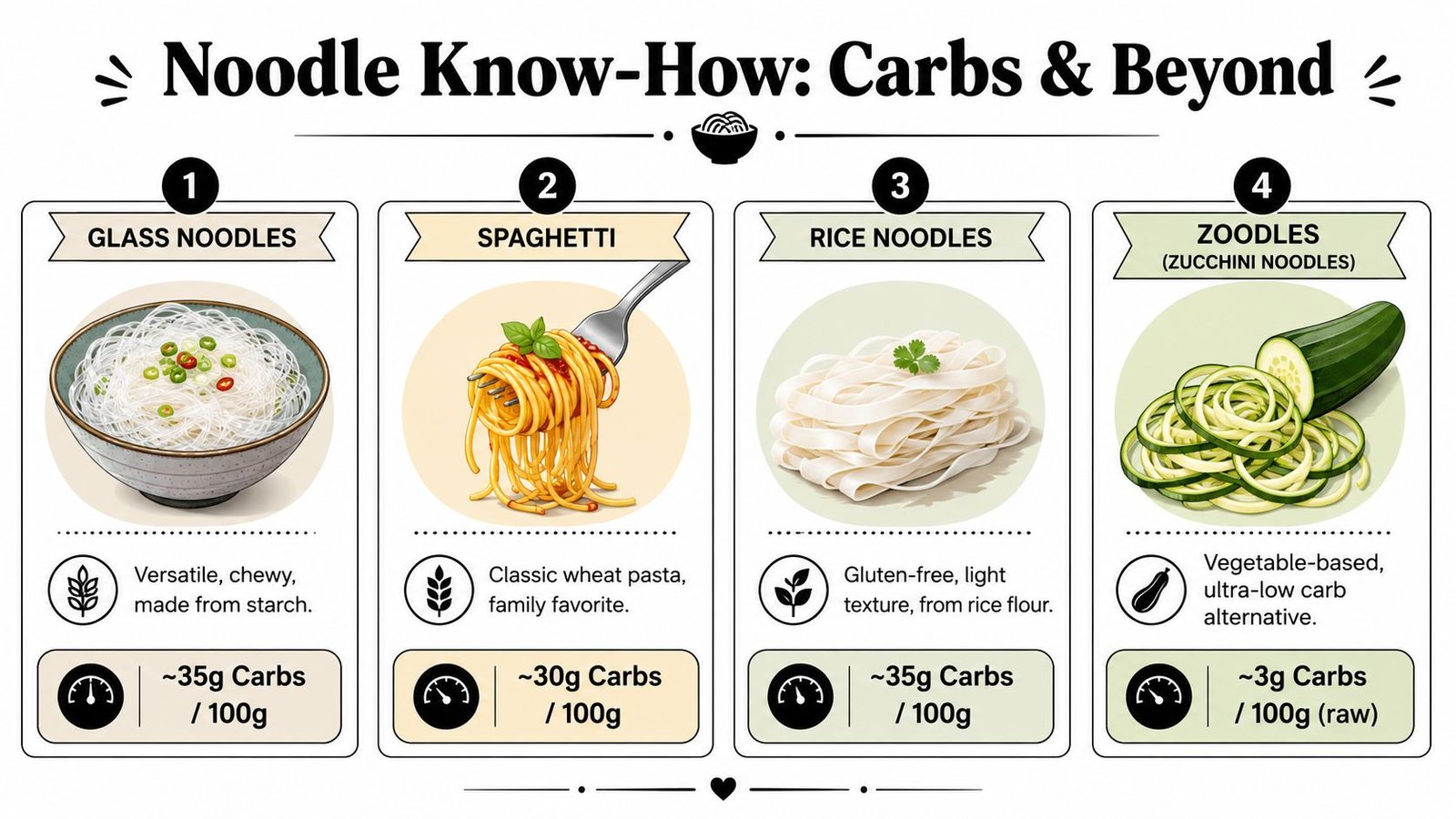
Where glass noodles sit on the noodle spectrum
Compared with spaghetti, glass noodles are not the obvious “lighter pasta” many people expect. As noted earlier, cup-for-cup cooked volume can leave glass noodles higher in carbs than cooked spaghetti. That surprises people who choose them as a diet swap.
Compared with rice noodles, glass noodles usually occupy a similar mental category in everyday eating. They're both often used in Asian-style dishes, and both can disappear into a bowl full of sauce and vegetables. If your main goal is carb reduction, neither should be assumed to be low-carb without checking the portion.
Compared with zoodles, the difference is more dramatic. Zoodles are a vegetable. Glass noodles are a starch. They may both sit under the same sauce, but nutritionally they're playing completely different roles.
If you want a broader pasta comparison for meals you already track, this look at 1 cup cooked pasta calories can help frame portion decisions.
Choosing by goal instead of hype
Different goals lead to different best choices.
- For comfort and chewiness: Glass noodles work well. Their texture is springy and satisfying.
- For classic pasta meals: Spaghetti usually fits better because it behaves the way most pasta sauces expect.
- For lower-carb eating: Zoodles make more sense than trying to force a starch noodle into that role.
- For gluten-free meals: Glass noodles or rice noodles may be useful depending on the recipe and product.
This is why food marketing can be so misleading. A noodle can be gluten-free and still high in carbs. It can be light-looking and still starch-dense. It can fit a balanced diet without fitting a strict low-carb plan.
A better swap question is: “Do I want another starch, or do I want a vegetable in noodle form?”
What readers often mix up
Many people blend together three separate ideas:
- Gluten-free
- Low-calorie
- Low-carb
Those are not interchangeable. A gluten-free noodle can still be mostly carbohydrate. A food that feels less heavy can still contain a meaningful amount of energy. A noodle used in a vegetable-rich recipe can still be the main starch on the plate.
So where do glass noodles fit? They're best thought of as a starchy noodle with a distinctive texture, not as a built-in diet food. If you love them, great. Use them for what they are. Just don't expect them to behave like zoodles because they look delicate.
Blood Sugar Impact and the Glycemic Index of Glass Noodles
Carb grams tell you how much carbohydrate is there. Glycemic index, or GI, gives a clue about how quickly a carbohydrate may raise blood glucose on its own.
A simple analogy helps. Some carbs act more like kindling. They catch fast. Others act more like a thicker log. They burn more gradually. GI is one way of describing that difference, though real meals are always more complicated than a single number.
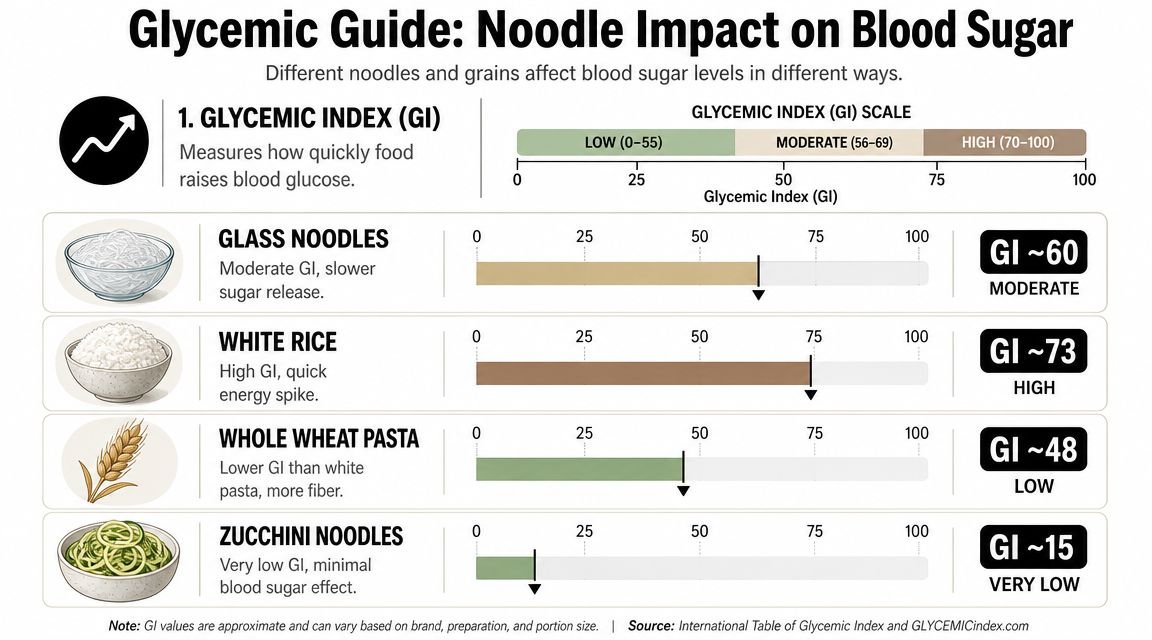
What the verified data says
One database reports glass noodles at 86.1 g carbs per 100 g, with only 0.5 g fiber and a glycemic index of 39, while a cooked Korean japchae dish provides 22 g carbs in a 175 g serving (cellophane noodle nutrition data).
The low fiber matters. Fiber often helps slow digestion and soften the blood sugar effect of a carb-heavy food. Glass noodles don't bring much of that on their own. They're not doing a lot of metabolic “braking” by themselves.
Why GI doesn't tell the whole story
A GI value can mislead people if they treat it like a final verdict.
A food with a lower GI than expected can still deliver a meaningful carbohydrate load if the portion is large. On the other hand, a noodle-based dish may land more gently than you'd assume if the serving contains plenty of vegetables, protein, and some fat from the cooking method.
That's why a plain bowl of noodles and a composed dish can feel different in the body, even when the ingredient at the center is the same. Portion size still matters. The rest of the plate matters too.
Lower GI doesn't mean “eat freely.” It means the pace may differ, not that the carbs disappear.
A more realistic blood sugar lens
If you're paying attention to blood sugar, think in layers:
- The noodle itself: mostly starch, very little fiber
- The portion: how much of the bowl is noodle
- The meal build: protein, vegetables, sauces, and fats all change the experience
This is also where broader eating patterns come in. If you're exploring steady-energy habits and drink choices alongside meals, you might like this resource on discover matcha's wellness advantages, especially as part of a wider conversation about blood sugar awareness.
The practical takeaway is simple: Don't assume glass noodles are blood-sugar-friendly just because they're translucent. Judge the whole meal, not the visual style of the noodle.
Building a Balanced Meal with Glass Noodles
The smartest way to use glass noodles isn't to pretend they're low-carb. It's to build the dish so the noodles share the stage.
That changes everything. Once vegetables and protein stop being “add-ons” and start being major components, the bowl looks and behaves differently. You're no longer eating a noodle bowl with a few extras. You're eating a balanced meal that happens to include noodles.
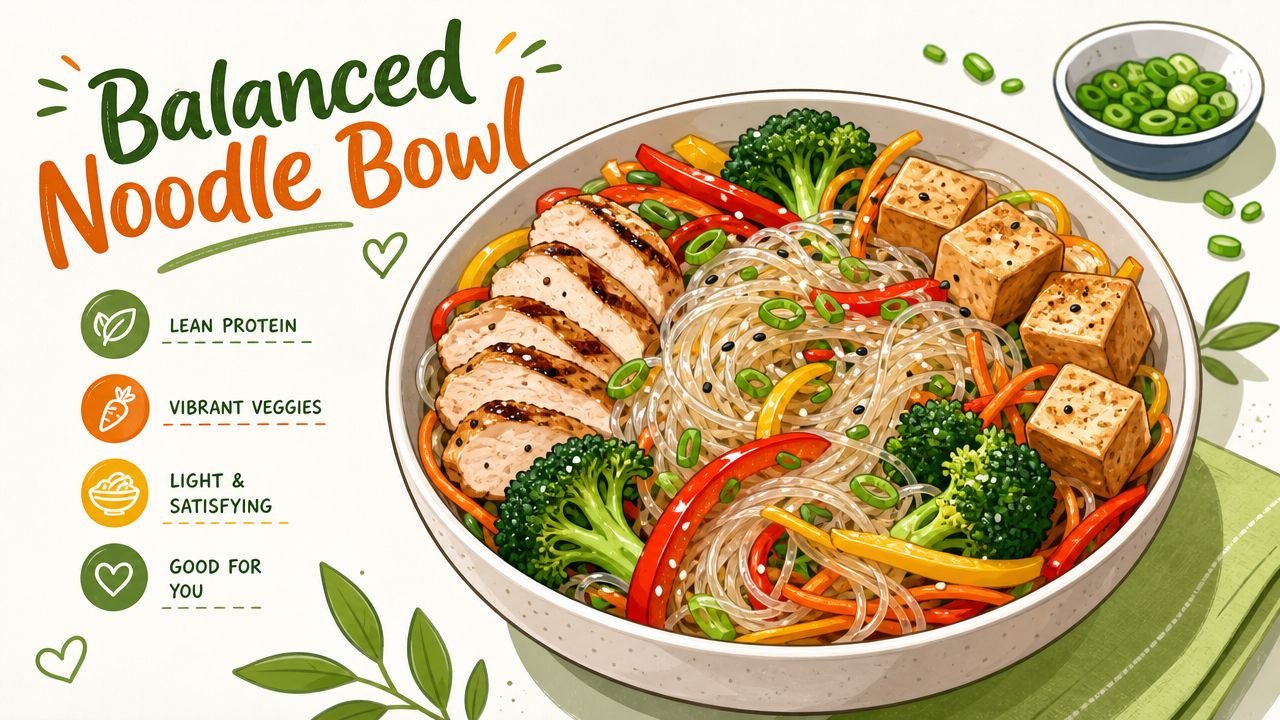
Japchae shows why dish context matters
Japchae offers a useful real-world example. A plain cooked serving of glass noodles can be around 39 grams of carbs per cup, while a mixed dish like japchae can come in at about 22 grams of carbs per 175 g serving because vegetables and protein dilute the noodle portion in the final dish (how dish context changes glass noodle carbs).
That gap is the whole story in one example. Seldom is a cup of plain noodles consumed on its own. Instead, a recipe is typically eaten. The recipe decides whether the meal is noodle-dominant or balanced.
How to build a better bowl
A practical japchae-style plate usually works best when you think in components, not restrictions.
- Start with noodles as one part: Let the glass noodles be present, but not the entire bowl.
- Add a real protein anchor: Chicken, tofu, eggs, beef, or another protein source helps make the meal feel complete.
- Use plenty of vegetables: Mushrooms, spinach, onions, peppers, carrots, or broccoli add bulk and variety.
- Watch the sauce layer: Sweet sauces and oils change the overall nutrition, even when the noodle amount stays the same.
This approach works well for weight loss because it tends to improve fullness. It also helps people who are trying to be more blood-sugar aware, since the meal becomes less centered on starch alone.
The goal isn't to ban the noodle. The goal is to stop letting it occupy most of the bowl.
What this looks like in real life
A bowl made mostly of noodles can disappear quickly and leave you hungry again sooner. A bowl with noodles woven through vegetables and protein asks you to chew more, eat more slowly, and get more variety per bite.
That's one reason balanced mixed dishes often feel easier to manage than plain starches. You haven't removed the food you enjoy. You've changed its role.
If you're also working on prediabetes-friendly meal patterns more broadly, this evidence-based UK diet guide is a useful companion read for thinking beyond a single ingredient.
Glass noodles can fit into a thoughtful meal. They just work best when you treat them like rice or pasta. They're a starch base, not a free food.
How to Log Glass Noodles for Accurate Macro Tracking
Food logging gets harder when the database entry is more generic than the food you consumed. “Glass noodles” sounds precise, but it often isn't.
Did you weigh them dry before soaking? Did you serve them cooked by the cup? Was the meal a stir-fry with beef, oil, and vegetables? Or was it mostly noodles with sauce? Those are different entries, even if they all start with the same ingredient name.
The easiest way to avoid common errors
Use a short mental checklist before you log:
Identify the state
Dry and cooked entries aren't interchangeable.Log the dish, not just the noodle
If you ate japchae, noodle soup, or a stir-fry, include the dish context.Check the product if packaged
Different brands and preparations can vary, so the label may describe something narrower than a generic database entry.
If you're new to macro tracking, this primer on how to count macros can help you spot where these mismatches happen.
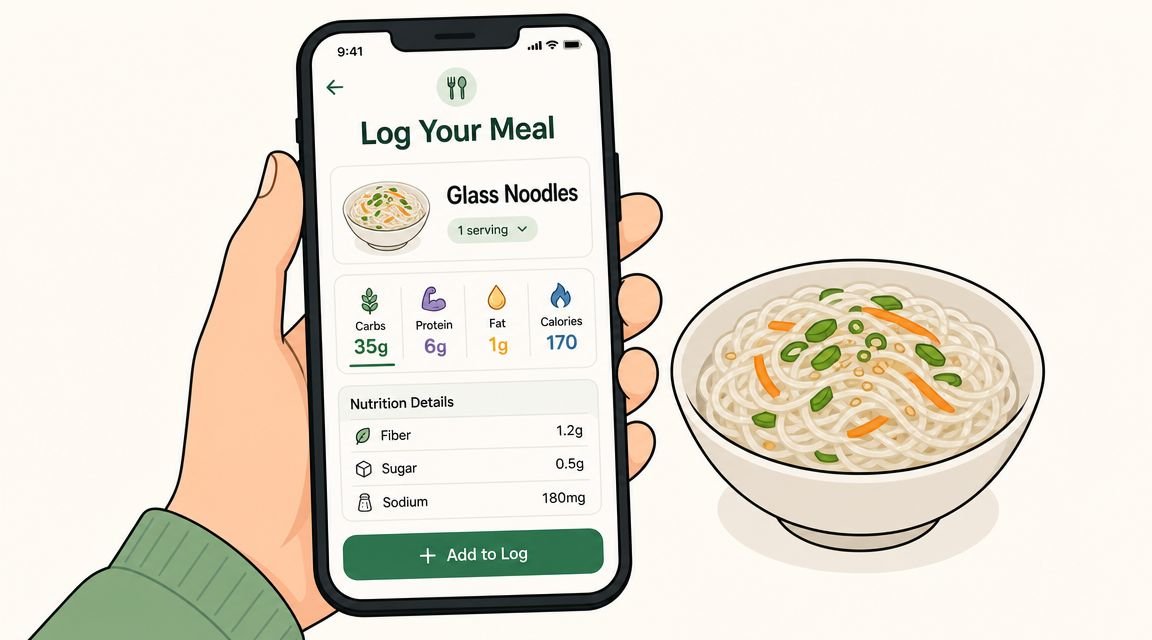
The entry should match the meal in front of you
This is the key idea that makes carbs in glass noodles much less confusing. You're not tracking a food in theory. You're tracking what you served and ate.
If the bowl was heavy on noodles, log it that way. If the noodles were just one piece of a vegetable-and-protein-rich stir-fry, log the full meal. Accuracy doesn't come from finding the perfect universal noodle entry. It comes from choosing the entry that best matches the actual portion and preparation.
That's especially true with foods like glass noodles, where visual lightness doesn't tell you much. The app entry should reflect the recipe, the state of the food, and the portion that ended up on your plate.
If you want a faster way to log mixed meals like japchae, stir-fries, and noodle bowls without guessing at every ingredient, PlateBird makes it simple. You can type what you ate in plain language or snap a photo, then get calorie and macro estimates that fit real meals, not just idealized database entries.