- The Challenge of Tracking Pasta Calories
- Why Pasta Calorie Counts Are So Inconsistent
- Calories in 1 Cup Cooked Pasta A Quick Reference Guide
- From Dry to Cooked How Volume and Weight Change
- Beyond Calories The Macronutrient Profile of Pasta
- How Sauces and Toppings Transform Your Meal
- Visualizing Your Portion What One Cup Really Looks Like
- Cooking Methods That Can Alter Calorie Count
- Logging Pasta in Seconds with PlateBird
- Frequently Asked Questions About Pasta and Calories
1 cup of cooked pasta has around 200 to 220 calories, but the exact number depends heavily on the pasta’s shape, how it’s cooked, and how tightly you pack the measuring cup. If you’re staring at a bowl of pasta and trying to log it accurately, that range matters more than a single generic number.
That’s the part most calorie guides skip. You eat a normal-looking serving, open your tracker, type “pasta,” and suddenly you’re choosing between entries that don’t agree with each other. Some are based on spaghetti, some on macaroni, some on dry weight, some on cooked volume, and almost none tell you why the numbers differ.
As a nutrition coach, I’ve found that pasta is one of the easiest foods to overthink and one of the easiest foods to log well once you know what changes the count. The goal isn’t perfection. It’s getting close enough that your daily intake reflects what’s on your plate.
The Challenge of Tracking Pasta Calories
You make dinner, serve yourself a bowl, and think it looks modest. Then you try to log it. One app says one thing, the box gives you dry pasta numbers, and the measuring cup you didn’t use is sitting in the cabinet.
That confusion is common because 1 cup cooked pasta calories sounds simple, but “1 cup” hides a lot of variation. Plain cooked pasta typically lands in the 200 to 220 calorie range, and that cup also provides about 2 to 2.5 grams of fiber and 8 grams of protein according to CalorieKing’s cooked pasta data. That’s one reason pasta remains a practical staple in balanced diets.
The problem starts when people treat every pasta cup as identical. A loose cup of spaghetti and a tightly packed cup of spirals don’t weigh the same, so they won’t log the same. Restaurant bowls make that harder because portion size usually looks smaller than it is once sauce spreads across the plate.
Practical rule: If you log pasta with a single default entry every time, you’ll often be close, but not always accurate enough to understand why your intake is drifting.
Good tracking comes from noticing the variables that matter most, not from obsessing over tiny differences that don’t.
Why Pasta Calorie Counts Are So Inconsistent
The biggest reason pasta entries clash is simple. Volume doesn’t tell the whole story. Different shapes hold different amounts of pasta in the same cup.
A cup of cooked pasta can range from 182 calories for macaroni shells to 212 calories for spirals and up to 220 calories for standard macaroni, with packing density changing the volume-to-weight ratio by 10 to 20% according to CalorieFriend’s cooked pasta comparisons. If you’ve ever looked at two “1 cup” servings and thought one seemed heavier, you were right.
Shape changes weight
Long pasta like spaghetti tends to sit more loosely in a cup. Short shapes like macaroni or spirals settle more compactly. That changes cooked weight, and calories follow weight, not appearance.
Water changes yield
Dry pasta absorbs water as it cooks, but not every batch absorbs the same amount. Cook time, pasta shape, and how long it sits after draining all affect the final cooked texture and weight.
Packing changes the log
Scooping a measuring cup loosely is different from pressing pasta down. That’s why label reading matters. If you want to get better at matching what’s on the box to what’s on the plate, this guide on how to read nutrition labels helps clarify what serving sizes are describing.
Pasta isn’t hard to track because it’s mysterious. It’s hard to track because people use volume when the food changes shape, water content, and density.
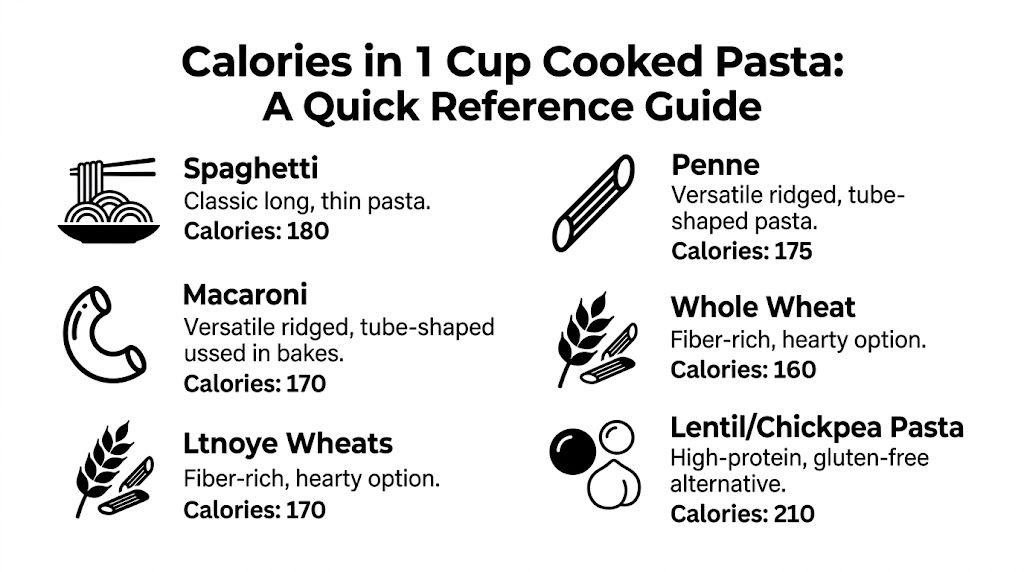
Calories in 1 Cup Cooked Pasta A Quick Reference Guide
When you need a working number, use the pasta shape that most closely matches what you ate. That’s more reliable than choosing a random generic entry and hoping it averages out.
What the databases show
Authoritative databases report these values for one cup of cooked plain pasta in NutriFox’s cooked pasta reference:
| Pasta Type | Calories (kcal) | Carbs (g) | Protein (g) | Fat (g) | Avg. Weight (g) |
|---|---|---|---|---|---|
| Unenriched spaghetti | 196 | around 43 | around 8 | around 1.3 | 124 |
| Spirals | 212 | 41.4 | 7.8 | 1.2 | 133 |
| Generic cooked macaroni | 220 | 42.95 | 8.06 | 1.29 | 140 |
| Enriched spaghetti | 221 | 43.2 | 8.1 | 1.3 | not specified |
These are all still “one cup,” but the weights differ. That’s the part that clears up most tracking confusion.
How to use the table in real life
If you ate spaghetti, use the spaghetti entry. If you ate rotini or another spiral shape, the spirals value is a better match. If the pasta was small, dense, and sat compactly in the bowl, the macaroni-style entry will usually get you closer.
A few practical callouts help:
- Use spaghetti entries for looser portions: Long strands usually create more air space in the cup.
- Use macaroni-style entries for packed bowls: Small shapes often land toward the upper end of the calorie range.
- Treat “around 200” as a baseline, not a promise: It’s a starting point, not a final answer.
- Save the exactness for repeat meals: If you meal prep the same pasta lunch weekly, that’s when shape-specific tracking pays off.
For most home meals, this is enough precision to be useful without turning dinner into a math problem.
From Dry to Cooked How Volume and Weight Change
A common tracking mistake starts before the first bite. The box lists pasta dry, your bowl is full of cooked pasta, and the volume changes a lot once water gets involved.
If you cook from a box, the cleanest reference point is usually the dry serving size on the label. A standard 2 oz dry pasta serving often ends up close to 1 cup cooked, but that cooked cup will not look or weigh the same across shapes.
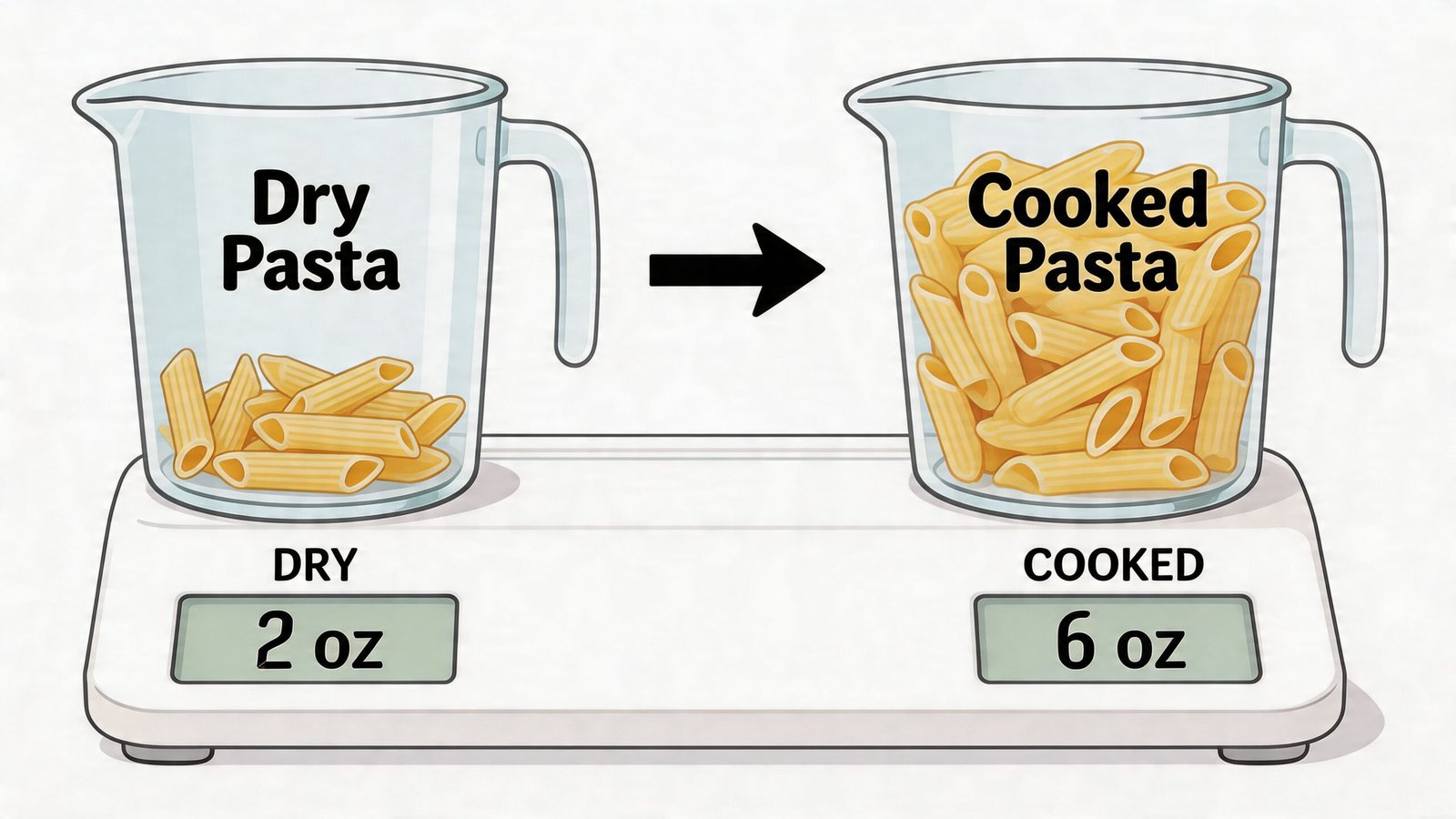
Water absorption explains most of the confusion. Long noodles tend to sit looser in a measuring cup. Small shapes like elbows or shells settle more tightly. Cook time matters too. Pasta cooked a little past al dente holds more water, so the same dry amount can turn into a heavier cooked portion.
That is why volume is useful, but weight is cleaner.
A simple home method
For clients who want accurate logs without overthinking dinner, I use a kitchen-first approach:
- Measure dry if you can. It matches the nutrition label and makes recipe math easier.
- Cook the batch as usual.
- Weigh or divide the finished pasta into equal portions if you are meal prepping.
- Use cooked cups as a fallback when the dry weight is gone and all you have is the plated meal.
This method works especially well for repeat meals. Weigh half a box dry once, cook it, split it into four containers, and you have a reliable entry for the whole week. No guessing how tightly each container got packed.
What works in real kitchens
Weighing dry pasta before it hits the pot gives the most consistent log. Measuring a random scoop of cooked pasta after everyone has served themselves is less precise because packing density changes from bowl to bowl.
Family-style pasta needs a practical compromise. Log the total dry amount used for the recipe, then divide by the number of servings plated. That gets you close enough for everyday tracking and avoids turning a weeknight meal into a spreadsheet.
If you missed the dry measurement entirely, use the cooked cup estimate and adjust based on what you see. A loose tangle of spaghetti and a tightly packed cup of macaroni are both "one cup," but they are not interchangeable. PlateBird speeds that part up by helping you log the portion you served instead of chasing a perfect number after the fact.
Beyond Calories The Macronutrient Profile of Pasta
A bowl of pasta can be a solid base for a meal, but the calorie total only tells part of the story. Macros explain why one pasta meal leaves you steady and satisfied while another has you hungry again an hour later.
Cooked pasta is mostly carbohydrate, with a modest amount of protein and very little fat on its own. That matters in practice. Carbs help refill energy stores, especially after training or before a long afternoon, while the small protein contribution gives the meal a better foundation than people often assume from a starch.
The bigger point is how pasta behaves in a full plate. Plain pasta is usually easy to digest and predictable. Pair it with chicken, lentils, tofu, Greek yogurt sauce, or parmesan, and the meal becomes more filling without needing a huge portion. Add vegetables and you also get more volume, which helps appetite control.
Why macros matter more than the pasta label alone
I coach clients to stop treating pasta as a yes-or-no food. A cup of cooked pasta can fit into fat loss, maintenance, or performance nutrition. The difference is usually what sits next to it and how much of the plate it takes up.
For appetite, protein and fiber do a lot of the heavy lifting. Pasta brings the carbohydrate base. The rest of the plate determines staying power.
That is why two pasta bowls with similar calories can feel very different after eating them.
Practical ways to build a better pasta meal
- For training days: Keep pasta as the main carb source and add a lean protein.
- For higher satiety: Mix in vegetables and use a protein-rich topping or sauce.
- For lighter meals: Use a smaller pasta portion and build out the bowl with shrimp, chicken, beans, or roasted vegetables.
- For accurate logging: Log the pasta separately from the protein and sauce whenever possible, especially in homemade meals.
If you cook at home often, it helps to understand how to calculate calories in homemade food so you can break the dish into parts instead of guessing from a generic restaurant-style entry.
Pasta works best when you see it as one part of the meal, not the whole nutrition story. That approach keeps tracking more accurate and makes your meals easier to shape around your goal.
How Sauces and Toppings Transform Your Meal
A bowl with one cup of pasta can stay fairly moderate in calories or turn into a heavy meal fast. The pasta usually is not the part that throws tracking off. The extras do.
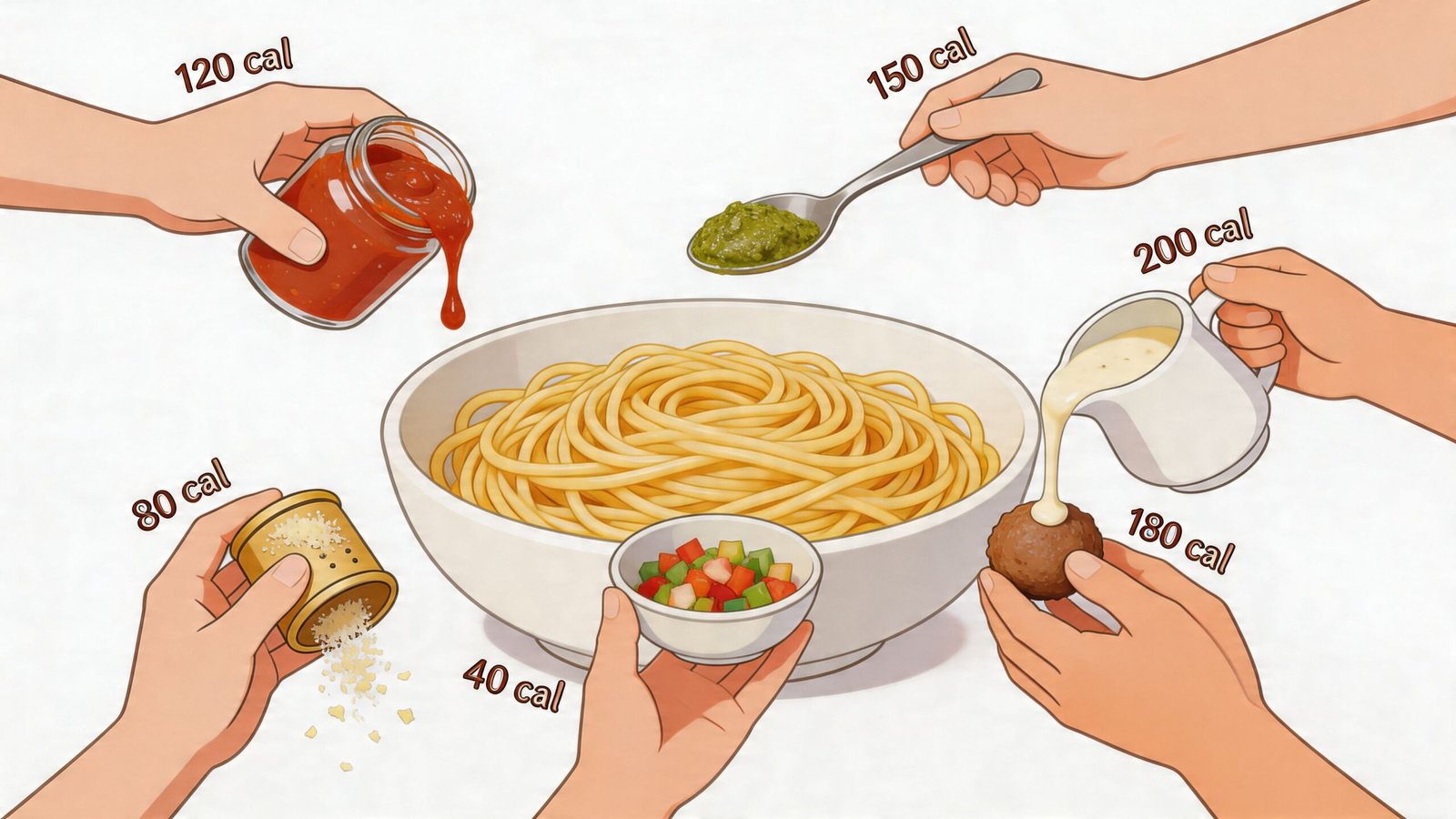
I see the same pattern with clients all the time. They measure the noodles, then eyeball the olive oil, grated cheese, creamy sauce, or handful of meatballs. That is how a meal that looks like "a cup of pasta" ends up logging very differently from what is on the plate.
What changes the total fastest
Start with the concentrated ingredients.
- Oil and butter: A small pour adds up quickly because fat is calorie-dense.
- Cream sauces and pesto: These can shift the meal far more than tomato-based sauces.
- Cheese: Parmesan, mozzarella, and ricotta are easy to underestimate, especially when added at the table.
- Protein toppings: Chicken, sausage, meatballs, shrimp, and ground beef improve staying power, but they also raise the total meal calories.
- Vegetables: Mushrooms, spinach, zucchini, peppers, and tomatoes usually add bulk with a smaller calorie effect.
The trade-off is simple. Rich toppings often improve flavor and satisfaction, but they also make "1 cup cooked pasta calories" a less useful shortcut. At that point, you are tracking a pasta dish, not plain pasta.
A practical way to log it accurately
For homemade meals, break the bowl into parts. Log the pasta first, then the sauce, then the toppings that matter most. If you cook mixed dishes often, this guide on how to calculate calories in homemade food makes recipe logging much easier to repeat.
Visual habits help here too. Using simple standards from portion control for meal planning can keep cheese, oil, and sauces from drifting upward over time.
PlateBird makes this easier because you can log what you see on the plate instead of settling for a generic "spaghetti with sauce" entry that misses the details. That shortcut saves time and usually improves accuracy.
Visualizing Your Portion What One Cup Really Looks Like
Serving cooked pasta onto a plate isn't usually done by precise measurement. Instead, it's common to serve dinner, estimate, and move on. That’s why visual cues matter.
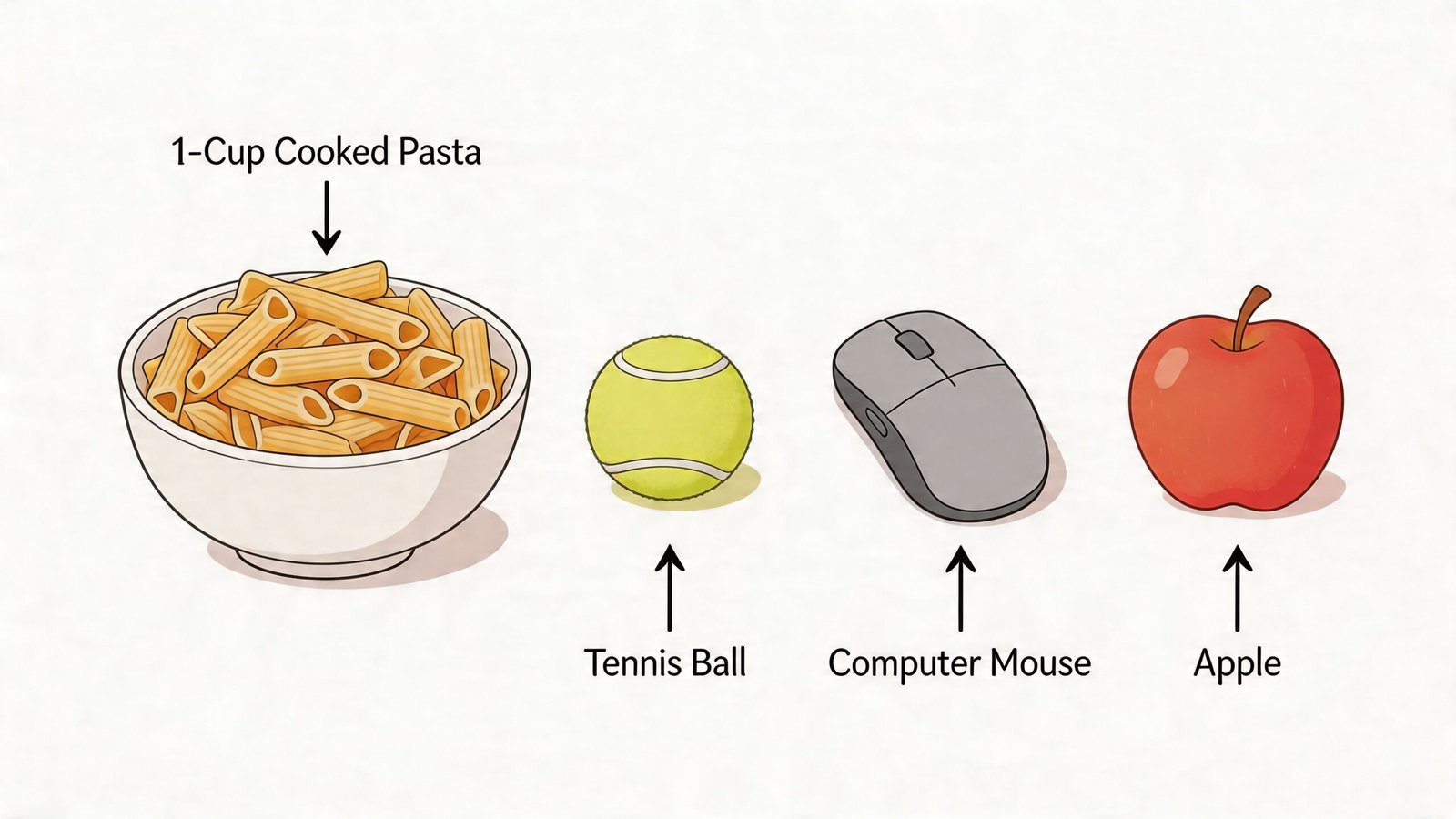
A true one-cup serving often looks smaller than expected, especially in a wide bowl. That’s one reason people accidentally serve double portions without noticing.
Useful visual anchors
These comparisons aren’t perfect, but they help when you’re eating out or away from measuring tools:
- A clenched fist: Often a decent rough guide for a one-cup portion.
- The size of a small mound, not a full dinner bowl: Spread matters. Wide plates make portions look smaller.
- The base portion before sauce expands the appearance: Sauce can make the bowl look more abundant than the pasta alone.
If you’re building consistency around portions across the week, this article on portion control for meal planning gives helpful context for using visual standards without becoming rigid.
After you’ve looked at the image above, this video gives another practical perspective on recognizing realistic portions in everyday meals.
A coaching note on restaurant pasta
Restaurant portions are where visual estimates tend to break down. A bowl can look elegant and still contain far more than a home serving because the pasta is packed below the sauce and garnish.
When you’re unsure, it’s often more honest to log the dish as more than one cup rather than forcing it into the smallest entry that feels convenient.
Cooking Methods That Can Alter Calorie Count
Two bowls of pasta can start with the same dry amount and still end up as very different logs. The biggest reason is rarely the boiling itself. It is what happens after the pasta leaves the water.
Cooking time changes texture more than calories. Firmer pasta usually holds its shape better, which makes portion size easier to judge on the plate. Softer, overcooked pasta compresses into the bowl and is easier to overserve without noticing. The calorie difference comes from logging a denser or larger serving, not from the noodle somehow changing its basic energy content.
The cooking choices that actually affect your log
A few common habits can shift the final number enough to matter:
- Rinsing cooked pasta: This can wash off some surface starch and changes how sauce sticks. For tracking, the practical issue is consistency. If you rinse sometimes and skip it other times, the same "1 cup" can eat differently and hold sauce differently.
- Finishing in oil or butter: This raises calories quickly because added fat is calorie-dense and easy to underestimate.
- Cooking pasta in the sauce: Pasta can absorb some of the sauce as it finishes, which makes the final cup more calorie-dense than plain boiled pasta.
- Salty water: This improves flavor, but it does not meaningfully change calories.
The useful rule is simple. Count the pasta, then count what coated it.
I see the biggest logging errors when someone measures carefully at the pot, then tosses the pasta with oil, cheese, or butter and still logs it as plain cooked pasta. That is a real trade-off. Finishing fats improve texture and flavor, but they also make the bowl substantially richer.
If dinner was cooked loosely and you are not sure how much fat or sauce ended up in your serving, PlateBird’s pasta meal logger is the faster option. Log the full dish as you ate it instead of forcing it into a plain pasta entry that misses the cooking method.
Logging Pasta in Seconds with PlateBird
Pasta is exactly the kind of food that exposes the limits of manual tracking. You have shape differences, uncertain portion size, sauce, toppings, and the usual gap between what the package says and what landed in the bowl.
That’s where PlateBird is useful. Instead of digging through a long food database and trying to decide whether your serving looked more like loose spaghetti or dense macaroni, you can type the meal the way you’d say it out loud or log it from a photo.
Why this solves the real problem
It isn’t a lack of understanding about calories that causes tracking to be abandoned. The annoyance of logging is the true deterrent. Pasta dinners magnify that friction.
PlateBird removes a lot of it by letting you:
- Type simple meal descriptions: “Spaghetti with marinara and chicken” is faster than building the meal item by item from scratch.
- Use photo logging for mixed plates: That helps when your serving wasn’t measured but is visible.
- Reuse recurring meals: Meal prep lunches don’t need to be rebuilt every time.
- Stay consistent without obsessing: That’s what makes tracking sustainable.
The win isn’t perfect precision. It’s reducing enough friction that you keep logging, week after week, even when dinner wasn’t pre-portioned.
Frequently Asked Questions About Pasta and Calories
Is 1 cup of cooked pasta a good portion for weight loss?
It can be. For many people, one cup is a reasonable base portion because it keeps the pasta itself in a moderate calorie range. The meal becomes more filling when you add protein and vegetables instead of only increasing pasta volume.
Is it better to measure pasta dry or cooked?
Dry weight is usually the most accurate method for home cooking and meal prep because it matches the package serving. Cooked measurement is still useful when the pasta is already on the plate or you’re eating out.
Why do two apps give different calorie counts for the same pasta?
They may be using different shapes, different cooked weights, or different assumptions about enrichment and packing density. “One cup” isn’t one fixed gram weight across all pasta types, which is why database entries can disagree.
Does pasta make people gain weight?
Pasta itself isn’t the issue. Total calorie intake over time matters most. In practice, oversized portions and heavy add-ins create more trouble than plain cooked pasta.
Is regular pasta just empty carbs?
Not really. Plain cooked pasta provides carbohydrates for energy, some fiber, and around 8 grams of protein per cup in the database values cited earlier. It’s better described as a useful base food than an all-in-one meal.
What’s the easiest way to make pasta meals more filling?
Three moves work well:
- Add protein: Chicken, turkey, tofu, beans, or seafood help the meal hold you longer.
- Add vegetables: Spinach, mushrooms, zucchini, peppers, and broccoli add volume.
- Measure calorie-dense toppings: Oil, cheese, and creamy sauces can add up in the meal total.
If you want pasta tracking to feel effortless instead of tedious, PlateBird is the shortcut. Type your meal or snap a photo, and it handles the messy part so you can stay consistent without turning dinner into a spreadsheet.