You're probably here because you've heard someone at the gym say, “I'm bulking right now,” and a few weeks later that same person says they're “starting a cut.” If you're new to training, that can sound like insider language from a world built for bodybuilders, not normal people with jobs, schedules, and groceries to buy.
It's simpler than it sounds. Bulking means eating in a calorie surplus to support muscle gain. Cutting means eating in a calorie deficit to reduce body fat while trying to keep the muscle you've built.
The confusion usually starts when people treat those words like magic. They're not. They're just two different phases with two different goals. Once you understand that, the whole process gets a lot less intimidating.
Your Introduction to Bulking and Cutting
A new client once asked me a question I hear all the time: “Do I bulk first, or cut first, or try to do both?” He'd been lifting for a few months, scrolling fitness videos at night, and every creator seemed sure their method was the right one. One person said to eat everything in sight. Another said to stay lean year-round. He wasn't lazy. He was overloaded.
That's where many individuals begin. They don't need more hype. They need a clear definition and a sensible plan.
Bulking is the phase where you eat more than your body needs to maintain its weight so you can support muscle growth. Cutting is the phase where you eat less than your body needs so you can lose fat while holding onto as much muscle as possible.
These ideas aren't limited to competitive bodybuilding anymore. A 2022 Canadian study on bulk-and-cut cycles found that nearly half of men and about 1 in 5 women and transgender/gender non-conforming participants reported engaging in bulk-and-cut cycles in the past 12 months. That tells you something important. This isn't niche gym jargon anymore. It has become a common pattern in modern fitness culture.
Why people get stuck
Most beginners don't struggle because the concepts are too advanced. They struggle because the advice they hear is too vague.
- “Just eat more” sounds simple, but it doesn't tell you how much more.
- “Just cut calories” leaves out the part where you still need to train and eat enough protein.
- “Listen to your body” is useful later, but beginners usually need a structure before instinct gets reliable.
You don't need a perfect plan on day one. You need a plan you can follow long enough to learn from it.
If you've been wondering what is bulking and cutting in real-world terms, think of them as two tools. One helps you build. The other helps you reveal what you built. Used well, they're practical. Used randomly, they're frustrating.
The Core Concepts Bulking Versus Cutting
A lot of beginners hit a frustrating pattern here. They hear that bulking adds size and cutting reveals definition, then they treat each phase like a fixed script. Eat more for a while. Eat less for a while. Hope for the best.
That usually falls apart in real life because your body does not respond like a calculator. It responds more like a weekly check-in with a coach. You set a direction, watch the response, and adjust before small mistakes turn into months of spinning your wheels.
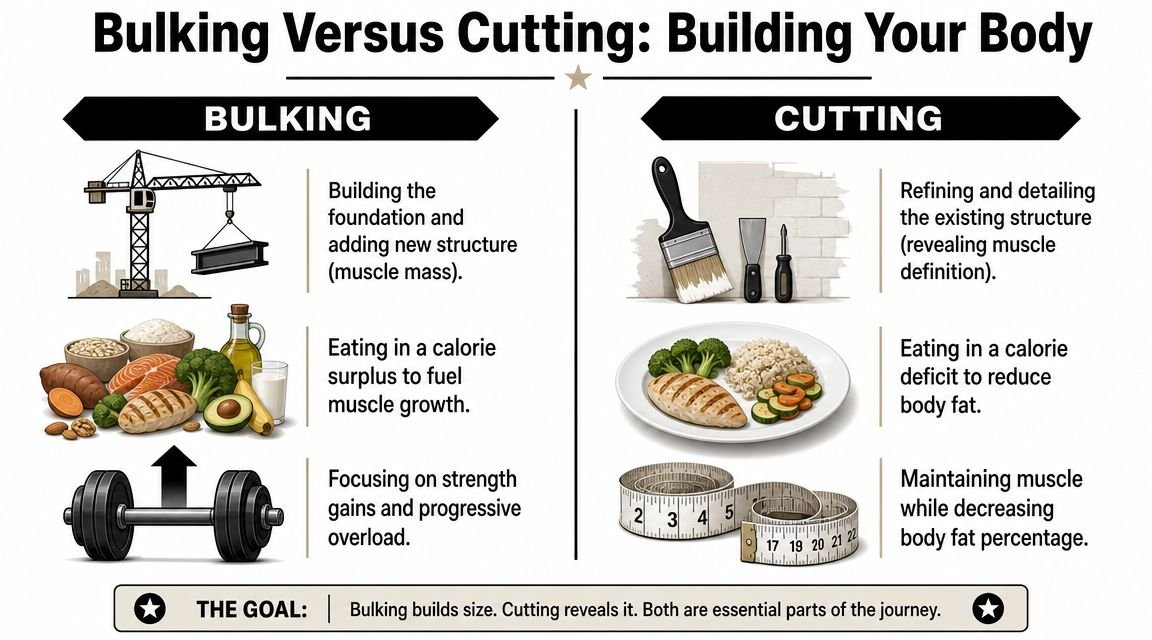
Bulking and cutting are two different jobs. A bulk works like a building phase. You give your body enough fuel to recover, train hard, and add muscle over time. A cut works like a refining phase. You lower calories to reduce body fat while trying to keep the muscle you spent time building.
What a bulk is really for
The goal of a bulk is not to gain weight for its own sake. The goal is to create a small growth-friendly surplus so training can produce more muscle. According to Healthline's guide to bulking, a bulk often uses a 10% to 20% calorie surplus above maintenance, aims for about 0.25% to 0.5% of body weight gained per week, and may run for 4 to 6 months.
Those numbers give you a starting lane, not a guarantee.
If your weight is climbing much faster than that, you are probably adding fat faster than you need to. If nothing is changing for a few weeks, your surplus may be too small, your tracking may be off, or your training may not be creating enough reason for your body to grow. That is why a good bulk is measured, not reckless.
What a cut is really for
A cut has a narrower mission. You are trying to reduce body fat while keeping strength, performance, and muscle as stable as possible.
Many people get confused by this. They assume cutting means chasing the fastest drop on the scale. In practice, an effective cut is usually the one you can sustain while still training well, recovering well enough, and keeping your routine under control. If your lifts are crashing, your energy is flat, and your hunger is running the day, the plan needs work.
A cut also tends to be more feedback-sensitive than a bulk. Water retention, sodium, stress, and sleep can all mask fat loss for short stretches. That is why smart adjustments matter more than emotional reactions.
Here's a simple side-by-side view:
| Metric | Bulking Phase | Cutting Phase |
|---|---|---|
| Main goal | Build muscle and strength | Reduce body fat while preserving muscle |
| Calorie approach | Small calorie surplus above maintenance | Calorie deficit below maintenance |
| Typical pace | Slow, controlled weight gain | Steady fat loss with muscle retention as the priority |
| Common timeframe | Often several months | Often several weeks to a few months |
| Training focus | Progressive overload and recovery | Strength maintenance and muscle retention |
A quick visual can help if you learn better by seeing the big picture:
The tradeoff beginners need to understand
Each phase asks you to accept a different compromise.
During a bulk, some fat gain usually comes with the process. During a cut, recovery and performance often feel less comfortable because you are asking your body to do hard training with fewer calories available. Neither phase is broken when those tradeoffs show up. The key question is whether the tradeoff is still within a useful range.
A practical way to judge that range is to track three things together. Body weight, gym performance, and visual change. If body weight is rising during a bulk but your lifts are flat and your waist is jumping fast, your surplus may be too aggressive. If body weight is dropping during a cut but strength is falling hard and you look smaller everywhere, the deficit may be too steep.
That feedback loop is the skill. Bulking and cutting work best when you treat them like adjustable processes, not fixed meal plans. If you want a starting point before you begin adjusting, a bulking macro calculator for setting your calories and protein target can help you set up the first version of the plan.
One phase builds the house. The other clears the view so you can see the structure you built. The better you monitor the process, the better each phase works.
Designing Your Nutrition Strategy
If training is the construction crew, nutrition is the material delivery. You can't build much with late shipments and guesswork.
Most beginners overcomplicate this part. They jump straight into tiny macro details before they've learned the big idea: your daily eating has to match your phase. A bulk needs a surplus. A cut needs a deficit. In both phases, protein stays high.
Protein is the anchor
The most useful nutrition habit for both phases is getting enough protein. A PureGym beginner guide to bulking and cutting recommends at least 1.6 grams of protein per kilogram of body weight during both bulking and cutting to support muscle growth and help prevent muscle loss.
That recommendation is practical, not just theoretical.
- In a bulk, protein gives your body the raw material to build muscle.
- In a cut, protein helps you protect muscle while calories are lower.
- In both phases, high-protein meals usually make your food choices more purposeful.
If you want help turning that target into a daily plan, a macros for bulking calculator can give you a starting point based on body size and goal.
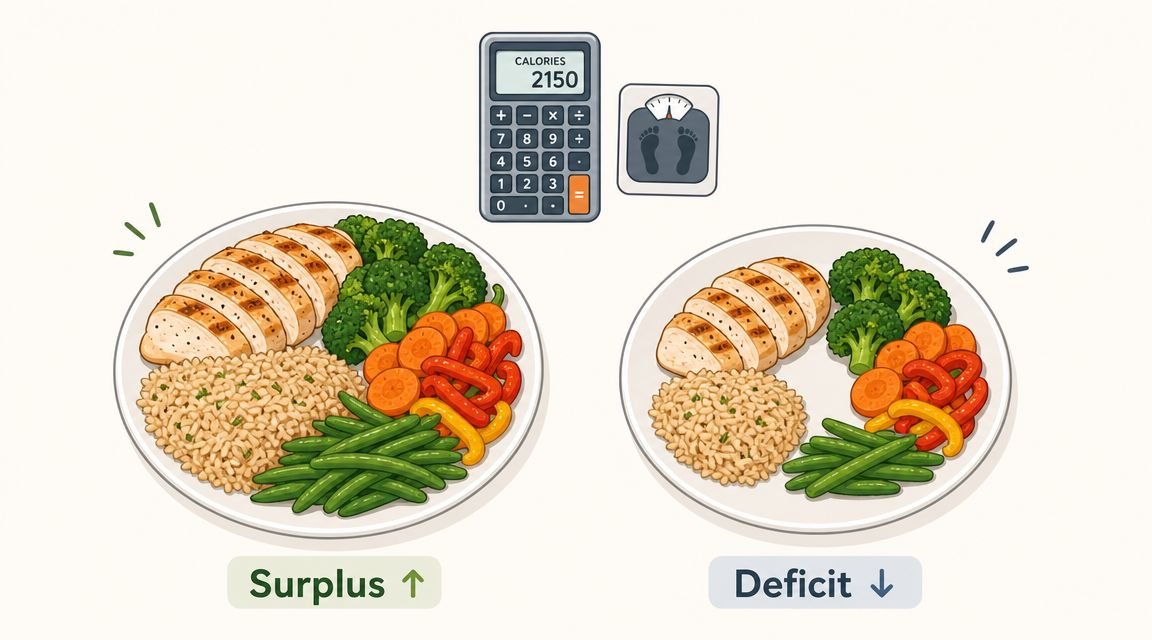
How your plate changes between phases
Your food choices don't need to become weird or restrictive. Usually, the same core foods work in both phases. The difference is portion size, meal balance, and how often energy-dense extras show up.
A simple way to understand this:
On a bulk
You're trying to make it easier to eat enough without living in a food coma.
A bulking day often includes:
- A larger carb base like rice, oats, potatoes, pasta, or bread to support hard training
- A clear protein source at each meal such as eggs, Greek yogurt, chicken, lean beef, tofu, fish, or cottage cheese
- Some calorie-dense add-ons like nut butter, olive oil, granola, cheese, or trail mix when appetite is low
Example meals:
- Breakfast with oats, Greek yogurt, fruit, and nut butter
- Lunch built around chicken, rice, vegetables, and avocado
- Snack like a smoothie with milk or yogurt, fruit, and protein powder
- Dinner with salmon, potatoes, vegetables, and a side of bread
On a cut
You're trying to make it easier to stay full while eating fewer calories.
A cutting day often includes:
- Lean protein first so each meal keeps you satisfied
- High-volume foods such as vegetables, fruit, soups, and potatoes
- Fewer extras that disappear fast like handfuls of nuts, random bites, sugary drinks, and oversized sauces
Example meals:
- Breakfast with eggs or egg whites, fruit, and toast
- Lunch with lean turkey, a large salad, rice or potatoes, and a simple dressing
- Snack like Greek yogurt with berries
- Dinner with white fish or chicken, roasted vegetables, and a moderate serving of carbs
Don't chase perfection
A strong nutrition strategy usually looks boring from the outside. It repeats meals. It favors foods you digest well. It doesn't swing wildly between “super clean” weekdays and chaotic weekends.
A few habits matter more than fancy meal plans:
- Pick repeatable meals you like.
- Center meals around protein so your intake doesn't drift.
- Adjust portion sizes by phase instead of changing every food you eat.
- Plan for appetite differences because some people struggle to eat enough in a bulk, while others struggle to stay satisfied in a cut.
A good meal plan feels sustainable on a busy Tuesday, not just motivating on a Sunday afternoon.
When people ask what is bulking and cutting at the kitchen table, this is the answer I give: it's mostly the same solid foods, organized differently to match the job you're trying to do.
How to Train for Bulking and Cutting
A nutrition phase only works if your training gives your body a reason to adapt. Extra calories don't automatically become muscle. Lower calories don't automatically reveal a better physique. Your workouts decide a lot of that.
In both phases, resistance training is the foundation. That means challenging your muscles consistently with exercises you can repeat, measure, and improve over time. Squats, presses, rows, hinges, pull-ups, split squats, and machine work all count if you apply effort and track performance.
Training during a bulk
When you're bulking, your training should chase progress. The extra food is there to support recovery and help you push for more over time.
That usually means:
- Add load when appropriate on big lifts and key accessories
- Add reps when the weight stays the same
- Keep exercise selection stable long enough to see improvement
- Recover well enough to train hard again
A good bulk is driven by progressive overload. If your weights, reps, or overall training quality never improve, the extra calories have less reason to go toward muscle.
Training during a cut
Beginners often get misled. They think cutting means switching to “toning” workouts, light weights, and endless circuits. That usually backfires.
Your body keeps muscle when you give it a reason to keep it. Heavy or challenging resistance training sends that message. During a cut, you may not feel as explosive, and progress may slow, but the goal isn't to reinvent your training. It's to maintain strength and muscle as well as you can.
Keep lifting with intent during a cut. You're telling your body that this muscle is still needed.
That doesn't mean every workout needs to feel heroic. It means your training should stay serious. Don't turn your cut into a cardio-only phase unless your real goal is just to burn calories and accept muscle loss.
What a practical program looks like
You don't need a complicated split to make progress. You need a plan with enough structure to repeat quality work week after week. If you like a style that blends strength, hypertrophy, and movement quality, the EVMT Brands functional fitness plan is a useful example of how to organize training without drifting into random workouts.
A simple checklist helps:
- Base your week on resistance training rather than treating lifting as optional
- Keep core lifts in rotation long enough to measure improvement
- Use cardio as support, not as the main event unless your goal specifically requires it
- Respect recovery because soreness isn't the same thing as progress
Bulking rewards performance. Cutting rewards discipline. In both cases, training is the signal that tells your body what to keep building or what to keep protecting.
Common Bulking and Cutting Mistakes to Avoid
Most failed bulks and cuts don't fail because the person lacked motivation. They fail because the person used an extreme version of the plan.
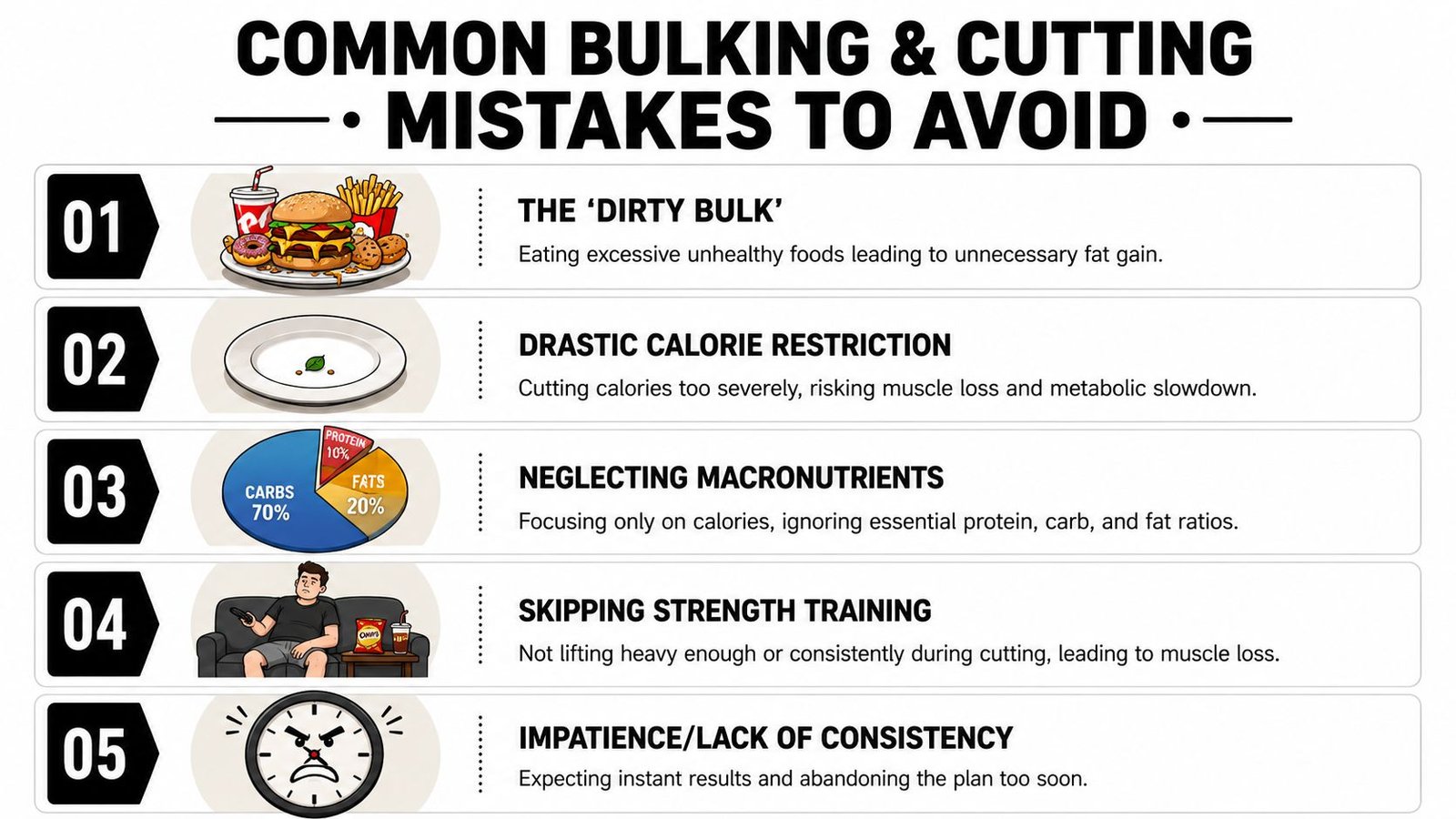
The biggest trap in bulking is the “dirty bulk” mindset. People hear surplus and translate it into fast food, giant cheat meals, and zero restraint. That approach sounds fun for about a week, then it turns into unnecessary fat gain and frustration.
The clean-bulk misunderstanding
A Carbon Performance article on bulk and cut strategy points out a major beginner mistake: being too aggressive with the calorie surplus. It also emphasizes that a successful clean bulk often requires only a small surplus, because the goal is to balance muscle gain with minimal fat gain.
That should reshape how you think about a bulk. More food isn't always better. Better-directed food is better.
Mistakes that cost people months
Here are the ones I see most often:
- Bulking too aggressively. If you treat every meal like a challenge, you'll often gain body fat faster than you build muscle.
- Cutting too hard. Slashing calories usually makes training worse, recovery worse, and adherence worse.
- Treating protein like an afterthought. Calories matter, but body composition changes are much harder when protein intake is inconsistent.
- Changing your plan every week. Jumping from one method to another makes it impossible to learn what's working.
- Expecting visible changes instantly. Body composition work rewards patience more than drama.
The emotional mistake
There's another problem that doesn't get enough attention. People often choose a phase based on emotion, not logic.
They bulk because they feel too small after seeing someone bigger on social media. Or they cut because they had one high-calorie weekend and panic. That kind of reactive decision-making creates endless cycles without much progress.
Most people don't need a more intense plan. They need a calmer one.
If you're new, avoid turning bulking into permission to overeat and cutting into punishment. Both phases work better when they're measured, boring in a good way, and consistent enough to produce feedback.
Tracking Progress and Making Smart Adjustments
This is the part that separates a useful plan from a hopeful guess.
Bulking and cutting aren't set-and-forget systems. You start with a plan, then you watch what your body does, then you adjust. That feedback loop is what keeps a bulk from becoming a free-for-all and keeps a cut from becoming a crash diet.

What to track each week
Daily body weight can be noisy. Sodium, digestion, sleep, stress, and meal timing can all move the scale. That's why weekly averages are more useful than any single weigh-in.
A practical benchmark from HSN's guide to cutting and bulking is to monitor your weekly average rate of weight change. It recommends 0.5–1% of body weight per week as a good target, while changes above 1% may mean your calorie surplus or deficit is too aggressive and should be adjusted.
That gives you a simple framework:
- If weight isn't moving as intended, your intake may need adjustment.
- If weight is moving too fast, slow things down.
- If the trend looks solid, stay patient and keep collecting data.
Use more than the scale
Good tracking isn't just body weight. It also includes:
- Progress photos taken under similar lighting and timing
- Waist, hip, or other body measurements if those help you stay objective
- Gym performance, especially whether key lifts are improving, stable, or falling
- How clothes fit, which often reveals changes before the mirror does
A cut can be working even if scale changes feel slower than you expected. A bulk can be too aggressive even if you're happy the number is going up. The extra data keeps you honest.
Adjustment beats obsession
What matters most is consistency in how you collect the information. You don't need to micromanage every fluctuation. You need enough data to spot trends and respond calmly.
If you're trying to get better at food awareness while learning this process, a practical primer on how to count macros can help you understand what you're eating and why intake changes matter.
The people who do well with bulking and cutting usually aren't the most extreme. They're the ones who notice patterns early, make small corrections, and stick with the phase long enough to let those corrections work.
Your Path Forward Building Muscle and Losing Fat
By now, the answer to what is bulking and cutting should feel much more grounded. Bulking is the build phase. Cutting is the reveal phase. One asks you to support growth. The other asks you to preserve hard-earned muscle while reducing body fat.
Neither phase is magic. Neither phase needs to be miserable. What matters is choosing the phase that matches your real goal, then running it with patience. Train hard enough to give your body a reason to adapt. Eat in a way that fits the job. Track your response. Adjust when the feedback says you should.
If you want more practical reading on the muscle-building side, this guide with tips to gain muscle mass is a useful companion to the principles covered here. And if your bigger goal is body recomposition instead of chasing extremes, this article on burn fat and build muscle can help you think through that path.
The biggest shift is mental. Stop seeing bulking and cutting as all-or-nothing identities. They're tools. You can use them thoughtfully. You can learn them. You can get better at reading your own body with each phase you run.
Start simple. Pick one goal. Give it structure. Then let consistency do the heavy lifting.
If you want tracking to feel easier, PlateBird is built for exactly that. You can type a meal like “eggs toast coffee” or “chicken rice broccoli,” or snap a photo, and the app calculates calories and macros fast. That makes it much easier to stay consistent during a bulk or a cut, especially when you're busy and don't want food logging to become a second job.