Most adults should aim for about 25 grams of fiber a day for women and 38 grams a day for men, but your real target depends on your age, sex, and how many calories you eat. If you're over 50, the common targets are lower at 21 grams for women and 30 grams for men, and another useful way to personalize your goal is 14 grams of fiber per 1,000 calories.
That changes the question from “how much fiber should I have a day?” to a better one: what amount fits your body and your usual eating pattern?
A lot of people have only heard one fiber number, usually 25 or 30 grams, and then feel confused when advice seems to conflict. It doesn't conflict. It's just incomplete. Fiber guidance works best when you look at the whole picture: your calorie intake, your stage of life, and the kinds of fiber showing up on your plate.
You're Probably Not Eating Enough Fiber
About 95% of American adults and children do not meet recommended fiber amounts, and that gap has stuck around for decades according to an NIH-linked review on fiber intake patterns. That's a striking number because fiber isn't some niche nutrition topic. It's part of the everyday foundation of eating well.
When fiber is low, people often notice the obvious digestive stuff first. They may feel irregular, unsatisfied after meals, or stuck in a cycle of eating and getting hungry again soon after. Fiber affects the texture and staying power of meals, so low intake can make a normal day of eating feel oddly unsatisfying.
Practical rule: If your meals are built mostly from refined grains, convenience foods, and low-produce choices, your fiber intake is probably lower than you think.
The good news is that this is very fixable. You usually don't need a dramatic diet reset. You need a clearer target and a smarter way to get there.
Why generic advice falls short
“Eat more fiber” sounds simple, but it leaves out the part people need. How much more? More than what? More from which foods?
That's why so many people search for how much fiber should I have a day and still leave with a vague answer. A single headline number doesn't tell a petite older woman, an active young man, and a busy parent eating on the go what their target should be.
What helps most
A personalized approach works better because it gives you a number you can act on. Then you can build meals that move you toward it, instead of guessing.
If constipation is one of the signs that made you start paying attention to fiber, these effective constipation remedies can be a useful companion resource while you work on your food pattern. Fiber helps, but pace, hydration, and overall gut habits matter too.
How Much Fiber Do You Actually Need
The most widely used benchmark is 14 grams of fiber per 1,000 calories, according to Harvard Health's overview of fiber recommendations. Using that benchmark, common daily targets work out to about 25 grams per day for women and 38 grams per day for men. For adults over 50, the common targets are 21 grams for women and 30 grams for men.
Here's the quick reference version widely sought.
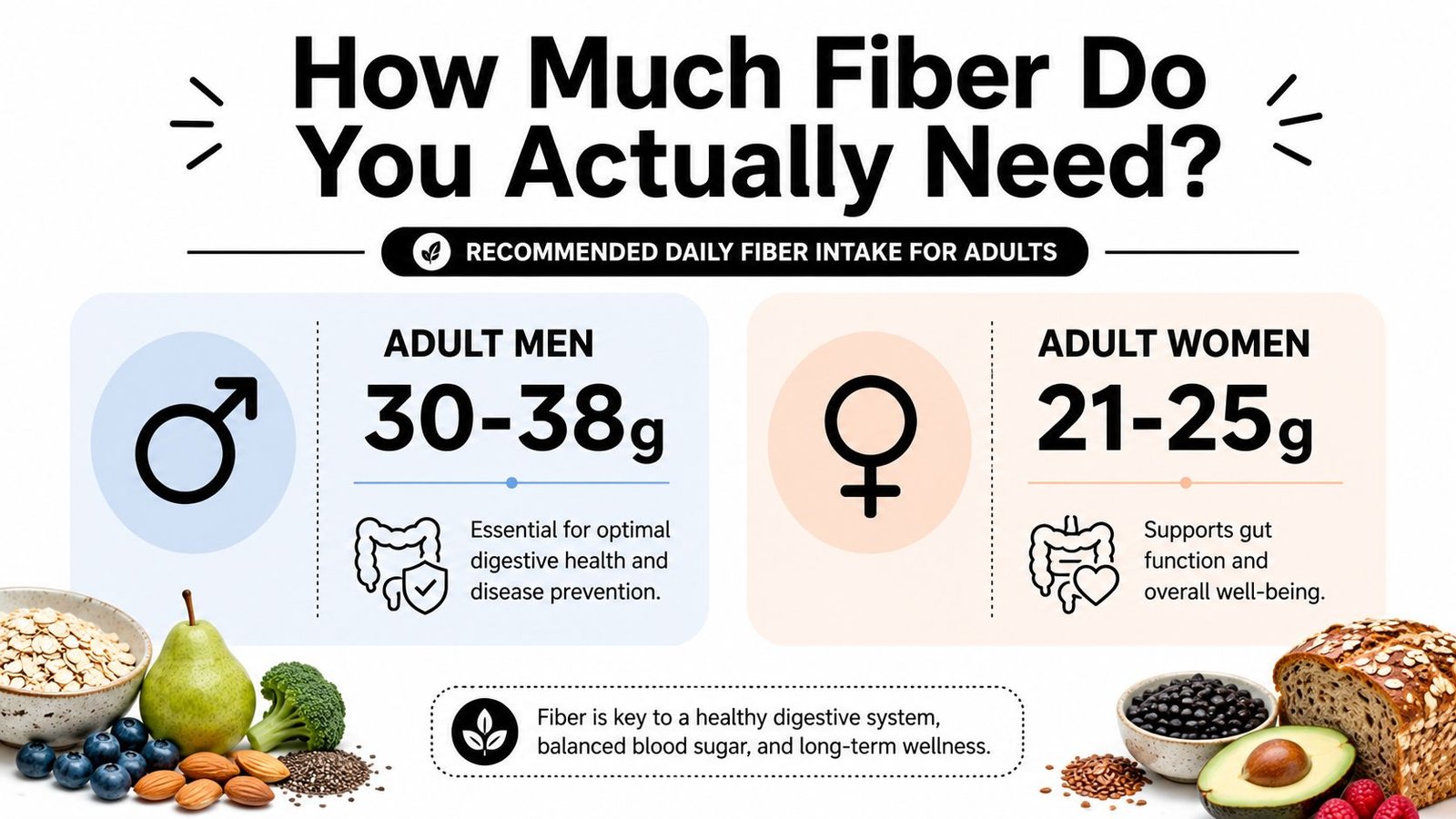
Daily fiber recommendations by age and sex
| Age Group | Females (grams/day) | Males (grams/day) |
|---|---|---|
| 19 to 50 | 25 | 38 |
| Over 50 | 21 | 30 |
This table is useful because it answers the “what should I aim for?” part fast. But it still isn't the whole story.
Use the calorie rule to personalize your target
The calorie-based method is often more useful in real life. If your appetite, body size, or activity level means you eat more or less than average, your fiber target should shift too.
A separate review also supports the same rule of thumb, noting that 14 g of fiber per 1,000 kcal generally translates to roughly 25 to 28 g/day for women and 28 to 34 g/day for men on typical calorie intakes in many settings, with global recommendations often clustering around 25 to 30 g/day or more for adults in this review of dietary fiber guidance.
Here's how to use it:
- If you eat around 1,600 calories, multiply 1.6 × 14. Your target is about 22.4 grams.
- If you eat around 2,000 calories, multiply 2 × 14. Your target is about 28 grams.
- If you eat around 2,500 calories, multiply 2.5 × 14. Your target is about 35 grams.
That gives you a personalized number instead of a generic one.
The best fiber target is the one that matches both your body and your usual intake, then increases at a pace your digestion can handle.
Which number should you follow
If you want a simple answer, use the age-and-sex table.
If you want a more precise answer, use the calorie rule.
If those two numbers are close, that's reassuring. It means you're in the right zone. If they differ a bit, choose the one that better fits how you eat. That's usually the most practical answer to how much fiber should I have a day.
The Two Types of Fiber and Why Both Matter
Hitting your total grams matters. But so does the kind of fiber you eat.
The easiest way to think about it is this: soluble fiber acts a bit like a gel, while insoluble fiber acts more like a broom. The gel slows things down in a helpful way. The broom helps move things along.
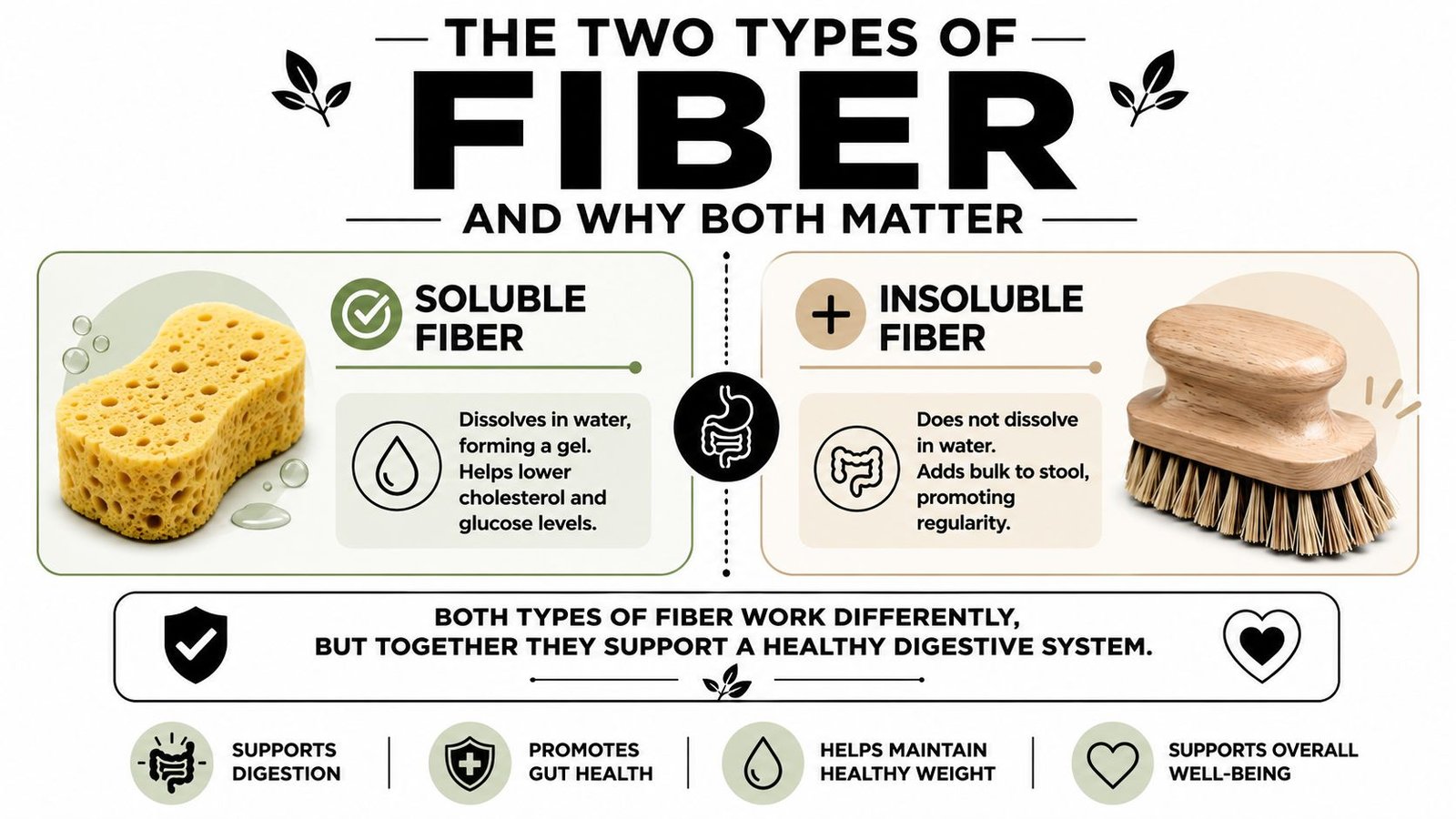
Soluble fiber is the gel
Soluble fiber mixes with water and forms a softer, gel-like texture. In everyday terms, this can help meals feel more steady and sustaining.
Foods that often bring more soluble fiber include:
- Oats and barley for a softer, more slow-digesting base
- Beans and lentils that add both texture and staying power
- Apples and citrus as easy, familiar options
- Chia and flax for a small but useful boost
If you've ever had a breakfast that kept you comfortable and full for hours, soluble fiber was probably part of the reason.
Insoluble fiber is the broom
Insoluble fiber doesn't dissolve the same way. It adds bulk and helps support regular movement through the digestive tract.
Common sources include:
- Whole grains such as whole wheat foods and brown rice
- Vegetable skins and peels when you eat produce in a less processed form
- Leafy greens
- Nuts and seeds
This is the fiber people often think of first when they think about regularity.
Balance usually works better than chasing one type
A recent expert summary noted that 25 to 29 g/day is adequate, more than 30 g/day may be even more beneficial, and Tufts highlighted a practical 2:1 insoluble-to-soluble ratio as a useful guide in this Tufts article on maximizing fiber intake.
That doesn't mean you need to calculate a perfect ratio at every meal. It means your plate should have variety. Oatmeal alone isn't enough. A giant salad alone isn't enough either. The best pattern usually mixes beans, whole grains, fruit, vegetables, nuts, and seeds across the day.
If you've also wondered whether fiber changes the energy content of foods, this explainer on whether fiber has calories clears up a common point of confusion.
A good fiber day usually looks mixed, not extreme.
Listening to Your Body's Fiber Signals
Your body gives feedback. The trick is not to treat that feedback as random.
When fiber is too low, meals often feel quick and flimsy. You eat, but the meal doesn't have much staying power. Digestion may feel sluggish, and bathroom habits may become less predictable. People sometimes interpret those signs as needing less food, more coffee, or a completely different diet, when the simpler issue is that their meals are missing enough plant structure.
What low fiber can feel like
Low fiber doesn't look the same in every person, but common patterns include:
- Irregularity when stools are harder to pass or less consistent
- Persistent hunger when meals digest quickly and don't satisfy for long
- Flat-feeling meals that seem low in texture, volume, and fullness
These are clues, not verdicts. They suggest looking at your eating pattern before assuming something more complicated is going on.
What happens when you increase too fast
On the other side, people sometimes go from very low fiber to “health overhaul” mode overnight. That's when bloating, extra gas, and stomach discomfort often show up.
That doesn't always mean fiber is the problem. Often, the problem is speed.
If your gut is used to a lower-fiber routine, a sudden jump can feel like throwing a beginner into an advanced workout. The body needs time to adjust. Water matters too. Fiber and fluid work together, so increasing one without paying attention to the other can make you feel worse before you feel better.
If fiber makes you feel uncomfortable, don't assume you should quit. First ask whether you added too much, too quickly, or without enough fluid.
The goal isn't to maximize fiber as fast as possible. The goal is balance. If your body feels better when you increase slowly, that's not a sign of failure. That's your best plan.
A Stepwise Plan to Increase Your Fiber Intake
The most reliable way to build fiber intake is through everyday food swaps. Reviews of dietary guidance note that replacing refined grains with whole grains, legumes, fruits, vegetables, nuts, and seeds is the most dependable way to reach a target around 30 g/day on a 2,000 kcal diet in this review on practical fiber intake strategies.
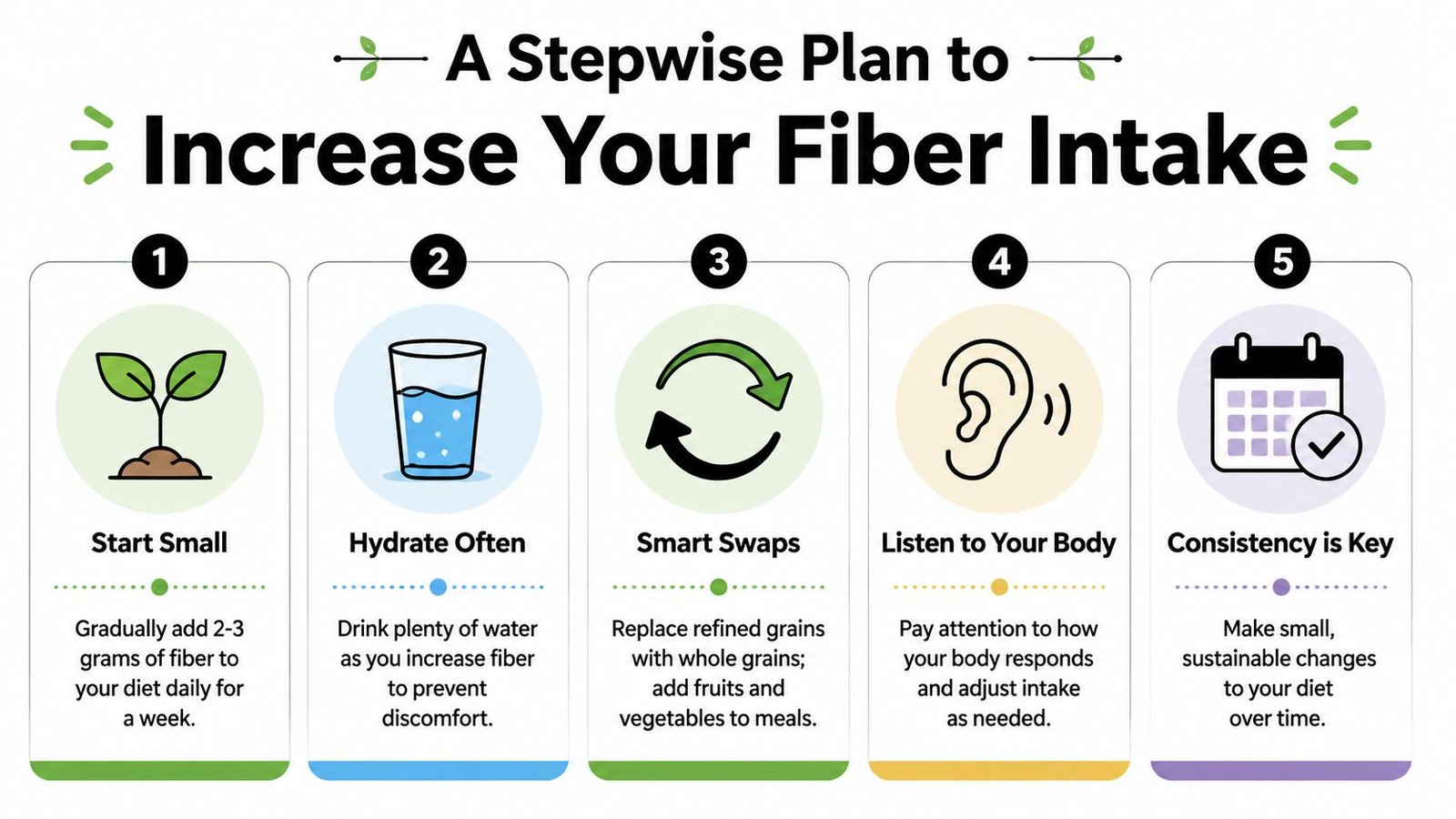
That sounds broad, so let's make it feel like a normal day instead of a nutrition worksheet.
Breakfast that actually sticks with you
Start with a breakfast that's built from fiber-containing foods instead of just refined starch.
A simple upgrade might look like this:
- Swap white toast for whole grain toast
- Add fruit instead of drinking only juice
- Stir seeds or oats into yogurt
If you like berries, this quick look at whether blueberries have fiber is useful because fruit is one of the easiest places to add fiber without making meals complicated.
Later in the morning, if you usually crash and want something crunchy, try fruit with nuts or a snack that includes seeds instead of reaching for a low-fiber packaged option.
Lunch and dinner with easy upgrades
Lunch doesn't need to become a perfect salad bowl. Small changes count.
Try choices like these:
- Use brown rice or another whole grain instead of a refined grain base
- Add beans or lentils to soup, grain bowls, tacos, or salads
- Keep vegetables visible on the plate instead of treating them like garnish
Dinner can follow the same rhythm. Think of fiber as something you layer in. A grain, a legume, and a vegetable often create a better meal structure than focusing on one item alone.
If you want broader routine ideas beyond fiber alone, AloeCure's gut health tips are a helpful read because they connect food choices with the bigger picture of digestive comfort.
A quick visual can help if you're trying to turn this into a daily habit.
The pace matters as much as the food
Don't try to overhaul breakfast, lunch, dinner, and snacks all on the same day.
A steadier rhythm works better:
- Change one meal first so your digestion has time to adapt.
- Keep the upgrade for several days before adding another.
- Drink water consistently as your fiber intake rises.
- Repeat foods you enjoy so the habit becomes automatic.
That's how fiber becomes part of your routine instead of a short-lived health kick.
How to Track Your Fiber Intake in Under a Minute
Personalized fiber goals are useful only if you know whether you're hitting them. That's where it often becomes difficult to stay on track.
A lot of advice still gives one adult target, but real recommendations vary by age, sex, and calorie intake, and the average U.S. adult still eats only about 15 g/day according to the Academy of Nutrition and Dietetics in this practical guide to boosting daily fiber intake. That's exactly why tracking helps. It turns “I think I'm doing okay” into something visible.
What to look for when tracking
You don't need perfect precision. You need consistency.
A simple approach works best:
- Know your target based on your age, sex, and calorie intake
- Check your recurring meals because breakfast and lunch patterns often repeat
- Notice gaps where your day is heavy on refined foods and light on plants
- Read labels carefully when packaged foods claim to be high in fiber
If labels confuse you, this guide on how to read nutrition labels makes the fiber line much easier to understand.
The real benefit of tracking
Tracking removes guesswork. It helps you notice whether your “healthy” day was low in fiber, or whether one small change, like adding beans to lunch or fruit to breakfast, moved you much closer to your goal than you expected.
That kind of feedback is what makes a personalized fiber target useful in real life, not just interesting in theory.
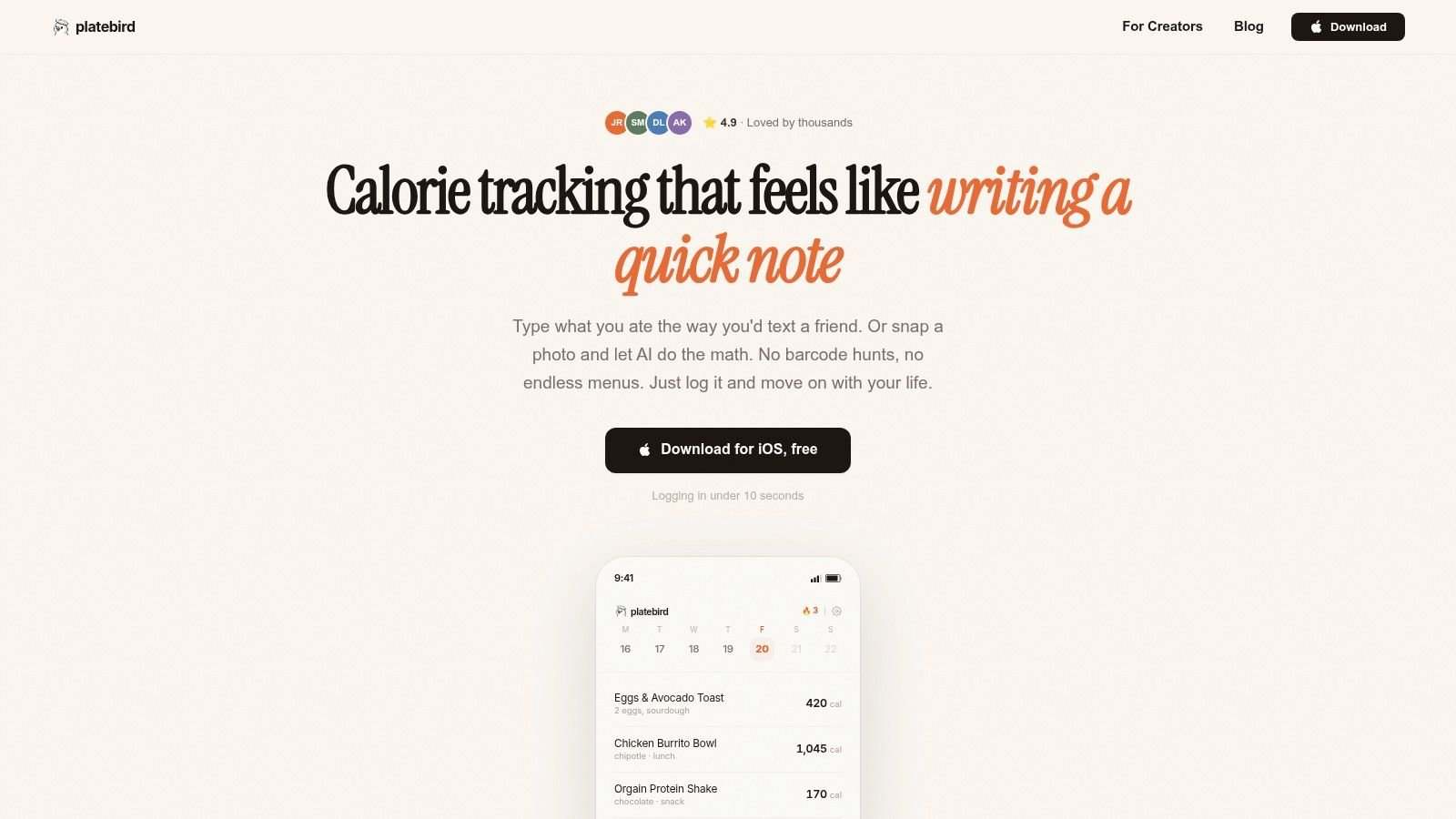
If you want a faster way to stay on top of fiber, calories, and macros without turning food logging into a chore, try PlateBird. You can type a meal like “eggs toast coffee” or “chicken rice broccoli,” or snap a photo, and get a quick nutrition breakdown that makes it easier to see whether you're reaching your daily fiber goal.