- The Morning Scramble Your Go-To Breakfast Dilemma
- The Nutritional Powerhouse in Your Pan
- Decoding the Great Cholesterol Debate
- How Your Cooking Method Changes Everything
- Smart Add-ins for a Healthier Scramble
- The Bigger Picture Portion Size and Meal Context
- Effortless Tracking From Your Plate to PlateBird
- Frequently Asked Questions About Eggs
You open the fridge, see a carton of eggs, and pause for a second.
They’re fast, cheap, familiar, and easy to cook before work. But the question still sneaks in: are scrambled eggs healthy, or are they one of those foods that sound wholesome until you look closer?
That hesitation makes sense. Eggs have spent years caught in nutrition whiplash. One era praised them for protein. Another warned about cholesterol. Then social media piled on with hot takes about seed oils, egg whites, pasture-raised labels, and whether adding cheese turns breakfast into dessert with a fork.
Individuals aren’t asking the question in a lab. They’re asking it in real life. While packing school lunches. While trying to lose weight. While meal prepping. While wondering whether the breakfast they keep repeating is helping or working against them.
The short answer is that scrambled eggs can absolutely fit into a healthy diet. The more useful answer is: it depends on what you put in the pan, how much you eat, and what the rest of the meal looks like.
The Morning Scramble Your Go-To Breakfast Dilemma
A lot of breakfasts fail because they ask too much of you. Overnight oats need planning. Smoothies need ingredients on hand. Yogurt bowls look easy until you’re out of fruit, granola, or both.
Eggs are different. They meet you where you are.
A busy parent can crack a few into a skillet before the kids are dressed. A gym-goer can make a quick scramble after training. A tired professional can stand in the kitchen half awake and still come out with something warm and filling. If you care where your food comes from, it can even start with finding a local source such as Scrambled Eggs Chicken Farm, which helps make a routine breakfast feel more intentional.
The confusion starts because “scrambled eggs” sounds like one food, but it’s really a category. One person means eggs gently cooked with spinach. Another means eggs with butter, cream, cheddar, and bacon. Those are not nutritionally identical breakfasts, even though they share a name.
Why the same breakfast can mean different things
Think of scrambled eggs like plain coffee. Coffee itself is one thing. Coffee loaded with syrups and whipped cream is another. Eggs work the same way.
A simple scramble can be a strong, protein-rich breakfast. A heavily loaded scramble can become much richer and more calorie-dense. Neither needs moral labels. It just helps to know which version you’re eating.
For mornings when you want more ideas beyond eggs, this list of easy breakfast ideas can help you compare options that are quick without feeling random.
Some of the healthiest meals are the ones you can repeat without stress.
The Nutritional Powerhouse in Your Pan
Scrambled eggs earn their reputation for a simple reason. They pack a lot of nutrition into a small, familiar food.
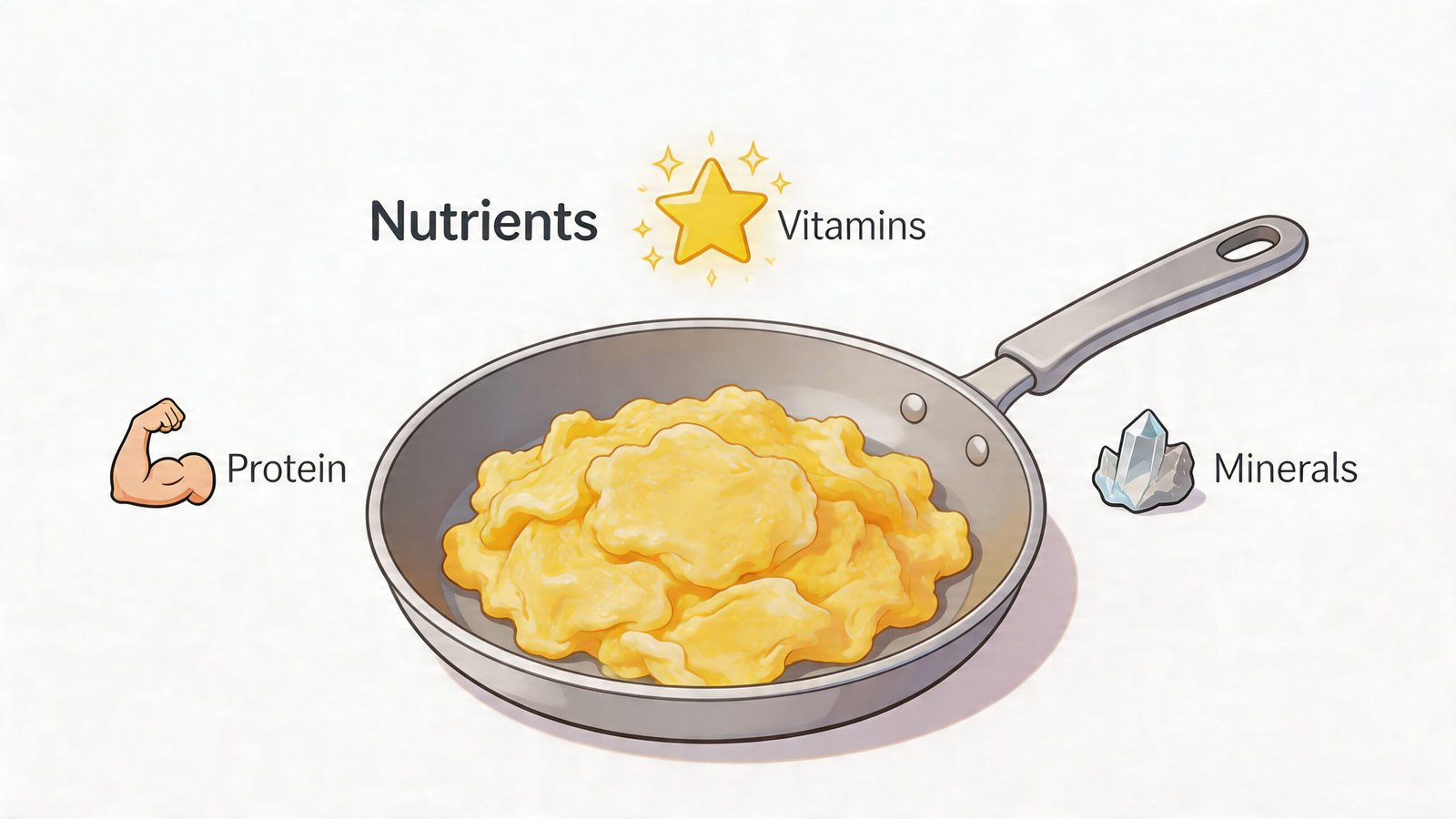
A plain scramble starts with two strengths that matter at breakfast. It gives you high-quality protein and a mix of nutrients that are hard to get from ultra-processed morning foods. The USDA FoodData Central entry for cooked eggs shows eggs provide protein, choline, several B vitamins, selenium, and vitamin A in a relatively modest portion.
Protein that does real work
Egg protein works like a fully stocked toolbox. Your body gets all nine essential amino acids in one food, which is why eggs are often used as a reference point for protein quality. That makes them useful for muscle repair after exercise, but also for ordinary mornings when you want breakfast to keep you satisfied longer.
Protein also helps explain why scrambled eggs often feel more steadying than a breakfast built mostly from refined carbs. A bowl of sugary cereal can burn fast, like kindling. Eggs burn slower, more like a log on the fire.
If you want a clearer sense of how eggs compare with yogurt, chicken, tofu, and other options, this protein quality chart comparing common foods adds helpful context.
Choline is one of eggs' overlooked strengths
Choline gets far less attention than protein, yet it plays a real role in brain function, liver health, and normal cell function. Eggs are one of the more practical ways to get it because they are affordable, familiar, and easy to build into a routine.
A useful comparison is this. If protein is the building material, choline helps with the communication system. You may not notice it the way you notice grams of protein, but it still supports how the body runs.
Why this matters on a real plate
Nutrition labels can feel abstract until breakfast is on the counter. Scrambled eggs make healthy meal-building easier because they already cover one major job in the meal. They supply a solid protein base, which means you can use the rest of the plate to add fiber, color, and staying power.
That is where the question shifts from “are scrambled eggs healthy?” to “what kind of meal am I building?” If your scramble is the anchor, it becomes much easier to pair it with fruit, whole-grain toast, beans, or vegetables and then log the full meal accurately in a tool like PlateBird instead of guessing later.
Eggs are not magic. They are efficient, flexible, and easy to use well.
Decoding the Great Cholesterol Debate
You crack two eggs into a pan, then a familiar question shows up with breakfast. “Are these good for me, or am I doing something harmful because of the cholesterol?”
That question makes sense. Eggs were treated like a heart health problem for years, so many people still carry that warning around even after the science became more nuanced.
The key distinction is simple. Cholesterol in food and cholesterol in your bloodstream are connected, but they are not a one-to-one swap. Eating a cholesterol-containing food does not automatically raise blood cholesterol in a dramatic or predictable way for every person.
A helpful way to picture it is this. Your body’s cholesterol system works more like a thermostat than a bucket. Food can influence the setting, but your liver, genetics, overall diet, and health status all affect the final number. That is why eggs can fit comfortably into one person’s routine and need more attention in another person’s plan.
Why the advice changed
Older nutrition advice focused heavily on the cholesterol content of single foods. Newer guidance pays more attention to overall eating patterns, the type of fats in the diet, and a person’s individual risk factors.
That shift matters because eggs contain cholesterol, but they do not come packaged with the same nutritional profile as highly processed breakfast foods. A scramble made with eggs and vegetables is a different health conversation from a breakfast built around refined carbs, excess sodium, and large amounts of saturated fat.
Research has also pushed the conversation away from fear-based shortcuts. For many healthy adults, moderate egg intake does not appear to worsen common heart disease risk markers in the way people once assumed. Some studies have even found eggs compare reasonably well with other breakfasts for fullness, which can shape the rest of the day’s eating.
What to focus on instead of a single number
A single cholesterol number can look intimidating on paper. On a real plate, context matters more.
Ask these questions instead:
- What else am I eating with the eggs?
- How often am I having them?
- What fats am I cooking with?
- Do I have a personal reason to monitor cholesterol more closely?
That is a more useful framework because foods do not act alone. A breakfast of scrambled eggs with spinach, beans, and fruit creates a very different nutrition picture than scrambled eggs with bacon, buttered white toast, and little fiber.
This is also where meal building becomes more practical than debating labels. If eggs give you a reliable protein base, you can use the rest of the plate to add what the meal may be missing, such as fiber, color, or slower-digesting carbohydrates, then log the whole breakfast in PlateBird instead of judging the eggs in isolation.
Who should be more careful
Eggs can fit into many healthy diets. That does not mean every person should treat them the same way.
If you have high LDL cholesterol, diabetes, a strong family history of cardiovascular disease, or you have been told by a clinician to limit certain foods, your best approach is more personal. The question shifts from “Are eggs healthy?” to “How do eggs fit into my numbers, my meals, and my routine?”
That is why broad advice can feel confusing. It is general by design. Your breakfast is specific.
If you enjoy precision in the kitchen, the precise technique for a 63-degree egg is a useful reminder that small changes can affect the final result. The same idea applies to nutrition. Small choices around portions, pairings, and frequency shape whether scrambled eggs support your goals well.
How Your Cooking Method Changes Everything
The egg itself is only part of the story. The pan matters too.
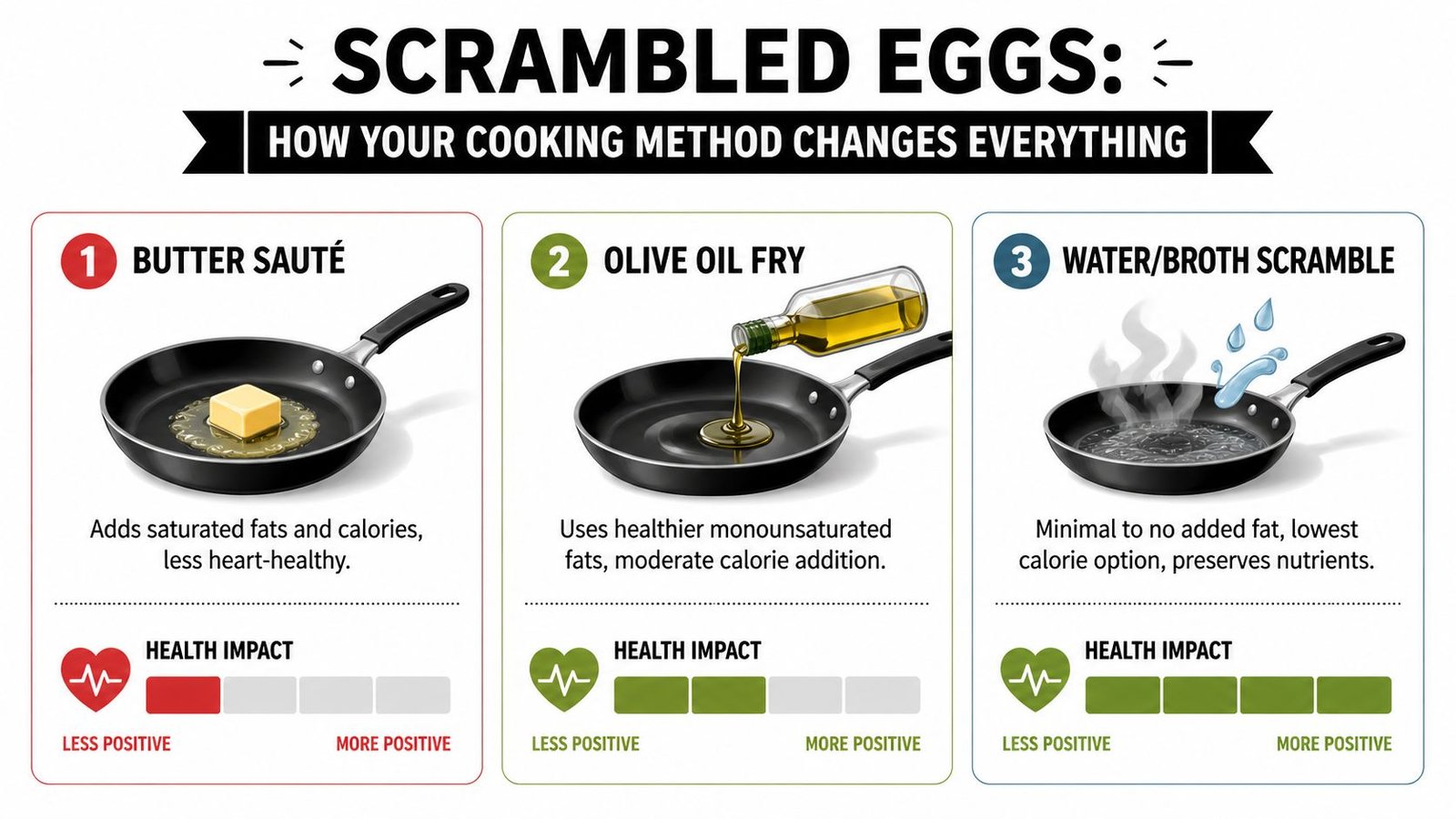
A plain scramble cooked gently with very little added fat is one breakfast. A scramble cooked in a generous amount of butter and finished with cream is another. The eggs didn’t change. The preparation did.
Three common ways to scramble
| Method | What changes | Best fit |
|---|---|---|
| Butter scramble | Richer flavor and more saturated fat | People prioritizing taste and richness |
| Olive oil scramble | Adds fat, but usually with a more heart-conscious profile | Balanced everyday cooking |
| Water or broth scramble | Little to no added fat | Lower-fat or lower-calorie meals |
Readers often get confused. They ask whether scrambled eggs are healthy, but what they really need to ask is, “What did I scramble them with?”
Texture and health can both work
You don’t need to choose between fluffy eggs and sensible cooking. A splash of water, broth, or a modest amount of oil can still produce soft curds. Lower heat helps too.
If you enjoy precision in egg cooking, the guide to the precise technique for a 63-degree egg shows how temperature changes texture in a very controlled way. It’s a useful reminder that cooking method affects the final result as much as ingredients do.
A practical kitchen checklist
- Use lower heat: Eggs turn tender when they cook slowly.
- Choose your fat on purpose: Don’t let “just a little” become an untracked pour.
- Skip automatic cream additions: Many people add dairy out of habit, not because the eggs need it.
- Nonstick can help: If your goal is a lighter scramble, the pan can do some of the work.
Gentle cooking often gives you a better texture and a meal that’s easier to fit into your day.
Smart Add-ins for a Healthier Scramble
Once the cooking method is under control, add-ins become your biggest lever.
Scrambled eggs become more than “fine”; they are useful. A basic scramble gives you protein. A thoughtfully built scramble can give you protein, color, volume, texture, and a better shot at staying full until lunch.
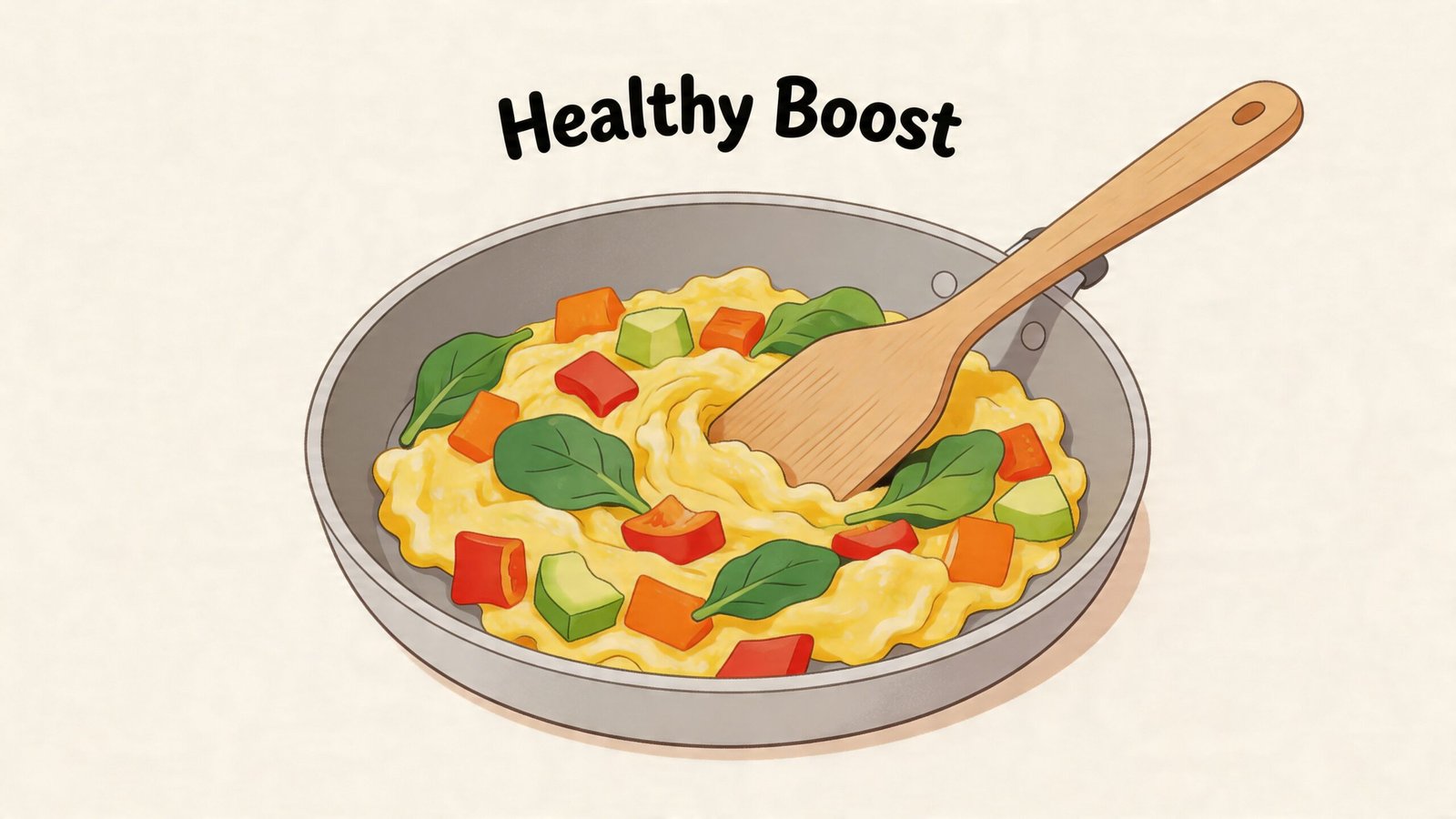
A review on egg intake and health notes that for diabetics or people tracking calories, pairing scrambled eggs with vegetables like spinach or peppers boosts fiber and nutrients without a significant calorie increase. The same source reports that higher egg intake can improve satiety, helping people stick to protein goals and potentially lowering overall energy intake.
Add-ins that earn their spot
If your goal is more volume without making breakfast heavy, vegetables are the easiest win.
- Spinach: Wilts quickly and adds bulk.
- Bell peppers: Add sweetness and crunch.
- Mushrooms: Make the scramble feel more substantial.
- Onions: Great for flavor, though some people find them harder to digest.
If your goal is more protein, think carefully before piling on lots of cheese.
- Cottage cheese can blend in softly for some people.
- Extra egg whites can increase protein while keeping the texture familiar.
- Leftover chicken or beans can work, depending on the style of meal you want.
Build by goal, not by trend
A good scramble for weight management looks different from one for a hard training block.
For lighter mornings, try eggs plus spinach, peppers, and herbs. For a more filling post-workout plate, add extra protein and pair it with something carbohydrate-based on the side. For kids or picky eaters, a softer scramble with mild vegetables often works better than a pan full of “superfoods” they’ll push around.
A quick visual can help if you like seeing ingredient combinations in action.
Two easy examples
Lighter everyday scramble
Eggs, spinach, peppers, and herbs. This keeps the meal colorful and satisfying without feeling weighed down.More filling training-day scramble
Eggs with extra whites, mushrooms, and a side of toast or potatoes. Same core food. Different purpose.
The Bigger Picture Portion Size and Meal Context
No food deserves a health halo all by itself. Scrambled eggs are no exception.
A balanced breakfast isn’t created by one ingredient. It comes from the portion, the extras, and what else lands on the plate. That’s why one person can eat scrambled eggs regularly and feel great, while another can eat “the same thing” and end up overshooting what they meant to eat by a lot.
Two breakfasts that look similar but aren’t
Breakfast A is a moderate portion of scrambled eggs with vegetables and a side of fruit. It’s built to satisfy hunger and provide balance.
Breakfast B is a huge scramble packed with cheese and processed meat, plus heavily buttered toast. That meal might still fit someone’s plan occasionally, but it serves a very different nutritional purpose.
The point isn’t to call one “clean” and the other “bad.” The point is to notice context. Eggs don’t cancel out everything around them, and they don’t need to.
Portion changes the story
A scramble can be a smart breakfast, a hearty brunch, or a very rich meal disguised as breakfast food. Portion size is the dial.
If you’re trying to lose weight, keeping the scramble satisfying without turning it into a skillet full of extras matters. If you’re trying to gain muscle or support harder training, a larger portion may make sense. The same food can work in both directions depending on what you need.
A healthy meal answers your goal. It doesn’t just pass a nutrition purity test.
Use the plate, not the ingredient, as your unit of thinking
Instead of asking only whether eggs are healthy, ask:
- What else is in this meal?
- Does this portion match my hunger and goals?
- Am I building a breakfast that keeps me steady, or one that leaves me chasing snacks?
That’s often where clarity shows up. Not in the egg itself, but in the full plate.
Effortless Tracking From Your Plate to PlateBird
You make scrambled eggs, add a splash of oil, toss in spinach, sprinkle on cheese, and call it a quick breakfast. Ten minutes later, you have a meal that is still healthy for many people, but very different from “2 eggs” in any tracker.
That gap matters.
Scrambled eggs are one of the easiest foods to underestimate because the extras subtly change the nutrition. Oil adds fat. Cheese changes the calorie and sodium total. Toast, avocado, or turkey sausage can turn a light breakfast into a full mixed meal. Tracking helps you see the whole plate instead of relying on memory.
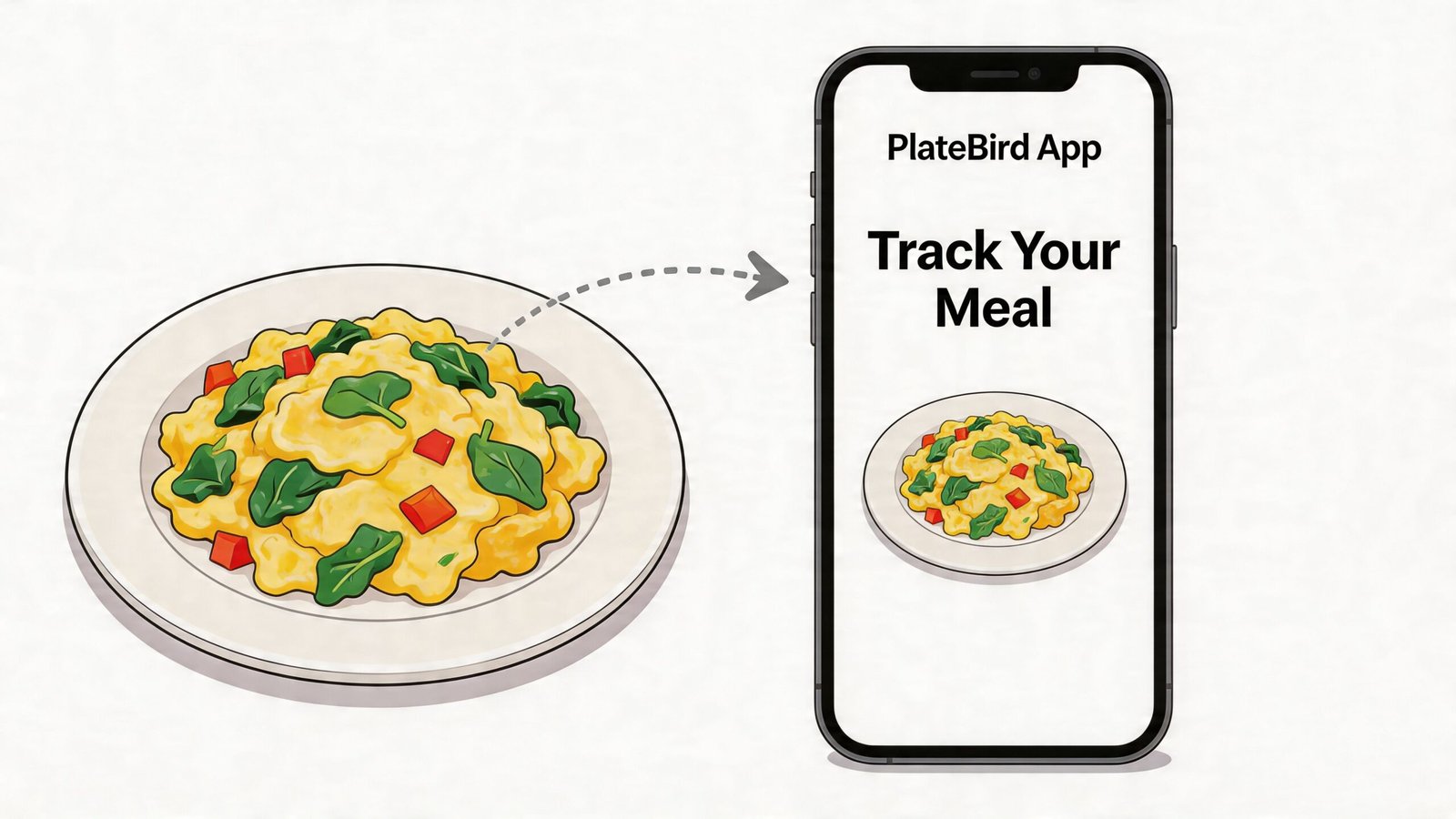
A good way to think about it is this: eggs are the foundation, and the add-ins are the furniture. The foundation matters, but the finished house depends on what else you put inside. If your goal is more protein, steadier energy, or better calorie awareness, logging the meal as you ate it gives you a more useful answer than logging “scrambled eggs” as a shortcut.
Why the egg itself can change the entry
Not every carton is nutritionally identical. Standard, pasture-raised, and omega-3 enriched eggs can differ, especially in fat composition. The American Egg Board’s overview of specialty eggs explains that pasture-raised and omega-3 eggs may offer a different nutrient profile than conventional eggs. If you pay more for those eggs for a reason, it makes sense to log the version you bought.
This matters most for people tracking more than calories. Someone focused on protein alone may not care much. Someone paying attention to overall fat quality, micronutrients, or meal patterns probably will.
What useful tracking looks like in real life
Useful tracking should feel like writing down what happened, not solving a puzzle.
“3 scrambled eggs with spinach, peppers, olive oil, and feta” is far more helpful than a vague entry that leaves out the parts that changed the meal. That kind of detail makes patterns easier to spot. You may notice that the breakfasts that keep you full longest include vegetables and a source of fiber on the side. You may also notice that your “light” scramble is only light on days when the extras stay modest.
If you want a tool built for that kind of practical meal logging, this guide to the best macro tracking app is a useful place to start.
Good tracking supports the whole process from question to action. You ask whether scrambled eggs are healthy. Then you build a version that fits your goal. Then you record it clearly enough to learn from it. PlateBird fits that last step well because breakfast is not just a food question. It is a habit question.
Frequently Asked Questions About Eggs
Are egg whites healthier than whole eggs
Egg whites and whole eggs serve different jobs on the plate.
Egg whites give you mostly protein. Whole eggs give you protein plus the yolk, which carries nutrients such as choline and fat-soluble vitamins. A simple way to look at it is this: egg whites are the leaner option, while whole eggs are the more complete package.
So the better choice depends on your goal. If you want to raise protein while keeping calories and fat lower, egg whites can help. If you want a breakfast that is often more satisfying and nutrient-rich, whole eggs may make more sense.
Are scrambled eggs healthy for weight loss
They can fit very well into a weight-loss plan because protein tends to help with fullness.
The catch is that scrambled eggs are a base, not the whole story. Eggs cooked with vegetables and paired with fruit or whole grain toast create a very different meal than eggs loaded with cheese, sausage, and a lot of butter. Same food, different total package.
If you are tracking intake, details matter. Logging “2 scrambled eggs with spinach and a teaspoon of olive oil” gives you a much clearer picture than logging “eggs.”
Is it safe to eat runny scrambled eggs
Safety depends on how fully the eggs are cooked and who is eating them.
As noted earlier, raw or undercooked eggs can carry a small salmonella risk. For pregnant people, young children, older adults, and anyone with a weakened immune system, fully cooked eggs are the safer choice. If you are making scrambled eggs for one of those groups, cook until the eggs are set rather than glossy and loose.
Good kitchen habits matter too. Keep eggs refrigerated, avoid cross-contamination from shells or raw egg, and cook them soon after cracking.
Are premium eggs actually different
Sometimes they are, but the difference is usually in the details, not in whether the egg is “good” or “bad.”
Omega-3 enriched eggs may contain more omega-3 fats. Pasture-raised eggs may differ somewhat in nutrient profile depending on production methods. Conventional eggs are still nutritious, so this is less about fear and more about matching the product to your priorities and budget.
If you buy a specialty egg for a reason, it is worth recording the type you used when you log the meal. That keeps your tracking closer to what you ate.
What if eggs upset my stomach
Start by separating the egg from everything around it.
Some people react to eggs themselves. Others do fine with eggs but feel off after a rich scramble made with butter, cheese, cream, or a large portion. A simpler test meal helps. Try eggs cooked plainly with a small amount of oil and see how you feel.
If symptoms keep happening, talk with a healthcare professional. Ongoing digestive issues deserve a closer look.
What’s a good vegan alternative to scrambled eggs
Tofu scramble is the closest everyday substitute.
It fills a similar role in a meal, especially when you cook it with vegetables, herbs, and spices. The nutrition is not identical, but the same meal-building rule still applies. What sits next to the scramble matters just as much as the scramble itself.
A tofu scramble with veggies and fiber-rich sides can be a strong breakfast. A highly processed plant-based scramble with few vegetables may be less satisfying.
So, are scrambled eggs healthy or not
For many people, yes.
Scrambled eggs are a nutrient-dense, protein-rich food that can support different goals, from staying full at breakfast to building a balanced higher-protein meal. The healthiest version depends on portion size, cooking fat, add-ins, and what else is on the plate. That is why the better question is often not “Are eggs healthy?” but “How do I build this meal so it fits my goal?”
That is also where tracking becomes useful, not obsessive. If you can quickly record your usual scramble and its add-ins in PlateBird, you can connect the nutrition science to real mornings and see which version works best for your appetite, macros, and routine.
If you want to stop guessing and start seeing how your real breakfasts fit your goals, PlateBird makes tracking simple. You can type what you ate in plain language or snap a photo, then get calories and macros without the usual logging hassle. For repeat meals like scrambled eggs with your usual add-ins, that kind of speed makes consistency much easier.