A standard 100g serving of plain frozen broccoli has about 30 calories. That’s a common figure, but it’s only the starting point, because cooking and portion size can change how those calories look on your plate.
You’re in the freezer aisle, holding a bag of broccoli, trying to make one quick decision. Is this one of those foods you can toss into a meal without thinking too hard, or is there a tracking catch hiding behind the label?
The good news is that frozen broccoli is one of the easiest vegetables to fit into a calorie-conscious routine. The less obvious part is that the number on the bag usually describes it in one state, often plain and unprepared, while you eat it in another state, steamed, boiled, roasted, or mixed into dinner. That difference is where a lot of confusion starts.
If you’ve ever logged broccoli and wondered why your serving looked much bigger or smaller than the app expected, you’re not doing anything wrong. You’re just running into the difference between total calories and calorie density. Once that clicks, calories in frozen broccoli become much easier to track without stress.
The Simple Question in the Freezer Aisle
A shopper picks up a bag of frozen broccoli because it feels like the safe choice. It’s green, convenient, cheap, and easy to pair with almost anything. Chicken and rice. Pasta. Salmon. A late-night stir-fry. The question usually comes next. How many calories are really in this?
The reassuring answer is simple. Plain frozen broccoli is very low in calories, and it fits easily into a meal plan. That’s why it shows up so often in weight loss meals, meal prep containers, and quick weeknight dinners.
What trips people up isn’t broccoli itself. It’s the label, the serving size, and the way food changes from freezer bag to dinner plate. One brand might list a serving by cup. Another uses grams. Then you cook it, the volume changes, and suddenly the portion in your bowl doesn’t seem to match anything on the package.
Frozen broccoli is simple food. Tracking gets confusing because preparation changes what that serving looks like.
That’s also why learning to read the label matters more than memorizing one number. If you want a useful refresher on serving size, grams, and what nutrition panels are really telling you, this guide on how to read nutrition labels helps clear up the most common mistakes.
Where people usually get stuck
A few pain points show up again and again:
- Cup measurements vary: One cup of frozen florets doesn’t always mean the same thing as one cup after cooking.
- Brands use different serving sizes: The bag may look similar, but the listed portion can differ.
- Cooked volume shrinks: The broccoli can look like less food after heating, even when the total calories haven’t changed.
If you’ve felt unsure about logging it, that’s normal. The details are manageable once you know which part of the process changes the number you use.
Frozen Broccoli by the Numbers
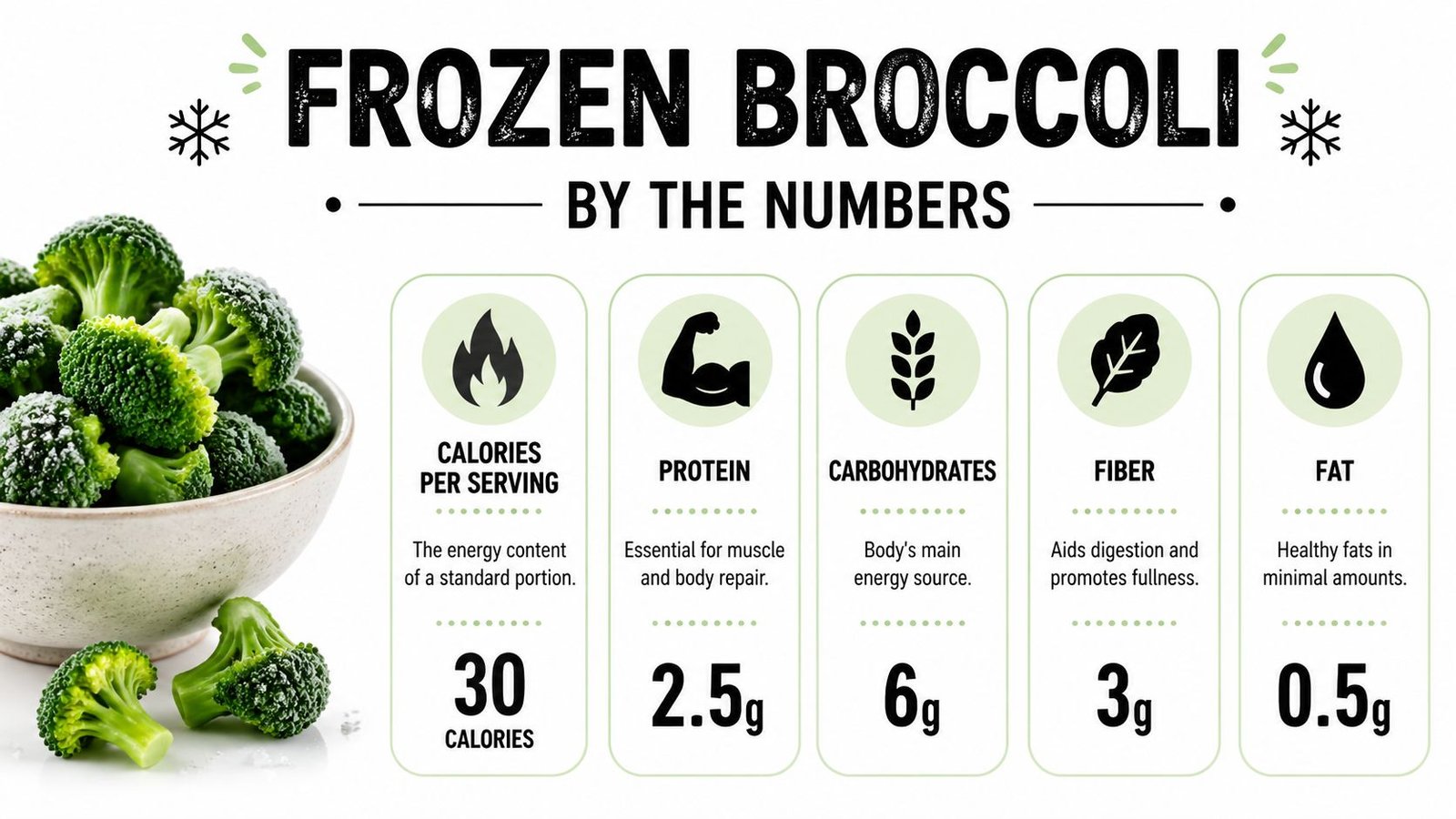
Start with the measurement that changes least: weight. If you want a reliable baseline for calories in frozen broccoli, plain, unprepared 100 grams is the best place to begin.
According to USDA-based data for frozen broccoli, 100g of frozen chopped unprepared broccoli contains 30 calories, with 5g carbs, 3g protein, 3g fiber, and 0g fat. That number gives you a stable reference point. Cups can shift depending on how large the florets are, how tightly they are packed, and whether the broccoli is measured frozen or cooked.
The baseline that matters
A food label becomes much easier to read once you have one steady reference in mind. For frozen broccoli, that reference is 30 calories per 100g.
Here is the practical reason. Weight works like using inches instead of estimating by eye. A cup of broccoli can look generous or skimpy depending on the cut and the cooking method. One hundred grams stays one hundred grams. If you ever need help converting a homemade portion into something you can log, this guide on how to calculate calories in homemade food walks through the process clearly.
Practical rule: If package servings seem inconsistent, return to grams.
You may still notice different calorie numbers across brands and apps. That usually reflects different serving sizes, not a different vegetable. A larger cup serving will naturally show more calories than a smaller gram-based serving.
What common servings look like
Use this quick comparison to sort out what each measurement is telling you:
| Serving view | What it tells you |
|---|---|
| 100g plain frozen broccoli | A steady baseline for comparison |
| Cup-based serving | Handy in the kitchen, but less exact because packing and piece size vary |
| Brand label serving | Fast for logging, if your portion matches that brand’s listed amount |
One cup and 100 grams are not competing numbers. They are different camera angles on the same food. Weight gives you the clearest view. Volume gives you a faster estimate.
That is why nutrition coaches often start with the plainest version of the food and the most stable unit of measure. Once you know the baseline, logging gets simpler and a lot less frustrating.
How Cooking Changes Your Calorie Count
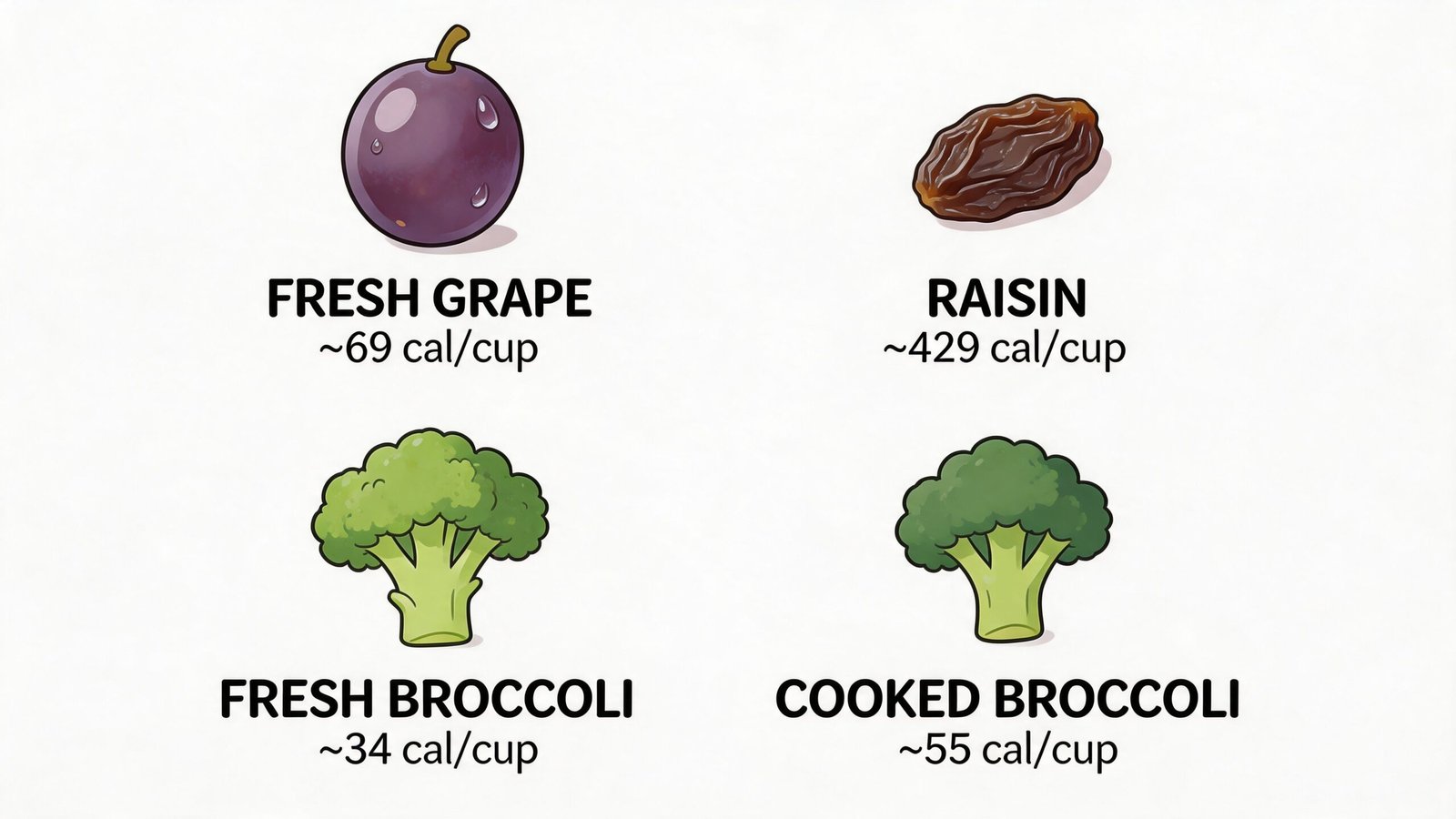
The calorie number on the bag is often assumed to be the final answer. It isn’t always. Cooking changes the calorie density of broccoli, which means the calories can become more concentrated in a smaller cooked volume.
The easiest analogy is a sponge. When it’s full of water, it looks big and puffy. When it dries out, it shrinks. The material is still there, but now it’s packed into less space. Broccoli behaves in a similar way when heat drives off water.
The number on the bag isn’t the whole story
A verified example makes this much clearer. CalorieKing’s frozen broccoli data notes that frozen chopped broccoli can go from around 30 calories per cup raw to 52 calories per cup when boiled and drained, because water loss concentrates the solids.
That doesn’t mean boiling adds calories by itself. It means one cup cooked is no longer the same amount of broccoli as one cup frozen.
Why this confuses meal preppers
You pour a generous amount into a pan. After steaming or boiling, it shrinks. Now the broccoli takes up less room in the container, so a cooked cup can represent more original broccoli than you expect.
That’s where people often under-log vegetables. Not because they’re careless, but because the visual cue changed.
A few common situations cause this:
- Boiled and drained broccoli: Water leaves, volume drops, and calories per cup rise.
- Steamed broccoli: Similar idea, though exact changes depend on how much moisture remains.
- Roasted broccoli: It can shrink even more visually, especially if edges dry out.
If you’re logging the cooked version, use the cooked entry. If you’re logging from the frozen bag before cooking, use the frozen entry.
For mixed dishes, this gets even trickier. A casserole, stir-fry, or meal prep bowl combines cooked foods with very different moisture levels. This guide on how to calculate calories in homemade food is useful when you want to log the whole recipe rather than each ingredient in isolation.
The key distinction
The broccoli itself didn’t become a higher-calorie food. The space it takes up changed. That’s the idea to hold onto. Once you separate total calories from volume, the label starts making a lot more sense.
The Nutrient Powerhouse in Your Freezer
Frozen broccoli earns freezer space for a simple reason. It gives you a lot of nutrition for very few calories.
As noted earlier, a cup of frozen broccoli is low in calories while still contributing vitamins and fiber. That matters because calorie tracking is not only about keeping numbers down. It is also about getting good return from the calories you eat. Broccoli does that well.
A practical way to picture it is this: some foods spend your calorie budget quickly and leave little behind besides taste and energy. Broccoli spends very little and brings back volume, texture, fiber, and micronutrients. It works like getting a full grocery bag for the price of one item.
Why frozen still deserves a spot on your plate
Frozen vegetables sometimes get treated like the backup plan. In many kitchens, they are the plan that works.
They are picked, packed, and stored for convenience, which makes it easier to keep vegetables available on busy nights. And consistency matters. A nutritious food helps only if it is in the house, easy to cook, and simple enough to use again tomorrow.
That is one reason frozen broccoli shows up so often in realistic meal patterns. It fits weeknight life.
What makes broccoli such a strong value food
Broccoli does more than add green color to a plate. It helps round out a meal that might otherwise feel light on fiber and nutrients.
A few benefits stand out:
- It adds fiber and volume: You get a more filling plate without adding many calories.
- It pairs easily with staples: Chicken, rice, pasta, eggs, tofu, potatoes. Broccoli fits with almost anything.
- It improves nutrient quality: Even a basic meal becomes more balanced when you add a vegetable with vitamins and plant compounds.
If you are also thinking beyond calorie totals, this article on cellular health and folate gives helpful context on why folate-rich foods matter in an overall eating pattern.
A low-calorie food is most useful when it also helps your meal do more work. Frozen broccoli is a good example. It is affordable, easy to keep on hand, and nutritionally dense without being hard to track.
Visualizing Portions without a Food Scale
Not everyone wants to weigh vegetables at dinner. That’s fine. You can get close enough for everyday tracking by building a visual reference and sticking with it.
The goal isn’t perfection. The goal is a repeatable estimate you can use when life is busy, your kitchen is chaotic, or the scale is buried in a drawer.
Use your hand as a measuring tool
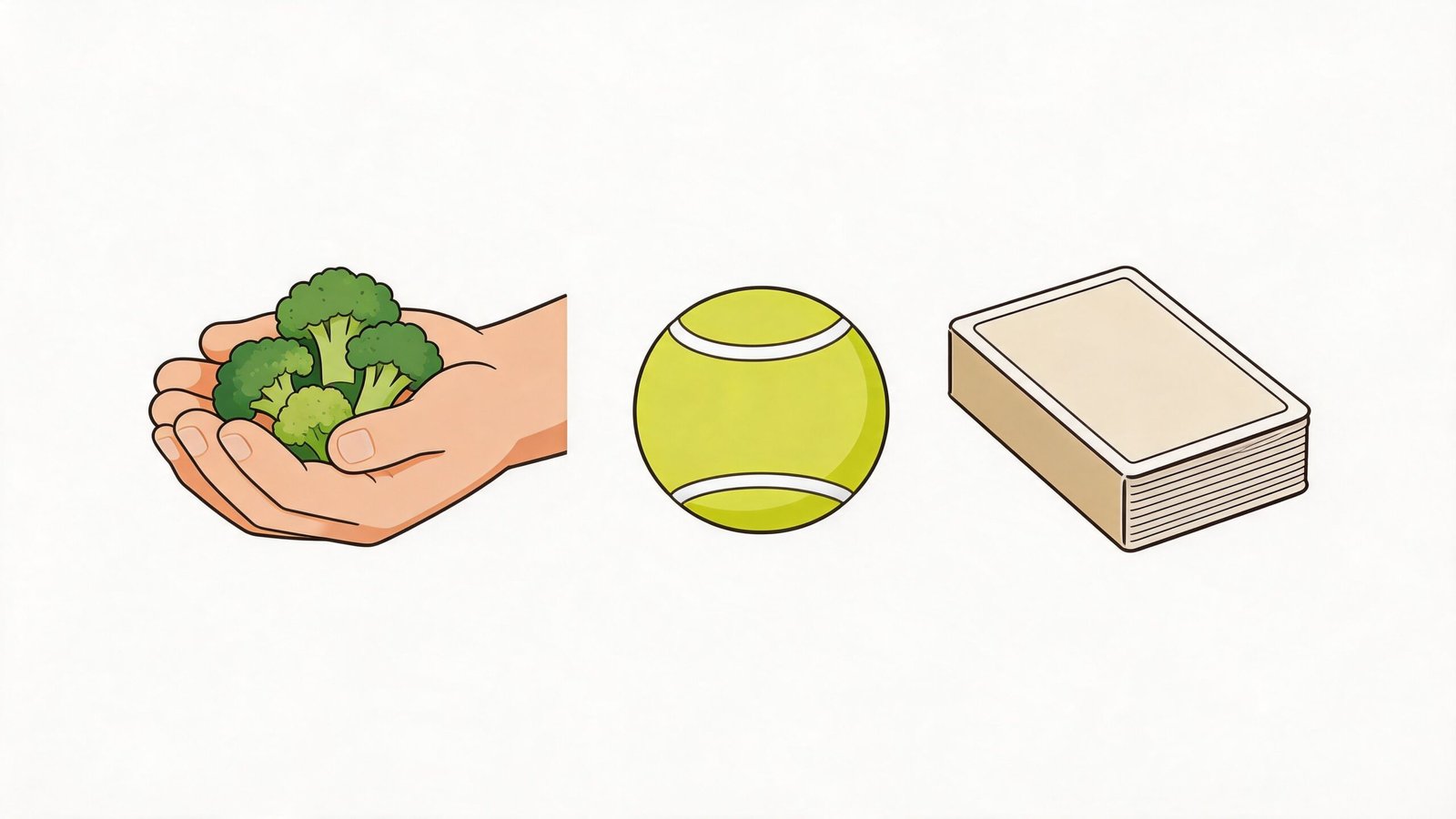
For broccoli, a practical estimate is to compare the portion to everyday objects and your own hand.
Try these cues:
- A loose fist of florets: A useful mental shortcut for a moderate serving.
- A side-dish mound: If it fills a small section of your plate, log it as a modest portion rather than a huge one.
- A heaping cooked scoop: Remember that cooked broccoli looks smaller, so don’t assume small volume always means tiny calories.
Match the estimate to the form you ate
People do better with one extra question. Did you eat it frozen-to-cooked, straight from a plain bag, or as part of a recipe with oil, cheese, or sauce?
That matters more than tiny visual differences.
A simple habit helps:
- Look at the broccoli on the plate.
- Decide whether it’s plain cooked broccoli or part of a richer dish.
- Log the closest version and move on.
Good tracking is often about being consistent with your estimates, not obsessing over every floret.
Keep your expectations realistic
Broccoli isn’t usually the food that derails progress. The bigger issue is often the oil, butter, dressing, or creamy sauce added around it. So if your frozen broccoli is served plain, you can relax a little. If it’s roasted in oil or covered in cheese sauce, log those additions separately.
That approach keeps things grounded. You don’t need a lab. You need a system you’ll use next Tuesday when dinner is late and everyone’s hungry.
Log Your Meal in Seconds with PlateBird
Understanding this makes tracking easier. The hardest part of calories in frozen broccoli isn’t that broccoli is complicated. It’s that the details pile up fast. Brand differences, florets versus chopped, frozen versus cooked, and whether the portion on your plate matches the serving on the package.
That variation is real. Verified data notes that calorie counts can vary by 20% or more between brands and cuts, partly because of processing and ice glaze. Manual logging often misses that nuance.
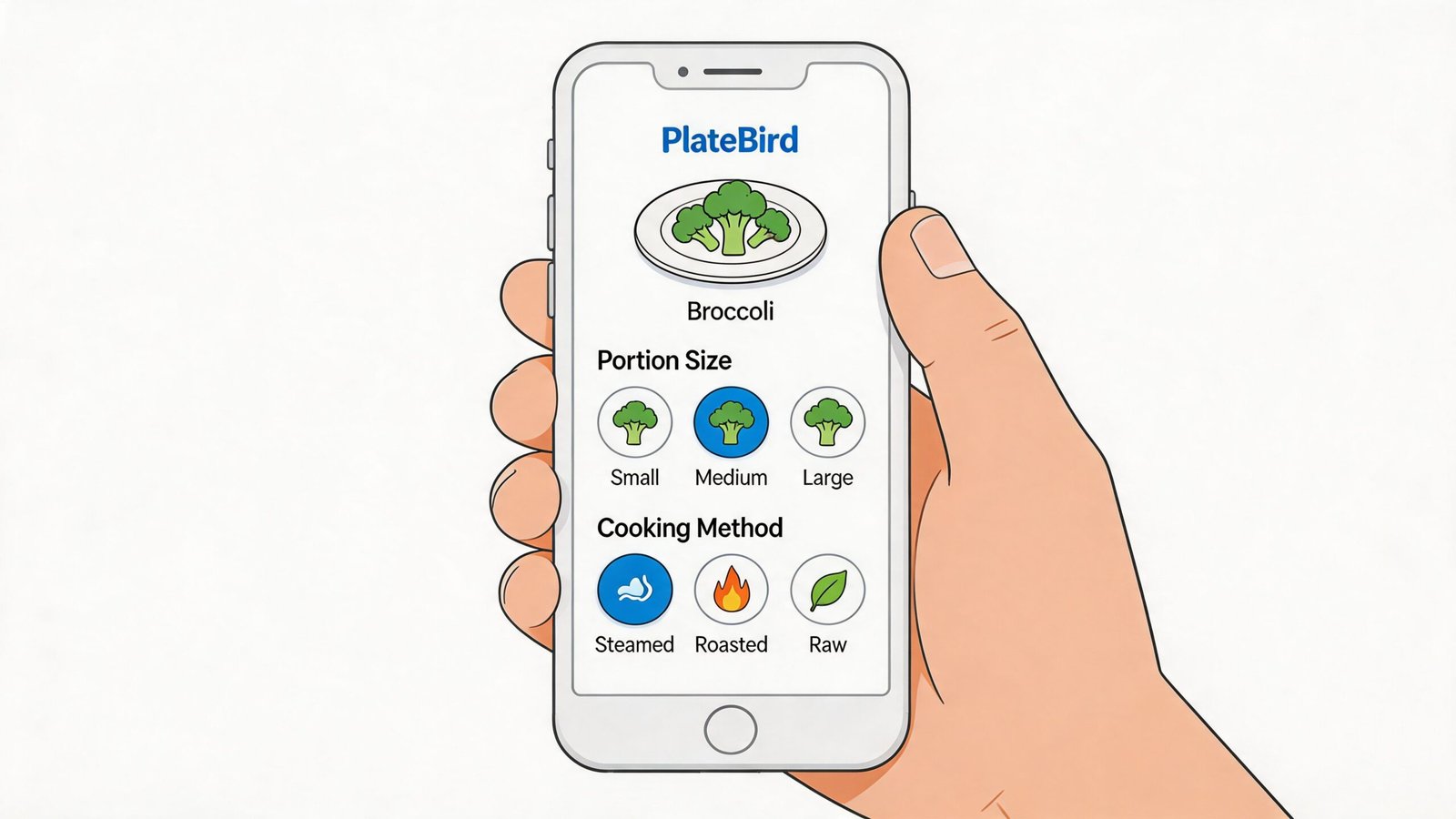
Two ways to make logging less annoying
One option is to type what you ate in plain English. If dinner is chicken, rice, and broccoli, you shouldn’t have to hunt through a giant food database one ingredient at a time.
The other option is visual logging. If the broccoli is already cooked and on the plate, a photo-based workflow is often more intuitive because it starts from what you ate, not what the frozen bag said earlier in the day.
Why this matters for broccoli specifically
Broccoli is exactly the kind of food that sounds easy to log but turns fiddly in practice. A plain frozen entry may be close, but not quite right for boiled and drained broccoli. A generic cup entry may not reflect the brand you bought. A chopped version may not line up with florets.
That’s where a tool built for low-friction tracking helps. PlateBird is designed so you can type a meal naturally or snap a photo instead of doing all the translation work yourself. If you want a closer look at how it compares with other tools, this breakdown of the best macro tracking app is a useful starting point.
What a smoother tracking habit looks like
A practical system usually looks like this:
- Type the meal fast: Use normal language instead of database gymnastics.
- Snap the plate when needed: This is helpful when cooking changed the volume and appearance.
- Repeat familiar meals easily: Once a meal is established, logging should get faster, not slower.
The best tracking app isn’t the one with the biggest database. It’s the one you’ll still use when you’re tired.
That’s the main benefit. Not more nutrition trivia. Less friction between eating the meal and logging it accurately.
Your Go-To Guide for a Go-To Vegetable
Frozen broccoli is one of the simplest foods to keep in rotation. The basic benchmark is easy to remember, about 30 calories per 100g for plain frozen broccoli, and the bigger lesson is just as useful: cooking changes volume, so it can change the calories you log per cup.
Once you understand that, the confusion fades. You can read labels more clearly, estimate portions with more confidence, and stop second-guessing every green side dish. That’s a win for weight loss, meal prep, and everyday sanity.
If you want food logging to feel as easy as texting yourself a note, try PlateBird. You can type meals like “chicken rice broccoli” or snap a photo of your plate, and the app handles the nutrition breakdown without the usual friction.