A full package of Top Ramen is usually about 380 calories, but that number can be misleading because the label often splits one pack into two servings. Depending on whether you read it as a serving or the whole package, the same noodles can look like a light snack or a real meal.
You're probably here in a familiar moment. It's late, you're hungry, there's a pack of Top Ramen in the cabinet, and you want a straight answer before you tear it open. Fair. Instant ramen is one of those foods that seems simple until you look at the label and realize the math gets weird fast.
The bigger issue isn't just the calories in Top Ramen. It's how people eat it. Some eat the whole pack. Some split it. Some add an egg, leftover chicken, frozen vegetables, sesame oil, or whatever's in the fridge. By the time that bowl hits the table, the number on the package may no longer describe the meal in front of you.
The Late-Night Question Is Top Ramen a Diet-Wrecker
At 11:30 p.m., a packet of ramen can feel like either a lifesaver or a bad decision. When one reaches for it, the mindset isn't usually, “I'm about to conduct a nutrition label audit.” The primary desire is for something warm, cheap, and fast.
That's why ramen gets judged in extremes. Some people treat it like instant diet sabotage. Others shrug and say it's only a few hundred calories, so what's the problem? A balanced assessment proves less dramatic and more useful. Top Ramen isn't automatically a diet-wrecker, but it also isn't a free pass just because the calorie number looks moderate at first glance.
Why the number feels slippery
A lot of confusion starts with the label itself. One source of nutrition info makes a serving of chicken-flavored instant ramen look modest, while eating the full package lands much higher because many packs contain two servings. Healthline reports 188 calories per 43 g serving and about 371 calories for the full package of chicken-flavored instant ramen, which is why so many people accidentally undercount what they ate when they finish the whole pack (Healthline's ramen nutrition guide).
That mismatch matters most if you're trying to lose fat, maintain weight, or hit a training target. If you want to know whether ramen fits your day, you need your daily calorie target first. A good starting point is a calorie deficit and surplus calculator so you can see whether your bowl is a small part of the plan or a bigger chunk than you thought.
Practical rule: If you ate the whole brick of noodles, log the whole package unless you intentionally measured out less.
What makes ramen tricky in real life
Top Ramen usually isn't eaten in a vacuum. It turns into a “real meal” once people start adding things. That can help or hurt.
A plain bowl may fit your calories better than takeout. But if you pour in oil, crack in eggs, toss in meat, and finish all the broth, the meal changes. Sometimes that's a good trade because it boosts fullness and protein. Sometimes it subtly transforms a cheap pantry meal into a much heavier bowl than expected.
A smarter question isn't “Is Top Ramen bad?” It's this:
- How much did you eat? The serving size changes the answer.
- What did you add? The noodles are only the baseline.
- What's your goal? A post-workout meal, a budget dinner, and a cutting-phase snack aren't the same thing.
Ramen can fit into a balanced diet. It just needs honest math and a little context.
Decoding the Top Ramen Nutrition Label
A Top Ramen label can feel like one of those receipts with tiny print everywhere. The trick is to find the number that matches what you ate.
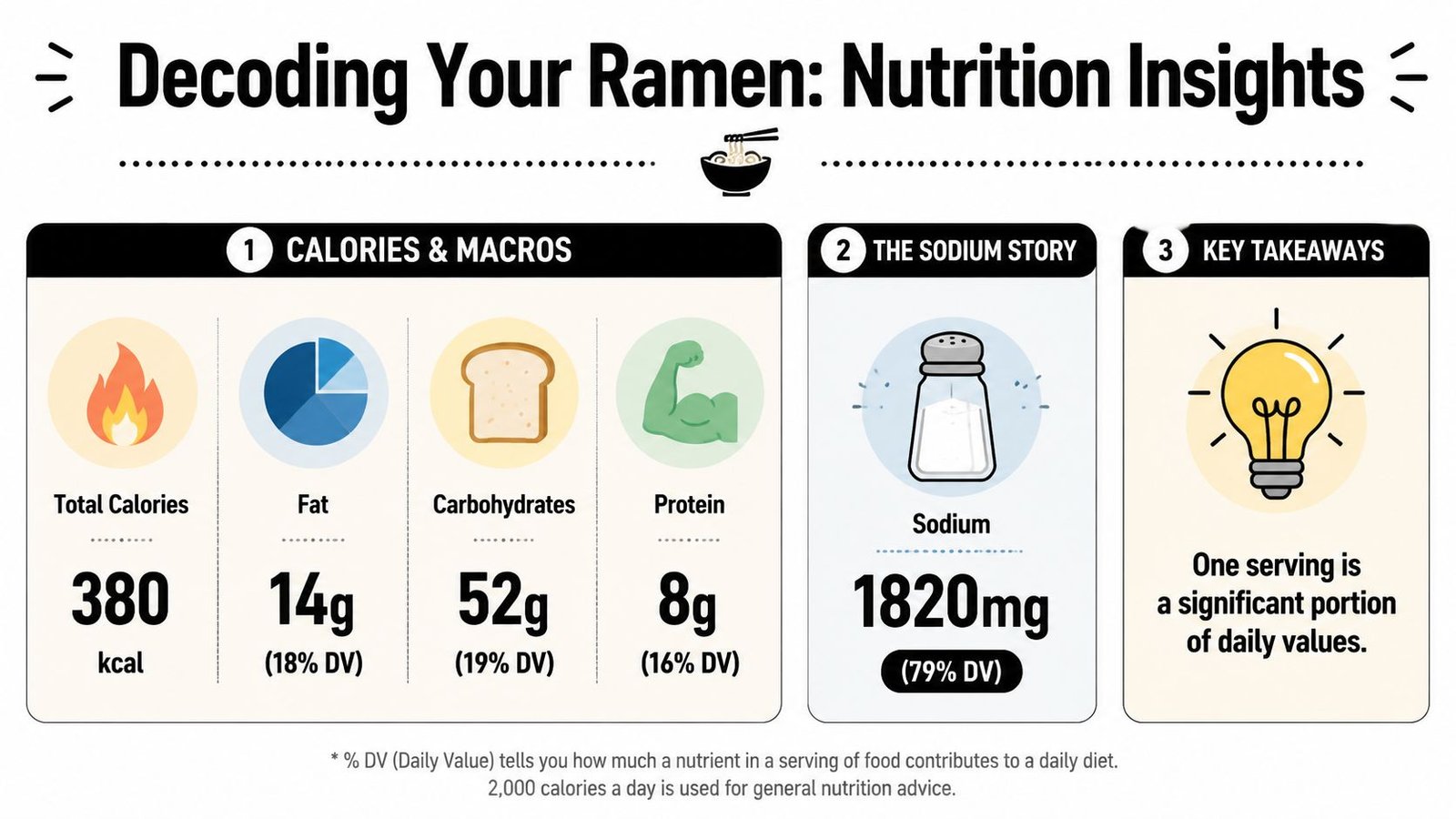
For Top Ramen, the common confusion is simple. One number may describe a serving, while another describes the whole package. If you eat the full brick, the full package number is the one that matters. As noted earlier, that often means about 380 calories for the whole pack, not 190.
The label question that changes everything
Start with one question: Is the label showing a serving or the whole package?
That sounds small, but it changes your log fast. A person who sees 190 calories and eats the entire package can end up recording only half the meal. That kind of mistake adds up over a week, especially with foods that go down easily.
If nutrition labels still feel annoying or inconsistent, this guide on how to read nutrition labels shows where the serving size, calories, and sodium usually hide.
What the macros actually mean
Top Ramen is mostly a carb-and-fat meal. Eat This Much lists Top Ramen Chicken Flavor at 380 calories per package, with 14 g fat, 52 g carbohydrate, and 8 g protein (Eat This Much entry for Top Ramen Chicken Flavor).
That protein number is the part many people miss. Eight grams is not much for a full meal, which helps explain why a bowl of plain ramen can feel filling at first, then leave you hungry again not long after. If you care about fullness, training, or optimizing your macros, that low protein baseline matters more than the calorie number alone.
Here's the cleanest way to read the baseline.
| Version | Calories | Fat (g) | Carbs (g) | Protein (g) |
|---|---|---|---|---|
| Per serving | 190 | 7 | 26 | 4 |
| Full package | 380 | 14 | 52 | 8 |
One more point matters here. Calories are only half the story. A plain package may look moderate on calories, but the seasoning packet can push sodium high while barely changing calories at all. That is why two ramen bowls with the same calorie count can feel very different from a health standpoint.
Read the package like a calculator, not a guess. First check the serving size. Then match the numbers to the amount you ate.
How Your Favorite Add-Ins Change the Calorie Count
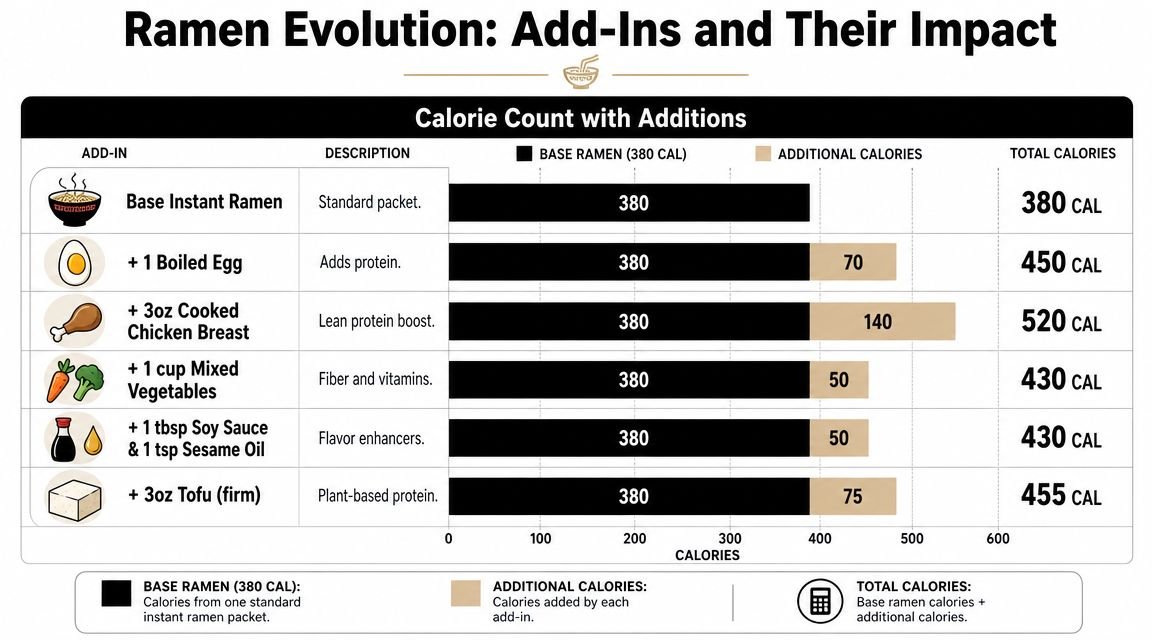
Ramen isn't typically consumed plain. They doctor it up. That's where the actual calorie count starts to drift from the neat number on the label.
This is also where ramen gets better. A plain noodle bowl is convenient, but it's not especially balanced. Add-ins can make it more filling, more satisfying, and more useful for your goals. They can also push the meal upward fast if you add rich fats and extra portions without noticing.
Nissin's product context highlights a common gap in ramen coverage: people want to know the bowl they eat, not just the dry package. That matters because the biggest calorie swing often comes from the add-ins, not the noodle block alone (Nissin Top Ramen Beef product page).
Think in bowl versions, not just noodle packets
A helpful way to think about ramen is to build the bowl in layers.
Start with the noodles. Then ask what job each add-in is doing:
- Egg or tofu adds staying power and makes the bowl feel more like a meal.
- Chicken or other lean protein shifts the meal toward recovery or fullness.
- Vegetables add volume, texture, and color without making the bowl feel heavier.
- Flavor extras like oil or sauce can improve taste quickly, but they can also change the meal more than people expect.
Three practical ramen builds
Here are three common patterns people use.
The “I just need dinner” bowl
You make the noodles, toss in vegetables, and call it a night. This usually improves the meal without making it feel overly rich. It's a good move when you want more volume and a more satisfying bowl.The “I need protein” bowl
You add egg, tofu, or chicken because plain ramen doesn't keep you full for long. This is often the best upgrade for lifters, walkers, busy workers, or anyone trying not to raid the kitchen an hour later.The “restaurant-style at home” bowl
You add oil, sauces, maybe extra meat, maybe leftovers. This can be delicious. It also moves the meal away from “cheap light dinner” and toward “custom comfort bowl,” which is fine if you count it accurately.
The bowl in your hands matters more than the number printed on the dry package.
The simplest way to estimate add-ins
You don't need to overcomplicate this. Use a mental checklist:
- Protein add-ins usually help balance the meal.
- Vegetable add-ins usually help volume and fullness.
- Fat-heavy add-ins usually drive the biggest jump in richness.
That's why two ramen bowls can start from the same packet and end up feeling completely different. One is noodles plus spinach and tofu. The other is noodles plus oil, sauce, and extra meat. Same base. Different meal.
When tracking your food, accuracy really matters. Logging “ramen” is only half the story. Logging “ramen with egg, chicken, and vegetables” is much closer to reality.
The Hidden Story Beyond Calories Sodium and Nutrients
A bowl of ramen can look manageable if you stop at calories. That's where a lot of people stop. It's also where the biggest nutrition blind spot starts.
A single 380-calorie package of Nissin Chicken Flavor Top Ramen can contain 1,820 mg sodium, which changes the conversation from “Is this low calorie?” to “What else am I getting with it?” (CalorieKing listing for Nissin Chicken Flavor Top Ramen dry). For people who monitor blood pressure, notice water retention, or care about sports nutrition, sodium may be the bigger issue than the calorie total.
Why ramen feels light on paper but not always in your body
Instant ramen gets much of its calorie density from the noodle block itself. Lose It's USDA-referenced summary notes that frying lowers water content and raises energy density, with typical fried ramen around 440 calories per 100 g and air-dried noodles closer to 300 calories per 100 g (Lose It article on ramen calories without seasoning). So the noodles do most of the calorie work. The seasoning packet does relatively little for calories, but a lot for sodium.
That's why ramen can be deceptively simple. The bowl may not be massive. The protein isn't high. The calories may not seem outrageous. Yet the sodium load can still be serious.
Who should pay closest attention
Some people can eat ramen occasionally and move on without much concern. Others need more caution.
- People tracking weight only may see a moderate calorie meal.
- People watching sodium may see a meal that doesn't fit well.
- People focused on fullness may notice that noodles alone don't satisfy them for long.
If you're trying to build meals that are more supportive of both fullness and lower sodium, this roundup of high-protein, low-sodium meal ideas is a useful contrast.
A food can be moderate in calories and still be a poor fit for your health goals.
That's a key ramen lesson. Calories matter. They're just not the only thing that matters.
Simple Swaps to Build a Healthier Bowl of Ramen
The good news is you don't have to swear off Top Ramen to make it work better for you. You just need to stop treating the packet as the finished meal.
Eat This Much's macro breakdown for a package of Nissin Top Ramen Chicken Flavor shows a meal that is 57% carbs, 33% fat, and only 10% protein, which is why it often works better when you add protein like eggs, meat, or tofu rather than eating it plain. That same macro split is what makes ramen filling for the moment but not always satisfying for long.
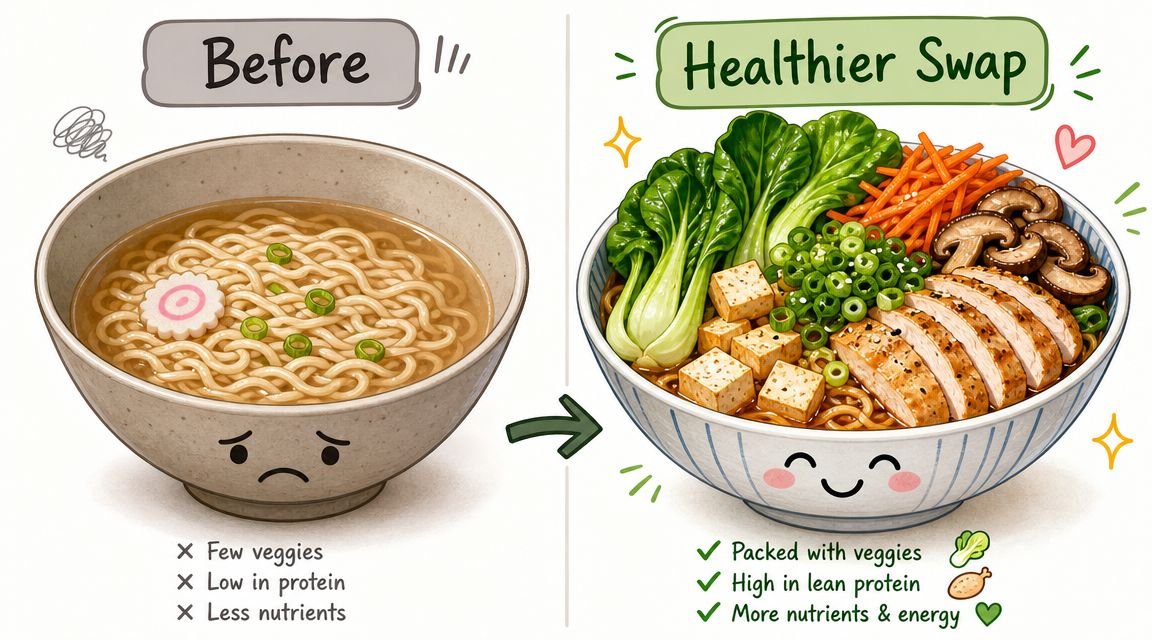
Start with the easiest fixes
You don't need a full meal-prep system. A few small changes make a big difference.
- Use less seasoning: If sodium is your concern, using only part of the packet is the fastest upgrade.
- Add a protein source: Egg, tofu, or leftover meat makes the bowl feel complete instead of snack-like.
- Throw in vegetables: Spinach, mushrooms, cabbage, or frozen mixed vegetables add bulk and texture.
- Treat oils carefully: Sesame oil or chili oil can make a bowl taste better fast. They also make it richer fast.
Two smarter ramen mindsets
Some people try to make ramen “healthy” by making it tiny. They cut portions down so much that they're hungry again soon after. That usually backfires.
A better approach is one of these:
Build a more balanced bowl
Keep the noodles, then add enough protein and vegetables that the meal satisfies you. This works well for dinner and for anyone who hates the cycle of eating a light bowl and then hunting for snacks.
Keep the ramen as the side, not the star
Use half the noodle portion and make the core of the meal the egg, tofu, chicken, and vegetables. This is a strong option if you like ramen flavor but want the bowl to lean less on refined noodles.
A quick cooking demo can make those upgrades easier to picture:
Coach's note: The best ramen upgrade isn't perfection. It's building a bowl that leaves you fuller, with less sodium and more protein than the plain packet.
What a better ramen bowl looks like
A better bowl usually follows a simple pattern:
- Keep the convenience. You're eating ramen because it's fast. Don't turn it into a project.
- Add one protein. Egg, tofu, or chicken does a lot of work.
- Add one plant food. Even a handful helps.
- Watch the salty extras. Seasoning, soy sauce, and broth all stack.
That way you still get the comfort of ramen, but the meal works harder for you.
How to Log Top Ramen in Under 10 Seconds with PlateBird
It's 10:47 p.m. You made a bowl of Top Ramen, cracked in an egg, tossed in some spinach, and now you want to log it without turning a quick meal into homework.
That is where people get stuck.
Ramen is simple to cook but oddly easy to log wrong. The package gives you a starting point, but your actual bowl depends on three moving parts: how much of the noodles you ate, how much seasoning you used, and what you added on top. If you miss any one of those, your log can drift pretty far from reality.
The easiest fix is to log the bowl the same way you built it.
What to include in your log
A good ramen entry needs three details:
Portion of the noodles
Full package, half package, or a smaller amount.Seasoning use
Full packet, half packet, or just a sprinkle. This matters less for calories and more for sodium.Add-ins
Egg, tofu, chicken, vegetables, sesame oil, cheese, or sauces all change the final total.
That sounds like extra work, but it usually takes one sentence. A ramen log works like a receipt. The closer it matches what went into the bowl, the more useful it becomes later.
Copy-and-type examples that work well
These are the kinds of entries that make instant ramen much easier to track:
- “1 package Top Ramen chicken, full seasoning”
- “Half package beef ramen, half seasoning, added broccoli”
- “1 package chicken ramen with egg and spinach”
- “Top Ramen with tofu and mixed vegetables”
- “Half pack ramen, drained, added chicken”
Notice what these examples do. They do not just name the product. They describe the version you ate.
That matters because a plain packet and a built-out bowl are not the same meal. One egg changes the calories a little. Oil or extra sauce can change them a lot. Using less seasoning barely changes calories, but it can make a big difference in sodium. That calorie versus sodium tradeoff is easy to miss if your log is too vague.
Why ramen is trickier to log than simpler foods
A banana is one item. Ramen is more like a base plus toppings.
Your bowl might include the full noodle brick or only half. You might drink the broth or leave part of it behind. You might add vegetables that bring volume with very few calories, or add peanut butter and turn the bowl into a much heavier meal.
That is why plain-language logging works well here. Instead of hunting for separate database entries for noodles, egg, spinach, and sauce, you can describe the bowl in one line. If you prefer visual tracking for mixed meals, a photo food diary app can make that process easier.
A fast ramen logging checklist
Before you save the entry, run through this quick check:
- Portion: Did you log the amount of noodles you ate?
- Add-ins: Did you include egg, tofu, meat, vegetables, oil, and sauces?
- Seasoning: Did you note full, half, or partial packet use?
- Broth: Did you finish it, or mostly eat the noodles and leave liquid behind?
A solid ramen log does not need to be perfect. It just needs to reflect the bowl in front of you.
If you want logging to feel more like sending yourself a text than filling out a spreadsheet, PlateBird lets you type your meal in plain language or snap a photo. That makes it much easier to record a custom bowl like Top Ramen with egg, spinach, and chicken without the usual search-and-scroll routine.