- Why Most People Quit Tracking Within Two Weeks
- The Three Fastest Ways to Log a Meal
- Building a Starter Library of One-Tap Meal Shortcuts
- Estimating Portions Without a Scale on the Counter
- Stop Obsessing Over Single Days and Track the Trend
- A Full Day Logged the Easy Way
- When to Upgrade to a Food Scale Without Burning Out
You wake up late, grab coffee on the way out, promise yourself you'll “log it later,” and by dinner the app is already a mess of guesses, half-remembered bites, and guilt. That's where calorie tracking goes wrong, not on the math, but on the friction. The easiest way to track calories is the one you'll keep using on an ordinary weekday, even when your schedule is ugly and your patience is thin.
Most guides get this backward. They obsess over perfect accuracy first, then act surprised when people quit after a few days. I'd rather have you use a slightly imperfect system that survives real life than a pristine one that dies the first time lunch gets delayed.
Why Most People Quit Tracking Within Two Weeks
Monday morning is already moving too fast. You're half dressed, your phone's buzzing, and the idea of weighing oats, typing every ingredient, and reconstructing yesterday's snacks from memory feels like unpaid homework. That's the moment where calorie tracking usually dies, because the habit gets designed for a calm person who doesn't exist.
Friction beats motivation every time
Paper logs were always a pain because they forced you to write everything down by hand. Spreadsheets were cleaner, but they still asked for too much effort at the exact moment you were trying to eat and get on with your day. Modern app workflows changed the game because they let you search foods, scan barcodes, save recurring meals, and log on the spot, which makes the whole process fast enough to survive real life Healthline.
Practical rule: log food as you eat it, not at night from memory. Delayed recall is slower and less reliable, and that extra friction is enough to make people stop.
That's the reason I push speed before precision. If logging takes too long, you'll skip it, and skipped logs are worse than slightly messy logs. The win is not lab-grade accuracy on day one, it's building a system that keeps running on busy Tuesdays.
Consistency is the bottleneck
The easiest method is the one that cuts seconds off every entry. A method that feels “efficient” but takes five minutes per meal is not efficient at all, it's just dressed up work. A simple app with fast input is better than a perfect system you resent using.
The shift from manual tracking to app-based logging matters because it changes what people can realistically sustain. Instead of weighing everything forever, you can start with text entry or barcode scans, then tighten things up later if you need to. That is the right order.
The Three Fastest Ways to Log a Meal
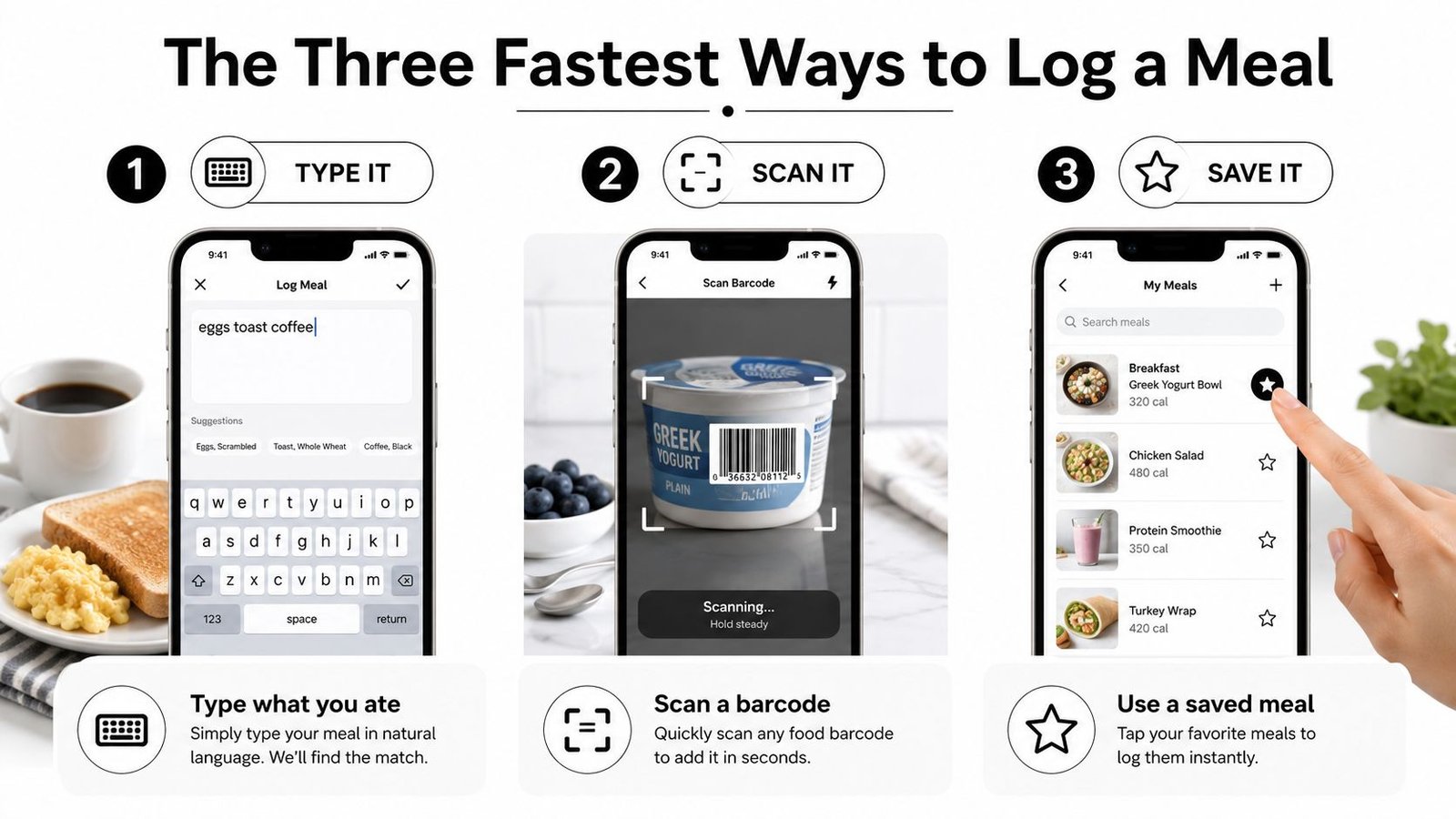
The best default is plain text. The second-best is barcode scanning. Photo logging is the most flexible when you're eating mixed meals, but it only works well if the app's recognition is strong and you're willing to correct it when needed.
Plain text is the fastest honest option
Typing something like “eggs toast coffee” is usually the cleanest move when the app has a solid food database. It's quick, it doesn't require a perfect recipe, and it's usually fast enough to do before the meal is gone. For many meals, that's a matter of seconds, not minutes.
This works especially well for breakfasts, simple lunches, and repeatable meals you already know by heart. It's also the least annoying method when you're standing in the kitchen, one hand on the phone, one eye on the clock. If you want a tool built around that kind of speed, PlateBird is one option that turns plain-English meal descriptions into calorie and macro estimates.
Barcode scanning is the cleanest for packaged foods
If the food has a label, scan the label. That's the whole case for barcode logging. Packaged yogurt, protein bars, frozen meals, sauces, and drinks all become easy entries because the app can pull the nutrition data directly from the package instead of guessing.
The limitation is obvious. Barcode scanning doesn't help much with home cooking, restaurant meals, or anything that doesn't come in a package. Use it for packaged foods and skip it elsewhere.
Photo logging is the best fallback for mixed meals
Photo-based logging is the fast option when the meal is complicated. Cafeteria bowls, restaurant plates, meal-prep containers, and mixed dishes are where a camera beats manual typing, because you can capture the whole plate at once and correct the estimate after. If you want a deeper comparison of photo-based workflows, the guide at PlateBird's picture-based calorie logging page is worth a look.
Use text as your default, barcode scan for anything packaged, and keep photo logging for the meals that don't fit neatly into a search box. That's the simplest stack that still covers most real-world eating.
Building a Starter Library of One-Tap Meal Shortcuts
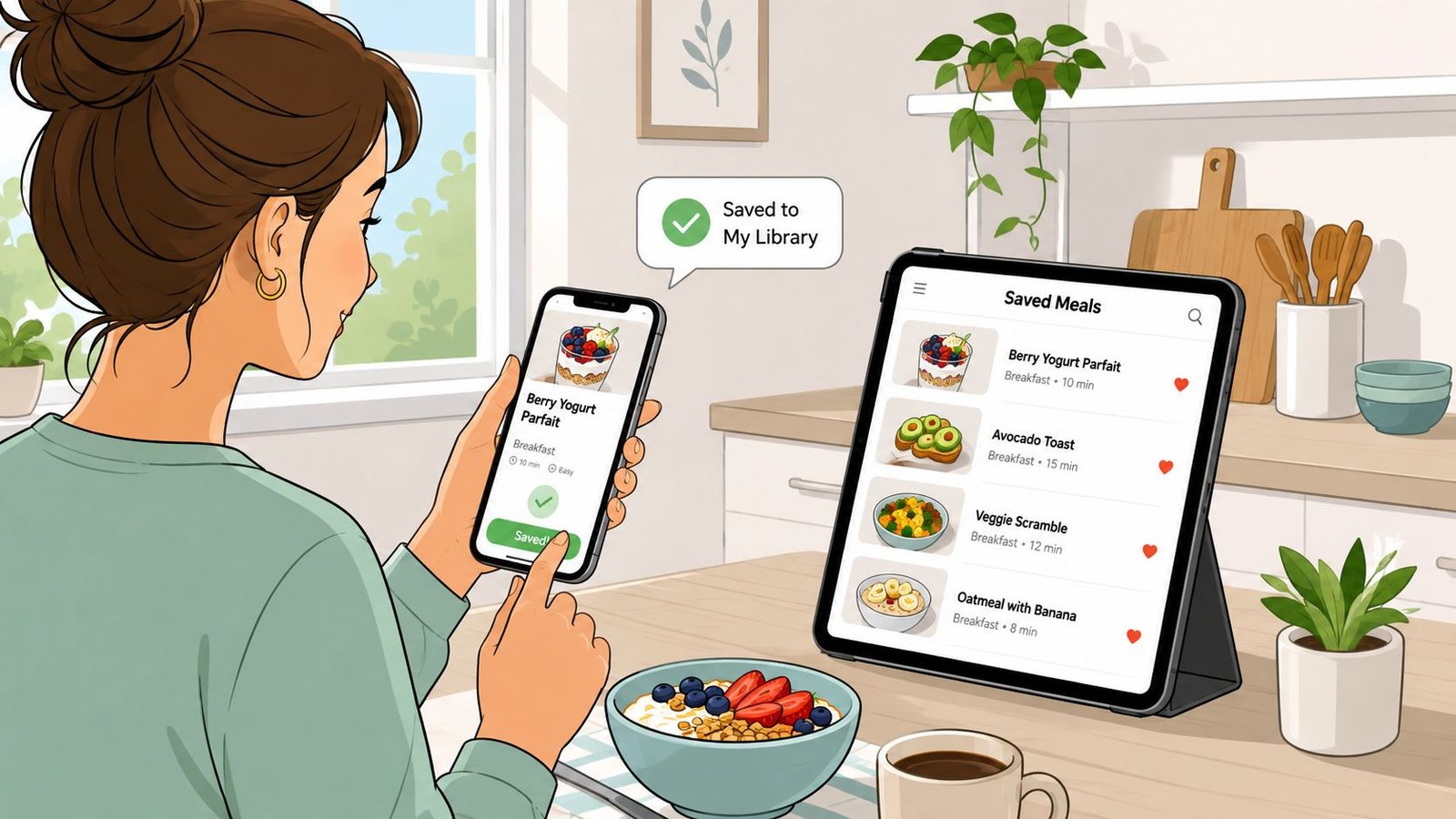
The easiest calorie trackers do one thing well, they stop you from typing the same meal over and over. That is the time saver. If you eat the same breakfast four mornings a week, entering it four different times is busywork, not tracking.
Save the meals you actually repeat
Start with the meals that show up on autopilot. Breakfast, post-workout shakes, work lunches, meal-prep dinners, and your most common snacks belong in your shortcut list first. Skip the random weekend meals that you will never log again.
Name them plainly so you can find them fast when you are tired, rushed, or halfway through lunch. “Oats, whey, banana” works. A clever label that only makes sense on a good day does not. If you need a portion swap, duplicate the meal and leave the original alone so your go-to version stays intact.
Lock the recipe, then stop touching it
If a recipe is part of your routine, save it as a reusable meal with the portion count already set. Then leave it alone unless the recipe changes. One update is fine. Rebuilding the entry every time you cook is how people turn tracking into admin.
Simple rule: save the meals that show up on autopilot, not the ones that make you feel organized.
The trap is overbuilding the library. People create a pile of tiny variations, then waste time hunting for the right one. A short list of the meals you eat all the time beats a bloated archive nobody opens twice.
If you cook at home a lot, how to calculate calories in homemade food helps you set those shortcuts once and reuse them without guessing. For packaged foods, keep understanding nutrition labels close so you can plug in the numbers quickly and move on.
Estimating Portions Without a Scale on the Counter
A food scale gives you tighter numbers, and that matters when you are building a recipe or checking a new meal for the first time. It also disappears the moment you are eating at a desk, grabbing lunch in a rush, or sitting in a restaurant with no scale in sight. If tracking has to survive real life, you need a fast estimate you can trust enough to log and move on.
Use simple visual anchors
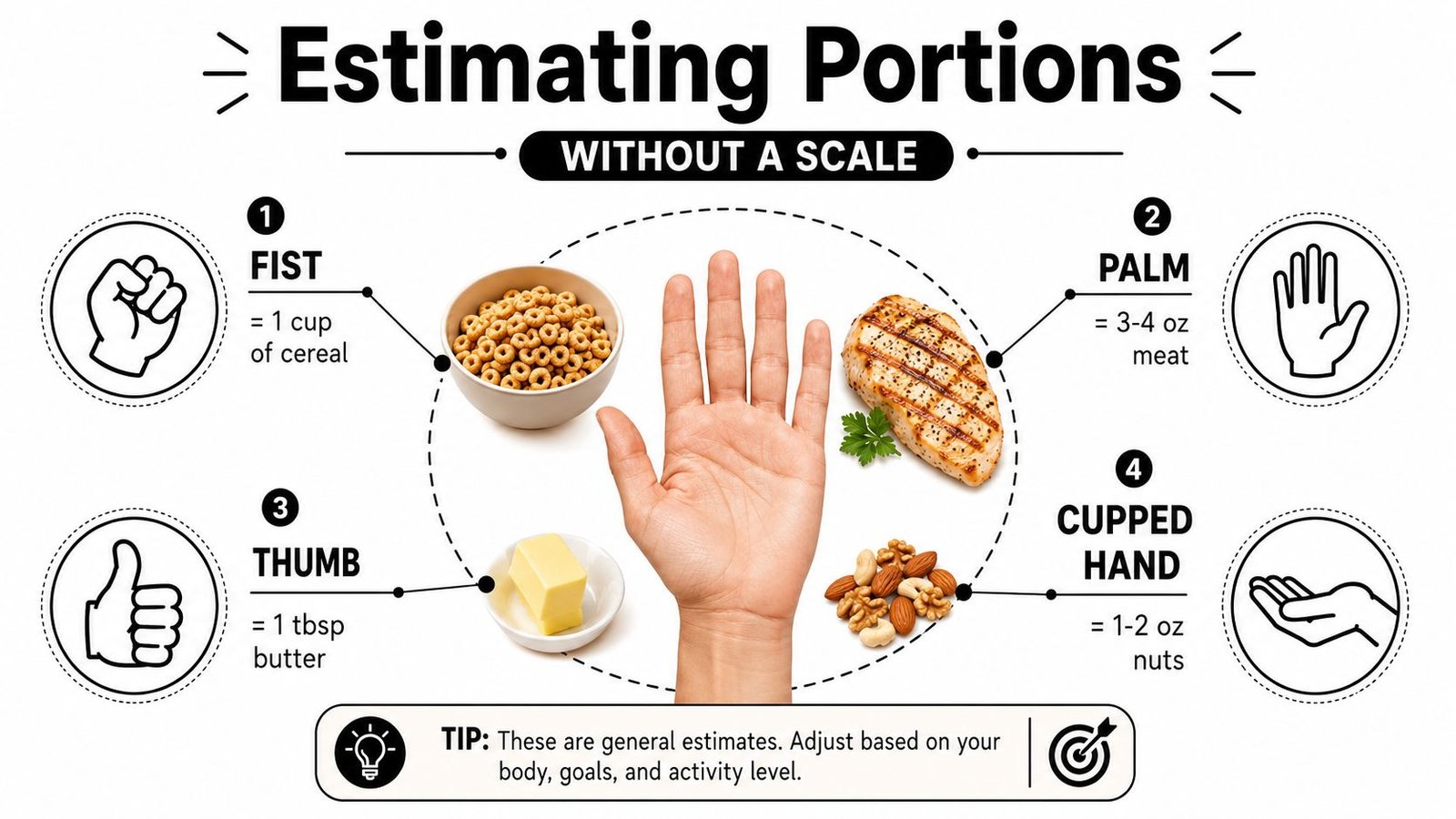
Your hand gives you the quickest reference point. A fist works well for a cup of cereal or another bulky carb. A palm is a solid guide for a serving of meat. A thumb is a practical stand-in for butter, and a cupped hand gives you a decent read on nuts.
Use the visual cue, log it, and keep going. The point is not perfect math. The point is to avoid stalling out because every bite feels like a measurement project. That is what keeps people tracking instead of quitting after the first messy week.
For food you make yourself, how to calculate calories in homemade food helps you turn a recipe into something you can estimate again later without starting from zero.
Watch the hidden calories people miss
The calorie mistakes usually come from the extras. Cooking oil, salad dressing, nut butter, butter in coffee, and the cream in a latte add up fast because they are easy to ignore. They look small on the plate, then they blow up the log.
That is why understanding nutrition labels matters even when you are not weighing everything. A label tells you what the serving size is, and that is where eyeballing usually goes wrong. Read that first, then estimate the rest. It saves time and prevents the kind of sloppy logging that makes people think tracking does not work.
Keep a quick check for mixed meals
Homemade dinners are where people overcomplicate things. Do not rebuild the whole plate in your head. Ask three direct questions. What is the main protein. What is the main starch. What fats or sauces were added on top. That gets you close enough for a useful entry without turning dinner into a spreadsheet.
If the meal is simple, log the pieces separately and keep moving. If it is a mixed dish you cook often, set it up once and reuse the entry instead of estimating from scratch every time. That is the time saver. Full precision matters when you are learning a recipe or fixing a stall, but daily compliance matters more than perfect numbers.
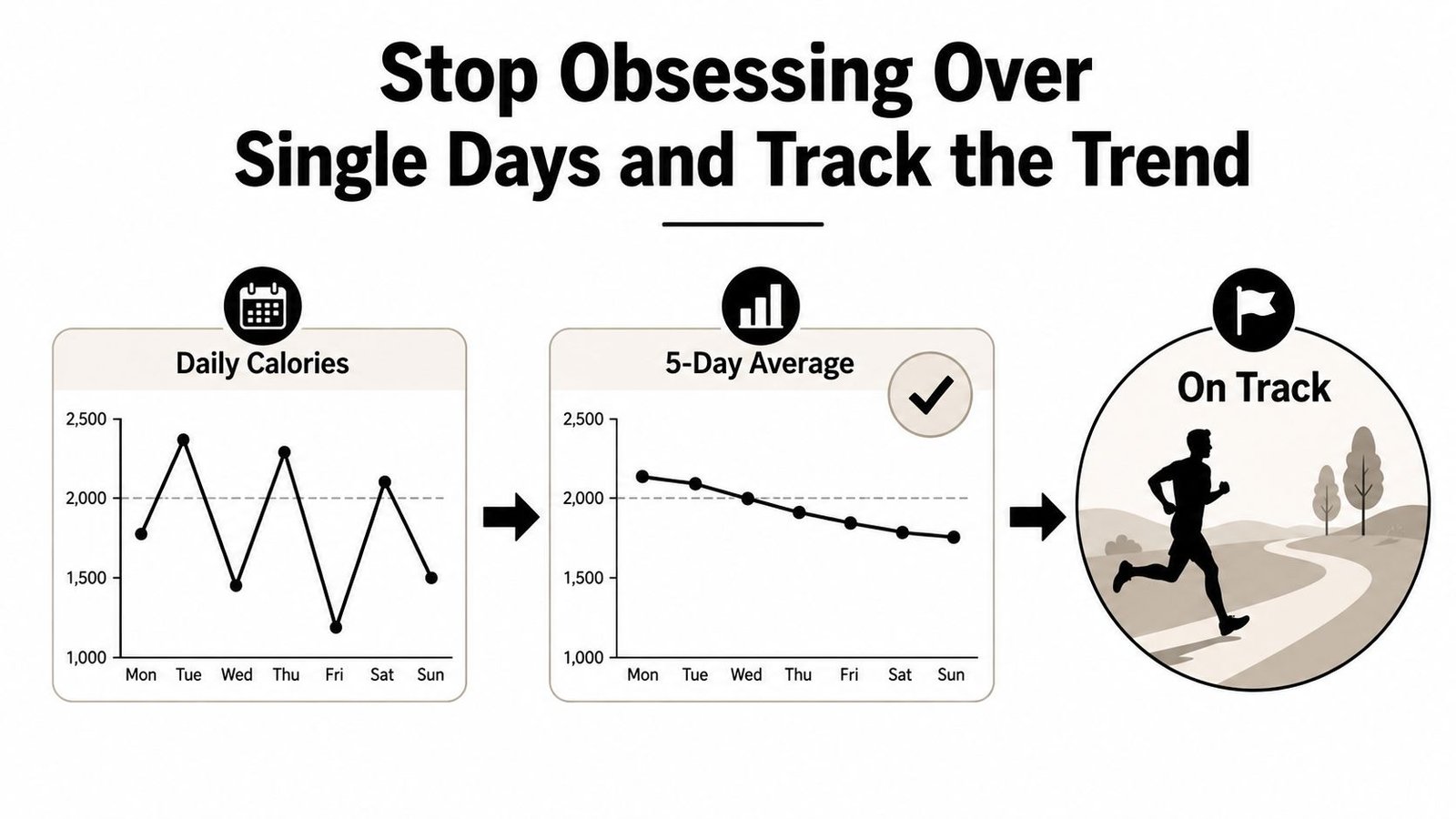
Stop Obsessing Over Single Days and Track the Trend
A rough Tuesday does not mean your plan is broken. A strong Monday does not mean you are suddenly perfect. Single days are noisy, and if you react to every spike, you start making decisions off bad data instead of useful patterns.
Weekly averages tell the truth faster
Review the trend, not the drama. Look at your weekly average, compare it with your goal, and judge whether the pattern is moving in the right direction. That keeps you from overreacting to one meal that ran high because dinner was out or because you had a hard training day.
Log in real time if you want cleaner records. It beats trying to rebuild a day from memory later, and a guide on how to count calories accurately notes that real-time logging is more accurate than retrospective recall. Batch-logging at night feels efficient. In practice, it creates more guesswork.
Don't adjust off one messy day. Adjust off a pattern.
Use a two-week review loop
Give the log time to mean something. Check your progress after a couple of weeks, then change intake only if the trend is clearly off target, as explained in a guide on how to count calories accurately. If you do need to change it, make a small adjustment instead of swinging wildly, which is the same steady approach recommended in a guide on how to count calories accurately.
That keeps the process calm. Vacation days, social dinners, and hard workouts can stay in the log without turning into a crisis. You are looking for signal, not perfection.
The people who stick with tracking are the ones who can handle imperfect days without dropping the system. That is the whole game.
A Full Day Logged the Easy Way
Breakfast should be boring, and logging it should be even more boring. A saved coffee-and-oats shortcut gets tapped before the first email of the day. No hunting, no rebuilding, no debate about whether you “should” have been more precise.
Lunch is where the app earns its keep. A cafeteria bowl gets snapped, the portions get corrected by hand if needed, and the entry goes in without a long pause. That's enough detail to stay honest without stopping your workday.
A realistic day does not need perfect entries
The post-workout shake is the easiest win. Scan the barcode, tap the saved portion, move on. Dinner usually needs a little more judgment, so a quick hand estimate and a package scan for something like pasta or sauce is enough to keep the meal anchored.
If you want a broader example of how calorie tracking supports performance goals, the nutrition approach laid out in Swift Running half marathon nutrition shows why consistent intake matters more than obsessing over every gram. The point is the same whether you're training for a race or trying to lose fat, the log has to fit the life.
At night, a 30-second review is enough. Check the day against your target, note anything unusual, and stop there. The app should support your routine, not become the routine.
When to Upgrade to a Food Scale Without Burning Out
Use the scale when it earns its place. That means the first 2 to 4 weeks of tracking, when you're still learning what real portions look like, and any time your weekly trend drifts the wrong way. It also makes sense on meal-prep days, because you're controlling the recipe and can lock in the numbers once.
A scale is especially useful for recipes you make often. If you want to get the math right on homemade food, calorie scales for food is the kind of reference that helps you use one without turning every meal into a chore. Measure raw ingredients, log them separately, then reuse the result.
Use precision where it changes the outcome
Don't drag the scale out just to feel disciplined. Use it when the extra accuracy will help you learn portions or correct a plateau. If your trend is stable and your routine is working, stay in the fast lane.
A scale can't make you log consistently. That's the part people miss. It improves the quality of the data, but it doesn't solve the core problem, which is whether you'll open the app on a rough day.
Stay fast most days. Reach for the scale when the trend is off. Keep the system small enough that you don't dread it.
If you want calorie tracking that feels fast enough to keep using, build around friction reduction first and precision second. PlateBird is built for exactly that workflow, with plain-English logging, photo-based entry, and one-tap meal reuse for the foods you eat over and over. Visit PlateBird and make your tracking simple enough to survive a normal week.