- What Is Full Throttle Energy Really
- The Science Behind Your Energy Engine
- Fueling for All-Day Power with Macronutrients
- Your Daily Energy Blueprint A Sample Meal Plan
- Beyond the Plate Sleep Hydration and Stress
- Track and Optimize Your Energy with PlateBird
- Your Full Throttle Energy Questions Answered
It's usually the same part of the day. Mid-afternoon. Your inbox is still full, your workout is still ahead of you, and your brain starts bargaining for a shortcut. Something cold. Something sweet. Something with “energy” printed on the can.
That instinct makes sense. Individuals typically don't want abstract wellness. They want to feel switched on right now. That's why the idea of full throttle energy is so appealing. It sounds immediate, powerful, and efficient.
The problem is that instant energy and sustainable energy aren't the same thing. One can make you feel alert for a window of time. The other lets you think clearly, train well, and get through the evening without dragging yourself across the finish line. If you want energy that holds up, you need to separate the marketing promise from what your body can consistently produce.
What Is Full Throttle Energy Really
At a surface level, full throttle energy means maximum output. No hesitation, no fog, no slump. In practice, the phrase commonly describes a state where one feels sharp, motivated, and ready to work.
A brand like Full Throttle built itself around that promise. The drink was launched by The Coca-Cola Company in 2004 and later moved into Monster Beverage's portfolio in 2015. Monster now holds a 33.4% share of the U.S. energy drink market, which shows how mainstream this category has become, not just for athletes but for regular people trying to get through demanding days (Full Throttle brand history)).
The promise people are actually buying
Most clients don't buy an energy drink because they love cans. They buy relief from a very specific set of problems:
- Mental drag: focus drops, decisions feel heavier, small tasks start to feel annoying.
- Physical flatness: you're not exhausted enough to lie down, but you're too drained to perform well.
- Time pressure: cooking a balanced meal takes planning, while a can takes seconds.
- Emotional urgency: when energy feels low, “good enough for now” often beats “better later.”
That's understandable. It's also why many people confuse stimulation with energy.
The deeper definition that matters
Real energy is less about feeling hyped and more about having a body that can keep producing output. That means stable blood sugar, enough total food, decent sleep, hydration, and stress that isn't chewing through your attention all day.
Practical rule: If your energy strategy only works when you're desperate, it isn't a strategy. It's a rescue tool.
There's nothing morally wrong with using a rescue tool. An energy drink can be useful in a pinch. But if “full throttle” only lasts a short burst and leaves you worse off later, you're borrowing from the rest of your day.
The better target is simple. Build an energy system that doesn't need constant emergency support.
The Science Behind Your Energy Engine
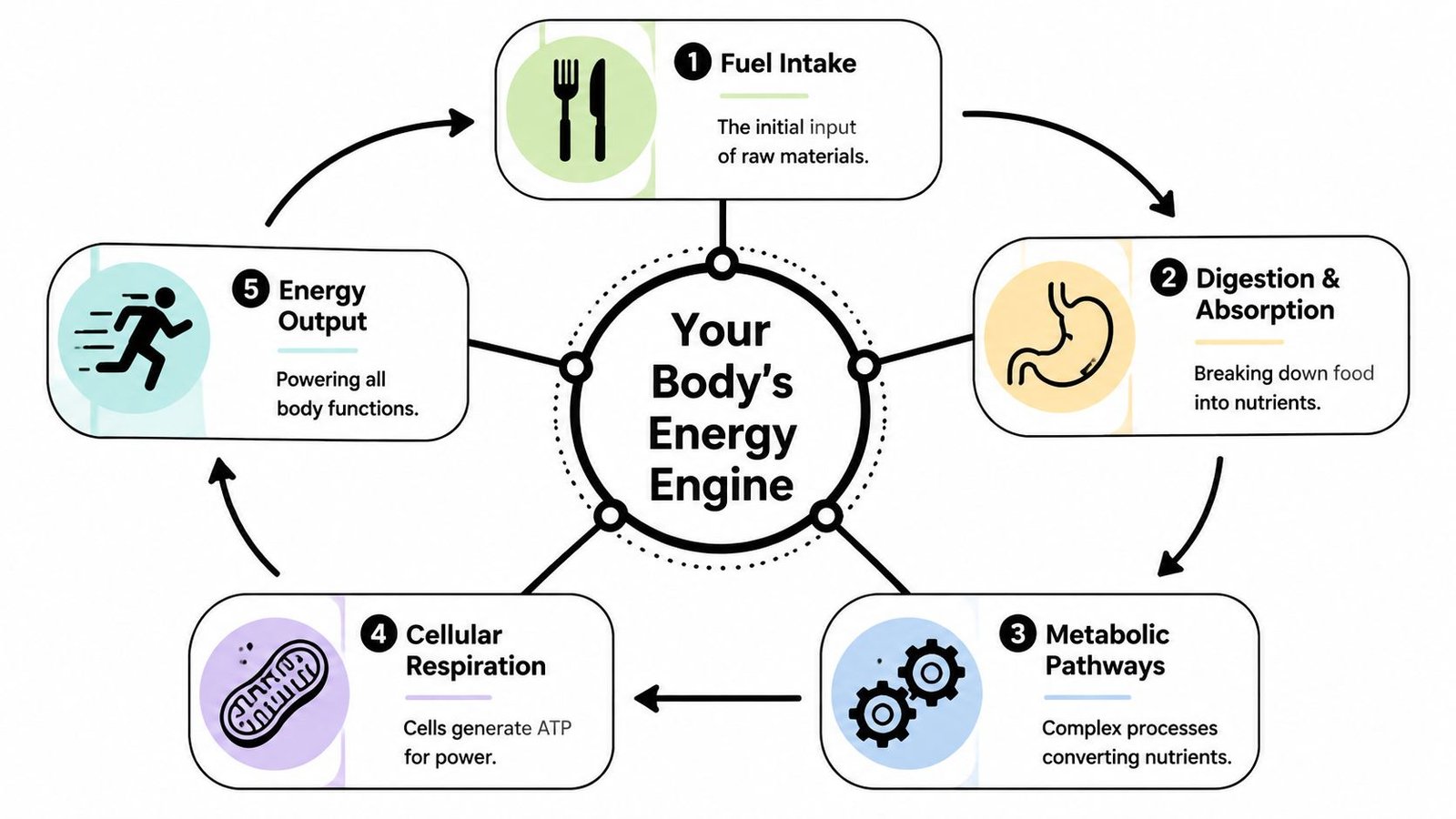
Your body doesn't run on motivation. It runs on chemistry.
At the cellular level, the usable currency is ATP. You don't need to memorize pathways to understand the practical takeaway. Your body has to take in fuel, break it down, and convert it into something your cells can use. That process happens all day, whether you're lifting, working, walking, or just trying to stay mentally present.
Stimulated energy versus fueled energy
A drink like Full Throttle provides a useful case study.
A can contains 160 mg of caffeine, and that caffeine works by blocking adenosine receptors in the brain, which dampens fatigue signals. The effect typically peaks in 30 to 60 minutes and can last 4 to 6 hours (caffeine mechanism and timing).
That matters because caffeine doesn't create calories or nutrients out of thin air. It changes how awake you feel. In other words, it can increase alertness even when your underlying recovery or fueling is poor.
The same can also brings a large sugar load. That sugar acts more like rapid fuel. It can raise energy fast, but fast fuel often comes with unstable follow-through. You feel the rise, then many people feel the drop.
The engine analogy that helps
Think of your body like a performance vehicle with two separate systems:
| System | What it does | What it feels like |
|---|---|---|
| Fuel system | Uses food to support actual energy production | Steady, durable, workable |
| Alertness system | Changes how switched on your brain feels | Sharper, faster, more urgent |
Caffeine mainly affects the second system. Food supports the first.
When people say, “I had energy for a bit, then crashed,” they're often describing a mismatch between the two. The brain got a signal to push. The body didn't have a stable enough base to sustain that push.
Your body can tolerate occasional stimulation. It struggles when stimulation becomes a substitute for recovery and proper fueling.
Why personal energy needs vary
Two people can drink the same thing and have very different days afterward. Body size, meal timing, training load, stress, and baseline calorie intake all influence how that energy feels.
That's one reason it helps to understand what a metabolic rate test measures. If you don't know how much energy your body uses at baseline, it's easy to under-eat, over-caffeinate, and then wonder why your focus is inconsistent.
The practical lesson is straightforward. If you want full throttle energy that lasts, start by asking whether you're fueled, not just stimulated.
Fueling for All-Day Power with Macronutrients
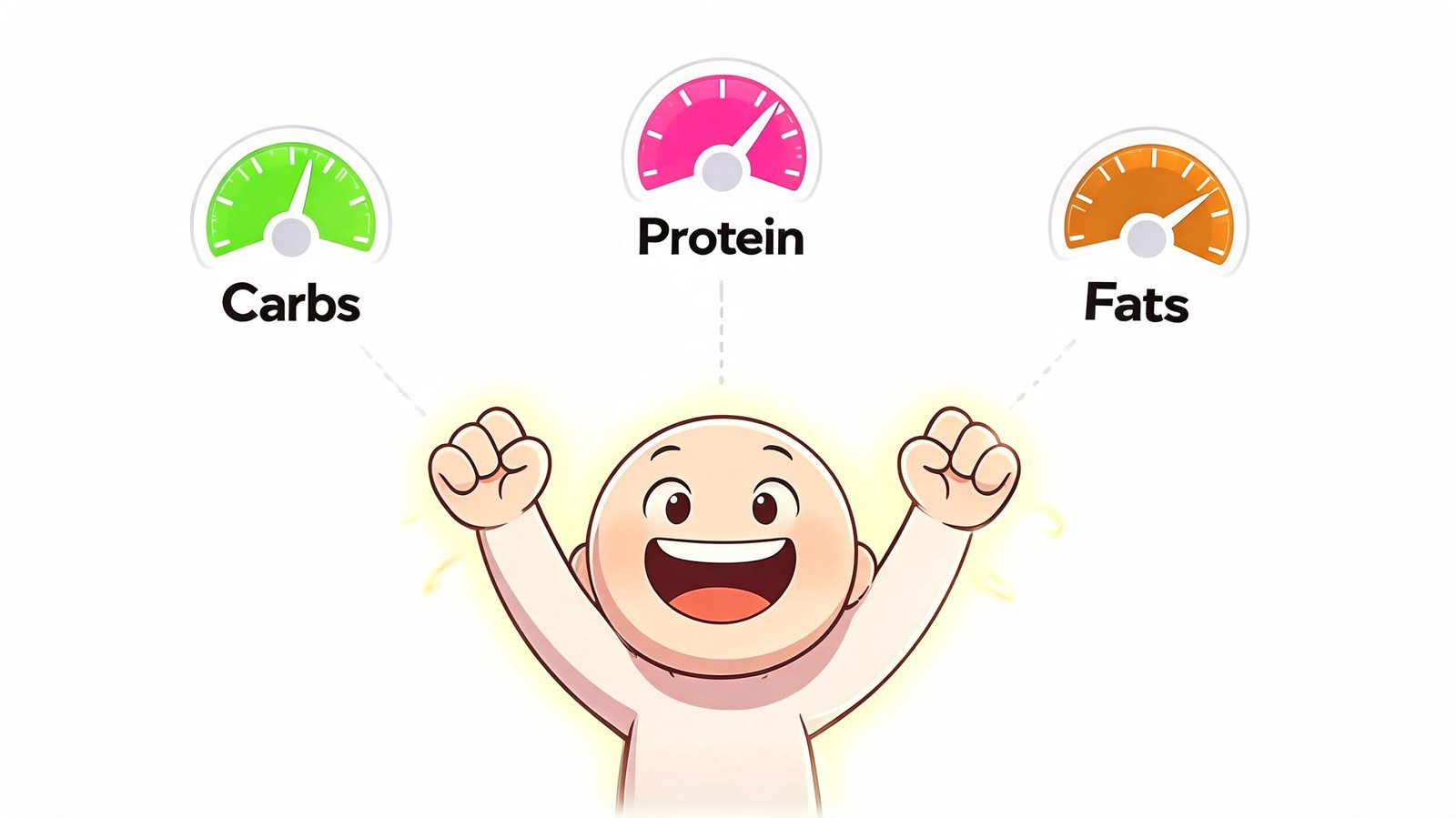
If caffeine is the dashboard light, macronutrients are the fuel in the tank. You can't outsmart that for long.
The three macros each help in different ways. Carbohydrates give your body accessible fuel. Protein supports repair and helps meals stay satisfying. Fat slows digestion and adds staying power. When people skip one of these for most of the day, energy often gets choppy.
Carbs aren't the enemy. Carb choice matters.
A lot of energy problems come from swinging between too little food and very fast food. That's where complex carbs help. Oats, potatoes, rice, beans, fruit, and whole grain foods tend to fit better into a day than sugar-heavy drinks when the goal is stable performance.
Here's the contrast in plain English:
- Complex carbs: better for sustained output, training support, and fewer dramatic highs and lows.
- Simple sugary drinks: faster hit, less staying power, easier to overuse.
- Mixed meals with carbs plus protein or fat: usually the best choice when you need both energy and control.
Full Throttle's formula includes D-ribose and B-vitamins aimed at energy metabolism. Those ingredients can sound impressive, and D-ribose may support ATP resynthesis after exercise, but in this drink their role is overshadowed by the 58g of sugar, which can work against hydration through an osmotic diuretic effect (formula details and trade-offs).
Protein and fat do a quieter job
Protein rarely feels exciting in the moment, but it helps prevent the “I'm hungry again in an hour” cycle. It's one of the simplest ways to make energy more predictable across a workday.
Fat also matters. Not because you need a heavy meal every time, but because some dietary fat can slow the pace of digestion and make meals feel more complete. That's useful when your schedule is chaotic and your next eating window isn't guaranteed.
If you're trying to dial this in more precisely, a practical starting point is learning what your macros should be. Individuals often don't need a perfect ratio. They need a structure that prevents accidental under-fueling.
After you've got the basics, this kind of breakdown helps put food choices into context:
A simple way to build an energy-friendly plate
Use this as a repeatable meal pattern:
- Start with a carb source: rice, oats, potatoes, fruit, beans.
- Add a protein anchor: eggs, Greek yogurt, chicken, tofu, fish, cottage cheese.
- Finish with color and fat: vegetables, avocado, nuts, seeds, olive oil, or cheese.
Coach's note: The best “energy diet” usually looks boring on paper. Consistent meals beat dramatic fixes.
That's what works. What doesn't work is relying on stimulant drinks to patch over skipped meals, low protein intake, or a day built on random snacks.
Your Daily Energy Blueprint A Sample Meal Plan
Individuals don't need a complicated food philosophy. They need a day that flows. Good energy comes from meals you'll prepare, carry, and eat on time.
This sample day is built around steadier output, not perfection. You can swap foods based on your preferences, culture, budget, or training schedule.
Sample One-Day High-Energy Meal Plan
| Meal | Food Items | Energy Benefit |
|---|---|---|
| Breakfast | Oatmeal cooked with milk or fortified soy milk, berries, and a side of eggs or Greek yogurt | Combines slower-digesting carbs with protein to start the day without a sharp rise and fall |
| Mid-morning snack | Apple with peanut butter, or cottage cheese with fruit | Helps bridge the gap before lunch and prevents the late-morning dip |
| Lunch | Chicken rice bowl with roasted vegetables and olive oil, or tofu grain bowl with beans and greens | Balanced carbs, protein, and fat support work focus and afternoon stamina |
| Pre-workout option | Banana with yogurt, or toast with turkey | Easy-to-digest fuel that won't sit heavy before training |
| Post-workout option | Rice, lean protein, and fruit, or a simple meal with potatoes and eggs | Replenishes energy and supports recovery after exercise |
| Dinner | Salmon or beans, potatoes or quinoa, and a large serving of vegetables | Refuels the evening without depending on sugar or stimulants |
| Evening snack if needed | Greek yogurt, chia pudding, or toast with nut butter | Useful if dinner is early or hunger shows up before bed |
Why this layout works
Breakfast sets the tone. If the first real fuel you get is late in the day, caffeine usually has to work harder than it should.
Lunch matters just as much. A lunch built on lean protein alone may look “clean,” but it often leaves active people flat by mid-afternoon. Add carbs and the day usually feels more stable.
For busy weeks, container choice and batch prep can make or break consistency. A practical resource is GrifGlo's guide on meal prep containers, because convenience often determines whether your plan survives a long workday.
How to adapt the template
Use this blueprint like a framework, not a script.
- If you train early: move the easier carbs toward the front of the day.
- If you sit most of the day: keep meals balanced, but avoid replacing meals with caffeine.
- If your appetite is low in the morning: start smaller, then build up with a real lunch.
- If you get afternoon cravings: check whether lunch had enough carbs and protein.
A strong shortlist of foods for energy can help you rotate meals without falling back on the same emergency choices.
Pack for the version of you that gets busy, not the version that has time to cook at 2 PM.
The best plan is the one that still works on Wednesday, not just on Sunday night when motivation is high.
Beyond the Plate Sleep Hydration and Stress
Plenty of people eat reasonably well and still feel wrung out. Usually, the missing pieces are sleep, hydration, and stress load.
Food gives you raw material. These three determine how well your body uses it.
Sleep decides how much energy you can access
You can white-knuckle your way through a poor night of sleep with caffeine. You can't do that repeatedly without consequences. When sleep quality drops, hunger cues get messier, focus gets worse, and simple tasks feel heavier.
If you need a practical framework for improving sleep quality, this guide on what is restorative sleep is useful because it focuses on what leaves you feeling recovered, not just time in bed.
Hydration changes more than thirst
A lot of people interpret low energy as a need for more stimulation when they're partly under-hydrated. That's one reason sugar-heavy energy drinks can be a poor default. They may feel refreshing, but they don't solve the bigger pattern if water intake is low and meals are inconsistent.
Try this instead:
- Keep water visible: a bottle on your desk works better than a hydration goal you forget.
- Pair drinking with habits: water with meals, after walks, before coffee.
- Watch the pattern, not just the drink: if every slump leads to caffeine, hydration may be getting ignored.
Stress can flatten energy even when calories are fine
Stress isn't only emotional. It's physiological. Deadlines, poor sleep, hard training, and under-eating can stack on top of each other.
Emerging concerns around drinks like Full Throttle focus on the combination of high caffeine and high sugar used daily. That pattern may disrupt sleep, raise cortisol levels, stall fat loss, and contribute to the crash people often report (daily use concerns).
That doesn't mean one can ruins your week. It means daily dependence often points to a system problem.
Reality check: If you need a stimulant to feel normal every day, start by auditing sleep, meals, hydration, and stress before blaming your willpower.
When those four line up, energy usually becomes less dramatic. That's a good thing. Stable beats intense.
Track and Optimize Your Energy with PlateBird
Good nutrition advice often falls apart at the same point. Logging feels annoying, so people stop paying attention. Then the “mystery crash” returns.
That's especially common with drinks and snacks that don't seem substantial. A 16 fl oz can of Full Throttle contains 230 calories, 0g fat, 0g protein, and about 57g carbs, but many people couldn't tell you that off the top of their head, and generic logging tools often make entry slower than it should be (Full Throttle macro breakdown).

What useful tracking actually looks like
The point of tracking isn't to create obsession. It's to remove guesswork.
For energy management, the most useful things to notice are often simple:
| What you log | Why it matters |
|---|---|
| Meal timing | Long gaps can set up a slump later |
| Carb intake | Too little can make training and focus feel harder |
| Protein intake | Helps meals satisfy and recover better |
| Liquid calories | Easy to miss, easy to underestimate |
| Patterns before crashes | Shows whether the issue is under-fueling, poor timing, or over-caffeinating |
The friction problem
They don't quit because they don't care. They quit because logging every bite by hand gets old fast.
That's why the best approach is the one that fits real life. If you can type a meal quickly, reuse repeat meals, and avoid hunting through cluttered databases, you're more likely to stay consistent long enough to learn something useful.
If you're comparing tools, it helps to look at a guide to the best macro tracking app and focus on speed, not just features. Convenience is what keeps tracking alive after the first week.
Track to find patterns, not to judge yourself. The value is in seeing what happened before the crash, not in proving you ate perfectly.
When people start tracking with less friction, they usually notice the same thing. The bad energy days stop feeling random. They start looking predictable, and therefore fixable.
Your Full Throttle Energy Questions Answered
Can I still drink coffee?
Yes. For many, coffee can fit just fine. The key is using it to support an already decent foundation, not to replace breakfast or compensate for chronic short sleep. If coffee works for you without wrecking appetite, focus, or sleep, keep it.
Are zero-sugar energy drinks a better option?
They can be a better option than sugar-heavy versions if your main concern is liquid calories and carb load. But “better” doesn't always mean “good for daily dependence.” You're still leaning on stimulation, so the same questions apply. Are you under-eating, under-sleeping, or over-stressed?
How fast will I notice better energy after improving my meals?
Some people feel a difference quickly once they stop skipping meals and add more structured carbs and protein. For others, it takes longer because sleep debt, stress, and inconsistent routines are also involved. The more chaotic the starting point, the more helpful it is to focus on repeatable habits instead of expecting a dramatic overnight shift.
Is an energy drink ever useful?
Sure. Before a long drive, before a hard session, or during an unusually demanding day, it can be a tool. Problems usually start when the tool becomes the plan.
What's the simplest first step?
Pick one of these and do it daily for a week:
- Eat breakfast with protein and carbs
- Bring a real afternoon snack
- Drink water before your second caffeinated drink
- Stop using stimulants as a substitute for lunch
Do that consistently and your version of full throttle energy will start feeling less like a spike, and more like control.
If you want a simpler way to connect what you eat with how you feel, PlateBird makes calorie and macro tracking fast enough to use in real life. You can type meals in plain language, snap a photo, and log repeat foods without the usual friction. That makes it easier to spot the habits behind your steady days, your crash days, and the energy patterns you want to keep.