A safe and realistic timeline to lose 40 pounds is five to ten months. That comes from the standard recommendation of losing 1 to 2 pounds per week, which makes this a marathon for building habits, not a sprint.
If you're reading this, there's a good chance you're tired of starting over. You've probably had a few strong weeks, seen the scale move, then hit real life: work deadlines, takeout dinners, low energy, weekends that erased the structure you had Monday through Friday.
That's why the best plan for how to lose 40 pounds isn't the most aggressive one. It's the one you can still follow when motivation dips, your schedule gets messy, and the scale doesn't reward you immediately. Fat loss works when the plan is boring enough to repeat and flexible enough to survive real life.
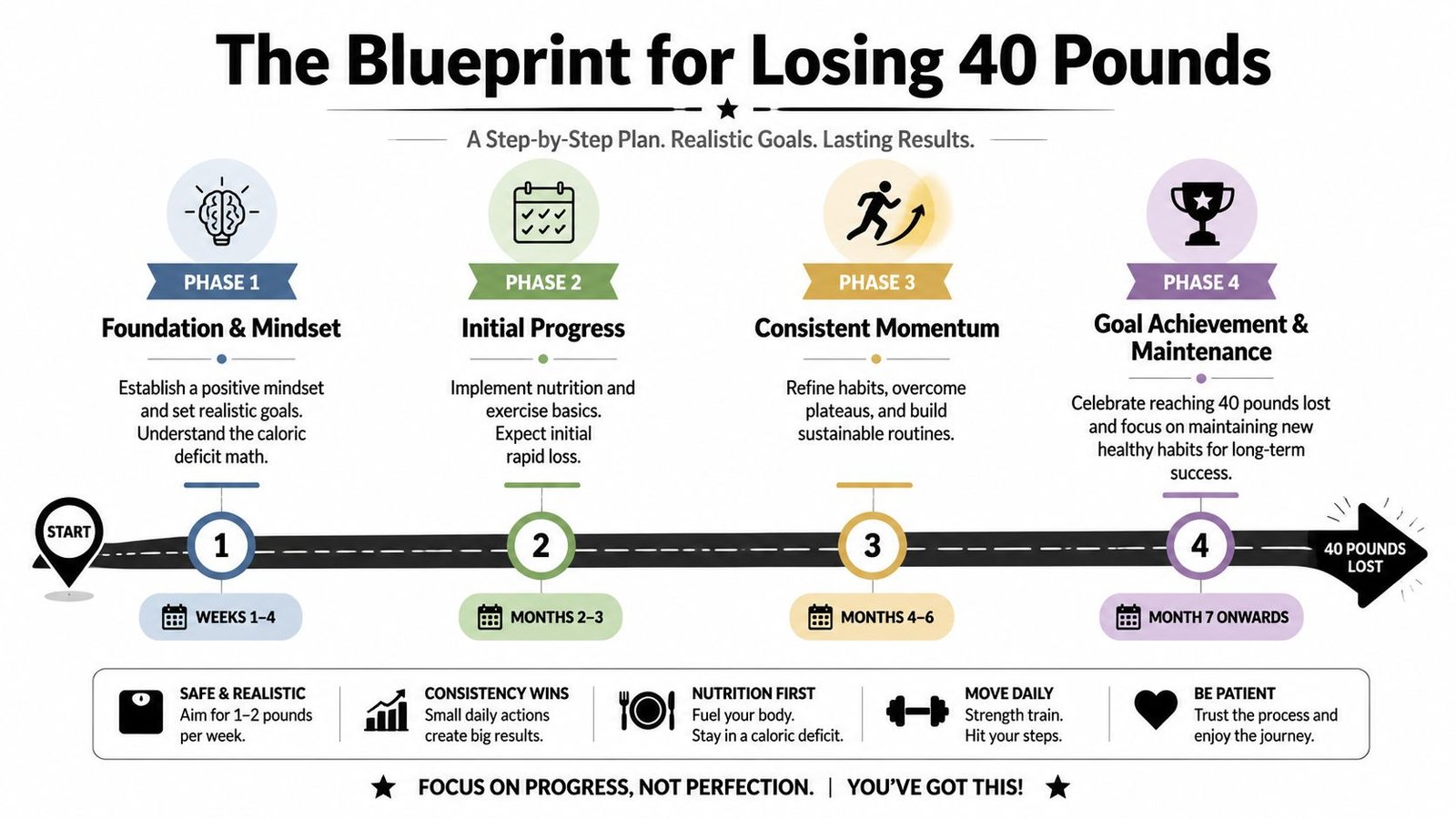
The Blueprint for Losing 40 Pounds
Monday starts with good intentions. By Thursday, sleep is off, dinner comes from a drive-thru, and the plan that looked solid on paper feels hard to follow in real life. That is the defining test in a 40-pound weight loss phase. The plan has to keep working on ordinary weeks, not just disciplined ones.
A safe pace for this goal is still about five to ten months, and that slower runway helps for a reason. It gives you enough time to lose fat, keep more muscle, and practice habits you will still need after the weight comes off (Your Health Magazine).
The math you need to respect
Fat loss comes from energy balance. For this size goal, that usually means creating a calorie deficit you can hold for months without dragging your mood, training, or sleep into the ground.
For many adults, a moderate daily deficit lands in the range that produces steady weekly loss. If you need a plain-English explanation of how that works, this guide on what a calorie deficit is lays out the basics well.
The trade-off is simple. A larger deficit can speed up early scale changes, but it also raises the odds of hunger, low energy, poor workouts, rebound eating, and the familiar cycle of "being good" for a few days and overeating on the weekend. A smaller deficit feels less exciting. It is usually the one that survives real life.
Practical rule: If your plan leaves you preoccupied with food, too tired to train, or too drained to function well at work, the deficit is probably too aggressive.
Build a phase you can actually live with
Losing 40 pounds works better when you break the process into jobs.
First, get your weekly routine under control. That means a calorie target you can hit more often than not, a short list of reliable meals, groceries in the house, and enough structure that one stressful day does not derail the whole week.
Next, expect your plan to change as your body weight drops. The deficit that worked at the start may stop working later. Maintenance calories also shift. At this point, many people get stuck because they prepare for weight loss, but not for life after it.
That maintenance phase deserves attention from day one. Once goal weight is close, the question becomes what now. Instead of jumping straight back to old portions and habits, increase calories gradually, monitor body weight trends, keep protein high, and keep training. Many coaches call that reverse dieting, but the label matters less than the purpose. You are practicing maintenance before regain has a chance to take hold.
Hormones and life stage can change how fast progress shows up and how much recovery you need. For readers dealing with cycle changes, sleep disruption, or shifting body composition, this guide to managing perimenopausal weight can help you set realistic expectations and make smarter adjustments.
A practical blueprint
Here is the structure I use with clients pursuing a larger loss:
- Phase 1: Set the floor. Establish a realistic calorie deficit, consistent meal timing, and a basic sleep routine.
- Phase 2: Repeat the basics. Rotate a handful of meals and training sessions until they feel automatic.
- Phase 3: Adjust, don't panic. Review trends, tighten portions if needed, and fix weak spots like weekend eating or skipped workouts.
- Phase 4: Transition to maintenance. Raise calories in a controlled way, keep activity steady, and learn the intake range where your weight holds.
What tends to work, and what usually backfires
| Approach | What usually happens |
|---|---|
| Moderate deficit with structure | Progress is slower, but adherence is better and results last longer |
| Aggressive restriction | Early weight drops fast, then energy, consistency, and compliance often fall apart |
| Exercise used to "burn off" overeating | Work goes up, recovery gets harder, and intake usually stays underestimated |
| Reaching goal weight with no maintenance plan | Old habits return quickly and regain becomes much more likely |
The milestone is not just losing 40 pounds. It is reaching that point with a routine strong enough to carry you into maintenance without starting over again.
Fueling Your Body for Fat Loss
By week two or three, many 40-pound efforts start to wobble. Breakfast gets skipped, lunch becomes whatever is fast, dinner turns into grazing, and the calorie deficit that looked clear on paper disappears in real life.
Food structure fixes that.
Nutrition will decide most of your progress, and the quality of that structure matters more than dietary intensity. General guidance often uses the 80/20 idea, with most results coming from food choices rather than exercise, and it also supports a higher-protein intake during a deficit. Protein in the range of 1.6 to 2.0 grams per kilogram of body weight is a strong target for preserving lean mass while you lose fat. The same guidance also recommends regular fruit and vegetable intake to help with fullness and fiber (Lose It!).

Start with protein, then build the meal around it
Protein should show up first on the plate and first in your planning. It improves fullness, helps you keep muscle while calories are lower, and makes meals more satisfying. Clients who under-eat protein usually describe the same pattern. They are “being good” all day, then feel ravenous at night and start picking at anything available.
A practical meal-building formula looks like this:
- Choose a protein source first. Chicken, eggs, Greek yogurt, cottage cheese, tofu, fish, lean beef, edamame, or a protein shake all work.
- Add high-volume produce. Build in vegetables, fruit, or both so meals have more fiber and take up more room on the plate.
- Add a carb or fat on purpose. Rice, potatoes, oats, beans, whole-grain bread, olive oil, avocado, nuts, and similar foods can fit well. The win comes from measured portions, not from cutting entire food groups.
Meals should make it easier to stop eating, not harder. Protein, produce, and a defined portion of carbs usually do that better than vague “eat healthy” rules.
Set targets you can actually follow
Macro precision is optional. Consistency is not.
Start with protein. Set calories at a level that creates steady progress without dragging your energy and adherence into the ground. Then repeat a few meals often enough that they become automatic. For a large weight-loss goal, boring can be useful.
A workable weekday setup might be a high-protein breakfast, a prepped lunch, one planned snack, and a simple dinner with protein, vegetables, and one carb source. That gives you enough structure to lose fat without feeling like every meal is a math problem.
If planning tends to fall apart midweek, OrganizEat's weight loss meal planner can help you organize repeat meals, grocery lists, and family-friendly options without rebuilding the week from scratch.
Meal prep that still works on a busy Thursday
Perfect meal prep is not the goal. Coverage is.
The best systems give you enough ready food to get through the moments that usually lead to takeout, drive-thru meals, or random snacking. In practice, that means keeping your prep simple enough to repeat every week.
These patterns hold up well:
- Cook one main protein in bulk. Chicken, turkey, tofu, ground meat, or fish gives you a base for several meals.
- Prepare one easy carb. Rice, potatoes, pasta, quinoa, or beans make fast assembly easier.
- Keep produce ready to use. Washed berries, cut vegetables, salad greens, roasted vegetables, and frozen options all reduce friction.
- Store backup meals and snacks. Greek yogurt, protein shakes, boiled eggs, frozen meals, and tuna packets can save a rough evening.
If you want more repeatable weekday options, this collection of high-protein meal prep ideas is useful.
A quick visual walkthrough can also help if you learn best by example.
Eat in a way you can maintain after the 40 pounds are gone
This part gets missed in a lot of weight-loss guides. The habits that help you lose 40 pounds also need to be adjustable enough to carry into maintenance.
That means avoiding food rules that collapse the second real life shows up. If your plan only works when every meal is cooked at home, every calorie is tracked perfectly, and every craving is suppressed, the transition after fat loss will be messy. A better approach is to practice skills you will still use later: building balanced meals, estimating portions, planning restaurant choices, and recovering quickly after higher-calorie days.
When goal weight gets closer, calories should rise in a controlled way rather than snapping back to old eating patterns. That transition is often called reverse dieting, but the practical point is simpler. Increase intake gradually, keep protein high, keep meal structure in place, and watch for the range where your weight holds steady. That is how you answer the “what now?” question without regaining the 40 pounds you worked so hard to lose.
Designing Your Progressive Exercise Plan
A lot of people hit this stage and assume the answer is more cardio, more sweat, and harder workouts. That approach usually backfires. For a 40-pound loss, exercise works best as a structure you can recover from, repeat during busy weeks, and still use after the dieting phase ends.
Public health guidance from the CDC's physical activity recommendations gives a practical baseline: regular moderate activity across the week, with strength training built in. Use that as a floor, not a dare.
What your training should actually do
During fat loss, training has three jobs.
- Keep muscle on your frame: Resistance training gives your body a reason to hold onto lean tissue while calories are lower.
- Increase energy output without frying you: Walking, cycling, and other cardio options help create a deficit, but they work best as support, not as punishment.
- Build a body that handles real life better: Better strength, balance, and work capacity make stairs, errands, travel, and long days easier.
I see the same mistake often. Someone gets motivated, starts doing intense cardio almost every day, skips strength work, and ends up exhausted by week two. Hunger goes up, joints get cranky, and consistency falls apart. A better plan leaves enough in the tank to eat well, sleep well, and train again.
The test is simple. Your program should still work on a stressful Wednesday.
A simple progression that makes sense
Start from your current ability, not from the version of you that exists only in your head.
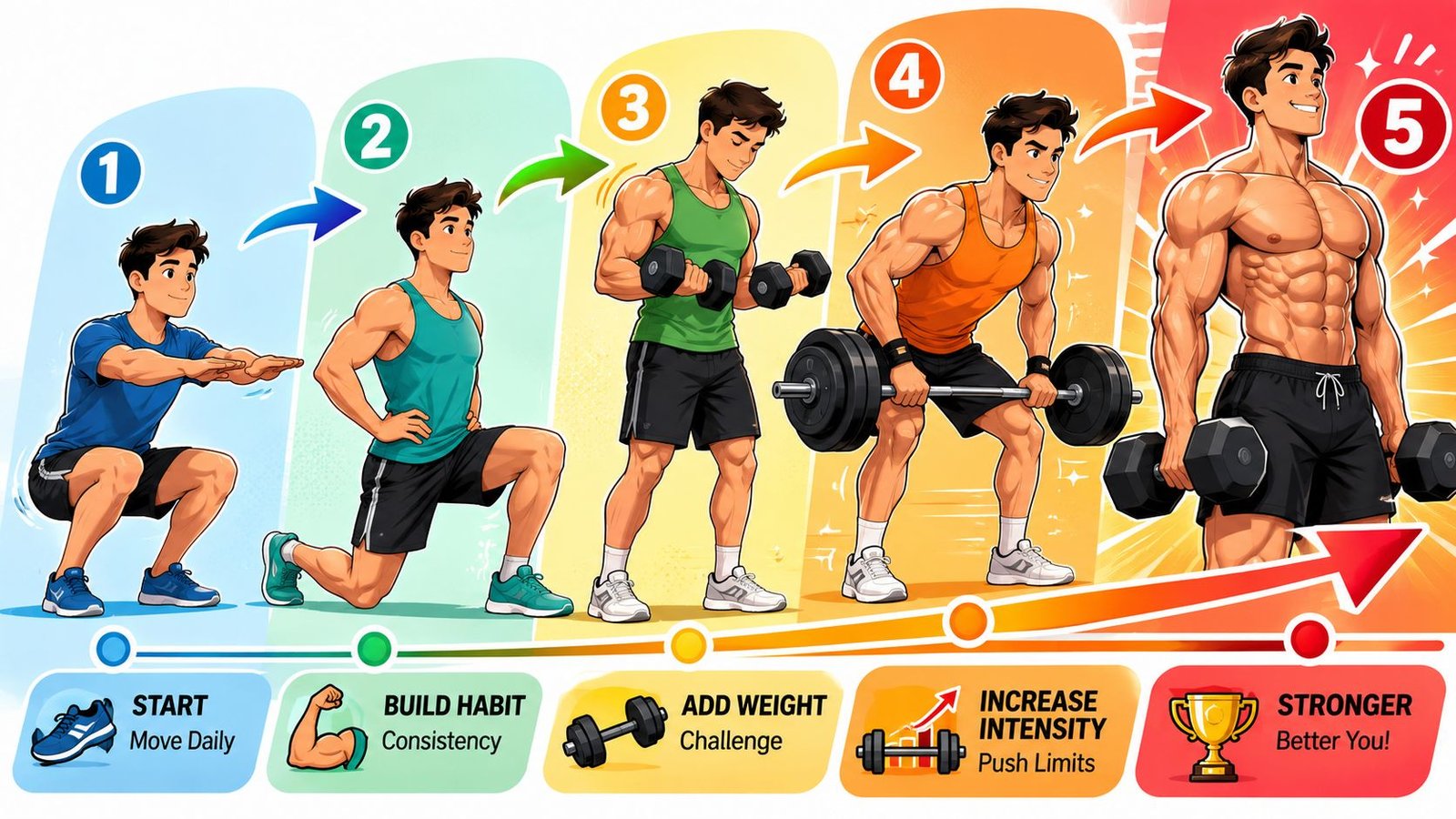
If you're a beginner, build around walking and a short list of basic movements. Chair squats, incline push-ups, glute bridges, band rows, loaded carries, and step-ups cover a lot. Two or three strength sessions per week is enough to make progress.
If you have some experience, run a full-body lifting plan three days per week and keep cardio moderate. Focus on movement patterns that give a good return: squat, hinge, push, pull, carry, and core stability. Add weight, reps, or control over time.
If your recovery is poor, solve that first. Harder workouts do not fix poor sleep, inconsistent eating, or chronically sore joints. In that situation, use lower-impact cardio, shorten sessions, and tighten up your routine outside the gym. A simple food diary for weight loss can help you spot whether low protein, skipped meals, or weekend overeating is hurting recovery.
A weekly structure that works
Try this kind of rhythm:
| Day type | Focus |
|---|---|
| Strength day | Full-body resistance training |
| Movement day | Walking or moderate cardio |
| Strength day | Full-body resistance training |
| Recovery day | Light movement and mobility |
| Strength or cardio day | Based on energy and schedule |
This setup works well because it has some flexibility built in. Miss one workout, and the week is still recoverable. You do not need to be perfect for this plan to work.
That matters later, too. The exercise routine that helps you lose the weight should also be realistic enough to keep during maintenance. If your fat-loss phase depends on six brutal workouts a week, the transition to maintaining your weight will be shaky. If it depends on three strength sessions, daily movement, and manageable cardio, you already have a template you can keep using while calories come back up in a controlled way.
Train hard enough to improve. Recover well enough to repeat it.
Tracking Your Progress Without Obsessing
The hardest part of weight loss tracking isn't understanding why it matters. It's dealing with how annoying it can be.
A lot of people start with good intentions, download an app, weigh food for three days, then stop because logging feels like a second job. By the end of the week, they're guessing portions, forgetting snacks, and wondering why the scale isn't matching their effort.
Make your feedback loop simple
The point of tracking isn't perfection. It's awareness.
Use a short list of metrics that tell the truth without hijacking your headspace:
- Body weight trend: Look for direction over time, not meaning in one random morning weigh-in.
- Waist or clothing fit: These often tell the story when the scale is noisy.
- Gym performance: If your strength is holding steady or improving, that's useful context.
- Daily consistency: Hitting your meal structure and workout plan matters more than one "good" day.

Use data to make decisions, not judgments
I've seen the same pattern repeatedly. Someone weighs in after a salty dinner, sees a bump on the scale, panics, and changes a plan that was working. That kind of emotional decision-making causes more problems than the plateau they were worried about.
A better process looks like this:
- Track intake accurately for the week.
- Watch trends, not single data points.
- Adjust only when the pattern is clear.
- Keep the adjustment small.
If you're trying to build a sustainable system, keeping a simple food diary for weight loss can make it easier to spot where consistency breaks down. Usually it's not breakfast. It's the unplanned bites, restaurant meals, liquid calories, and weekend drift.
Your body doesn't care whether the extra calories came from a "cheat meal" or healthy snacks. Intake still counts.
Count more than pounds
Scale-only thinking is one reason people quit too early. If your energy is better, your workouts feel stronger, your clothes fit differently, and your eating is more stable, progress is happening even if the scale hasn't caught up yet.
Keep a short weekly review:
- What went well: A few repeat wins worth keeping
- What got messy: Stress eating, schedule issues, skipped prep
- What changes next week: One adjustment, not five
This keeps tracking grounded in behavior. That's where long-term results come from.
Navigating Plateaus and Building Lifelong Habits
You do everything that worked for the first 15 or 20 pounds. Then the scale sits there for two weeks, your patience gets thin, and the old urge shows up fast. Eat less. Train harder. Start over on Monday.
That reaction is common. It also backfires.
A plateau usually means something changed, and the answer is to examine the change instead of slashing calories out of frustration. As your body weight drops, your calorie needs drop with it. Fatigue can lower daily movement without you noticing. Food portions can drift. Sleep gets worse. Stress goes up. Any of those can slow the trend even when you're still making progress underneath the surface.
What a plateau usually means
Before changing your plan, audit the parts that tend to slip in real life:
- Portions have crept up: Oils, snacks, handfuls, and restaurant meals add up fast.
- Your weekday structure is solid, but weekends are loose: Four disciplined days cannot always offset three reactive ones.
- Training is still there, but general movement fell off: Fewer steps can erase more of your deficit than people expect.
- Recovery is poor: Hard training with poor sleep and high stress can keep body weight artificially high for days.
I tell clients to treat a plateau like a systems check. If compliance has been inconsistent, fix compliance first. If compliance has been strong for several weeks, then a small calorie adjustment, more daily movement, or a better recovery routine usually makes more sense than a dramatic overhaul.
A plateau is feedback. Use it to tighten the plan, not to punish yourself.
The part most weight loss plans skip
Losing 40 pounds is only half the job. The harder question comes right after: what now?
Many people regain weight. According to Today, 78% of people who lose a significant amount of weight regain it within two years. The same reporting notes that people who use tools with maintenance features keep 40% more of their weight loss.
That lines up with what I see in practice. Plenty of people can follow a short-term deficit. Far fewer know how to come out of that deficit without swinging straight back to old habits. If the only version of "healthy eating" you know is aggressive restriction, maintenance feels confusing, loose, and easy to lose control of.
How to reverse diet without overcomplicating it
Reverse dieting is a gradual exit from fat loss. The goal is simple: raise calories carefully, keep your routine intact, and give your body time to settle at a new normal.
Done well, it reduces the common rebound pattern where someone reaches a goal weight, relaxes all structure, and gains back ten pounds before they realize what's happening.
A practical approach looks like this:
- Spend a short period stabilizing at your new weight. Keep your usual meals and training in place.
- Increase calories gradually. Add a small amount, then hold steady long enough to observe the trend.
- Keep protein and meal structure consistent. Those habits still do a lot of the work.
- Continue lifting and stay active. Maintenance is easier when your routine does not disappear after the diet ends.
- Expect normal fluctuations. A small bump after more carbs, sodium, or a restaurant meal is not instant fat regain.
The trade-off is patience. Reverse dieting feels slower than declaring victory and eating freely, but it is far more effective for keeping the result.
What maintenance eating really looks like
Maintenance is not a reward phase where everything goes back to normal. It is a new normal.
You get more flexibility, but you still need structure. The people who keep weight off tend to hold onto a few anchor habits: regular weigh-ins, repeat meals that make intake easier to manage, planned indulgences instead of impulsive overeating, and quick corrections when weight starts drifting up.
That does not mean living like you're on a cut forever. It means knowing which habits carry the biggest return and keeping those in place. For many people, breakfast and lunch stay fairly predictable, dinners stay flexible, workouts remain scheduled, and weigh-ins happen often enough to catch a trend early.
The true goal of maintenance
The goal is not just to lose 40 pounds. The goal is to live at that lower weight without feeling trapped by the process.
That requires a different skill set. During fat loss, the question is often how much to reduce. During maintenance, the better question is how much structure keeps the result while still allowing a normal life. Answer that well, and you stop chasing temporary success. You build a body weight you can keep.
If you want a simpler way to stay consistent through both the deficit phase and the maintenance phase, PlateBird is worth a look. It makes calorie and macro tracking faster by letting you type meals like a note or log food from a photo, which is exactly the kind of low-friction system that helps people stick with the habits that matter.