
Dinner is halfway done, the onions smell good, the pan looks promising, and then you taste the pot. It's bland. Not bad, just flat. It needs depth, but you don't have homemade stock tucked away in the fridge, and you're not starting a long simmer on a busy weeknight.
That's where bouillon cubes earn their place.
A lot of people treat them like a backup ingredient. I think of them more like a compact flavor base. They can turn plain water into broth, yes, but that's only the beginning. Used well, they can round out rice, wake up vegetables, deepen sauces, and help you build savory flavor fast. If you're also tracking food closely, they matter for another reason. They're powerful, concentrated, and worth using with intention.
The Secret Flavor Weapon in Your Pantry
One of the most common kitchen frustrations is cooking something that should taste comforting and rich, but somehow lands thin and forgettable. Soup can do this. Rice can do this. Even a quick skillet sauce can taste like all the parts are there, but the center is missing.
Bouillon cubes fix that fast because they bring concentrated savory flavor into the pan without much effort. They were designed as a shelf-stable shortcut, and that's exactly why they're so useful in real homes. You don't need bones, scraps, or hours of simmering. You need hot liquid, a spoon, and a little restraint.
What makes them more interesting than “just salty” is the role they play in flavor balancing. A dish usually falls flat for one of a few reasons. It may need more savoriness, more seasoning, or more backbone under the vegetables, grains, or protein. Bouillon often helps with all three at once, which is why a small amount can make a pot taste much more complete.
Bouillon works best when you treat it like a base layer, not a last-minute rescue dumped in carelessly.
I also like bouillon because it pairs well with other pantry habits. If you already cook with garlic, onion, black pepper, paprika, dried herbs, or blends from an organic spice collection, bouillon gives those seasonings something to sit on. The spices add personality. Bouillon adds body.
That's the shift that helps most cooks. Stop thinking of it as a cheap cube that replaces stock. Start thinking of it as a tool for building flavor on purpose. Once you do that, it gets much easier to understand how to use bouillon cubes in a way that makes food taste fuller, not just saltier.
Bouillon Basics Dissolving and Measuring
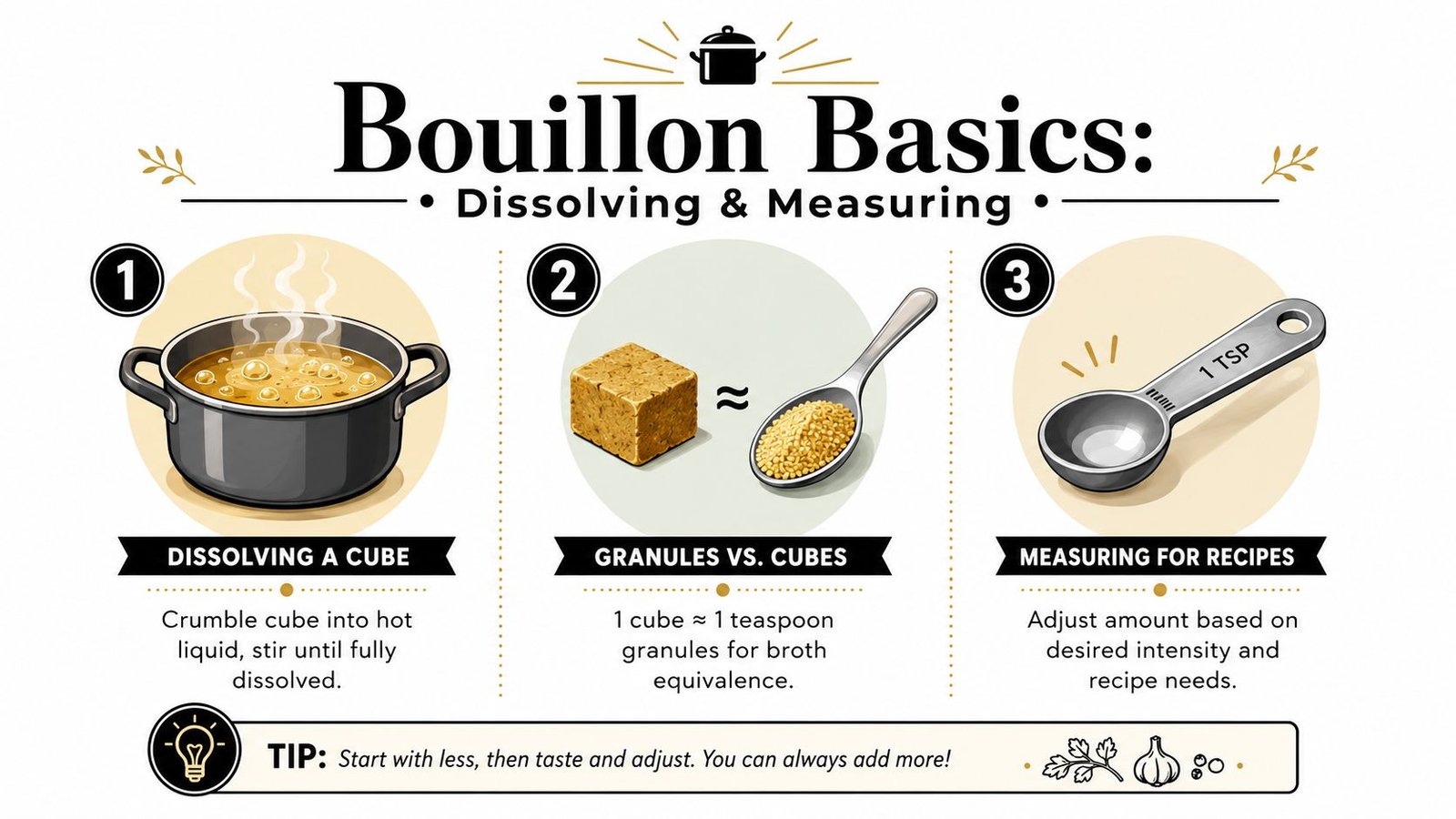
The first skill is simple, but it matters. If you don't dissolve bouillon properly, you can end up with salty pockets, gritty bits, or a recipe that tastes stronger in one spoonful than the next.
Start with hot liquid
A common preparation method is to dissolve about 1/2 cube per cup of water or 1 cube per cup depending on the package directions, and for a 3-cup recipe that means you can build broth in minutes instead of simmering stock for hours. The key technique is to bring the water to a boil or simmer, add the cube, and stir until fully dissolved before tasting and adjusting seasoning, as explained in this guide to making chicken broth with bouillon cubes.
If I'm making broth in a mug or measuring cup, I usually crumble the cube first. It dissolves faster and gives you more control. If I'm adding it to a pot, I still wait until the liquid is hot before it goes in.
Use the package as your starting line
A common point of confusion arises with bouillon. Bouillon advice is often vague, so cooks start guessing. Then the dish turns out too strong, too weak, or oddly salty.
Use this approach instead:
- Check the package direction first. Some products are meant to be stronger than others.
- Match the liquid in your recipe. If your soup, rice, or sauce uses a set amount of water, build your bouillon from that volume.
- Taste before adding salt. Bouillon is seasoning and broth base at the same time.
A good kitchen habit is to read the label the same way you'd read any packaged ingredient. If you want a refresher on serving size, sodium, and ingredient order, this quick guide on how to read nutrition labels is worth bookmarking.
Practical rule: Dissolve first, taste second, salt last.
Know when to go lighter
If you're making a dish where the liquid gets absorbed, like rice or couscous, full-strength bouillon can taste stronger at the end than it did in the pot. In that case, start on the lighter side. You can always add a bit more flavor later with herbs, lemon, garlic, or a splash of pan juices.
Here's a simple way to explain it:
| Dish type | Best starting move |
|---|---|
| Soup | Make the broth first, then add ingredients |
| Rice or grains | Start a little lighter if the liquid will be fully absorbed |
| Sauce | Use a small amount of dissolved bouillon for depth, then taste |
| Vegetables | Use lightly seasoned liquid so the vegetables still taste like themselves |
This is the part that turns bouillon from random pantry item into repeatable cooking technique.
Upgrade Everyday Dishes with Bouillon
The easiest way to get better at bouillon is not by making more soup. It's by using it in foods you already cook every week.

Plain water cooks food. Bouillon broth seasons it from the inside. That one shift can make meal-prep staples taste much less repetitive, especially if you're eating chicken, rice, vegetables, potatoes, or beans on rotation. If you like practical batch-cooking, these easy meal prep ideas pair nicely with bouillon-based upgrades.
Use it where water would normally go
Some of the best uses are almost invisible. Nobody needs to know you did anything fancy. The food just tastes better.
- Rice and other grains. Replace plain cooking water with prepared bouillon broth. The grains come out savory all the way through instead of needing all the flavor added on top later.
- Vegetables. Steam or simmer green beans, carrots, or cabbage in lightly seasoned bouillon instead of plain water. You're giving them a subtle backbone, not drowning them.
- Potatoes. Boil potatoes in bouillon broth before mashing. The seasoning gets into the potatoes early, which means you don't have to chase flavor only with butter and salt at the end.
- Beans or lentils. A little bouillon in the cooking liquid can make them taste more finished and less flat.
Think of it as background flavor
Bouillon shines when it supports the dish instead of announcing itself. If your goal is balanced food that still tastes satisfying, that matters. A grain bowl, for example, can go from “healthy but dull” to “I'd gladly eat this again tomorrow” just by cooking the base in seasoned liquid.
That's especially helpful if you're trying to keep meals consistent without getting bored. A chicken-and-rice lunch tastes different when the rice has real savoriness built in and the vegetables were cooked in flavorful liquid instead of bland steam.
Here's a helpful demo if you want to see bouillon in action in a home-cooking context:
A few combinations that work well
Add bouillon where it can season the whole dish, not just sit on the surface.
Try these ideas:
- Chicken bouillon with rice and broccoli for lunch bowls
- Vegetable bouillon with quinoa and roasted vegetables for a lighter prep
- Beef bouillon in the liquid for mushrooms or onions when you want deeper savory notes
- A light bouillon bath for frozen vegetables when you need a quick side that still tastes intentional
Once you start using it this way, bouillon stops being an emergency fix and becomes part of how you build dinner.
Create Rich Sauces and Marinades
Bouillon is useful in sauces for the same reason it's useful in broth. It's concentrated. A homemade bouillon recipe can reduce roughly 1 gallon of stock to about 1 cup of liquid bouillon, with a target texture like a glossy sauce that coats the back of a spoon, which helps explain why commercial cubes are so potent, as described in this homemade bouillon cube method.
Build a fast pan sauce
Say you've cooked chicken, tofu, or mushrooms in a skillet. You've got browned bits in the pan, maybe a little fat left behind, and not much else. That's a perfect moment for bouillon.
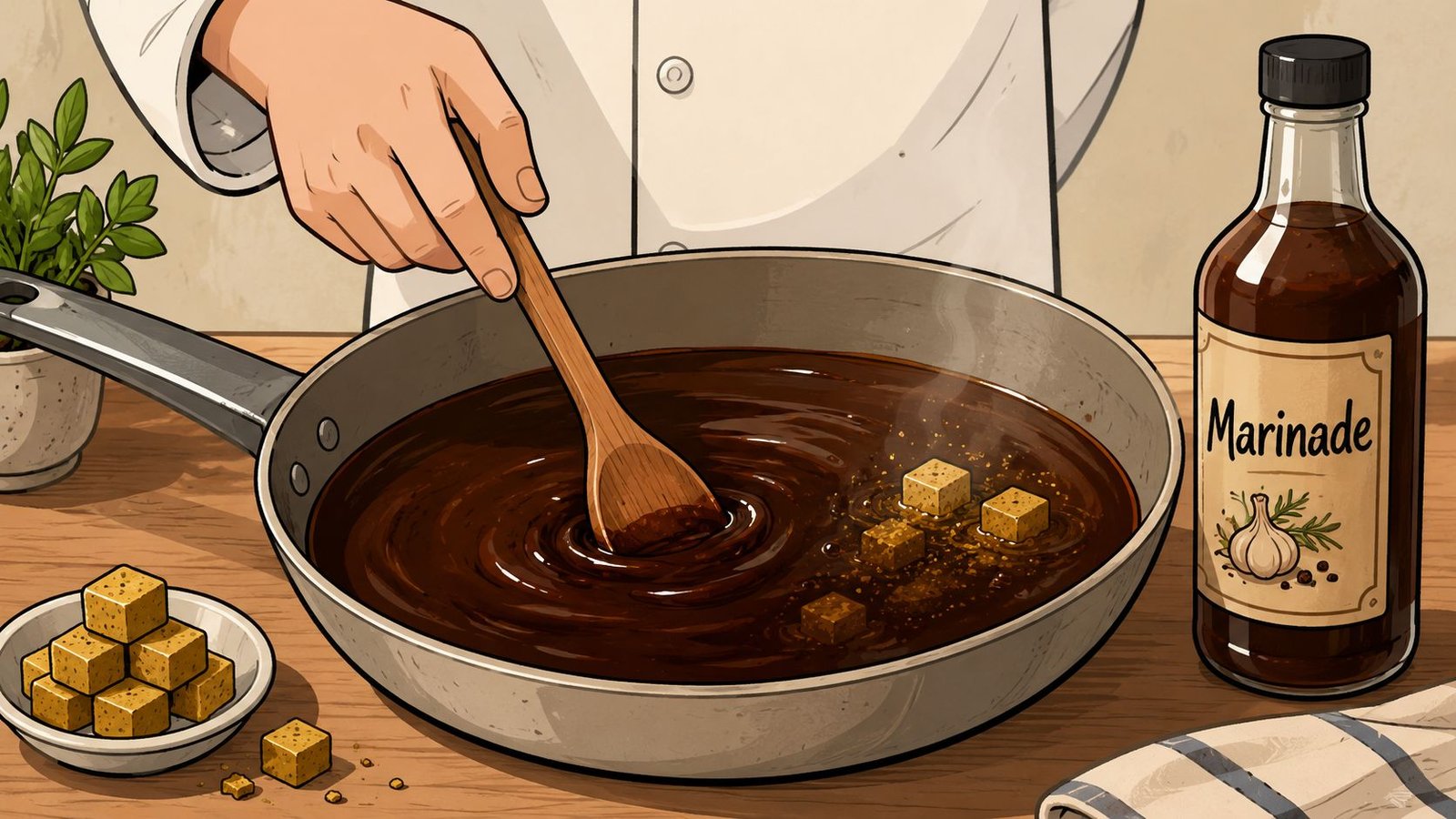
Add a small amount of hot water, then stir in a little dissolved bouillon. Scrape the pan, let the liquid reduce, and finish with whatever fits the meal. A squeeze of lemon, a spoonful of yogurt, a pat of butter, or some black pepper all work. What bouillon contributes is the stock-like depth that would otherwise take much longer.
A good pan sauce usually needs three things:
| What it needs | What bouillon helps with |
|---|---|
| Savory base | Adds concentrated broth flavor |
| Balance | Supports acid, fat, and aromatics |
| Body | Makes the sauce taste more complete |
Use it in marinades carefully
Bouillon can also anchor a marinade, but use a light hand. Because it's concentrated, too much can push the mixture from flavorful to harsh.
Try this pattern: dissolve a small amount of bouillon in hot water, cool it, then combine it with oil, an acid like lemon juice or vinegar, garlic, and dried herbs. That works well for chicken, beef, or tofu. The bouillon gives the marinade a savory core, while the other ingredients shape the final flavor.
A marinade with bouillon should taste seasoned and savory, not like straight soup concentrate.
Better flavor with less clutter
This is one of my favorite uses for busy nights because it removes the feeling that you need ten separate ingredients to make something taste “restaurant-like.” Bouillon won't replace fresh ingredients, but it does give your sauces and marinades a head start.
If your sauce tastes thin, bouillon can deepen it. If your marinade tastes sharp but one-dimensional, bouillon can round it out. Used this way, it acts less like a shortcut and more like a quiet supporting ingredient that makes everything else taste more like itself.
Managing Sodium and Finding Alternatives
Bouillon can make healthy cooking easier, but it does ask for awareness. One cube can contribute roughly 800 to 1,200 mg of sodium, while the recommended daily limit is 2,300 mg, which means a single cube can account for roughly 35% of a whole day's sodium for many adults according to this nutrition overview of bouillon cube sodium.
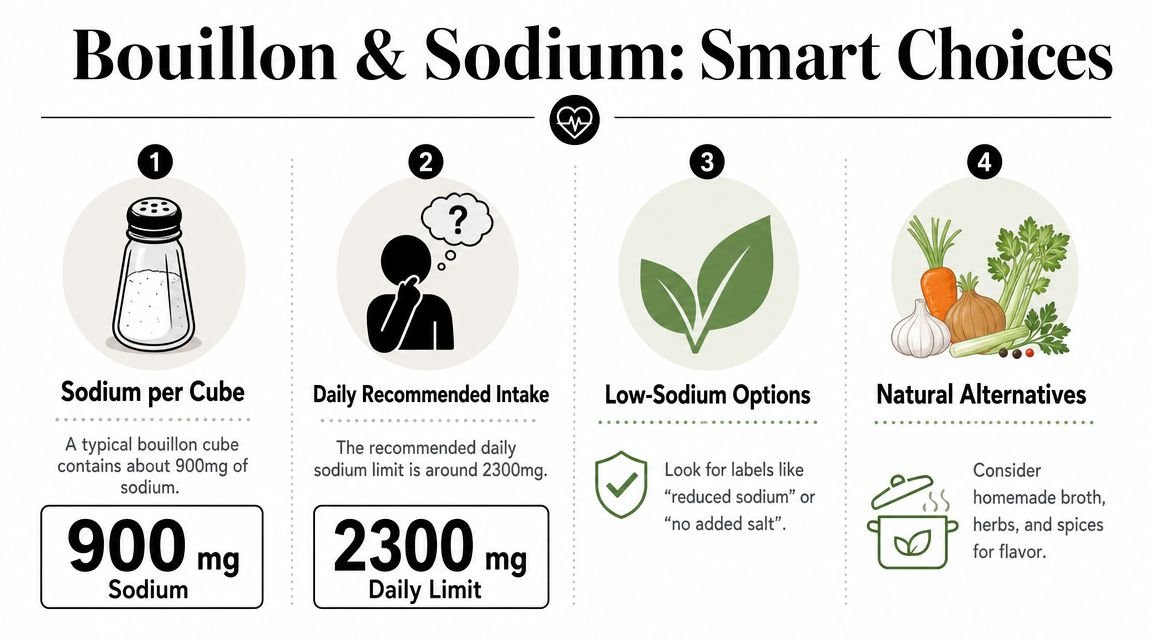
That doesn't mean bouillon is off-limits. It means dose matters. If you're tracking macros, working on weight loss, or trying to keep blood pressure in mind, bouillon is a tool to manage, not a free pour.
Smart ways to use less without losing flavor
A lot of cooks make the same mistake. They use bouillon at full strength, then salt the dish again out of habit. That's where things get away from you.
Try these habits instead:
- Start with half strength if you know the dish will reduce or the liquid will absorb fully.
- Add herbs and spices early so the food gains flavor from more than salt alone.
- Hold back extra salt until the dish is completely finished and tasted.
- Use acid at the end. Lemon juice or vinegar can brighten flavor and make a dish feel more seasoned without more sodium.
Read labels with your goal in mind
Not every bouillon product is built the same way. If sodium is a concern, compare labels and look for options described as reduced sodium or no added salt. If you follow a plant-based diet, vegetable bouillon can be a practical choice. If you want a cleaner canning workflow or fewer surprises in texture, simpler formulas are usually easier to work with.
A useful way to think about alternatives is this:
| If your priority is | Best move |
|---|---|
| Lower sodium | Start with less bouillon or choose a lower-sodium version |
| More control | Build flavor with herbs, garlic, onion, and acid around a smaller amount |
| Plant-based cooking | Use vegetable bouillon and layer in mushrooms or tomato paste |
| Whole-food approach | Keep homemade broth on hand when possible |
Kitchen reminder: Bouillon doesn't have to carry the whole dish. Let aromatics, herbs, and acidity do part of the work.
For cooks who want meals that are both satisfying and sodium-conscious, ideas from a high-protein low-sodium approach can help you think beyond the cube itself and build better balance across the full plate.
Proper Storage and Quick Recipe Ideas
Bouillon cubes don't ask for much, but they do keep better when you protect them from moisture and kitchen heat. Store them in a cool, dry place, and once opened, keep them sealed well so they don't soften, crumble unpredictably, or pick up pantry odors.
If you use bouillon in preserving or recipe prep that involves jars, there's one rule worth remembering. For commercial bouillon cubes used in recipes or home canning, the key operational step is to dissolve the cube fully in hot liquid before adding it to the jar, and guidance also recommends using plain bouillon without fillers and matching the dosage to the manufacturer's directions, as noted in this home canning guidance for bouillon cubes.
Keep it simple and usable
A few habits make bouillon easier to cook with:
- Store opened cubes airtight so they stay firm and easy to portion.
- Keep flavors labeled if you use chicken, beef, and vegetable cubes in the same pantry.
- Break off only what you need when you're seasoning a small sauce or quick side dish.
- Dissolve before adding when consistency matters.
Five quick recipe sparks
Sometimes you don't need a full recipe. You just need a nudge.
- Stir a little dissolved chicken bouillon into the liquid for stovetop rice.
- Add a small amount to a mushroom pan sauce for chicken or tofu.
- Simmer green beans in light vegetable bouillon with garlic.
- Mix a bit of dissolved bouillon into a marinade with oil, lemon, and dried herbs.
- Boil potatoes in bouillon broth before mashing for deeper flavor.
Learning how to use bouillon cubes well is mostly about confidence. Start light, dissolve fully, taste as you go, and let the cube support the dish instead of dominating it.
If you're trying to cook flavorful meals while staying on top of calories, protein, and sodium, PlateBird makes the tracking part much easier. You can type what you ate or snap a photo, and the app quickly turns real meals into usable nutrition data without the usual logging hassle.