You're probably in one of two places right now. You know you should eat more protein, but you're not sure how much you're getting. Or you tried a full calorie tracker, got buried in menus, servings, and macro charts, and stopped using it after a few days.
That's where a protein tracker app starts to make sense.
For a lot of people, tracking everything is too much friction. Tracking one thing well is different. Protein sits at the center of several common goals people care about: staying full, keeping muscle while dieting, recovering from training, and making meals more structured without turning food into homework.
Why Just Tracking Protein Changes Everything
You finish a busy day, realize dinner is your first real source of protein, and then spend the evening hungry, snacking, or wondering why training recovery feels off. I see that pattern all the time. The problem usually is not a lack of effort. It is that “eat better” is too vague to guide real food choices at 7 p.m. when time and energy are low.
Protein gives the day a clear anchor.
A single protein target changes how meals get built. Instead of sorting every bite into calories, carbs, fat, sugar, and portion math, you ask one useful question: Did this meal move me closer to my protein goal? That question is fast to answer, and speed matters. Habits that take less effort are the ones people keep.
Why single-macro tracking is easier to stick with
Full calorie counters still have a place. They can help during a cut, for detailed macro coaching, or when someone needs a tighter nutrition plan. The trade-off is time and attention. For many people, logging every ingredient and checking every macro turns one meal into a small admin task.
A protein-first app trims that workload. You still get structure, but you focus on the metric that often improves fullness, meal quality, and muscle support with the least friction. That shift explains why some people do better with a focused tracker than with an all-in-one food log. If you want the broader picture, an AI calorie counter for full nutrition tracking can make sense. If full tracking keeps getting abandoned, narrowing the target is usually the smarter starting point.
Practical rule: If detailed tracking keeps breaking the habit, reduce the number of things you track.
This matters outside the gym too. Runners, lifters, and busy adults often miss protein after training because they do not notice the gap until late in the day. The Swift Running article on post-run fuel gives a useful example of how protein supports recovery without turning nutrition into a project.
Better adherence beats perfect logging
The clients who get the best results from a protein tracker app are rarely the ones chasing perfect entries. They are the ones who make protein visible early enough to adjust.
That usually means:
- Repeating easy wins: the same breakfast, shake, or lunch shows up often because repetition reduces effort
- Checking the total before dinner: they know whether the last meal needs to carry more protein
- Using estimates without stressing: close enough is often enough to guide better decisions
That is the fundamental shift. Single-macro tracking moves nutrition from obsessive detail to useful awareness. A good protein tracker app should make eating more intentional, not more complicated.
How a Protein Tracker App Actually Works
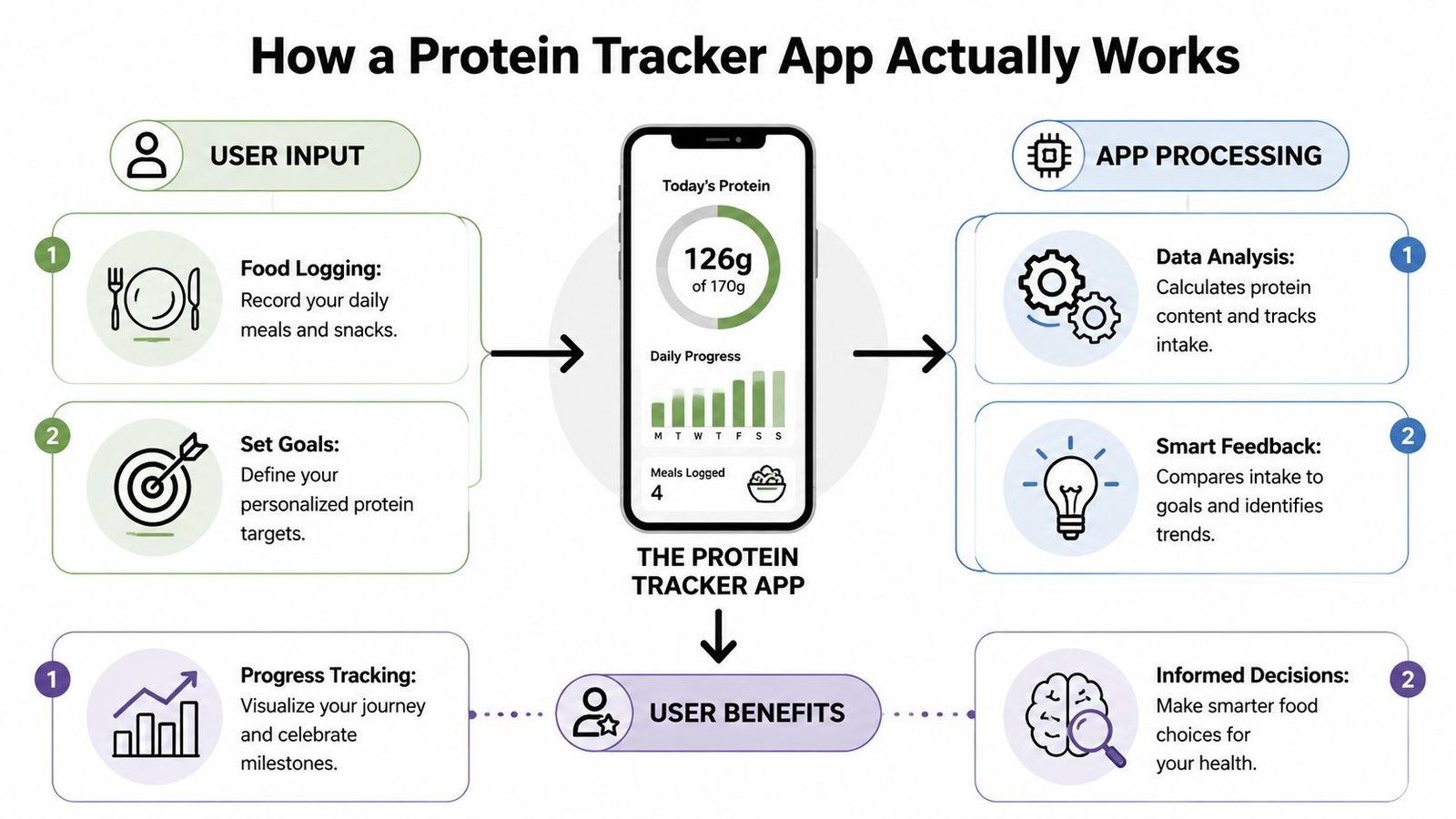
A protein tracker app acts like a fast food librarian. You bring it a food, a serving size, or a meal. It looks up the nutrition details, translates them into protein grams, and files that entry into your day so you can see progress against your target.
That's much more useful than a note in your phone that says “chicken salad for lunch.” A note captures memory. An app captures usable data.
From meal to number on screen
Most apps follow the same basic flow:
You enter food
by typing, barcode scanning, photo input, or selecting something you've logged before.The app matches that food
to a nutrition database and estimates the protein content based on the portion you choose.It adds the entry to your day
and compares your running total to your target.It stores the pattern
so repeated meals become faster to log later.
That database piece is the engine. The broader nutrition market helps explain why. MyFitnessPal describes itself as the “#1 nutrition tracking app” and says its database includes over 20 million foods on its website. That huge library shows the core challenge these tools are trying to solve: fast lookup, reliable matching, and less friction at mealtime.
Why newer tools feel less like diaries
Older food logging often felt like bookkeeping. Newer protein trackers try to behave more like decision tools. Instead of just recording what happened, they help you respond while the day is still in progress.
That's why features like recurring meals, widget-based day tracking, barcode support, and calendar views matter in practice. They reduce taps and help you answer one useful question quickly: Am I on track, or do I need to adjust my next meal?
If you want a broader look at how fast logging tools work beyond protein-only use, PlateBird's AI calorie counter is a good example of how natural language and simpler inputs can cut the usual logging friction.
A good tracker doesn't just remember your meals. It shortens the distance between eating and understanding.
What the app is really doing for you
The visible output is a protein total. Its true value is behavioral.
A protein tracker app helps you:
- Spot gaps early: a low-protein breakfast doesn't stay hidden until bedtime.
- Make dinner smarter: you know whether you need a higher-protein meal or just a normal one.
- Reduce guesswork: repeated foods become easier to judge over time.
- Build awareness: after a few weeks, many users can estimate their usual meals more confidently.
That's the shift from a food diary to a data-guided habit tool. The app doesn't make choices for you. It makes your choices easier to see.
Evaluating Essential App Features
Two apps can both claim to track protein and still feel completely different in daily use. One feels fast enough to keep. The other turns lunch into admin.
When you're comparing options, don't start with the longest feature list. Start with the features that remove friction in your actual routine.
The must-have features
Food entry comes first. If logging is clunky, the rest doesn't matter.
Here's a simple way to compare input methods:
| Method | Best For | Tradeoff |
|---|---|---|
| Typing food names | Fast logging of simple meals and repeat foods | Can be less precise if your description is too vague |
| Barcode scanning | Packaged foods and convenience items | Less helpful for homemade meals or restaurant plates |
| Photo logging | Busy users who want low effort capture | May still need edits for portions or mixed dishes |
| Saved meals or recurring entries | People who eat similar breakfasts, lunches, or shakes | Takes a little setup before it becomes effortless |
The strongest apps make at least one of those methods feel easy enough to use every day.
Database quality matters too. A giant database sounds appealing, but usefulness beats sheer size in real life. You want foods that are easy to find, servings that make sense, and common meals that don't require too much cleanup.
What separates basic from genuinely useful
Many apps still stop at a daily total. That's enough for a beginner, but it's often not enough for someone who wants better feedback.
Welling's roundup notes that some tools go further. It says MacroFactor updates calorie and macro targets based on weight trend and intake, while Cronometer can show amino-acid breakdowns, giving context beyond a plain total in its coverage of protein tracking apps in 2026. That's a meaningful distinction. A tracker can either count grams, or it can help you judge whether your target and food quality fit your situation.
Use that difference as a filter. If your main need is simplicity, basic tracking may be enough. If you're a coach, a vegetarian, an older adult, or someone dialing in a very specific goal, richer feedback may matter more.
For a broader comparison of macro-focused tools, PlateBird's guide to the best macro tracking app is a useful reference point.
Coach's view: The best app isn't the one with the most features. It's the one you'll still be using on a busy Thursday.
Nice-to-have features that matter more for some users
These aren't universal dealbreakers, but they often improve adherence:
- Custom targets: useful if you don't want a generic setup.
- Calendar or history views: helpful for spotting rough patches instead of judging one meal at a time.
- Health app syncing: convenient if you already track training, weight, or daily activity elsewhere.
- Shopping lists or meal-prep support: more valuable than they sound if you plan food in batches.
- Multiple portion units: important if you switch between grams, ounces, cups, or packaged servings.
What usually doesn't help is feature overload. If the app asks you to manage every nutrient, score every meal, and review five dashboards daily, it's unlikely to retain users. Speed and clarity beat novelty.
Common Goals and Everyday Use Cases
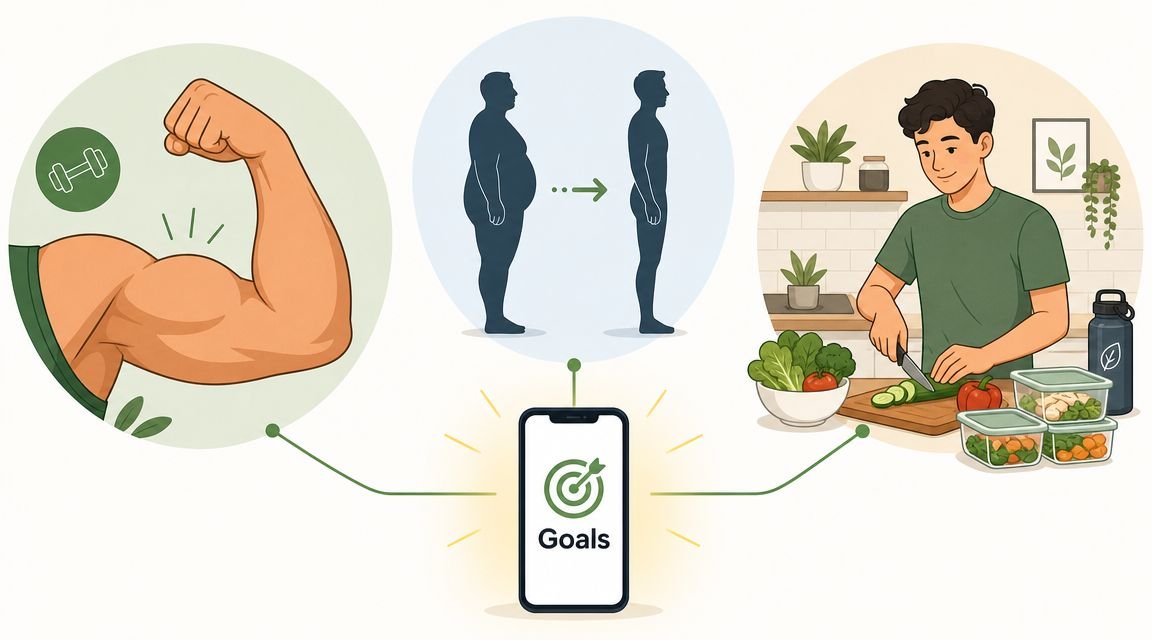
A protein tracker app earns its place when it helps with a real problem you face during a normal week. The value is different for a lifter trying to grow, a parent trying to lose weight without logging every bite, and someone who meal preps the same lunches Monday through Friday.
For muscle gain and training recovery
A common pattern looks like this. You train hard, get a solid post-workout shake, then realize at dinner that the rest of the day was light on protein. The issue usually is not motivation. It is distribution.
A focused tracker helps you spot that gap fast. Instead of getting buried in calories, fiber, sugar, and meal scores, you can check whether breakfast, lunch, and your post-training meal are pulling their weight. That matters more for muscle gain than one high-protein dinner trying to make up for everything.
Some lifters also do better with repeatable meals than with endless food variety. Saving the same breakfast, go-to lunch, or shake removes friction and makes consistency more realistic on workdays.
Recovery also includes sleep, soreness management, and training load. If you want that bigger picture alongside nutrition, MEDISTIK's guide to best recovery techniques for athletes is a practical companion read.
For weight loss without calorie fatigue
Single-macro tracking really makes sense. Full calorie counters can work, but they also ask for a lot of attention. For many people, that is fine for two weeks and exhausting by week six.
Protein-first tracking gives you a simpler target that still improves meal quality. Higher-protein meals tend to be more filling, easier to build around, and less likely to turn into random snacking later. You are still making nutrition decisions. You are just doing it with less mental clutter.
A busy professional might use the app in a very plain way:
- Breakfast check: make sure the first meal helps the day instead of leaving all the protein for later.
- Lunch check: catch the salad, sandwich, or grab-and-go option that looks healthy but barely moves the target.
- Dinner fix: add chicken, Greek yogurt, eggs, tofu, or a shake if the day is short.
That approach is easier to sustain than treating every meal like an accounting exercise.
For meal prep and repeatable eating
This group often gets the biggest benefit.
If your weekdays follow a pattern, a focused protein tracker fits that pattern better than an all-in-one app built for constant food variety and detailed macro management. You can reuse staple meals, compare one week to the next, and notice quickly when your routine slips.
I see this a lot with clients who want structure without obsession. They do not need more data. They need a fast way to confirm that the meals they already rely on are still supporting the goal.
The easier an app makes repeat meals, the more likely you are to stay consistent when life gets busy.
Repeated meals also make your intake easier to judge. When your baseline is steady, low-protein days stand out fast, and fixing them is usually simple.
Tips for Consistently Hitting Your Protein Target
Often, individuals don't miss their protein target because they lack information. They miss it because the day gets away from them. Breakfast is small, lunch is rushed, dinner becomes a rescue mission, and the app gets blamed for a planning problem.
Consistency comes from using the app before the day is over, not just after it.
Use the tracker as a planning tool
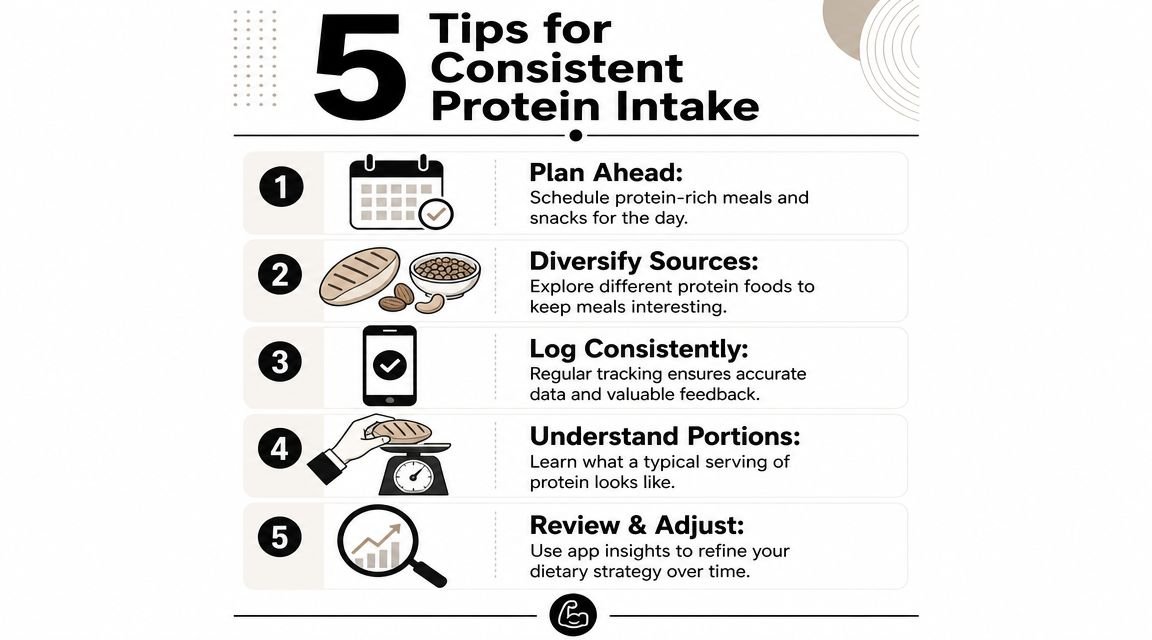
The biggest habit shift is simple. Don't only log what you already ate. Start previewing what you're likely to eat.
That changes the app from a scorecard into a guide.
Try these habits:
- Front-load breakfast: if mornings are always low in protein, fix that first. It's easier than trying to cram the whole gap into dinner.
- Pre-log obvious meals: if you already know lunch or a shake is coming, enter it early.
- Build a rescue list: keep a short set of easy protein options you can add when the day is running behind.
Look for patterns, not isolated misses
One low day doesn't matter much. Repeated low days at the same time of week do.
Protein Tracker by MWM highlights statistics like average daily protein, total entries, and trend charts on its app page. That kind of feedback matters because it helps users and coaches spot patterns such as under-eating on rest days, low-protein breakfasts, or travel disruptions that wouldn't stand out from a raw daily number alone.
That's the part many people skip. They log, but they never review. The review is where behavior change happens.
If weekends always fall short, you don't need more motivation. You need a weekend plan.
Make portion learning part of the process
A tracker works best when it teaches you over time. After repeated logging, you start recognizing what your usual foods contribute. That doesn't mean you stop using the app. It means the app is doing its job by improving your judgment.
A few practical moves help:
- Repeat simple meals on purpose for a while so you learn what they provide.
- Notice weak spots such as breakfasts, restaurant lunches, or evening snacks.
- Adjust one meal first instead of trying to overhaul the whole day.
- Keep your standards realistic because “close and consistent” beats “perfect for three days.”
What doesn't work is treating every day like a test you either pass or fail. The better mindset is course correction. The app gives you information. You use it to make the next meal easier.
Quick Start Your Journey with PlateBird
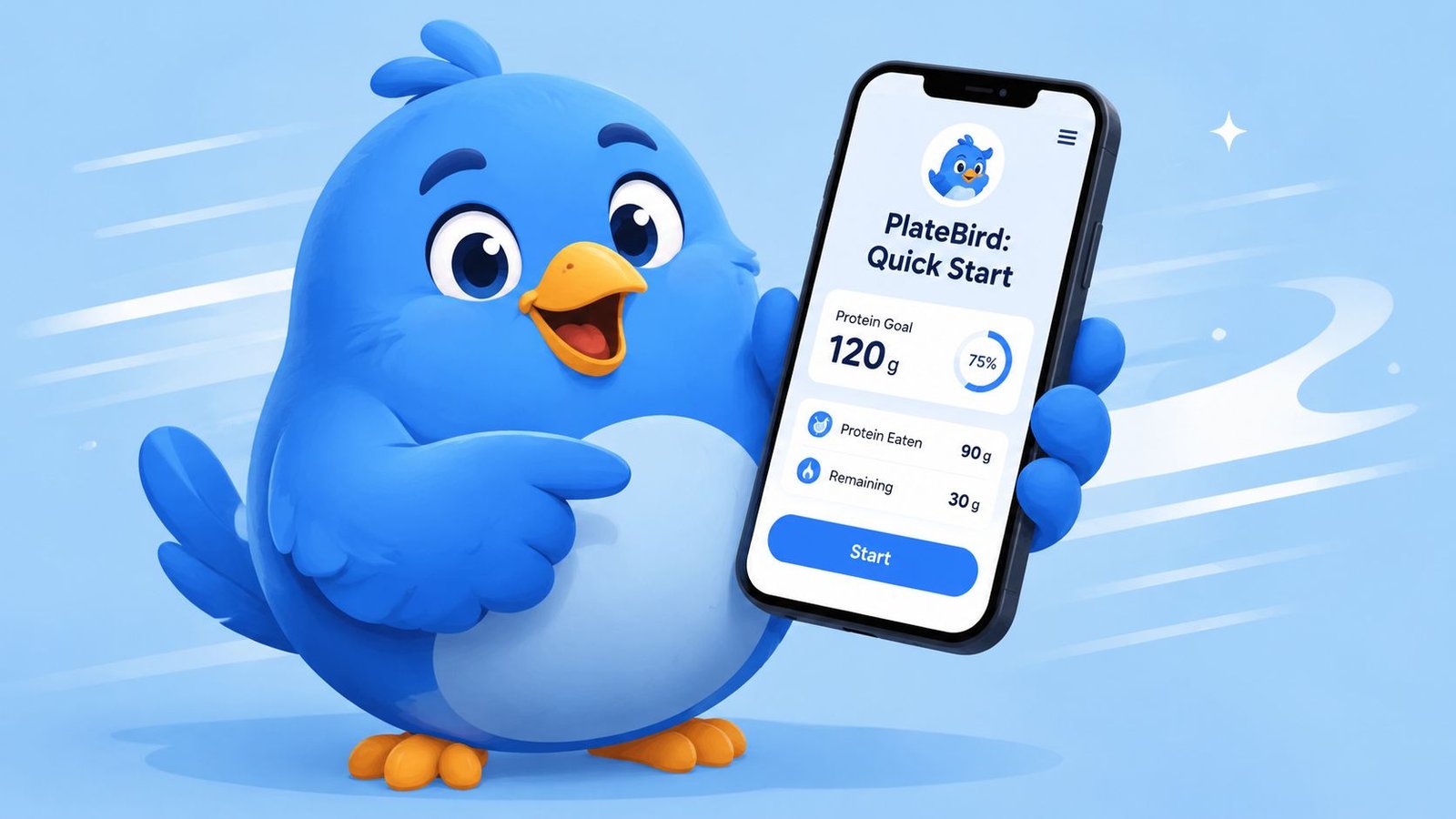
If you like the idea of protein tracking but hate the thought of another tedious food logger, the fastest way to start is to use a tool built around low-friction capture. That's where PlateBird stands out.
Start with the foods you already eat
You don't need a perfect meal plan to begin. Just log your next normal meal.
Type something simple like “eggs toast coffee” or “chicken rice broccoli.” PlateBird is designed to turn plain-language input into calorie and macro data without forcing you through endless search steps. If you'd rather not type, you can snap a photo and let the app identify what's on the plate before you eat.
That matters because users don't quit tracking over nutrition theory. They quit because the logging flow is annoying.
Build speed through repetition
The fastest trackers get better after the first few uses. PlateBird learns from your habits, so meals you repeat become shortcuts instead of repeated work. That's exactly how sustainable tracking should feel.
A simple way to use it:
- Log breakfast first: get an early read on the day.
- Reuse your staples: common lunches, shakes, and meal-prep bowls should become one-tap actions.
- Check protein before dinner: use the app to decide whether dinner needs a stronger protein anchor.
The point isn't to create a perfect record. It's to make tracking light enough that you'll keep doing it.
Keep the barrier low
PlateBird is free to download, requires no account to start, and is built for quick logging on iOS. That makes it a strong fit for first-time trackers, busy professionals, and anyone who wants the benefits of a protein tracker app without the usual setup fatigue.
If you've bounced off calorie counters before, that's often the right starting point. Lower friction. Faster input. More useful feedback.
If you want a simple way to start tracking protein without turning meals into admin, try PlateBird. Type what you ate, snap a photo if that's easier, and see how quickly you can log a real day of food. The easiest tracking system is usually the one that sticks.