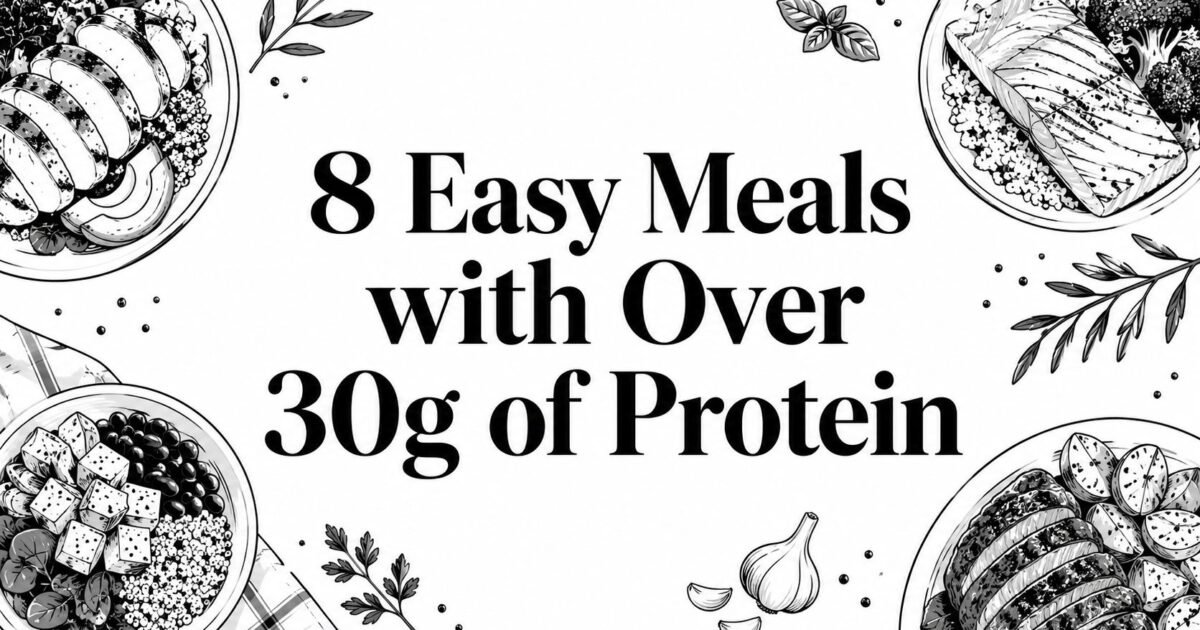
- 1. Grilled Chicken Breast with Rice and Vegetables
- 2. Greek Yogurt Protein Parfait
- 3. Three Eggs with Protein Toast and Avocado
- 4. Salmon Fillet with Quinoa and Roasted Vegetables
- 5. High-Protein Lean Ground Turkey Tacos
- 6. Cottage Cheese Bowl with Berries and Nuts
- 7. Grilled Chicken Thigh with Sweet Potato and Broccoli
- 8. Protein Smoothie with Greek Yogurt, Protein Powder, and Oats
- 8 Meal Options for 30g Protein
- From Plate to Log Making 30g of Protein a Habit
What does 30g of protein look like on a plate, and how do you hit it without overthinking every meal?
A lot of nutrition advice breaks down at the practical level. “Eat more protein” sounds simple until you try to turn that into breakfast before work or a lunch you can prep twice a week without getting bored. A 30g target works well because it is high enough to support training and recovery for many active adults, but still realistic with normal foods you can buy at any grocery store.
The bigger challenge is consistency. You need meals you can cook fast, portion without guesswork, and repeat often enough that protein stops feeling like a daily math problem.
Simple, repeatable meals solve that.
This list focuses on eight options that reliably put you around 30g of protein using regular ingredients, not expensive “fitness foods.” Each one is built for real life. You'll see how to prep it, how to adjust the portion if your calorie target is higher or lower, and how to log it in seconds instead of manually entering every ingredient.
For example, if you make a chicken, rice, and vegetable bowl, save it once in PlateBird as a custom meal and reuse it all week instead of rebuilding the entry every day. If you rotate ingredients, such as swapping broccoli for green beans or rice for potatoes, logging stays quick because the base meal is already there. If you need more ideas before you start, these high-protein meal prep strategies make the rest of this list easier to use.
That is the goal here. Not just knowing what 30g of protein looks like, but making it easy enough to repeat that it becomes automatic.
1. Grilled Chicken Breast with Rice and Vegetables
This is the meal prep standard for a reason. It's cheap, predictable, and easy to portion without guessing. A basic plate of grilled chicken breast with rice and vegetables lands you right around the 30g mark without needing powders, bars, or tricks.
If you're busy, this is one of the best “default meals” to keep in rotation. Trainers, office workers, and lifters all come back to it because it reheats well and you can change the flavor profile with seasoning instead of rebuilding the whole meal.
How to make it work all week
Use chicken breast when you want lean protein with simple portion control. Marinate it before cooking so it stays moist, then pair it with either white rice for easy digestion or brown rice if you prefer a heartier texture. Broccoli is the classic side, but mixed vegetables, green beans, or roasted carrots work just as well.
A few practical rules make a big difference:
- Cook in batches: Grill or bake several portions at once so lunch is already solved for the next few days.
- Season smart: Cajun seasoning, lemon pepper, garlic herb, and smoked paprika all keep the meal interesting without relying on heavy sauces.
- Avoid overcooking: Dry chicken makes people quit meal prep faster than almost anything else.
Practical rule: If your chicken is consistently dry, the problem usually isn't the recipe. It's that you're leaving it on the heat too long.
For a step-by-step approach to repeating this kind of meal without getting bored, PlateBird's guide to high-protein meal prep ideas is a useful place to steal combinations.
How to log it in seconds
This is one of the easiest meals to track because the structure is so clear. Snap a photo with chicken, rice, and vegetables visible separately on the plate, or type a quick note like “chicken rice broccoli” into PlateBird.
Once you've logged it once, save it as a shortcut. That's the key win. The best tracking system isn't the most detailed one. It's the one you'll still use on a Wednesday when you're hungry and distracted.
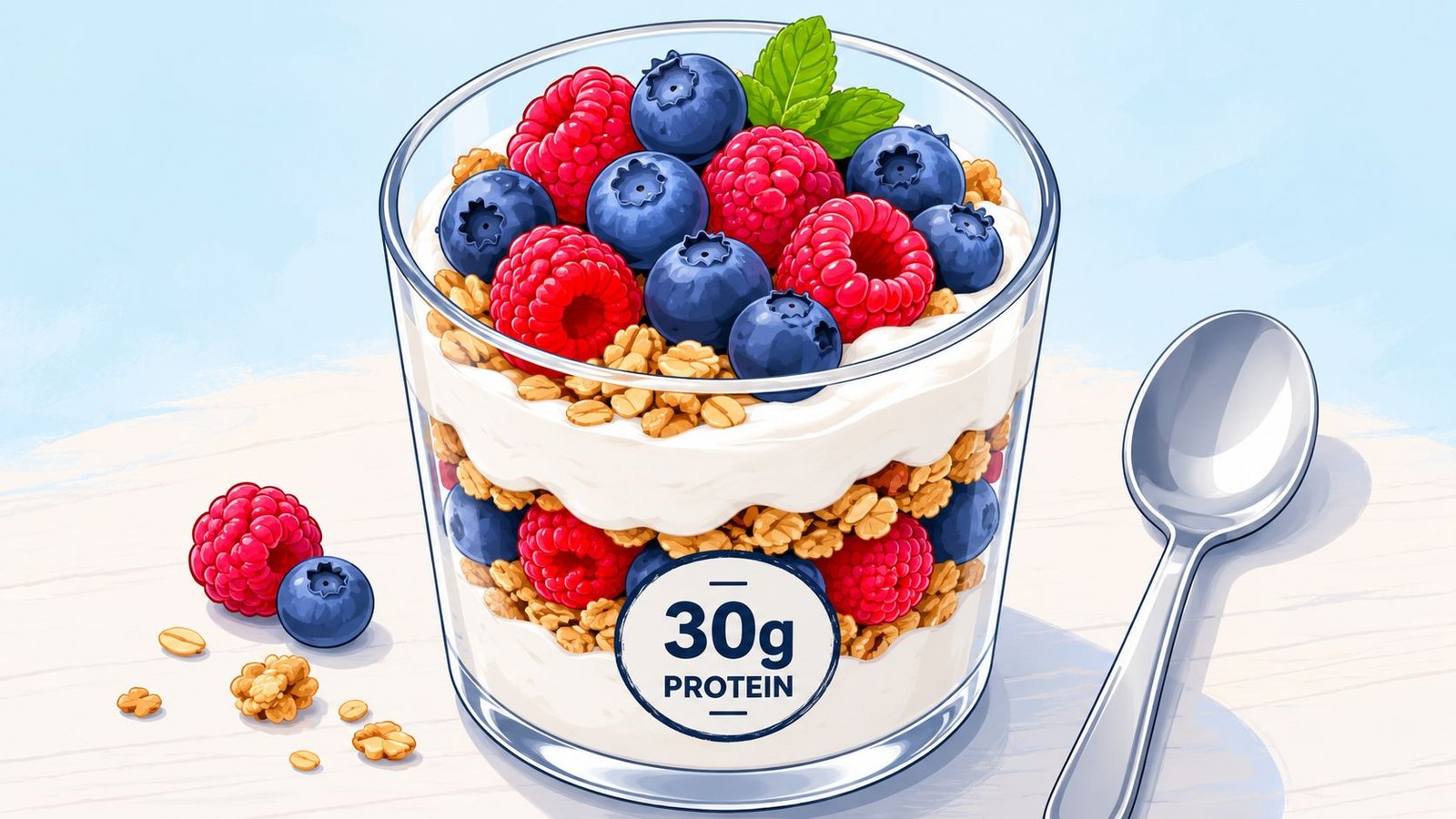
2. Greek Yogurt Protein Parfait
Some high-protein meals feel like “diet food.” This one doesn't. A Greek yogurt parfait can hit 30g of protein while still tasting like something you'd want for breakfast, a desk lunch, or an evening snack.
The base is simple. Plain Greek yogurt gives you the protein anchor, and the toppings let you shift the meal toward crunch, sweetness, or extra staying power. It also works well for people who don't want to cook first thing in the morning.
The trade-off most people miss
Greek yogurt parfaits are convenient, but they can turn into sugar bombs fast if you start with flavored yogurt and sweet granola. I'd rather control the sweetness myself. Plain yogurt, berries, cinnamon, and a protein-focused granola usually gives a better result and keeps the meal from feeling overly processed.
Texture matters here too. If you assemble it too early, granola softens and the whole thing turns mushy. Keep the yogurt portion prepped in a container, then add toppings right before eating.
- Choose plain yogurt: It gives you more control over taste and ingredients.
- Add crunch late: Granola belongs on top at the last minute.
- Use berries for freshness: They balance the thicker, tangier yogurt well.
If you want more ways to build meals around this format, PlateBird has a solid roundup on ways to increase protein intake.
How to log it in seconds
Photo logging particularly shines. A layered bowl or jar is visually distinct, so PlateBird can usually identify the major components quickly. Take the photo before you start mixing.
If you eat this often, save two versions. One for a lighter bowl and one for a more substantial parfait with granola and nuts. That keeps recurring meals accurate without making you rebuild the entry every time.
3. Three Eggs with Protein Toast and Avocado
Eggs alone usually aren't enough if your goal is 30g of protein. That's why this breakfast works. It combines eggs with higher-protein toast and avocado, so the plate feels balanced instead of turning into a giant scramble.
It also solves a common breakfast problem. Many people eat a low-protein breakfast, then try to cram most of their protein into dinner. A breakfast built around 30g can help distribute intake more evenly across the day.
Clinical data summarized by the University of Arkansas Extension shows that a breakfast with 30 grams of protein produced a muscle protein synthesis response roughly 30% higher than a breakfast with 10 grams, and distributing protein more evenly across three meals resulted in about 25% greater total 24-hour muscle protein synthesis than an uneven pattern skewed toward the evening in the data they reviewed in their protein timing publication.
How to keep it satisfying
Use whole eggs unless you have a specific reason not to. They cook well, taste better, and make the meal more satisfying. Pair them with a bread that contributes meaningful protein, then add avocado for texture and staying power.
This is one of the breakfasts I recommend to clients who say they're starving by 10 a.m. A bowl of cereal disappears quickly. Eggs, toast, and avocado usually doesn't.
A good breakfast should buy you time. If you're hungry again an hour later, it probably needed more protein or more volume.
How to log it in seconds
This meal is easy to save as a recurring breakfast. Type something simple like “3 eggs protein toast avocado” the first time, then reuse it with one tap later.
Photo logging works well too because eggs and avocado toast are visually distinct. Just keep the components visible rather than stacking everything into a messy pile. Clean photos make logging faster.
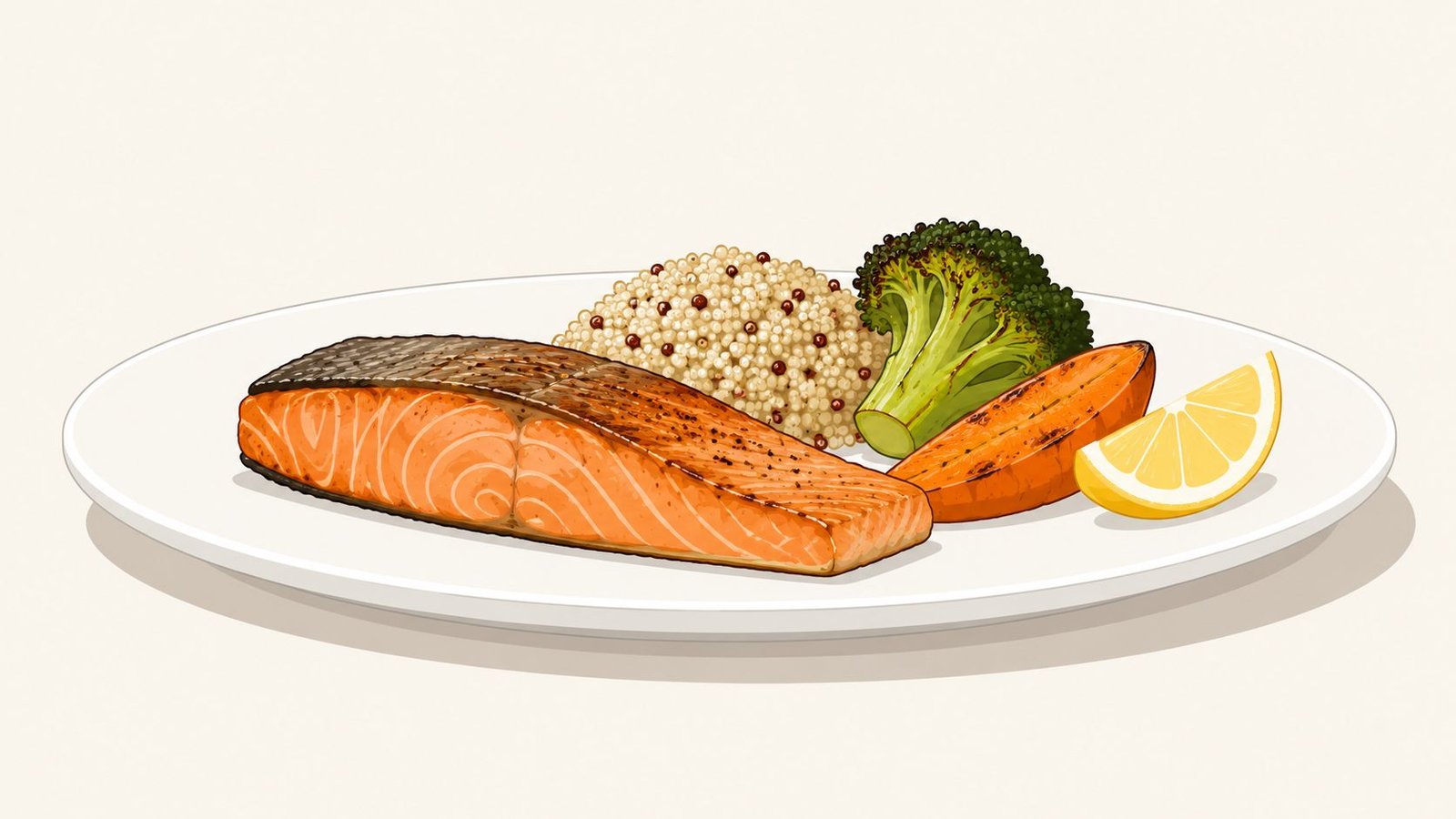
4. Salmon Fillet with Quinoa and Roasted Vegetables
When someone wants a meal that feels less like meal prep and more like dinner, I usually point them here. Salmon with quinoa and roasted vegetables gives you 30g of protein with a more premium feel than the standard chicken-and-rice routine.
It's also a good option for people who get bored with poultry. Rotating protein sources improves adherence because you stop feeling like every healthy meal is a copy of the last one.
Preparation details that matter
Salmon is forgiving if you don't overcomplicate it. Lemon, salt, pepper, and herbs are enough. Quinoa works best when you rinse it first, and vegetables improve fast when you roast them until they brown instead of steaming them into softness.
The trade-off is cost. Salmon usually isn't the cheapest protein in your fridge. That means it's better used strategically. Maybe two dinners a week instead of seven.
- Keep the seasoning simple: Salmon already brings flavor.
- Roast vegetables hard enough: Good color makes the whole meal feel better.
- Use this when you want variety: It breaks up repetitive meal prep weeks.
For anyone trying to place meals like this into a full day target, PlateBird's guide on how to calculate daily protein needs helps frame where a 30g meal fits.
A quick visual can help if salmon still feels intimidating to cook:
How to log it in seconds
Photograph this meal from above with the salmon, quinoa, and vegetables separated clearly. Salmon's shape and color make it easy to distinguish, and quinoa usually reads better when it isn't buried under the fish.
This is another good candidate for a saved meal name like “salmon quinoa veg.” Once recurring meals are stored, tracking shifts from a chore to a quick confirmation step.
5. High-Protein Lean Ground Turkey Tacos
Tacos are proof that hitting 30g of protein doesn't have to feel clean, bland, or repetitive. Lean ground turkey works especially well because it cooks fast, takes seasoning well, and can be used in several meals beyond tacos if you batch cook it.
This meal is practical for families too. You can keep the turkey base the same and let each person customize toppings, tortillas, and heat level without creating separate dinners.
Why this works better than “healthy taco salad”
A lot of healthy taco recipes strip out the fun and leave you with lettuce, dry meat, and disappointment. I'd rather keep the tacos and clean up the build. Use lean turkey, load up vegetables, and be selective with high-calorie extras instead of turning the whole thing into punishment.
Ground turkey is also forgiving for meal prep. Cook a large batch once, then use it for tacos one day, bowls the next, and stuffed peppers later in the week.
- Build volume with vegetables: Lettuce, onions, tomatoes, cabbage, and peppers make the meal more filling.
- Go easy on extras: Cheese and sauces add up quickly if you're not paying attention.
- Season aggressively: Turkey needs spices to become something you crave.
Coach's note: If a meal tastes flat, people don't stick with it. Protein matters, but flavor is what gets you to repeat the meal next week.
How to log it in seconds
Tacos can be slightly trickier to track than bowl meals because toppings overlap. The easiest method is to log them before piling everything on. A clean overhead photo of tortillas, turkey, and toppings laid out separately gives better recognition.
If tacos are part of your weekly rotation, save a shortcut in PlateBird under “turkey tacos.” That way, even if toppings vary a bit, you're only making small edits instead of starting from scratch.
6. Cottage Cheese Bowl with Berries and Nuts
Cottage cheese has made a comeback because people finally stopped pretending every protein meal needs to be hot, savory, or blended. A cottage cheese bowl is fast, filling, and easy to scale up or down depending on whether you need a snack-sized meal or something bigger.
It's especially useful when your day goes sideways. No cooking, no pan, no cleanup beyond a bowl and spoon. That matters more than people think.
The key is making it taste like real food
Those who say they hate cottage cheese often had a bad version once and never revisited it. The texture is the hurdle, so the fix is pairing it with foods that improve contrast. Berries, nuts, cinnamon, and a little crunch turn it into a meal instead of a compromise.
If you prefer it colder and thicker, use frozen berries. They chill the bowl and change the texture in a good way. If you want more sweetness, a light drizzle of honey works better than dumping in a lot of sugary toppings.
A practical caution here. Protein quantity by itself isn't the whole picture. Recent commentary highlighted an underserved angle around post-meal movement, noting that a 2024 JAMA study of more than 8,000 people over 10 years linked higher protein intake with lower mortality, especially in older adults, and also discussed findings from Moore showing that short movement breaks after eating improved amino acid utilization for muscle building in a summary published by Medscape on protein and lifestyle advice. In plain terms, eat the protein, then move a little. Don't eat it and stay planted for hours if muscle support is part of your goal.
How to log it in seconds
This meal photographs well from overhead because the components are obvious. Keep the berries and nuts visible instead of fully mixed in. That makes photo recognition simpler.
If you rotate fruit and nut choices, save the base as “cottage cheese bowl” and edit the toppings when needed. That keeps the habit fast without pretending every bowl is identical.
7. Grilled Chicken Thigh with Sweet Potato and Broccoli
If you've been forcing yourself to eat chicken breast and dreading every bite, chicken thighs are your answer. They're more forgiving, more flavorful, and usually reheat better. For many people, that makes them the protein source they'll keep eating.
This meal is especially good for people who meal prep but hate dry leftovers. Sweet potato and broccoli round it out without making the plate complicated.
Where thighs beat breasts
Chicken breast wins on leanness and simplicity. Chicken thigh often wins on taste and compliance. And compliance matters. The best meal plan on paper won't help if you get sick of it by Thursday.
Marinate thighs with bolder flavors than you'd use on breast. Garlic, lime, paprika, cumin, chili powder, and black pepper all hold up well. The darker meat can handle stronger seasoning and still taste balanced.
- Prep several portions at once: Thighs hold up well in the fridge.
- Use sweet potato for easy carbs: It reheats reliably and pairs well with stronger spices.
- Keep broccoli simple: Salt, pepper, and a squeeze of lemon is enough.
Historically, the RDA for a minimally active healthy adult has been 0.8 grams of protein per kilogram of body weight per day, or about 60 grams for a 75-kilogram person, while active individuals often need more according to the review in Food & Function on dietary protein for adults. A single meal built around 30g of protein can therefore make up a substantial share of daily intake, especially for someone who's trying to move beyond “just enough” and eat more intentionally.
How to log it in seconds
This is one of the easiest dinner plates to save because the structure rarely changes. Type “chicken thigh sweet potato broccoli” once, confirm the portions, and reuse it.
For photo logging, the color contrast helps. Orange sweet potato, green broccoli, and darker chicken are easier to identify than beige meals where everything blends together.
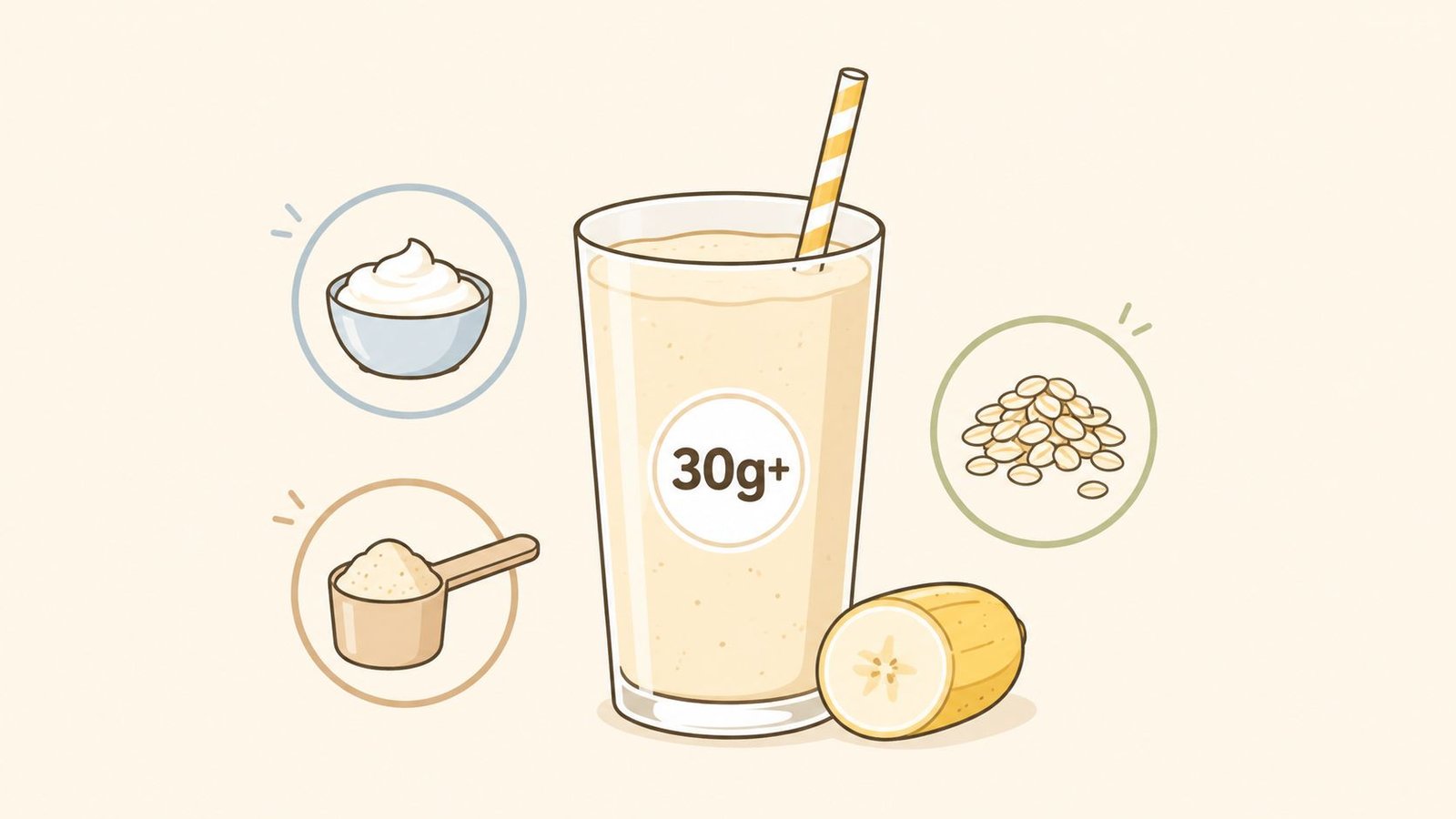
8. Protein Smoothie with Greek Yogurt, Protein Powder, and Oats
Sometimes chewing another meal sounds awful. That doesn't mean you should skip it. A smoothie is often the best answer when you need convenience, especially after training or during a rushed morning.
The mistake is building a smoothie that's basically dessert with a scoop of powder tossed in. A better smoothie has structure. Protein, a carb source, enough liquid to blend well, and ingredients you'll keep stocked.
Build it once, then repeat it
Greek yogurt plus protein powder gives the smoothie its backbone. Oats make it more substantial, and banana improves texture and drinkability. If you want more variety, rotate flavors instead of reinventing the formula every day.
Good combinations include vanilla with berries, chocolate with peanut butter, or even boost energy with matcha protein if you like a lighter, more caffeinated option.
The convenience side is obvious, but there's also a real body-composition use case. In clinical weight-loss trials lasting 6 to 12 months, higher-protein diets showed a 50% reduction in weight regain compared with controls, and one long-term study cited in a review found that adding 30 grams of protein daily for 6 months was linked with less regain, 0.8 kg versus 3.0 kg, in the analysis summarized by this review on protein and body composition.
How to log it in seconds
Liquids can be annoying to track if you build them from memory every time. Don't do that. Save the exact smoothie once with a clear name like “Greek yogurt whey oats banana smoothie.”
Keep your weekday smoothie ingredients in the same place every time. Habit starts in the kitchen before it ever shows up in the tracking app.
In PlateBird, typing the ingredient string is often faster than searching each item one by one. Once saved, it becomes one of the lowest-friction meals in your whole routine.
8 Meal Options for 30g Protein
| Meal | 🔄 Complexity | ⚡ Speed / Efficiency | 📊 Expected Outcomes | 💡 Ideal Use Cases | ⭐ Key Advantages |
|---|---|---|---|---|---|
| Grilled Chicken Breast with Rice and Vegetables | Low, basic grilling & stovetop skills; batch-friendly | Moderate, quick to batch cook and reheat | ~30–32g protein; balanced carbs, fiber; high satiety | Meal prep, weight loss, bodybuilding lunches | Cost-effective, versatile, easy to scale |
| Greek Yogurt Protein Parfait | Very low, no cooking, simple assembly | Very fast, ready in <2 minutes | ~30–35g protein; probiotics; portable | Breakfast, snack, on‑the‑go, photo‑logging | Minimal prep, consistent macros, highly portable |
| Three Eggs with Protein Toast and Avocado | Low, simple cooking (5–7 min) | Fast, fresh prep beats reheating | ~30–32g protein; complete amino acids + healthy fats | Quick breakfast, commuter meals, high‑satiety start | Nutrient‑dense, flexible cooking methods, recognizable |
| Salmon Fillet with Quinoa and Roasted Vegetables | Moderate, attention to cooking temp and quinoa prep | Moderate, oven time but batchable | ~30–35g protein; high‑quality protein + omega‑3s | Recovery meals, health‑focused dinners, restaurant‑style | Anti‑inflammatory benefits, nutrient‑dense, upscale feel |
| High‑Protein Lean Ground Turkey Tacos | Low, quick skillet cooking; simple seasoning | Fast, ready in <15 minutes | ~26–30g protein; lower fat than beef; customizable | Family dinners, budget meal prep, taco nights | Budget‑friendly, quick, highly customizable |
| Cottage Cheese Bowl with Berries and Nuts | Very low, no cooking, simple assembly | Very fast, ready in <2 minutes | ~25–32g protein; slow‑digesting casein; high protein/calorie ratio | Snack, bedtime protein, muscle‑preservation | Extremely cost‑effective, high protein density, long satiety |
| Grilled Chicken Thigh with Sweet Potato and Broccoli | Low–Moderate, trimming/marinade recommended | Moderate, sweet potato adds cook time; reheats well | ~28–32g protein; more flavor and moisture than breast | Flavor‑focused meal prep, recovery meals, budget dining | Better taste/adherence, forgiving to cook, nutrient variety |
| Protein Smoothie with Greek Yogurt, Protein Powder, and Oats | Low, blender required; simple ingredient prep | Very fast, drinkable in seconds; ideal post‑workout | ~35–38g protein; rapid absorption but less satiating | Post‑workout recovery, busy mornings, meal replacement | Fastest protein delivery, highly customizable, portable |
From Plate to Log Making 30g of Protein a Habit
What makes a 30g protein target stick long enough to matter?
Usually, it is not more nutrition knowledge. It is having a few meals you can make on autopilot, adjust to your schedule, and log in under a minute. That is the difference between a good plan and a plan you still follow three weeks from now.
The meals above give you enough range to build around real life. Chicken breast works for tighter calorie targets. Chicken thighs and salmon usually win on flavor and reheating. Greek yogurt, cottage cheese, and smoothies cover the days when cooking is not happening. Eggs, tacos, and grain bowls give you more flexibility if you are feeding other people or want meals that do not feel repetitive.
Start smaller than you think you need. Pick one repeat breakfast, one repeat lunch, and two dinners you can rotate without much effort. Then make each one easier to execute. Batch-cook rice, quinoa, or sweet potatoes once or twice a week. Keep frozen vegetables on hand for backup. Pre-portion proteins if you tend to overpour or under-eat. Use different sauces, spice blends, salsa, herbs, or fruit to change the meal without rebuilding it from scratch.
Tracking has to be just as practical as cooking. If logging takes too long, people stop doing it. Save your common meals the first time you enter them. After that, use the saved version and adjust the parts that changed, like swapping broccoli for green beans or chicken breast for thighs.
A simple setup looks like this:
- Weekday breakfast: Repeat one option such as the yogurt parfait, eggs with protein toast, or the smoothie.
- Reliable lunch: Use a bowl or plate you can batch ahead, like chicken with rice and vegetables.
- Flexible dinner: Rotate tacos, salmon with quinoa, or chicken thighs with sweet potato and broccoli.
- Fast fallback: Keep one no-cook option ready, such as cottage cheese with berries and nuts.
PlateBird makes that process faster. You can type a meal like “turkey tacos,” “salmon quinoa,” or “eggs protein toast avocado,” or snap a photo and let PlateBird estimate calories and macros. For repeat meals, saved entries cut logging down to a quick check instead of a full rebuild.
That matters more than perfect precision. A slightly imperfect log you can keep up for months is more useful than a perfectly detailed log you quit after four days.
Adjust the meals to your actual goal. If fat loss is the priority, keep the protein base the same and trim calorie-dense extras first. If muscle gain is the priority, add easy carbs you already tolerate well, like oats, rice, tortillas, or potatoes. If appetite is the problem, use more liquid meals and softer foods. If fullness is the problem, build around potatoes, Greek yogurt, vegetables, and higher-volume bowls.
Build your protein plan around your busiest days, not your most motivated ones. The breakfast you can make half asleep, the lunch you can pack in five minutes, and the dinner you will still eat happily on Thursday are the meals that become habits. Save those meals in your tracker, keep the ingredients around, and repeat them often enough that 30g of protein becomes routine instead of another thing to think about.