You're trying to eat better. You've started buying more protein, cooking at home more often, and paying attention to labels. Maybe you're training hard too. But the result still feels fuzzy. Your weight isn't changing the way you expected, your workouts don't feel stronger, or you keep wondering whether your “healthy” meals match your goal.
That's where a calorie and macro tracker can help. Not as a punishment. Not as a crash-diet tool. More like a map when you're tired of guessing.
A lot of people picture tracking as a tedious routine with kitchen scales, barcode hunts, and endless typing. It used to feel that way. Today, it can be much simpler. Modern tools are built around speed, repeat meals, quick text entry, and photo logging, which means the true skill isn't becoming perfect at nutrition math. It's building a small daily habit that gives you clarity.
From Nutritional Guesswork to Real Results
Maya had what many would consider “good habits.” She worked out most weekdays, packed lunches, and tried to avoid random snacking. Breakfast was yogurt and fruit. Lunch was a salad with chicken. Dinner was usually something sensible.
Still, she felt stuck.
She wasn't doing anything obviously wrong, which made it more frustrating. When progress stalls, people often assume they need more willpower, a stricter plan, or another round of cutting out foods. Usually, they need something much less dramatic. They need visibility.
That's what a calorie and macro tracker gives you. It turns “I think I'm eating pretty well” into “I can see what I'm doing.”
Healthy eating can still be unclear
The phrase “eat healthy” sounds helpful until you try to use it day to day. One person's healthy breakfast is a smoothie. Another person's is eggs and toast. Both can fit a goal. Both can miss a goal too, depending on portions, ingredients, and the rest of the day.
Even drinks can blur the picture. If your mornings include lattes, sweetened cold brew, or flavored creamers, it helps to spend a few minutes understanding coffee calories so your tracker reflects what's present in the cup.
Tracking isn't about catching you doing something bad. It's about replacing vague effort with useful feedback.
A tracker also helps you separate two questions that people often mash together:
- How much am I eating overall? That's the calorie side.
- What is that food made of? That's the macro side, especially protein, carbs, and fat.
If you've never checked your daily energy needs before, a simple explanation of TDEE and what it means for your goal can make the whole process feel less random. Once you know your rough baseline, your food log starts to mean something.
Control feels better than restriction
People hear “tracking” and think “rules.” I think “awareness.”
When you know what your usual day looks like, you stop making nutrition decisions in the dark. You can notice patterns. Maybe your lunches are lighter than you thought, but dinners are much larger. Maybe you're not eating enough protein to support recovery. Maybe weekends, not weekdays, are where your consistency slips.
None of that requires guilt. It just requires a clearer picture.
That's the shift. Tracking isn't there to make food stressful. It's there to make progress understandable.
How Calorie and Macro Trackers Actually Work
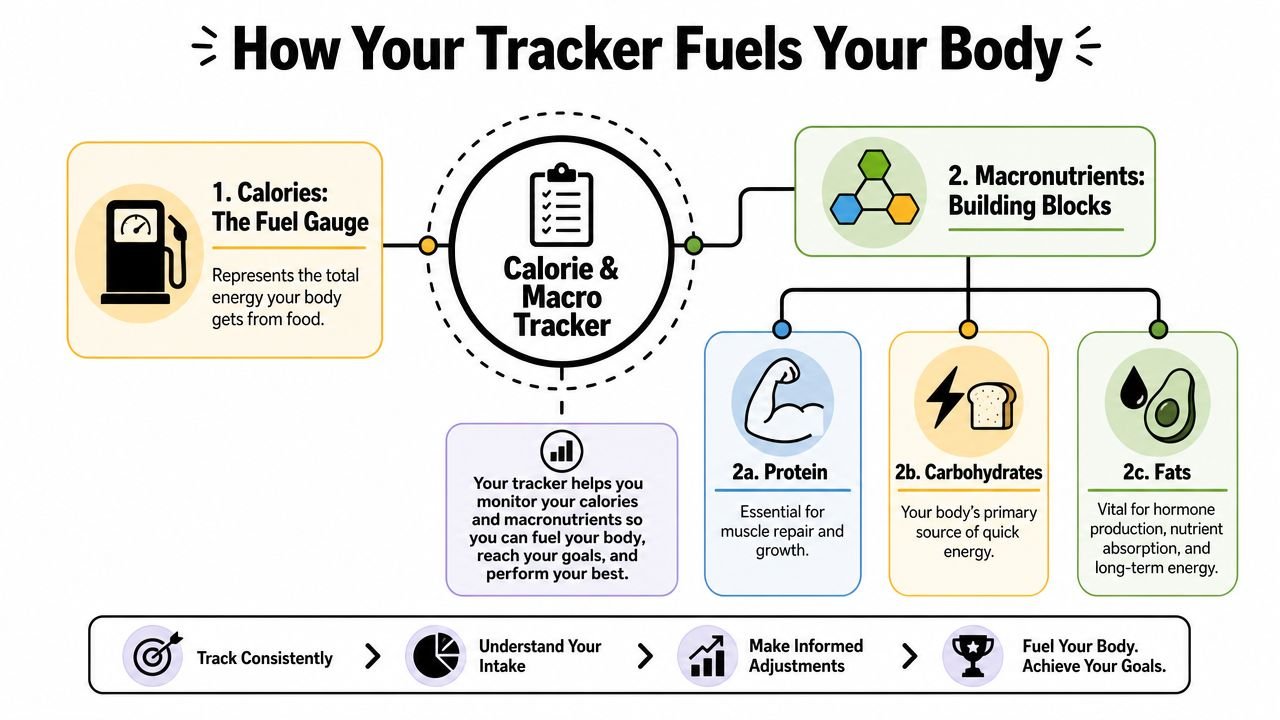
Calories are your body's fuel budget. Macros are the types of fuel inside that budget. Once you see that relationship, tracking becomes much less mysterious.
Calories are the big picture
Think of your body like a car on a long trip. Calories are the total fuel in the tank. Your body uses that fuel for basic living, daily movement, exercise, recovery, and everything in between.
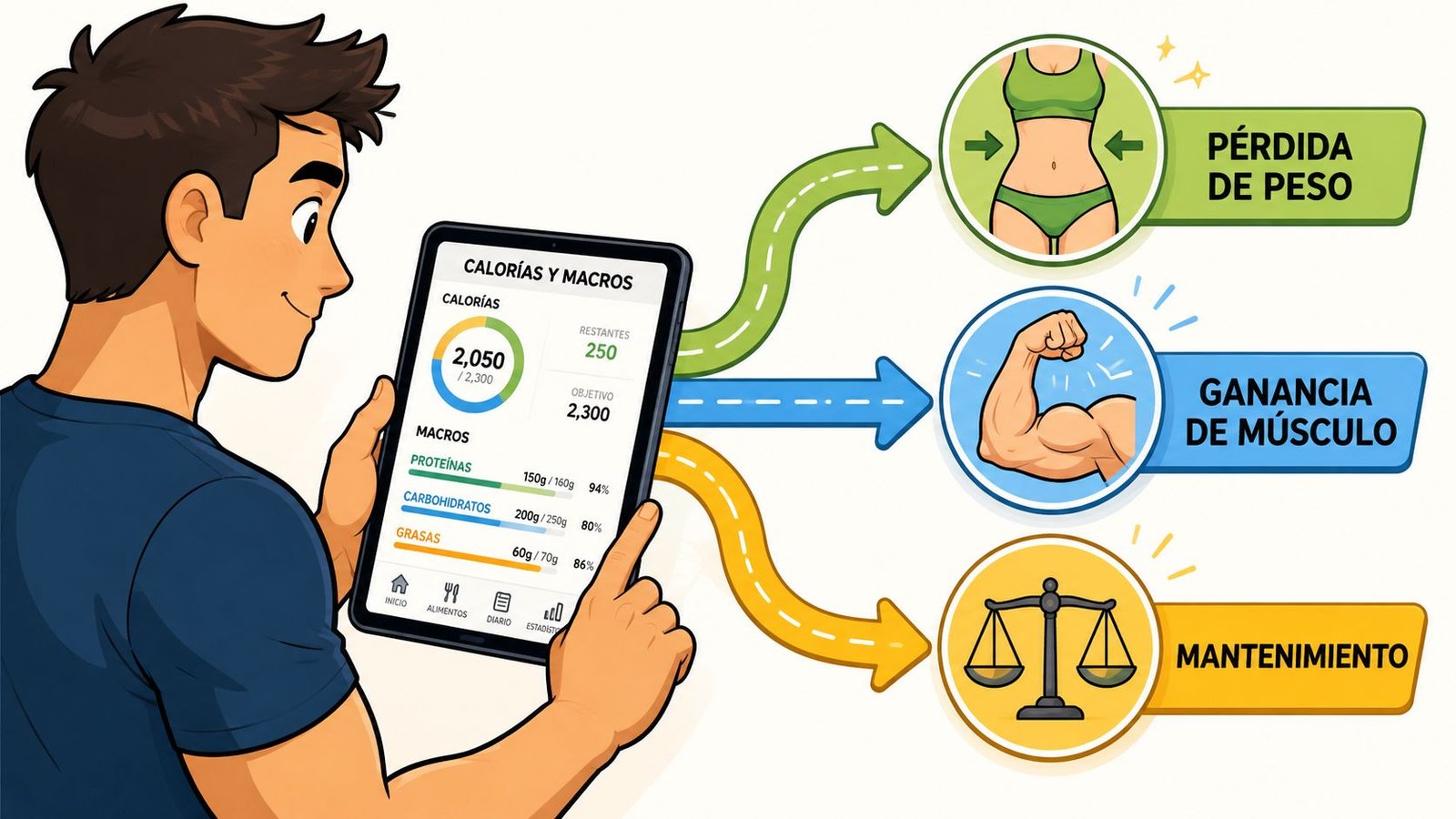
If your goal is fat loss, you usually need intake that stays below what your body uses over time. If your goal is muscle gain, you usually need enough food to support training and recovery. If your goal is maintenance, you're trying to stay around your usual needs.
Calories answer the “how much” question.
Macros are how that fuel is built
Macros are protein, carbohydrates, and fat. They all contribute energy, but they also do different jobs.
| Macro | Think of it as | Why people care |
|---|---|---|
| Protein | repair material | helps support muscle repair and fullness |
| Carbs | quick-access fuel | helps support training, movement, and energy |
| Fat | slower-burning reserve | helps support hormones, meals that satisfy, and nutrient absorption |
Many beginners often struggle. They assume macro tracking is advanced, but it's really just more detailed food awareness. Calories tell you the total. Macros tell you the mix.
Practical rule: Start with the question that matches your frustration. If your weight isn't moving, look at calories. If your recovery, fullness, or gym performance feels off, look at macros too.
What the app is actually doing
When you log food, the app isn't “guessing magic.” It's matching your entry to nutrition data.
That can happen in a few ways:
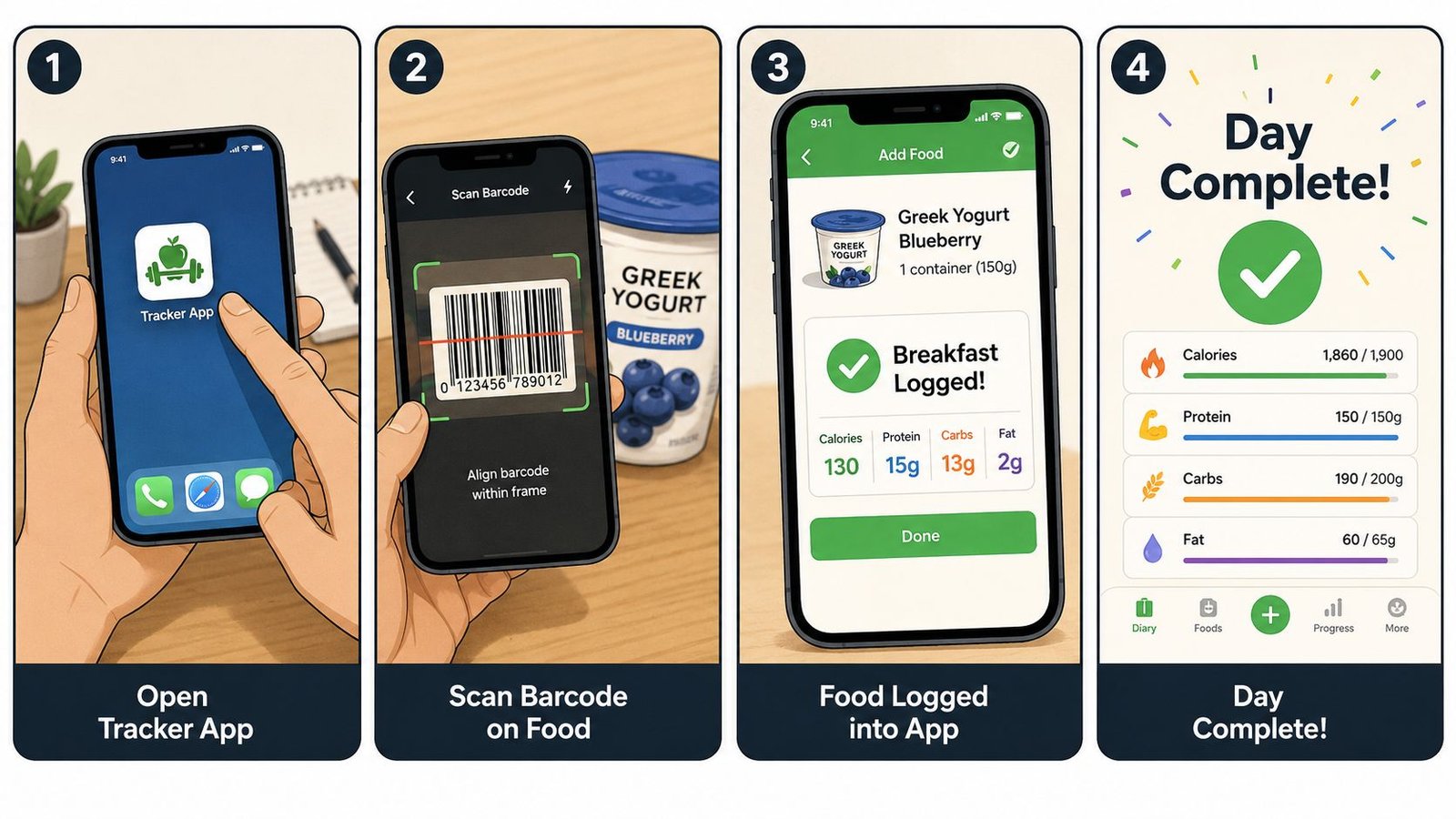
- Barcode scan links a packaged food to its saved nutrition entry.
- Search entry matches something like “turkey sandwich” or “greek yogurt.”
- Recipe entry breaks a meal into ingredients and portions. If you cook often, this guide on how to understand your recipe's calorie content can help you think through homemade meals more clearly.
- Photo logging uses computer vision to identify foods on the plate, then connects them to likely nutrition entries.
- Quick text logging lets you type a simple meal description and review the result.
If you're curious about newer workflows, this overview of a photo-based calorie counter app shows how image logging fits into modern tracking.
Why modern tracking feels different
Old-school tracking asked you to become a part-time data clerk. That's why people quit.
Newer tools reduce the friction by leaning on habits you already have. You type a note. You snap a picture. You reuse common meals. The app does more of the sorting. Your job is mostly to stay consistent enough that your log reflects real life.
That's a huge shift. The win isn't perfect precision. The win is making tracking easy enough that you'll still do it next week.
Aligning Your Tracking with Your Fitness Goals
A tracker becomes useful when it answers a personal question. “Why am I not losing?” “Why am I not growing?” “Why do I keep drifting off plan?” The same app can support very different goals, depending on what you pay attention to.
For fat loss
Chris felt like he was “barely eating,” but his log told a different story. His weekdays were tidy. The extras showed up at night. Handfuls while cooking, drinks out, a dessert that didn't feel like much in the moment.
Once he tracked consistently, he stopped treating his results like a mystery. He could see his actual pattern. That made it easier to adjust portions, plan satisfying meals, and stop overreacting to one meal.
For fat loss, the tracker helps you notice whether your intake lines up with that goal over time. It turns emotional guesses into something calmer and more useful.
For muscle gain
Dana wanted more muscle, but she kept eating like someone trying to stay as light as possible. Her workouts were strong, yet her meals were small and inconsistent.
Her tracker revealed two things quickly. She wasn't eating enough overall, and her protein was lower than she thought. Once she started checking both, her meals became more intentional. Breakfast got upgraded. Post-workout food became a priority. Dinner stopped being an afterthought.
If your goal is muscle gain, tracking helps you make sure your intake supports the work you're doing in the gym.
A goal only works when your daily meals point in the same direction.
For maintenance
Maintenance sounds passive, but it isn't. It's a skill.
Alex had already lost weight and didn't want to keep dieting forever. Tracking helped him shift from “I need to be strict” to “I need a rhythm I can live with.” He learned what a normal week looked like, which meals kept him steady, and how to recover from vacations or busy stretches without spiraling.
Tracking begins to resemble other kinds of progress logs. Coaches often use simple frameworks to make growth visible over time. Even outside nutrition, a student progress tracking template shows the same principle. What gets observed is easier to guide.
If you're trying to match your food targets to a specific outcome, a practical guide to what your macros should be can help you choose a starting point that fits your training and lifestyle.
A Practical Guide to Your First Day of Tracking
Your first day doesn't need to be perfect. It needs to be real.
That means you shouldn't wait for a clean eating Monday, a fresh grocery haul, or a magical motivated version of yourself. Start with an ordinary day. Log what you eat. That gives you a useful baseline.
Step one, set a simple baseline
Most tracking apps ask for basic details and your goal. That creates a starting target. Think of it as a rough lane, not a contract.
You don't need to obsess over every setting on day one. You're just giving the app enough context to make your log meaningful.
Step two, log breakfast fast
This is where modern tools shine. Instead of building a meal item by item, many apps now let you log the way people naturally think.
You might type something like:
- Quick text entry “eggs toast coffee”
- Photo entry snap your breakfast plate before you eat
- Saved meal tap the breakfast you repeat most weekdays
That small change matters. The less effort logging takes, the more likely you are to keep doing it.
Step three, use rough honesty at lunch
Beginners often get hung up on exactness. They think, “If I don't know every ingredient, why bother?”
Bother because rough honesty beats polished guessing.
If lunch is a turkey sandwich and chips from a café, log the closest match you can find. If it's meal prep, use your saved meal or recipe. If it's leftovers, estimate the main parts and move on.
A simple day might look like this:
| Meal moment | Easy logging option |
|---|---|
| Breakfast at home | type the foods in one line |
| Lunch out | search for the closest match |
| Afternoon snack | scan or choose from recents |
| Dinner meal prep | reuse a saved meal or snap a photo |
Log the meal you ate, not the meal you wish you had eaten.
Step four, close the day without judging it
Dinner is where many people either give up or overthink. They realize the day wasn't perfect, so they stop logging. That's the exact moment to keep going.
Use the same low-friction approach:
- If dinner is simple, type a plain description.
- If it's homemade, use a recipe or estimate the core ingredients.
- If you eat the same thing often, save it for next time.
Then check your day with curiosity. Were you light on protein? Did dinner carry most of your intake? Did snacks appear because lunch wasn't filling enough?
That's enough for day one.
What to focus on for the first week
Don't chase precision first. Chase repetition.
Use these filters:
- Log before you forget by entering meals right after eating.
- Repeat familiar foods so the app starts working with your habits.
- Review trends, not moments because one off-plan meal doesn't erase a solid day.
- Keep notes mentally simple such as “need a stronger lunch” or “late snack came from boredom.”
When tracking becomes as easy as sending yourself a note, it stops feeling like homework. That's when the habit has a chance to stick.
Choosing the Right Calorie and Macro Tracker
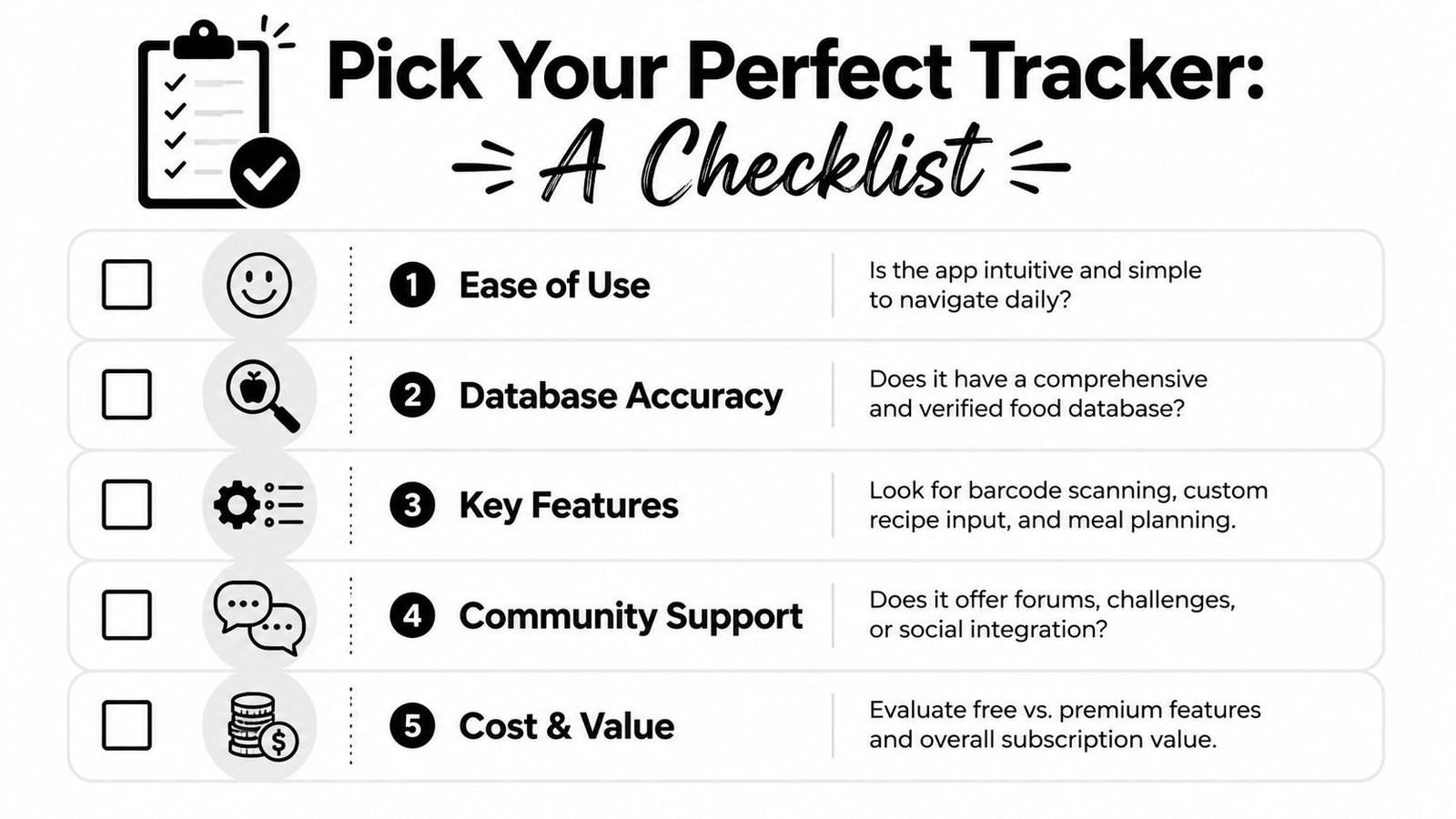
Users don't need the most powerful app. They need the app they'll regularly open.
That's an important difference. A calorie and macro tracker can have every feature in the world and still fail if logging feels slow, cluttered, or annoying. The best choice is the one that makes consistency easier for your kind of life.
Start with logging speed
If you're busy, logging method matters more than fancy dashboards.
Some apps are built around deep manual entry. Others focus on barcode scanning. Newer ones add quick text or image recognition. None of those is automatically better. The key question is simple. Which one feels natural enough that you'll use it on a normal Tuesday when you're distracted and hungry?
Check what happens with repeat meals
The average person doesn't eat a completely new menu every day. Most of us rotate breakfasts, lunch staples, snacks, and a handful of dinners.
A useful tracker should make repeat eating easier, not more repetitive.
Look for:
- Saved meals so common combinations become one tap
- Recent foods that surface things you already logged
- Custom recipes for meal prep or family staples
- Fast editing in case portions change
Look at the interface, not just the feature list
A crowded app can create decision fatigue. If every screen asks you to do too much, you'll put it off.
Here's a simple comparison frame:
| What to evaluate | What a good experience feels like |
|---|---|
| Daily logging | quick, obvious, low effort |
| Food search | easy to find common items |
| Review screen | clear enough to understand at a glance |
| Habit support | helps you reuse meals and keep momentum |
If an app feels like admin work, most people won't stay with it.
Match the app to your personality
If you love detail, a feature-rich tracker may suit you. If you've quit tracking before because it felt tedious, a minimalist tool may fit better.
Some people want charts, meal planning, and community features. Others want one thing only. Log food fast and move on. Be honest about which camp you're in.
The right tracker doesn't impress you on day one. It quietly removes friction on day fourteen.
Common Pitfalls and How to Stay Consistent
The biggest tracking mistake isn't choosing the wrong carb target. It's quitting after an imperfect day.
People often drop the habit for emotional reasons, not technical ones. They miss lunch, eat a spontaneous dessert, or have a social dinner that's hard to estimate. Then they feel “off track” and stop logging altogether. That turns one messy meal into a lost week.
The perfection trap
If you treat the log like a pass-fail test, you'll keep restarting. Tracking works better when you treat it like notes in the margin. Useful, incomplete, and still worth writing down.
When a meal is hard to estimate, log the closest version and keep moving. A reasonable entry helps more than a blank space.
The all-day backlog problem
Another common issue is waiting until night to remember everything. By then, details blur and logging feels like a chore.
Try these instead:
- Log in the moment when the meal is in front of you
- Save routine meals so repeat foods take almost no effort
- Use quick descriptions rather than building every plate from scratch
- Accept imperfect entries for restaurant meals or shared dishes
The numbers becoming too loud
Some people start tracking and immediately turn every meal into a math puzzle. That usually backfires.
Your log should support decisions, not dominate your day. If exact macro targets make you tense, focus first on a simpler target such as consistent logging or getting enough protein at your main meals. You can always add detail later.
Consistency wins because it gives you enough information to adjust. Perfection usually ends in burnout.
The mindset that helps most
Think of tracking like brushing your teeth. You're not trying to become world-class at it. You're trying to make it normal.
That means some days will be tidy and some won't. Some meals will be exact and some will be estimates. The habit still counts. In fact, the days when life is messy are the days when a low-friction tracker helps most.
If you want tracking to feel fast instead of fussy, PlateBird is built for that kind of real life. You can type what you ate in plain language, snap a photo of your meal, and reuse repeat foods without digging through cluttered menus. It's a practical option if you want a calorie and macro tracker that supports consistency by making logging feel almost effortless.