A plain shot of espresso contains a negligible amount of calories, typically between 1 and 3. If you're ordering straight espresso with nothing added, it's one of the easiest coffee choices to fit into almost any calorie target.
If you're reading this while standing in line at a café, staring at the menu and wondering whether your daily coffee habit is undermining your progress, relax. The espresso itself usually isn't the problem. For many coffee drinkers, the true calorie jump starts after the shot leaves the machine and milk, sugar, syrups, sauces, and whipped toppings enter the cup.
That distinction matters because "how many calories in espresso" sounds like a simple question, but anyone who tracks food consistently knows it gets messy fast. One app says one thing. A café menu says another. A double shot feels like it should be easy to log, yet somehow it still turns into guesswork. Coffee is one of those places where tiny numbers, inconsistent databases, and custom orders collide.
As a barista and a fitness-minded coffee drinker, I see the same pattern all the time. People stress over the shot, then barely register the add-ins. Straight espresso is the lean part of the equation. The complicated part is everything that makes it taste sweeter, creamier, or easier to sip slowly on the way to work.
Your Morning Espresso Has Fewer Calories Than You Think
A lot of calorie trackers have had this moment. You open your app after breakfast, log your eggs or yogurt without much trouble, and then pause at the coffee. The espresso was tiny, intense, and unsweetened, but now you're wondering if concentrated coffee somehow means concentrated calories.
It doesn't work that way in the cup.
A standard espresso shot is very low in calories. A typical 1-ounce (30 mL) shot has approximately 2 calories, and other food databases place plain espresso in a 1 to 3 calorie range per fluid ounce, which is why it has such a small impact on daily intake according to FoodStruct's espresso nutrition breakdown.
What this means in real life
If you drink:
- Straight espresso: you're dealing with a very small calorie amount
- An Americano: plain water changes the volume, not the calorie load in a meaningful way
- Espresso over ice: same story, unless something sweet or creamy gets added
That tiny baseline is good news for anyone trying to lose weight, maintain a deficit, or stop overthinking coffee. Plain espresso is one of the few café orders that usually deserves a mental shrug rather than a nutrition deep dive.
Practical rule: If the drink is just espresso and water, calorie tracking is simple. If it includes milk or sweetness, that's where attention pays off.
Where people get tripped up
The confusion comes from how espresso feels. It's bold. It's concentrated. It's smaller than drip coffee but tastes stronger. That intensity makes people assume the calorie number must be bigger too.
In practice, the small serving keeps it tiny. The shot itself is rarely the thing nudging your intake upward. The "healthy coffee" that turns into dessert is almost always a milk-and-syrup story, not an espresso story.
That's why the smartest way to think about coffee calories isn't "Is espresso fattening?" It's "What happened after the espresso was pulled?"
Why A Plain Espresso Shot Is Nearly Calorie-Free
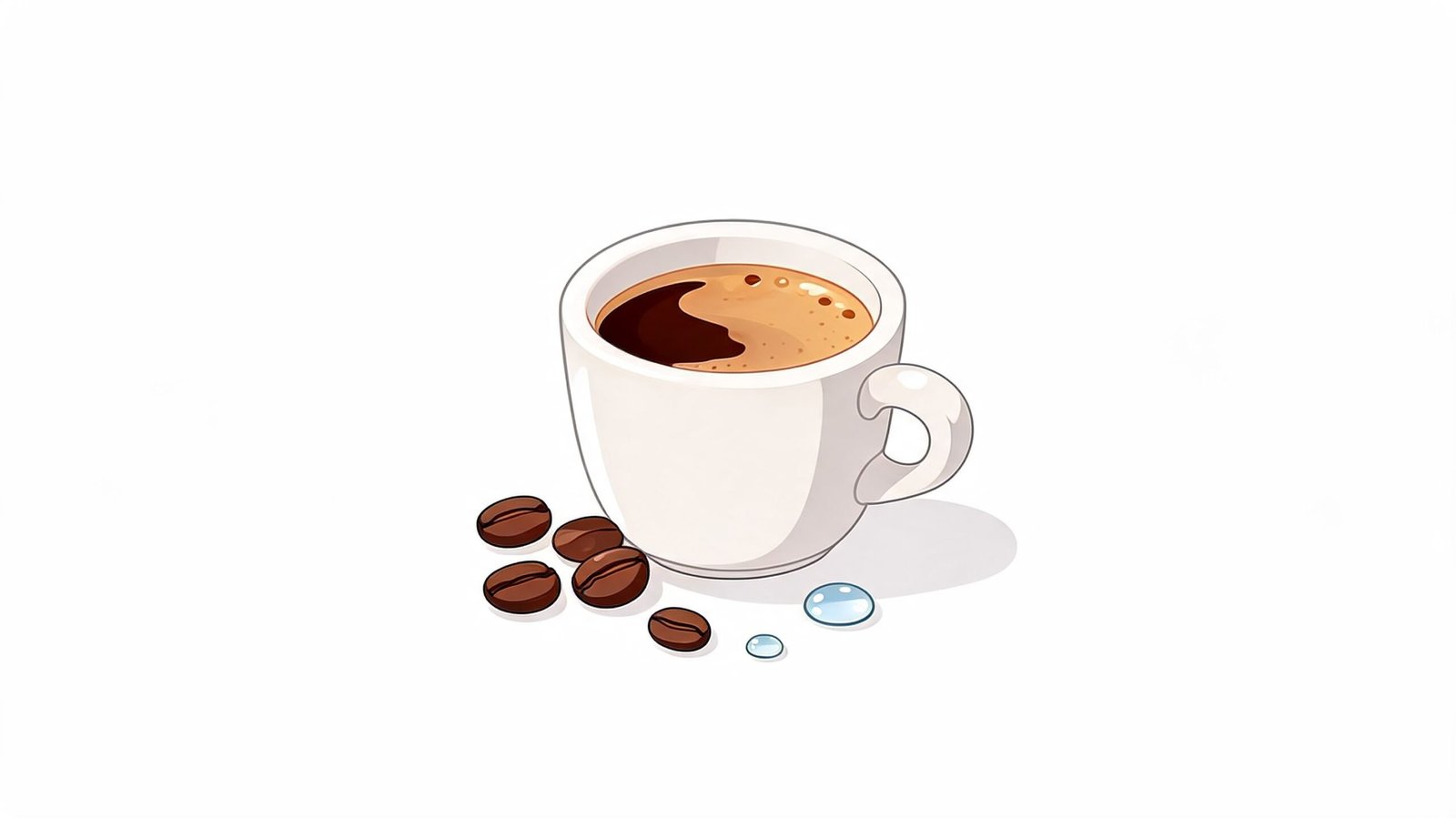
Espresso is concentrated coffee, not concentrated nutrition. The machine pushes hot water through finely ground coffee under pressure, and what ends up in the cup is mostly water plus a small amount of dissolved coffee solids and oils.
Why the shot stays so light
Healthline notes that espresso has more calories per ounce than brewed coffee because it's more concentrated, but the usual serving is only about 1 ounce (30 mL), with around 65 mg of caffeine per shot, and that small portion is what keeps the total so low compared with a standard cup of drip coffee in their coffee calorie guide.
That sounds abstract until you compare it with something in food. Espresso is like a drop of hot sauce. Drip coffee is more like a bowl of mild salsa. The hot sauce is more intense per bite, but you use far less of it. Espresso works the same way. Stronger by ounce doesn't mean high-calorie in the serving size people typically drink.
What is actually in the cup
The calorie content comes from trace material extracted from the beans:
- Coffee oils: these contribute body and aroma
- Soluble compounds: these create flavor, bitterness, sweetness, and acidity
- Crema: the foam on top carries emulsified oils and gases, and it can slightly change how a shot is measured or perceived
None of that adds up to much in plain espresso. That's the key point. You're not drinking a calorie-dense liquid. You're drinking a tiny, highly extracted serving.
Espresso looks substantial because of the crema, aroma, and texture. Nutritionally, it's still a very small serving.
Why espresso numbers still feel confusing
Coffee nerd stuff overlaps with tracking app frustration here. Even when the drink is plain, shops don't all pull the same shot. One café may run a tighter shot with less liquid. Another may pull longer. Some cups include more crema. Some databases round tiny values differently.
That's why you'll see slightly different numbers across nutrition databases and coffee apps. The drink hasn't changed in any meaningful diet sense. The measurement method has.
If you're curious about the craft side of espresso itself, this ultimate guide for coffee enthusiasts gives a solid overview of how espresso is brewed and why it tastes so distinct from regular coffee.
How Milk Sugar and Syrups Transform Your Coffee
Once milk, sugar, or flavored syrup enters the cup, you're no longer really asking how many calories in espresso. You're asking how many calories are in an espresso-based drink. That's a different question, and it's where most of the actual variation lives.
The small changes that barely matter
A ristretto, standard shot, or lungo can change taste, texture, and how much liquid lands in the demitasse. Bean choice and roast level can shift flavor too. For tracking, though, those differences are minor compared with what happens when the drink gets padded out.
The first meaningful jump usually comes from milk.
A splash in a macchiato-style drink isn't the same as a full pour in a latte. Whole milk tastes richer and creates a rounder mouthfeel. Oat milk often brings more body and a naturally sweeter profile. Almond milk usually keeps things lighter in texture. Those differences matter less because one option is "good" and another is "bad," and more because they change how much energy the drink carries.
For readers trying to choose more strategically, PlateBird has a useful breakdown of the best milk for weight loss that looks at the practical trade-offs between common options.
Where calorie creep really starts
A plain shot stays tiny. Additions don't.
Consider how quickly a drink changes:
- Milk: even a modest amount can turn a near-zero drink into a small snack
- Sugar: one simple sweetener can outweigh the espresso itself
- Flavored syrups: sweetness stacks fast because each pump adds both flavor and energy
- Sauces and cold foam: these are where café drinks can start feeling more like dessert
This isn't a moral issue. It's just math in liquid form. If someone loves a flavored latte, the answer isn't panic. The answer is knowing that the creamy and sweet parts are doing the heavy lifting.
If you want the biggest calorie reduction without giving up coffee, adjust the milk and syrup before you worry about the espresso.
What works when you still want the café experience
The easiest strategy is to keep one indulgent element and simplify the rest. Choose the syrup and skip the sauce. Keep the milk but reduce sweetness. Order the flavored drink in a smaller size. Ask for fewer pumps if the shop allows it.
Texture also changes perception. Properly steamed milk can make a drink feel fuller and sweeter even before extra flavoring gets added. If you're interested in technique, these barista secrets for latte milk explain why milk texture changes how satisfying a drink feels.
What usually doesn't work is pretending a heavily customized drink is "basically just espresso." If it has milk, syrup, sauce, and topping, treat it like a custom beverage. That's more accurate and a lot less frustrating than trying to force it into the espresso bucket.
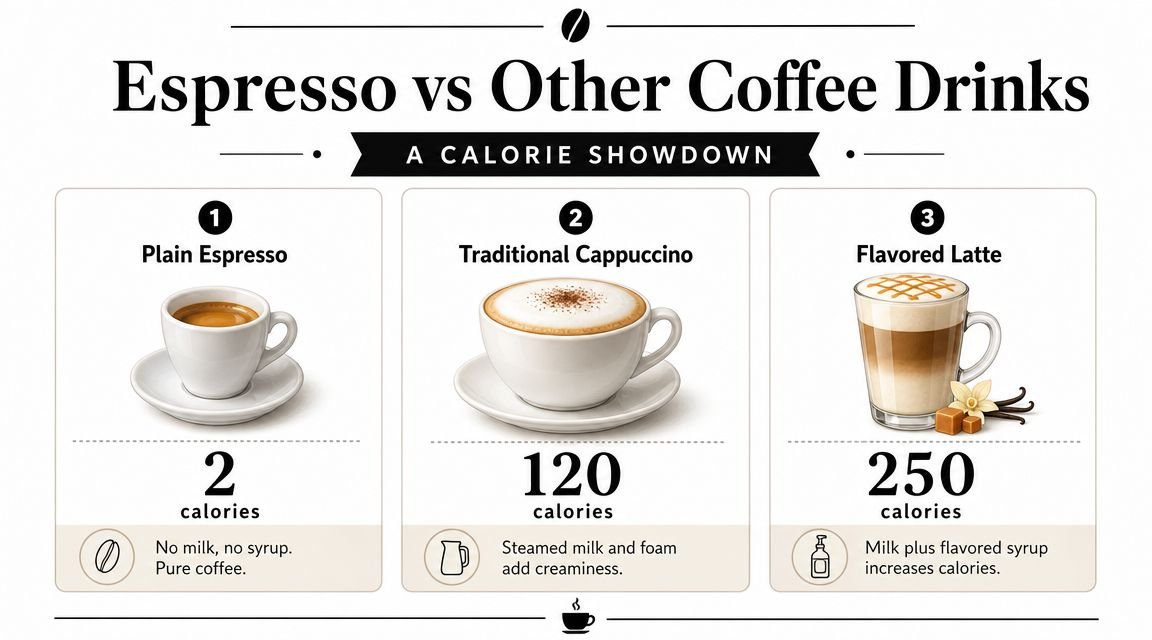
Espresso vs Other Coffee Drinks A Calorie Showdown
At the café, the fastest way to estimate calories is to look at the milk-to-espresso ratio. More milk usually means more calories. Add syrup, and the number rises again. Add sauce, and it rises faster.
A simple café comparison
| Drink | Description | Estimated Calories |
|---|---|---|
| Double espresso | Espresso only | Very low |
| Americano | Espresso plus hot water | Very low |
| Macchiato | Espresso with a small amount of milk | Low |
| Cortado | Espresso with a more balanced amount of milk | Moderate |
| Cappuccino | Espresso with steamed milk and foam | Moderate |
| Latte | Espresso with a larger amount of steamed milk | Higher |
| Mocha | Latte-style drink with chocolate or similar flavoring | Higher |
This table is intentionally qualitative because cafés build these drinks differently. Cup sizes vary. Milk choices vary. Sweetness varies. Two drinks with the same name can land very differently depending on the shop and the barista.
The ordering shortcut that helps most
When someone asks me for the leanest espresso-based drink that still feels like a proper coffeehouse order, I usually point them toward these patterns:
- Choose an Americano if you want volume without much added energy.
- Choose a cappuccino if you want milk texture but not a very milk-heavy drink.
- Choose a cortado if you want balance and a smaller footprint.
- Be careful with lattes and mochas if you're tracking closely, because they're easy to underestimate.
A latte isn't "worse" than a cappuccino. It just carries more milk. That's why it often feels softer, creamier, and more filling. The structure of the drink explains the calorie difference better than the name does.
Order by build, not by branding. Ask yourself how much milk and sweetness are going into the cup.
If you make coffee at home, gear matters too. People comparing stovetop brewers with espresso machines may find this guide on which coffee maker to buy in 2026 helpful for understanding how brew style changes the final drink.
And when you're away from home, rough estimation matters more than perfection. PlateBird's guide on how to estimate calories when eating out is useful for exactly this kind of real-world order.
How to Accurately Log Coffee for Your Fitness Goals
Coffee becomes annoying to track right when you're trying to be consistent. You type "espresso" into one app and get one result. You search in another and get something else. Neither answer feels wrong, but neither feels settled enough to trust.
Why tracking apps disagree
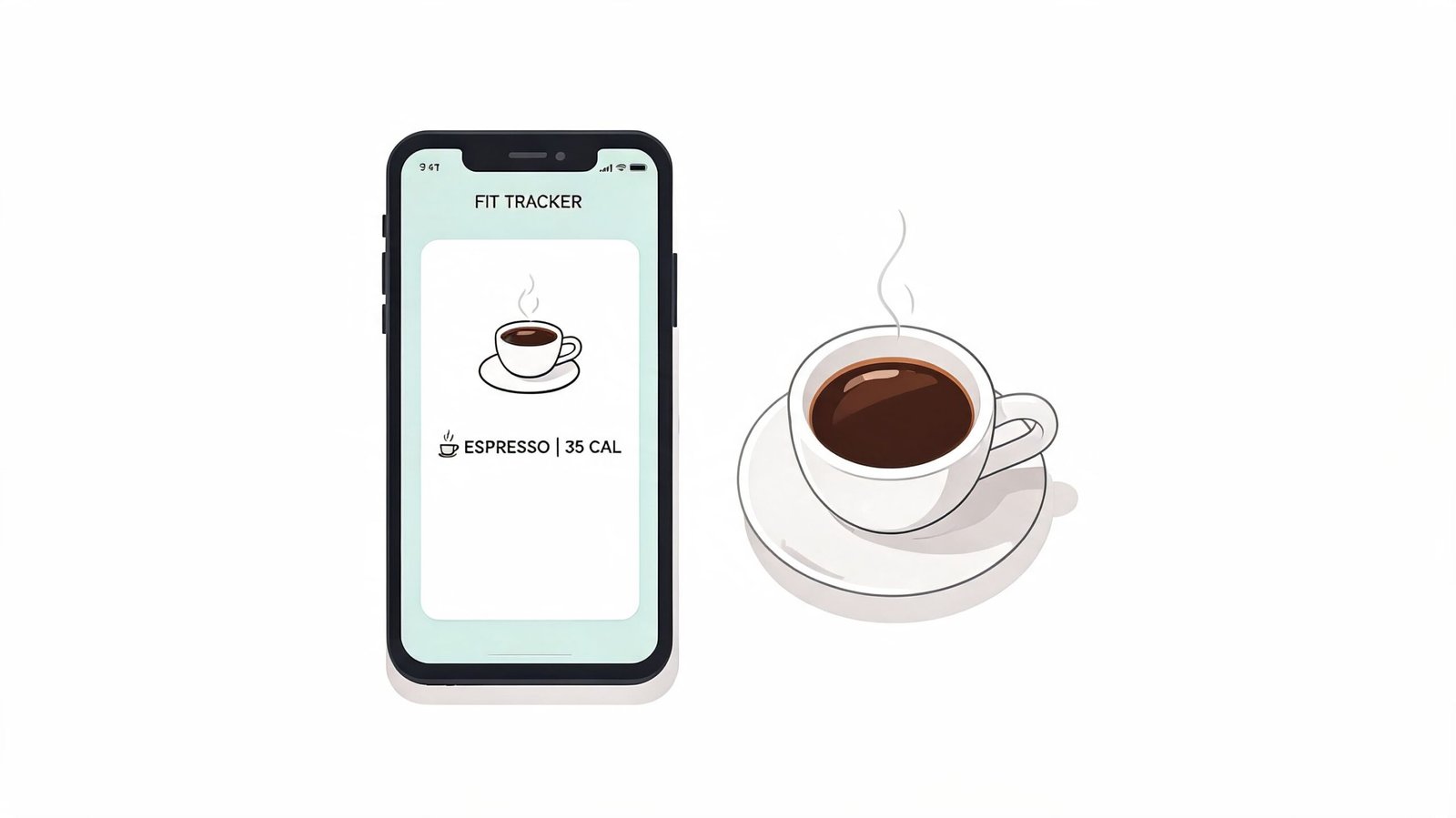
The calorie count for espresso is inconsistent across trackers. CalorieKing lists 1 calorie for a 1 fl oz shot, while Lose It! cites 3 calories, which is a tiny difference on its own but creates unnecessary uncertainty once you start building custom drinks, as shown in CalorieKing's espresso listing.
That mismatch usually comes from a few real-world issues:
- Rounding rules: trace calories may get rounded down in one database and rounded up in another
- Shot yield: one "shot" isn't poured identically everywhere
- Crema and extraction style: slight differences in what ends up in the cup can affect listings
- User-generated entries: some tracking apps contain messy duplicates
For plain espresso, this doesn't matter much. Logging 1 or 3 calories for an unsweetened shot won't meaningfully change your day. For a custom drink, though, the uncertainty compounds because now you're trying to estimate milk volume, syrup amount, and any extras.
The method that works best
When accuracy matters, break the drink into parts instead of relying on a generic café name.
Log it like this:
- Start with the espresso base Single, double, or whatever was pulled.
- Add the milk separately Whole, skim, oat, almond, soy. Volume matters more than brand in most café situations.
- Add sweetness Sugar, syrup, sauce, honey, sweet cream.
- Add toppings if used Whipped cream, caramel drizzle, cold foam, chocolate dusting.
That approach is less elegant, but it reflects how the drink is made.
The more custom the coffee order, the less useful a single generic database entry becomes.
Here's a quick visual explainer before the practical examples below.
What to do on busy mornings
If you're grabbing coffee on the way to work, perfection isn't realistic. Consistency is. Use the same logging approach every time so your entries are at least internally consistent.
A few habits help:
- Save common orders: if your weekday drink barely changes, reuse the same entry
- Ask simple questions at the café: milk type and number of syrup pumps can make a big difference
- Don't micromanage plain espresso: save your effort for the drinks with real additions
If logging still feels clunky, using a tool built for flexible food entry can make a difference. PlateBird's AI calorie counter is designed around natural language input, which fits coffee orders far better than scrolling through endless duplicate entries.
Enjoying Your Coffee Guilt-Free
Coffee doesn't need to become a stress test. Plain espresso is one of the easiest drinks to fit into a calorie-conscious routine, and that should be reassuring if you love a strong shot, an Americano, or a simple iced espresso.
The bigger lesson is even more useful than the number itself. Most of the calorie load in coffee doesn't come from the espresso. It comes from what makes the drink creamy, sweet, or dessert-like. Once you understand that, you can order with a lot more confidence.
A balanced way to think about it
You don't need to turn every coffee into the leanest possible version of itself. Some people are happy with straight espresso on weekdays and a richer latte on the weekend. Others would rather keep the milk and skip the syrup. Both approaches can work.
What matters is matching the drink to the moment:
- Need a low-calorie default: go plain or mostly plain
- Want something more satisfying: use milk strategically
- Want a treat: enjoy it, but log it like the custom drink it is
That kind of awareness tends to work better than swinging between restriction and "it doesn't count because it's coffee."
What usually keeps people on track
The best tracking habit is the one you'll repeat. For coffee, that means making peace with small ambiguity and focusing on the high-impact pieces. Don't waste energy obsessing over trace calories in a plain shot. Do pay attention when the drink includes multiple add-ins.
A good coffee habit fits your goals and still feels like your life.
That's the sweet spot. You get to keep the ritual, the café stop, the pre-gym espresso, or the slow Saturday latte without feeling like you're guessing your way through every cup.
If you want coffee logging to feel as easy as texting a note to yourself, try PlateBird. It's built for real meals and real drink orders, so instead of wrestling with duplicate database entries, you can type what you had in plain English and keep moving.