- Why restaurant meals usually derail macro targets
- The simplest ordering rule: choose protein first
- High-impact swaps that keep macros closer to target
- How to estimate macros when nutrition info is missing
- What to do before you go out
- Best macro strategies by restaurant type
- How photo and text logging fits into the real-world workflow
- Frequently Asked Questions
You sit down at a restaurant, scan the menu, and feel that familiar tension. You have a protein target to hit and a calorie ceiling to stay under, but nothing on the menu comes with a nutrition label. The server is already walking over. You order something that sounds reasonable and decide you will figure out the numbers later.
Later never comes. Or it does come, and you spend 20 minutes hunting for the closest match in a food database, guessing at portion sizes, and wondering whether the kitchen used butter or oil. By the time you log it, you have either given up or convinced yourself the estimate is close enough.
Eating out and still hitting your macros is genuinely possible without turning every dinner into a spreadsheet exercise. The approach is less about perfection and more about a few ordering decisions that do most of the work before the food arrives. Here is how to eat out and still hit your macros with PlateBird, and how to make that process fast enough to actually stick.
Why restaurant meals usually derail macro targets
Portions are bigger and less predictable than home cooking
A chicken breast you cook at home weighs roughly 150 to 180 g. The same item at a casual dining restaurant can run 250 to 350 g, sometimes more. That gap alone adds 100 to 150 calories and 20 to 30 g of protein you did not plan for.
Portion unpredictability is not just about size. It is about inconsistency. The same dish at the same restaurant can vary depending on the cook, the night, and how generous the kitchen is feeling.
Sauces and oils are the hidden calorie sources
A grilled salmon fillet might be 300 calories. Add a tablespoon of butter baste and a cream sauce and you are closer to 500 calories. The protein number barely changes. The fat and calorie numbers shift significantly.
Sauces, dressings, and cooking oils are where most restaurant macro estimates go wrong. They are invisible in the final plate and rarely listed on the menu. A useful heuristic is to assume any dish described as “rich,” “creamy,” or “glazed” has at least 100 extra calories from fat that you cannot see.
The goal is not a perfect number
Hitting your macros at a restaurant does not mean landing on exactly 42 g of protein and 38 g of carbs. It means staying within a range that keeps your day on track. Being off by a reasonable margin on one meal is not a problem. Abandoning tracking entirely because the situation felt too hard is.
The restaurant meal you estimate imperfectly and log anyway does more for your progress than the one you skip tracking because the numbers felt too uncertain.
The simplest ordering rule: choose protein first
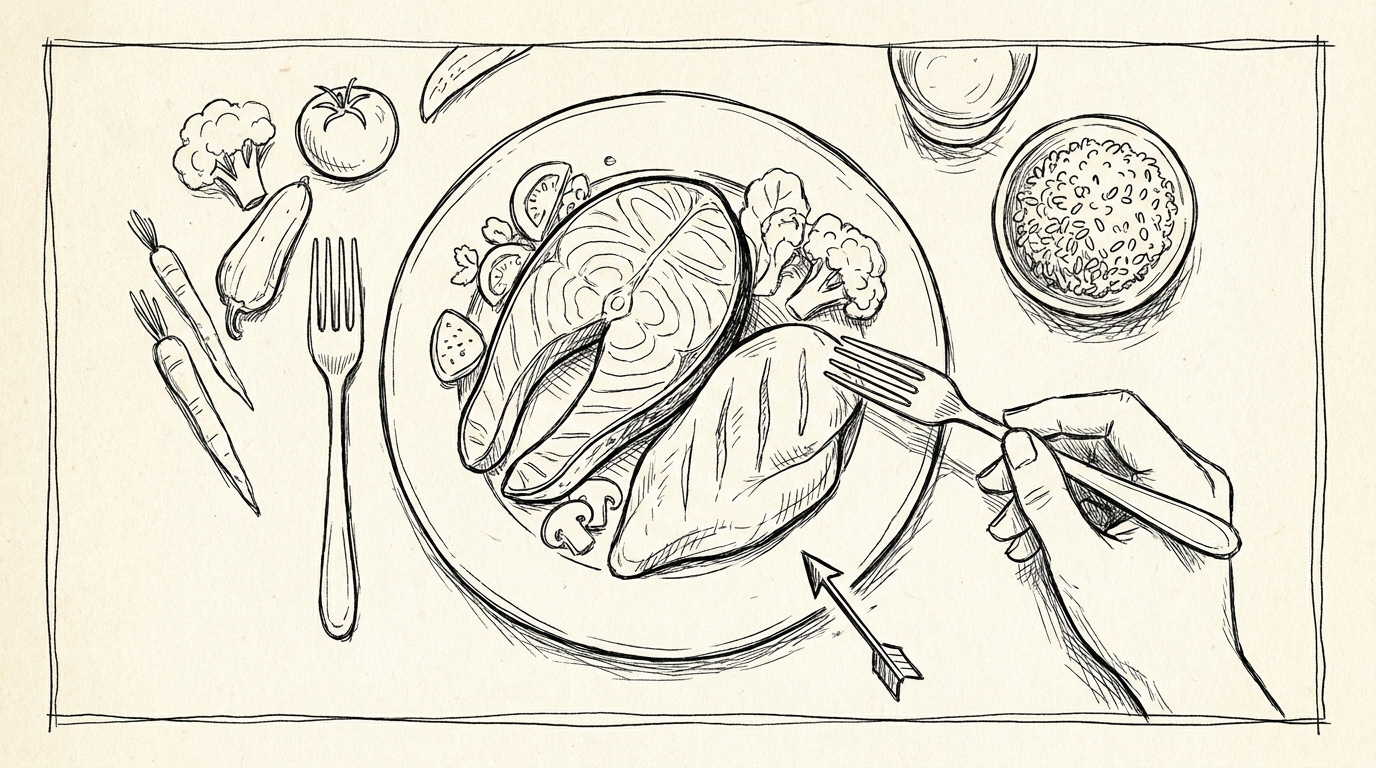
Protein is the easiest anchor to estimate
A 6 oz grilled chicken breast is roughly 38 g of protein and 185 calories. A 5 oz sirloin is about 35 g of protein and 210 calories. A palm-sized piece of fish is typically 25 to 30 g of protein and 150 to 180 calories. These numbers are consistent enough to use as a starting point even without a nutrition label.
Carbs and fats vary far more depending on preparation. Protein from a single lean source is the most stable number on the plate. Starting with protein gives you a reliable anchor before you decide anything else.
Build the rest of the meal around what you have left
Once you have chosen your protein, check your remaining daily budget. If you are 60 g of carbs short for the day, a side of rice makes sense. If you are already close on fat, skip the extra cheese or ask for the sauce on the side.
This is not complicated math. It is a two-step decision: pick the protein, then treat everything else as adjustable. That framing alone removes most of the confusion at the table.
Skip the protein and everything else becomes a guess
Ordering a pasta dish or a shared appetizer as your main means you are estimating a mixed item with no clear protein anchor. You might get 15 g of protein. You might get 30 g. The carbs and fat are even harder to pin down.
Protein-first ordering is not a rigid rule. It is a practical starting point that works across almost every menu type, from fast food to fine dining.
If you only remember one thing at the table, make it this: find the protein item first, then build around it.
High-impact swaps that keep macros closer to target
Ask for sauces and dressings on the side
A Caesar salad with dressing mixed in can have 400 calories from the dressing alone. The same salad with dressing on the side, used lightly, drops to under 200 calories from that component. That is a 200-calorie swing from one request.
Butter, cream sauces, glazes, and dressings are the fastest levers you have. Asking for them on the side does not change the dish. It gives you control over how much ends up in the meal.
Choose preparation methods that reduce hidden fat
Grilled, baked, steamed, and blackened preparations add minimal calories beyond the food itself. Fried, breaded, sautéed in butter, and pan-seared in oil add 100 to 300 calories depending on the portion. Choosing grilled over fried is one of the most consistent swaps available across every type of restaurant.
This is not about avoiding flavor. A blackened tilapia or a wood-grilled chicken thigh can be excellent. The preparation method matters for the macro math, not the eating experience.
Use simple structural swaps when the meal is oversized
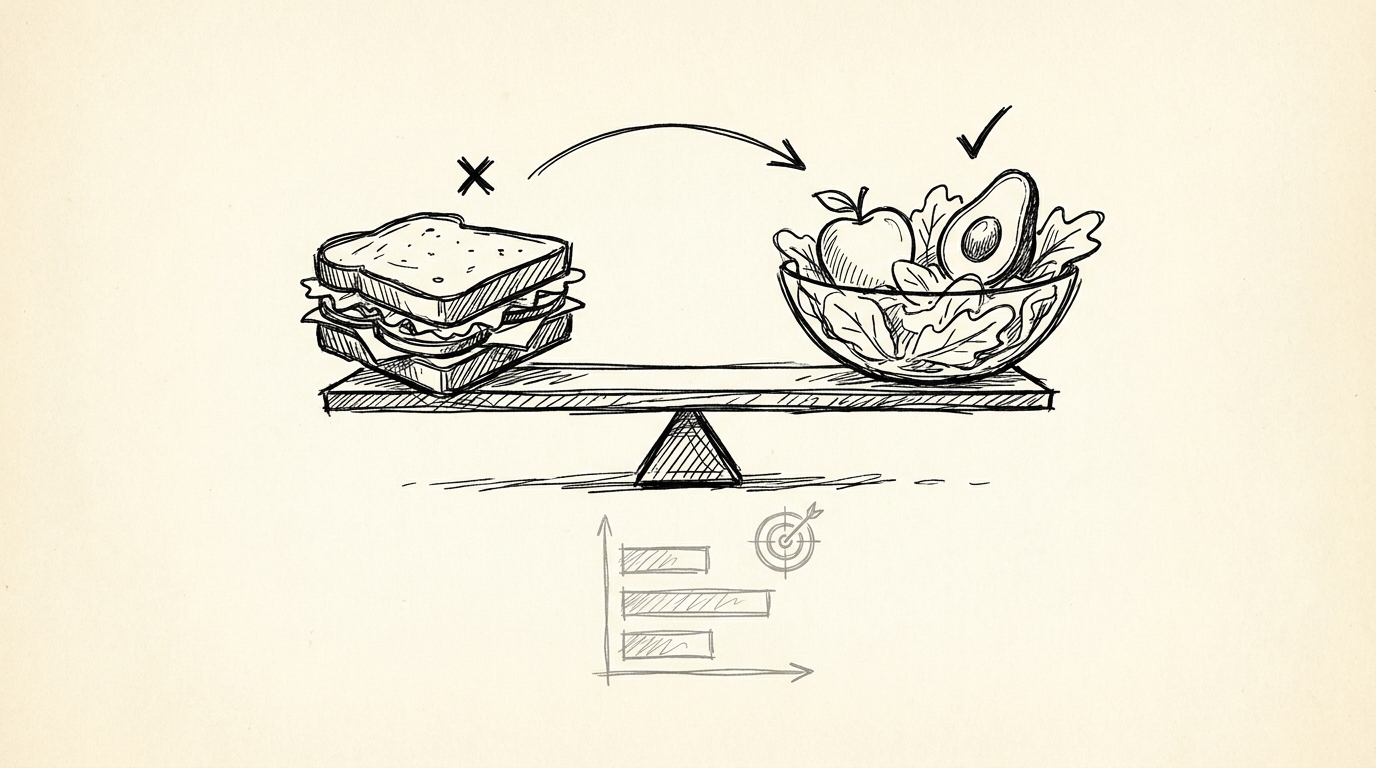
No bun on a burger removes roughly 25 to 30 g of carbs and 120 to 140 calories. Swapping fries for a side salad or steamed vegetables saves another 200 to 350 calories. Splitting an entrée with someone at the table cuts every number in half.
| Original item | Simple swap | Approximate calorie reduction |
|---|---|---|
| Burger with bun | Burger, no bun | 120 to 140 calories |
| Fries (medium) | Side salad, no dressing | 200 to 300 calories |
| Creamy pasta sauce | Marinara or olive oil base | 150 to 250 calories |
| Full entrée portion | Half portion, boxed to go | Roughly half of all macros |
| Dressing mixed in salad | Dressing on the side | 100 to 200 calories |
How to estimate macros when nutrition info is missing
Break the plate into components
Instead of guessing one total number for a plate of pasta or a mixed stir-fry, split it into parts. Identify the protein source, the starch, the fat source, and any toppings or sauces. Estimate each piece separately.
A chicken stir-fry might break down as: 5 oz chicken (35 g protein, 185 calories), 1 cup rice (45 g carbs, 200 calories), 2 tablespoons of stir-fry sauce and oil (roughly 100 calories from fat). That is a workable estimate of around 485 calories, even without a menu label.
Err toward overestimating on mixed or heavily sauced dishes
When the dish is a single mixed item, like a curry, a burrito, or a creamy pasta, the fat content is almost always higher than it looks. In my experience, a restaurant curry or pasta in a cream sauce adds 50 to 100 calories more than a home-cooked version of the same dish.
Adding a small buffer to your estimate on these dishes is reasonable. It is better to slightly overcount one meal than to consistently undercount and wonder why the scale is not moving.
Estimating components separately is the most reliable approach for any meal where the ingredients are mixed together before serving.
Use visual portion cues as a backup
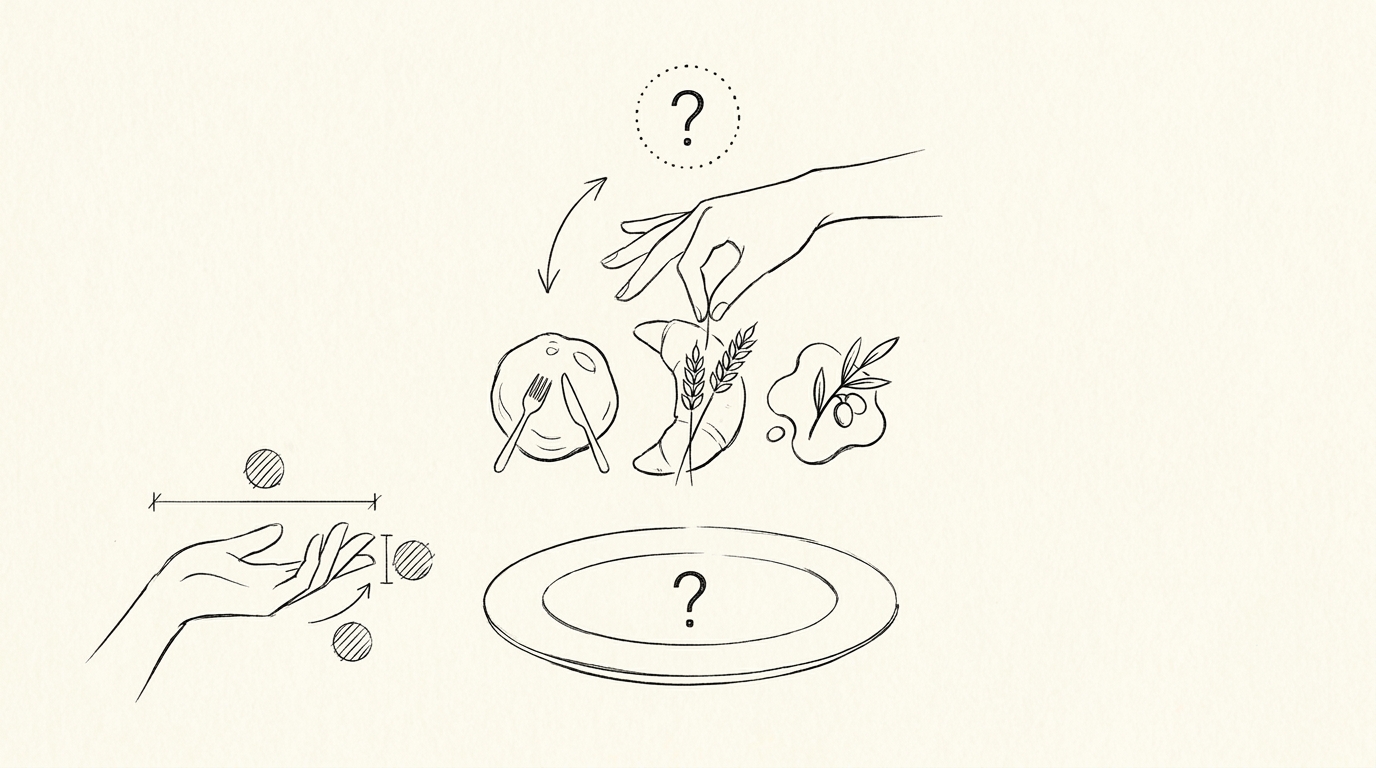
A deck of cards is roughly 3 oz of cooked meat, or about 21 g of protein. A cupped handful is approximately 1 cup of cooked rice or pasta, around 200 calories. A thumb tip is close to 1 teaspoon of oil or butter, roughly 40 calories.
These are rough guides, not precise measurements. But rough is enough when the goal is staying within range rather than hitting an exact number.
A decent estimate you make at the table beats a precise calculation you never do.
What to do before you go out
Review the menu in advance when you can
Chain restaurants often post nutrition information online. Even independent restaurants often have a menu you can browse before arriving. Spending 3 to 5 minutes before leaving the house to pick your order removes almost all of the decision pressure at the table.
If you know you are having a 1,200-calorie dinner, you can keep lunch to 400 calories and breakfast to 350 calories and still land within your daily target. Pre-planning is not about restriction. It is about making room.
Keep earlier meals protein-forward and lighter
If dinner out is likely to be bigger or harder to estimate, earlier meals should be leaner and easier to log precisely. A 30 g protein breakfast of Greek yogurt and eggs is simple to track. That leaves more flexibility for the restaurant meal later.
The goal is a daily budget that absorbs a slightly uncertain dinner without blowing the total. A 300-calorie buffer built into the earlier part of the day does that without requiring willpower at the table.
Do not arrive hungry
Showing up to a restaurant after skipping lunch is one of the fastest ways to abandon any ordering plan. Hunger narrows decision-making. You order more, eat faster, and skip the modifications you planned.
A 150 to 200 calorie protein snack an hour before a restaurant meal keeps hunger manageable and makes it easier to stick to the order you planned.
Best macro strategies by restaurant type
Fast food: build from the protein item and remove extras
Fast food menus are some of the easiest to navigate because nutrition information is usually published. A grilled chicken sandwich without the sauce has roughly 300 to 350 calories and 30 g of protein. Add a side salad instead of fries and the meal stays under 450 calories with solid protein.
The mistake at fast food is adding extras: the sauce packet, the cheese slice, the large drink. Each one is small. Together they add 200 to 400 calories to a meal that was otherwise reasonable.
Steakhouses and grill restaurants: the easiest venue to track
Steakhouses are among the most macro-friendly restaurant types because the components are visually separated. A 6 oz filet, a baked potato, and a side of asparagus are all individually estimable. There is no mixed sauce hiding the fat content of each item.
Ask for butter and sour cream on the side of the potato. Skip the bread basket. Those two moves alone save 300 to 400 calories without changing the meal in any meaningful way.
Sushi, pasta, and buffets: trickier but manageable
Sushi rolls vary more than people expect. A basic tuna roll has roughly 200 to 250 calories for 6 pieces. A tempura shrimp roll with spicy mayo can reach 500 to 600 calories for the same count. The difference is almost entirely in the preparation and toppings.
Pasta in a cream sauce is hard to estimate precisely because the fat content depends on how much cream and butter the kitchen used. A useful approach is to estimate on the high end, around 700 to 900 calories for a full restaurant portion, and adjust tomorrow if needed.
Buffets are the hardest scenario. The best approach is to walk the full line before taking anything, build a plate with a clear protein item as the anchor, and keep the portion of each item to one serving.
| Restaurant type | Tracking difficulty | Best strategy |
|---|---|---|
| Fast food chains | Low (nutrition info available) | Use published data; remove extras |
| Steakhouses / grill | Low (components separate) | Estimate each item individually |
| Casual dining (American) | Medium | Protein first; sauces on the side |
| Sushi | Medium to high | Stick to simpler rolls; avoid tempura |
| Pasta / Italian | High | Overestimate; choose tomato over cream |
| Buffet | High | Survey first; anchor on protein; one pass |
How photo and text logging fits into the real-world workflow
The logging burden is the real problem
People do not fail at restaurant macro tracking because they ordered badly. They fail because logging the meal afterward takes too long or feels too uncertain. Manual entry for a mixed dish at an independent restaurant can take 10 to 15 minutes and still produce a rough estimate.
That friction compounds. One skipped log becomes two. Two becomes a habit of not logging restaurant meals at all. The ordering decisions were fine. The capture step broke down.
Photo and text logging removes that friction
When the meal is already in front of you, snapping a photo or typing a short description is a 30-second task. PlateBird reads the photo or the text and returns a calorie and macro estimate without requiring you to search a database, weigh ingredients, or scan a barcode.
The best workflow is to order smart using the rules above, then capture the meal quickly while you are still at the table. That keeps the day’s log complete without adding meaningful time to the meal.
For more detail on the in-restaurant logging process, this guide on tracking macros when you eat at restaurants covers the step-by-step approach.
Smarter ordering and faster logging work together
Neither strategy alone is sufficient. Ordering a grilled chicken breast and then never logging it leaves a gap in your day. Logging every meal perfectly but ordering a 1,400-calorie pasta dish when you had 600 calories left does not fix the problem either.
The combination, making a few deliberate ordering choices and then capturing the meal in under a minute, is what makes restaurant tracking sustainable over weeks rather than just on motivated days. Consistency across the full week matters more than any single perfect meal.
The tracking system that works on a Tuesday business dinner and a Saturday birthday dinner is the one worth keeping.
Frequently Asked Questions
What if I cannot find any nutrition information for the restaurant?
Break the plate into its main components: the protein, the starch, the fat source, and any sauces or toppings. Estimate each piece separately using visual portion cues. A palm-sized protein is roughly 25 to 35 g of protein. A fist-sized starch is roughly 200 calories. Add a small buffer on the total for any cooking fats you cannot see. That gets you close enough.
What if I went over my calorie target at one meal?
One over-target meal does not require a dramatic correction. Keep the next meal lighter and protein-forward, skip any planned snacks if you are not hungry, and move on. Trying to compensate aggressively by eating very little the next day usually backfires. A small, natural reduction over the following 24 hours is enough.
How do I handle social meals where ordering modifications feels awkward?
Most modifications are invisible to the table. Asking for dressing on the side or skipping the bun is a 5-second exchange with the server. If the social context makes modifications genuinely difficult, focus on portion size instead. Eat half the entrée, skip the bread, and skip dessert. Those three moves alone reduce the meal by 400 to 600 calories without requiring any special requests.
Are some cuisines genuinely harder to track than others?
Yes. Cuisines that use heavy sauces, shared dishes, or mixed preparations are harder to estimate than those with clearly separated components. Thai curries, Indian butter-based dishes, and Italian cream sauces all have high fat variability. Mexican and Mediterranean cuisines tend to be easier because the components are more visible and separable. Steakhouses and grill-focused menus are the most straightforward.
Does the protein-first rule work at every type of restaurant?
It works at most. The exception is cuisines where protein is not the primary dish structure, like a tapas spread or a dim sum meal. In those cases, estimating the total table spread and dividing by the number of people eating is a reasonable approach. Identify the highest-protein items on the table and prioritize those.
Restaurant meals do not have to be a gap in your tracking. The ordering decisions are straightforward once you have a framework, and the logging step does not have to take longer than the time it takes to unfold your napkin.
If you want eating out to feel manageable instead of like a tracking problem you defer until later, try PlateBird and snap a photo of your next restaurant meal before you take the first bite. The estimate comes back in seconds, your log stays complete, and the rest of the day stays on track.