- The Short Answer and Why It Matters
- The Nutritional Powerhouse in a Pinto Bean
- How Pinto Beans Fuel Sustainable Weight Loss
- Getting Your Portions Right for Weight Loss
- Canned vs Dried Beans Which Is Better
- Delicious Ways to Add Pinto Beans to Your Diet
- Common Pitfalls When Eating Beans for Weight Loss
Yes, pinto beans are good for weight loss. Their real strength is a simple one two punch: 15 grams of fiber and 15 grams of protein in 1 cup of boiled pinto beans for 245 calories, which helps you stay full on relatively few calories.
If you're asking this, you're probably trying to solve a very practical problem. You want foods that don't leave you prowling the kitchen an hour later, and you don't want your meals to feel like punishment. Pinto beans can help because they work less like a “diet food” and more like a satiety tool you can plug into meals you already eat.
A lot of people get stuck on one question: “Aren't beans too high in carbs for weight loss?” That sounds reasonable until you look at the full package. Pinto beans don't bring carbs by themselves. They bring carbs bundled with fiber, protein, and very little fat. That changes how filling they feel and how easy they are to fit into a calorie-conscious day.
The Short Answer and Why It Matters
The answer to “are pinto beans good for weight loss” is yes, and not in a trendy, magical-food way. They're useful because they make hunger easier to manage.
Most weight loss struggles aren't really about knowing that calories matter. They're about trying to stay in a calorie deficit while feeling hungry, distracted, and low on energy. Pinto beans help with that exact friction point. They give you a meal component that feels substantial without demanding a big calorie budget.
Research from the National Health and Nutrition Examination Survey found that bean consumers had significantly lower body weight and smaller waist circumferences than non-consumers. Bean eaters also had a 23% reduced risk of increased waist size and a 22% reduced risk of obesity according to the NHANES findings summarized here.
Why this matters in real life
If a food helps you feel full, it can make several parts of weight loss easier at once:
- Meals feel more complete. A salad with beans is usually more satisfying than a salad made of mostly lettuce.
- Snacking pressure drops. When lunch holds you, you're less likely to start grabbing whatever is nearby in the afternoon.
- Calorie control gets simpler. You spend less effort “being good” and more time just feeling normally fed.
Practical rule: The best weight loss foods aren't the ones that sound the healthiest. They're the ones that help you eat a little less without feeling like you're losing your mind.
Think of pinto beans as a buffer against hunger
That framing matters. People often treat weight loss foods as moral badges. Pinto beans are more useful as a tool. You can add them to tacos, bowls, soups, salads, and scrambled meals to make those meals more staying-power friendly.
When people hear “beans,” they sometimes picture a side dish. For weight loss, it's more helpful to think of pinto beans as part of the structure of a meal. They can carry hunger for longer, and that makes consistency easier.
The Nutritional Powerhouse in a Pinto Bean
Before talking strategy, it helps to know what you're getting in the bowl. Pinto beans are nutrient-dense, which means they deliver a lot of useful nutrition for a reasonable calorie cost.
For a standard serving, here are the numbers for 1 cup of boiled pinto beans.
Pinto beans nutrition facts
| Nutrient | Amount | % Daily Value (DV) |
|---|---|---|
| Calories | 245 | Not specified |
| Carbohydrates | 45 g | Not specified |
| Fiber | 15 g | Not specified |
| Protein | 15 g | Not specified |
| Fat | 1 g | Not specified |
Those numbers come from this pinto bean nutrition guide, which is also helpful if you've ever wondered how fiber affects calorie counting.
Why these numbers are so helpful
A lot of foods give you just one useful trait. Chicken gives protein but no fiber. Oatmeal gives fiber but not much protein. Chips give you quick energy but little staying power.
Pinto beans combine several strengths in one place:
- Protein helps with fullness. It tends to make a meal feel more substantial.
- Fiber slows digestion. That usually means the meal lingers longer and feels more satisfying.
- Low fat keeps calories in check. With just 1 gram of fat per cup, the calories don't climb as quickly as they can in richer foods.
A simple way to think about pinto beans is that they “earn their calories.” They don't take much from your daily budget without giving something back.
They do more than fill a calorie gap
People sometimes reduce weight loss food to one number: calories. That's too narrow. A food with moderate calories can still be very useful if it helps prevent the extra grazing that often happens later.
Pinto beans also bring other nutrients, including fiber and minerals, so they support overall diet quality rather than just acting as filler. That's one reason they tend to show up in eating patterns that people can maintain.
How Pinto Beans Fuel Sustainable Weight Loss
You finish lunch at noon, feel proud of your healthy choice, and then find yourself hunting for a snack at 2:30. That pattern wears people down during weight loss. Pinto beans can help because they act like a satiety tool, not just a source of calories.
Satiety is the hidden lever
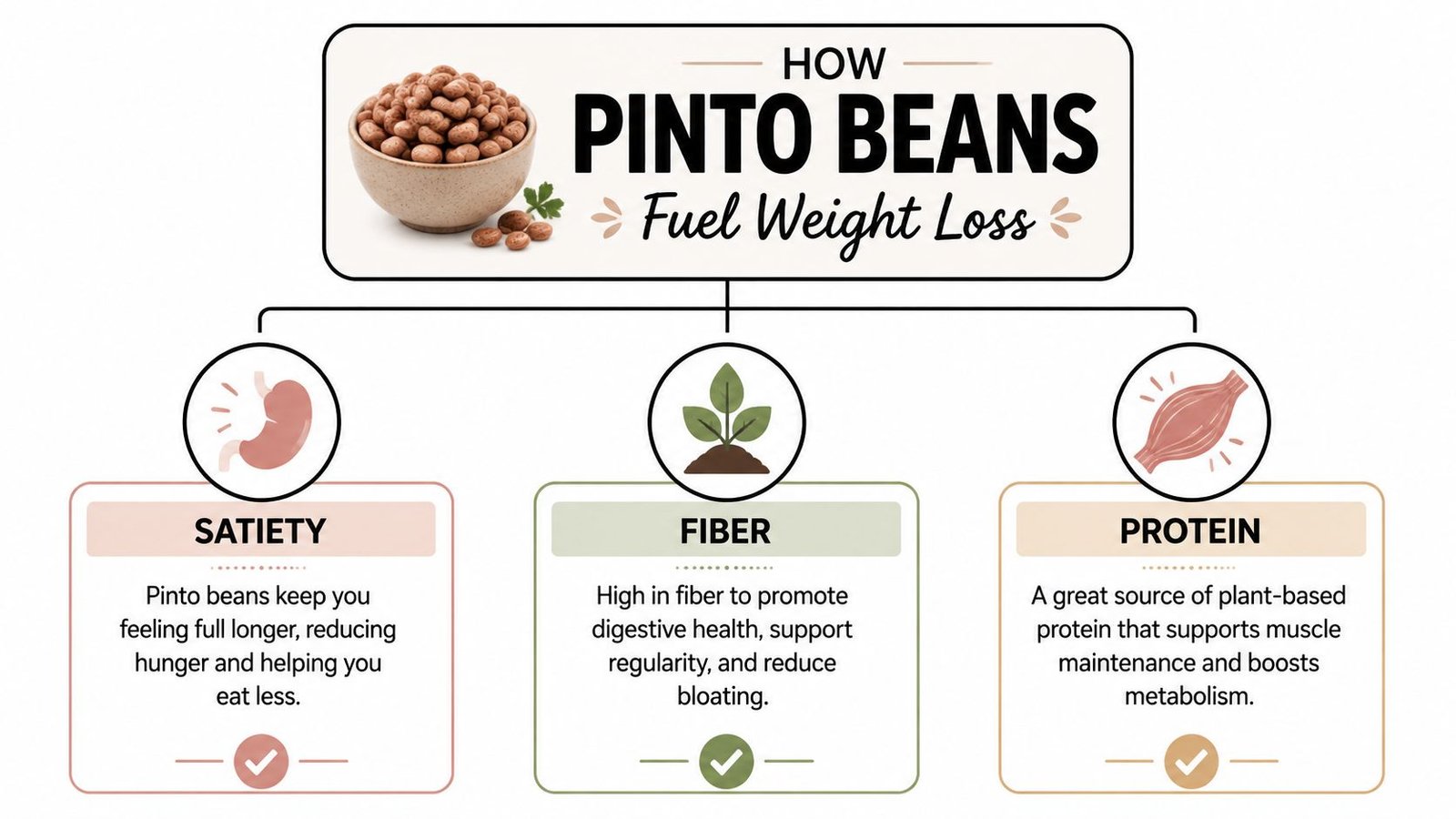
Satiety means how long a meal keeps you comfortable before hunger starts pushing back. For someone trying to lose weight, that matters because willpower usually fades faster than physical fullness.
Pinto beans help on both sides of the fullness equation. Their fiber adds volume, and their protein slows the meal down. The result is a meal that tends to stay with you longer, instead of disappearing fast and leaving you restless an hour later.
A Healthline review of pinto bean nutrition notes research on high-fiber bean-based eating patterns that found people felt more satisfied and less hungry after eating them. That is the key advantage for weight loss. Fewer hunger rebounds often means fewer unplanned calories later in the day.
Their carbs are slower and steadier
Carbohydrates can be confusing at first because they do not all behave the same way.
Pinto beans have a low glycemic index, which means their carbs enter your bloodstream more gradually. Sugary cereal acts more like kindling. It burns fast. Pinto beans act more like a log that keeps the fire going at a steadier pace. That slower release can make energy and appetite feel less chaotic.
If you are still learning how that fits into fat loss, this guide on what a calorie deficit actually means explains why steady, filling foods often make the math easier to stick with.
For readers building more plant-forward meals, these natural plant protein weight management tips can help you pair beans with other satisfying foods.
They make food tracking more useful
A food tracking app works best when it helps you spot patterns, not just log numbers. Pinto beans are useful here because they often improve the quality of a meal without making tracking complicated.
For example, compare two lunches with similar calories. One is white rice with a small sauce-heavy topping. The other is a burrito bowl with pinto beans, vegetables, salsa, and lean protein. On paper, the calories may look close. In real life, the bean-based meal often buys you more time before the next wave of hunger.
That is why pinto beans can be a practical tool in a modern tracking routine. Log the portion, then pay attention to what happens next. Did you stay full for four hours. Did cravings ease up in the afternoon. Did you avoid the random snack run. Those patterns matter because sustainable weight loss usually comes from meals that make the next decision easier, not harder.
Gut health may help support the process
Fiber also feeds beneficial gut bacteria, which can influence digestion and appetite regulation. You do not need to track that day by day to benefit from it. You just need to eat fiber-rich foods consistently enough for them to become part of your normal routine.
That is one more reason pinto beans work well for beginners. They are simple, affordable, and filling. A good weight loss food does more than fit your calorie target. It helps your day feel calmer around food.
Getting Your Portions Right for Weight Loss
A healthy food can still become confusing if you don't know what a practical portion looks like. With pinto beans, it's generally advisable to think in household measures, not nutrition jargon.
A cooked serving of pinto beans is easy to picture. ½ cup to 1 cup cooked is a sensible range for many weight loss meals, depending on what else is on the plate. If beans are the main starch and protein support in the meal, the larger portion often makes sense. If they're one part of a bigger bowl with chicken, rice, and vegetables, the smaller portion may fit better.
Use visual cues, not guesswork
If measuring cups aren't handy, use simple references:
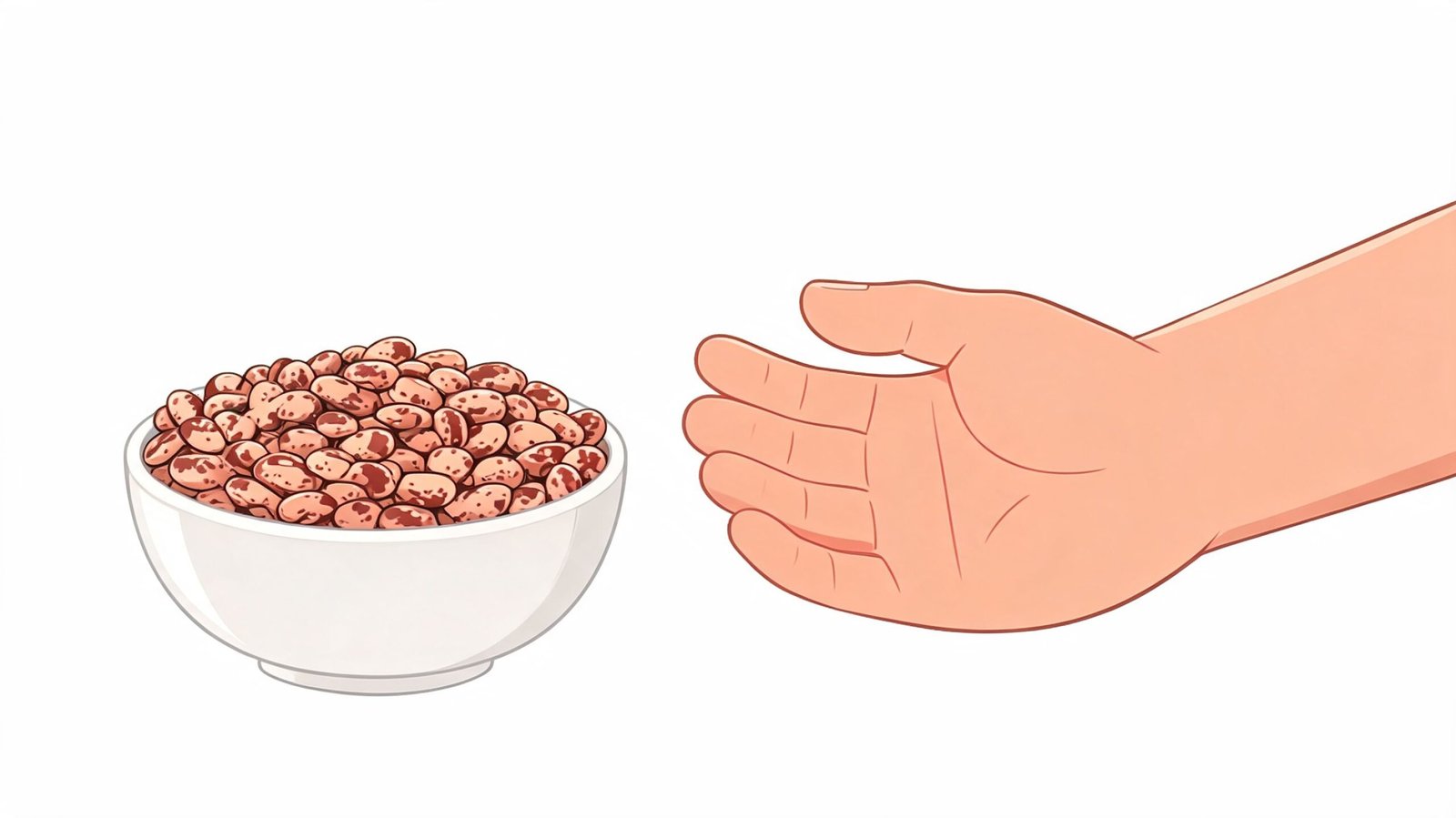
- About ½ cup cooked looks roughly like a rounded half-fist.
- About 1 cup cooked is close to the size of your fist.
- A scoop on top of a salad is usually smaller than you think, which is why eyeballing can go wrong fast.
A lot of overeating doesn't come from “bad foods.” It comes from portions drifting upward because the food feels healthy and harmless.
Build the portion into the meal
Pinto beans work best when they replace something less filling, not when they get added on top of an already large meal.
Here are three easy ways to portion them:
- In tacos or burrito bowls, use beans as part of the base instead of doubling up on rice and cheese.
- In salads, add enough beans that the salad can function as a real lunch.
- In soups or chili, let beans carry some of the bulk so you don't rely only on meat or creaminess for satisfaction.
If you're trying to lose weight, portion size should answer one question: “Will this amount help me stay full until the next meal?”
For a helpful primer on using visual cues and practical estimates, see this guide to serving sizes for weight loss.
Canned vs Dried Beans Which Is Better
You get home hungry, open the pantry, and need dinner to happen fast. In that moment, the better bean is the one that makes a filling meal easy enough to repeat.
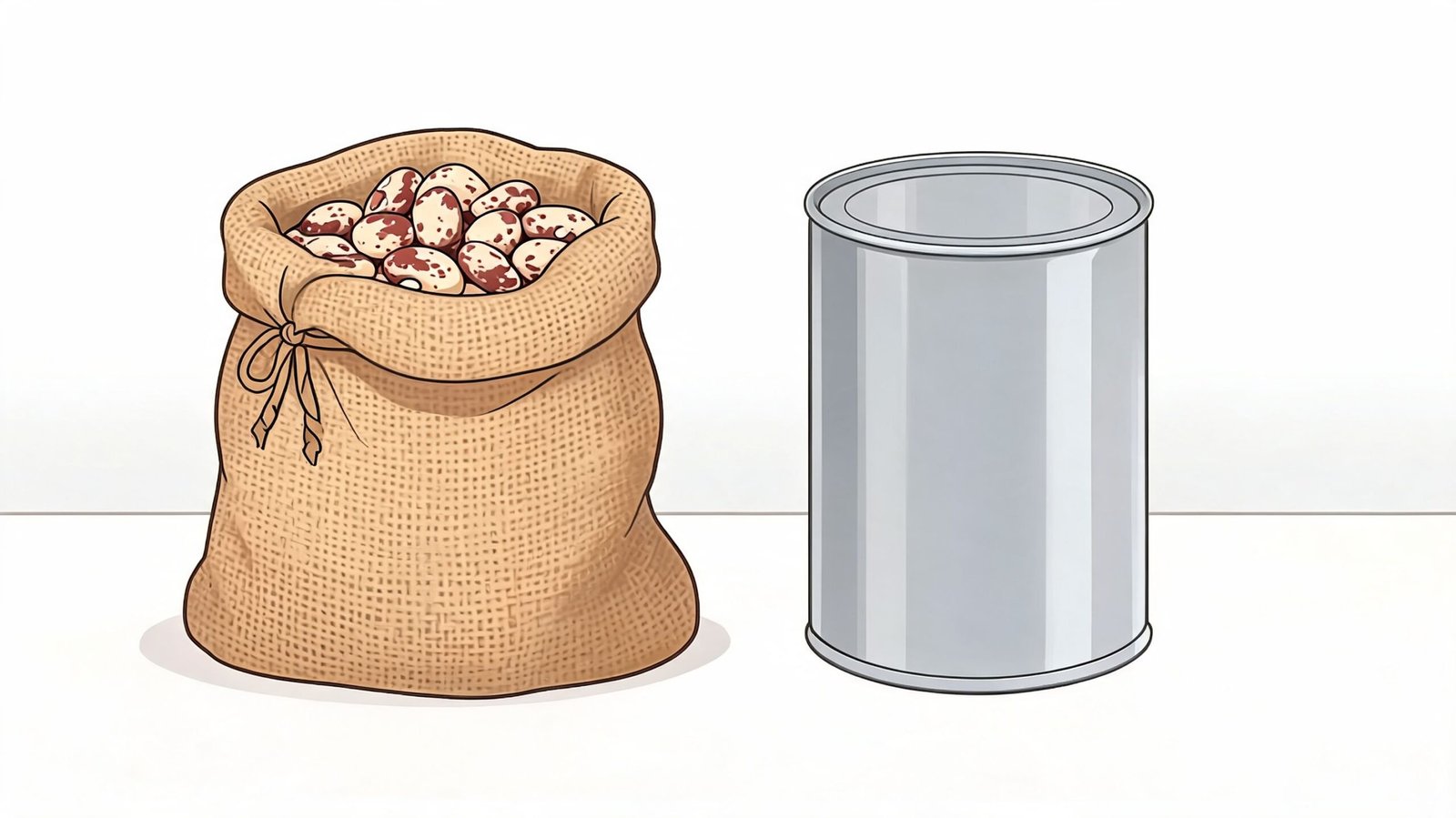
Both canned and dried pinto beans can help with weight loss. The fundamental difference is less about nutrition and more about friction. If one option fits your routine better, you will use it more often, and that matters more than having the "perfect" version sitting untouched on a shelf.
Dried beans give you more control
Dried pinto beans work well for people who like batch cooking. You control the texture, the salt, and the seasonings from the start. That can be helpful if you want beans to match different meals across the week, like softer beans for soup or firmer beans for burrito bowls.
They also fit a food-tracking routine well. Cook a big pot once, portion it into containers, and log the same amount each time in your app. It is like setting up your week in advance so hunger has fewer chances to make the decision for you.
Canned beans make follow-through easier
Canned beans solve the problem that stops a lot of healthy intentions. Time.
They are already cooked, easy to rinse, and ready in minutes. If your weight loss plan tends to fall apart on busy nights, canned beans can act like a backup plan that still keeps hunger under control. That matters because satiety is often the difference between eating one solid dinner and picking through snacks an hour later.
The main tradeoff is sodium, not usefulness. A quick rinse helps, and checking labels lets you compare options without much effort.
Bean-based eating patterns can also support health markers tied to long-term weight management. An 8-week RCT found that ½ cup (86g) of daily pinto beans lowered LDL cholesterol by 10 to 15%, and pooled randomized trials reported bean-inclusive diets could reduce waist circumference by 1.5 to 3 cm more than isoenergetic control diets in this bean trial summary.
If you want a quick visual on handling dried beans in the kitchen, this is a handy walkthrough:
The better choice is the one you will actually log and eat
For satiety, consistency beats theory. A can you rinse and add to lunch today often helps more than dried beans you keep meaning to cook someday.
If dried beans fit your weekend prep style, use them. If canned beans help you build a fast, filling meal you can track without guesswork, use those. Pinto beans are a hunger-management tool first. The best version is the one that makes that tool easy to use again tomorrow.
Delicious Ways to Add Pinto Beans to Your Diet
The easiest way to eat more pinto beans is not to invent a whole new menu. It's to fold them into meals you already like.
Easy swaps that increase fullness
Tacos are a great example. If you normally use only ground beef, try replacing part of it with pinto beans. The texture stays hearty, the meal becomes more filling, and you usually need less cheese to make it feel complete.
Chili works the same way. Pinto beans stretch the pot, add body, and help the bowl feel substantial without making it feel heavy.
A few low-effort ideas:
- Taco night upgrade. Mix pinto beans into seasoned meat or use them as the main filling with salsa and shredded lettuce.
- Salad fix. Add a scoop of beans to turn a side salad into lunch.
- Soup shortcut. Blend some beans into broth for a creamier texture without heavy cream.
- Toast topping. Mash pinto beans with avocado, lime, and salt for a savory spread.
- Egg scramble add-in. Fold beans into scrambled eggs with peppers and onions for a more satisfying breakfast.
A good weight loss meal doesn't have to be small. It has to be satisfying enough that you don't keep eating afterward.
Build around familiar flavors
Pinto beans pair well with foods people already know how to cook. That makes them easier to use consistently than a niche “health food” ingredient that sits untouched in the pantry.
Try flavor combinations like these:
| Meal idea | How pinto beans help |
|---|---|
| Burrito bowl | Add bulk and make the bowl more filling |
| Taco salad | Replace some of the higher-calorie toppings |
| Vegetable soup | Add body and a soft, satisfying texture |
| Rice and beans bowl | Create a simple, budget-friendly meal base |
| Stuffed sweet potato | Turn a light dinner into a complete one |
Don't overlook cold meals
A lot of people only think of beans as hot food. They're excellent cold too. Add them to chopped salads with cucumber, tomato, herbs, and a simple vinaigrette. Toss them with corn and salsa. Stir them into grain bowls for meal prep lunches that hold up well.
That flexibility matters. The more situations a food fits into, the easier it becomes to keep using it when life gets busy.
Common Pitfalls When Eating Beans for Weight Loss
You make a bean bowl because it sounds like the healthy choice. Then the bowl grows. Rice, cheese, sour cream, oil, chips, maybe guacamole. By the time you sit down, the food that was supposed to help with hunger is carrying a lot more calories than you planned.
That is the trap with pinto beans. They work well for weight loss because they help you feel full. But fullness only helps if the rest of the meal does not crowd out your calorie budget.
Where people get tripped up
- Loaded bean bowls. Beans can be the hunger-control part of the meal, but cheese, chips, creamy sauces, and large scoops of rice can turn a balanced bowl into a heavy one.
- Restaurant-style refried beans. Some are cooked with added fat, so the calories can rise fast even when the portion looks small.
- Treating beans like a free food. Pinto beans are nutritious, but they still count. A food can be wholesome and still be easy to overeat.
- Skipping tracking because the meal feels simple. A bean-based lunch can look light, yet the extras often matter more than people expect.
A useful way to handle this is to treat pinto beans as the anchor, not the entire strategy. The beans are the part that helps settle hunger. The toppings should support that job, not compete with it. Salsa, cilantro, onion, lime, cabbage, and a spoonful of Greek yogurt give flavor without changing the meal as much as heavy add-ons.
Another common problem is rushing your fiber intake
Beans bring a lot of fiber, and your digestive system may need time to get used to it. Going from very little fiber to a large serving of beans can feel like asking a beginner to jog five miles on day one. Start smaller, drink enough water, and build up over several meals.
This gets easier with a simple tracking habit. Log the bean portion, then log the extras. In an app like PlateBird, that makes it easier to see whether your meal is built around satiety or built around toppings. Small patterns show up fast when you can compare a simple bean bowl with a loaded one.
Keep pinto beans in the plan. Keep the extras on purpose.
Used that way, pinto beans become more than a healthy ingredient. They become a satiety tool you can repeat, track, and adjust without making weight loss feel complicated.