You pull a stuffed green pepper out of the oven, set it on the plate, and for a second it feels like the ideal healthy dinner. It’s warm, savory, filling, and built around a vegetable. Then the usual question shows up right before the first bite. How many calories are in this thing?
That’s where a lot of people get stuck.
Most search results give you one neat number pulled from a frozen dinner label. That number can be useful, but it’s also often misleading if you cook stuffed peppers at home. A homemade pepper can be much lighter or much heavier depending on the beef, rice, cheese, sauce, and portion size you use. So if you’ve ever logged “stuffed pepper” and hoped for the best, you’re not alone.
This is one of my favorite meals to teach because it looks complicated, but the logic is simple once you know what changes the numbers. When you understand the parts, calories in stuffed green pepper stop feeling mysterious. You can keep the comfort, adjust the recipe to fit your goals, and track it without turning dinner into homework.
That Perfect Stuffed Pepper Moment
You’ve probably had this moment before. Dinner smells amazing, the pepper is soft but not mushy, and the filling is bubbling up through the top with a little melted cheese. It feels homemade in the best way. It also feels hard to measure.

One person uses lean ground beef, a spoonful of rice, and tomato sauce. Another packs the pepper with beef, extra rice, shredded cheese, and more cheese on top. Both meals are called “stuffed green pepper,” but they won’t land the same in your calorie tracker.
That’s why this meal confuses so many people. Stuffed peppers have a healthy reputation, and often they deserve it. They can be protein-rich, satisfying, and easy to prep ahead. But they can also swing from light lunch territory to hearty comfort-food territory depending on how you build them.
Practical rule: Don’t assume the pepper itself determines the calories. The filling does most of the heavy lifting.
If you’re trying to lose weight, hit a protein goal, or just stay aware of portions, that difference matters. The good news is that you don’t need to avoid stuffed peppers or guess your way through them. You just need a better way to think about them than “one pepper equals one number.”
A stuffed pepper is really a container. Once you see it that way, the math gets much easier and a lot less stressful.
From Light Lunch to Hearty Dinner The Calorie Range
Dinner can look almost identical on two plates and still log very differently.
A stuffed green pepper might be a lighter meal that fits neatly into lunch, or it might eat more like a comfort-food dinner with rice, meat, cheese, and sauce packed into every bite. According to Carb Manager’s stuffed green pepper nutrition entry, stuffed green peppers can range from 110 to 380 calories per serving.
That wide range surprises people for one simple reason. Many articles borrow a single number from a frozen dinner label, but homemade peppers are built more like a mix-and-match bowl inside a vegetable shell. Change the filling, and you change the calories.
A quick comparison
Here’s a practical snapshot of how the same meal name can cover very different plates.
| Pepper Type | Estimated Calories | Protein (g) | Carbs (g) | Fat (g) |
|---|---|---|---|---|
| Commercial frozen stuffed green pepper | 110 to 170 | 17 to 24 | about 20 to 22.8 | 6 to 7 |
| Lean ground beef stuffed pepper | 180 | 17 | 11 | 7.5 |
| Homemade beef, rice, and cheese stuffed pepper | 270 | 18.9 | 22.8 | 12.1 |
| Higher-calorie homemade version with generous filling | up to 380 | within the common high-protein range | higher depending on rice and additions | higher depending on cheese and fat |
The useful lesson is not just the number. It is the spread. A pepper in the 180-calorie range behaves very differently in your day than one closer to 380, even though both still count as “stuffed peppers.”
That is why generic tracker entries can be so misleading.
Why people miscount this meal
A database entry called “stuffed pepper” sounds helpful, but homemade recipes rarely behave like standardized frozen meals. Your version might use lean beef and a modest scoop of rice. Someone else’s might include fattier beef, extra cheese, and enough filling for two servings stuffed into one large pepper.
Three factors usually create the gap:
- Pepper size changes the whole meal: A small pepper is a smaller container. A large one can hold a lot more meat, rice, and cheese than you expect.
- Homemade filling is rarely standardized: A “spoonful” of cooked rice or shredded cheese can vary a lot from cook to cook.
- Toppings count too: Sauce, melted cheese, and oil used in the pan can unexpectedly push the total higher.
A stuffed pepper works like a bowl with edible walls. The pepper itself stays relatively light. What you pack into it decides whether the meal lands in light-lunch or hearty-dinner territory.
If you want a fast, accurate estimate, skip the single mystery number and log the ingredients that went into your batch. A simple method for calculating calories in homemade food makes stuffed peppers much easier to track, especially when you cook from memory instead of from a strict recipe.
What Really Determines Your Pepper's Calorie Count
When calories in stuffed green pepper jump unexpectedly, the pepper itself usually isn’t the reason. The biggest changes come from what goes inside, what goes on top, and how generously the recipe is built at home.
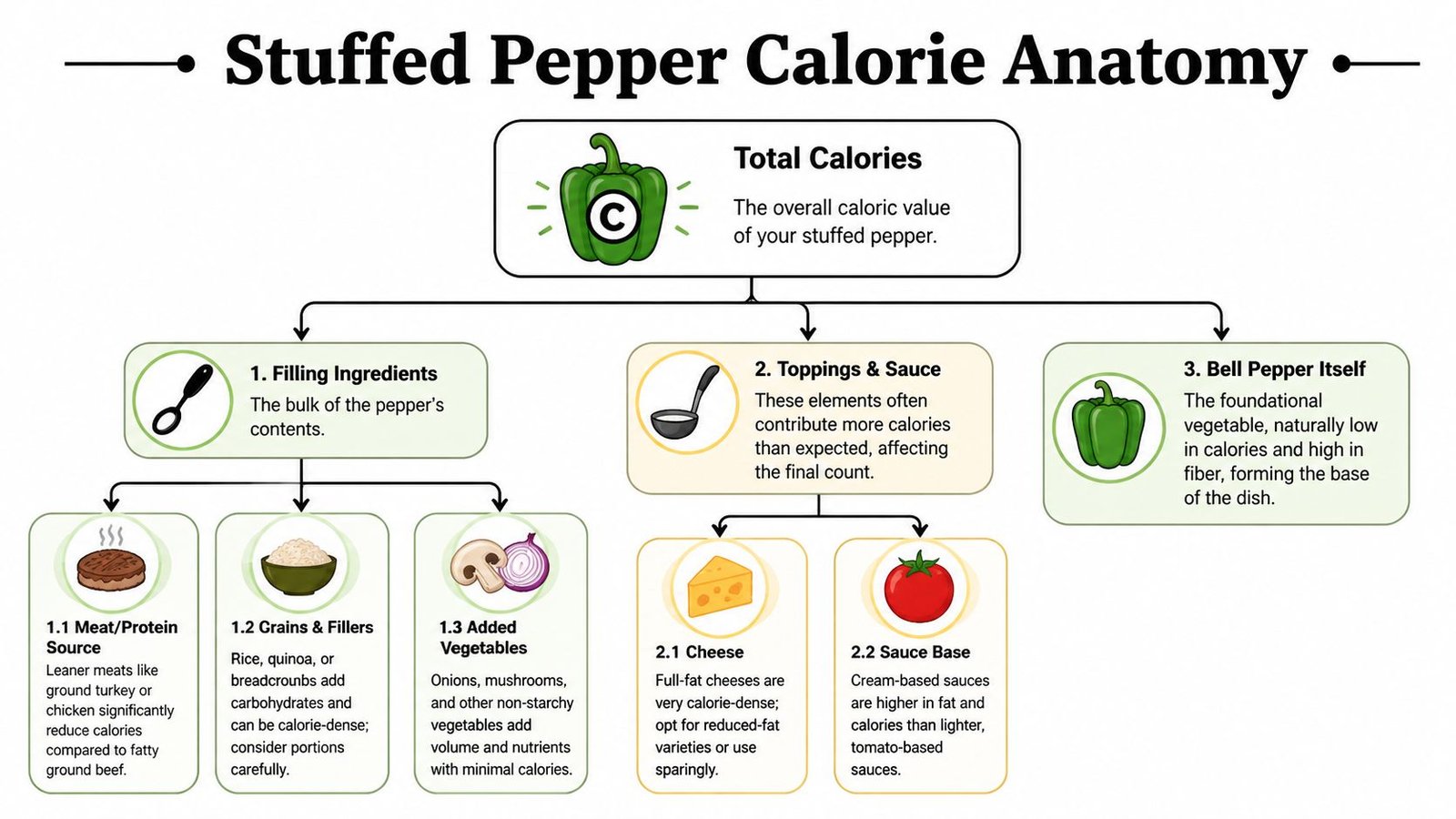
A useful example comes from CalorieKing’s frozen stuffed pepper listing. A basic homemade version made with 100 g ground beef, 50 g rice, sauce, and cheese can reach 485 calories per pepper, which is over 70% higher than many frozen commercial products that often sit around 110 to 170 calories. That gap is why homemade peppers are so easy to undercount.
The filling matters most
If you want to know where the calories are coming from, start with the center.
A stuffed pepper filling usually combines protein, starch, sauce, and extras. Ground beef can be perfectly reasonable in a balanced recipe, but the amount and leanness matter. Rice adds structure and comfort, yet it also raises the carbohydrate total quickly when portions creep up. Cheese mixed into the filling makes it richer before you even get to the topping.
Here’s the practical way to scan a recipe:
- Protein source: Leaner meat lowers the calorie density of the whole pepper.
- Rice and fillers: More rice usually means more carbs and a bigger total.
- Cheese inside the filling: Easy to forget, easy to underestimate.
Toppings turn a moderate meal into a heavier one
Many people count the stuffing and forget the finishing layer. That’s often where the surprise comes from.
A light sprinkle of cheese is one thing. A thick blanket of cheese plus extra sauce creates a different meal entirely. That doesn’t make it bad. It just means the calorie estimate needs to match what’s on the plate.
If your stuffed pepper looks restaurant-style, don’t log it like a plain frozen entree.
Home cooking adds flexibility and uncertainty
Homemade food is wonderful because you control it. Homemade food is annoying because you control it.
That’s why a simple method for calculating calories in homemade food helps so much. Once you total the core ingredients and divide by how many peppers you made, the mystery disappears. You don’t need perfection. You need a realistic estimate based on your own recipe, not someone else’s box label.
How to Cut Calories Without Sacrificing Flavor
The nice thing about stuffed peppers is that they respond well to smart edits. You don’t have to turn them into diet food. You just need to protect the flavor while trimming the ingredients that subtly push the meal higher.
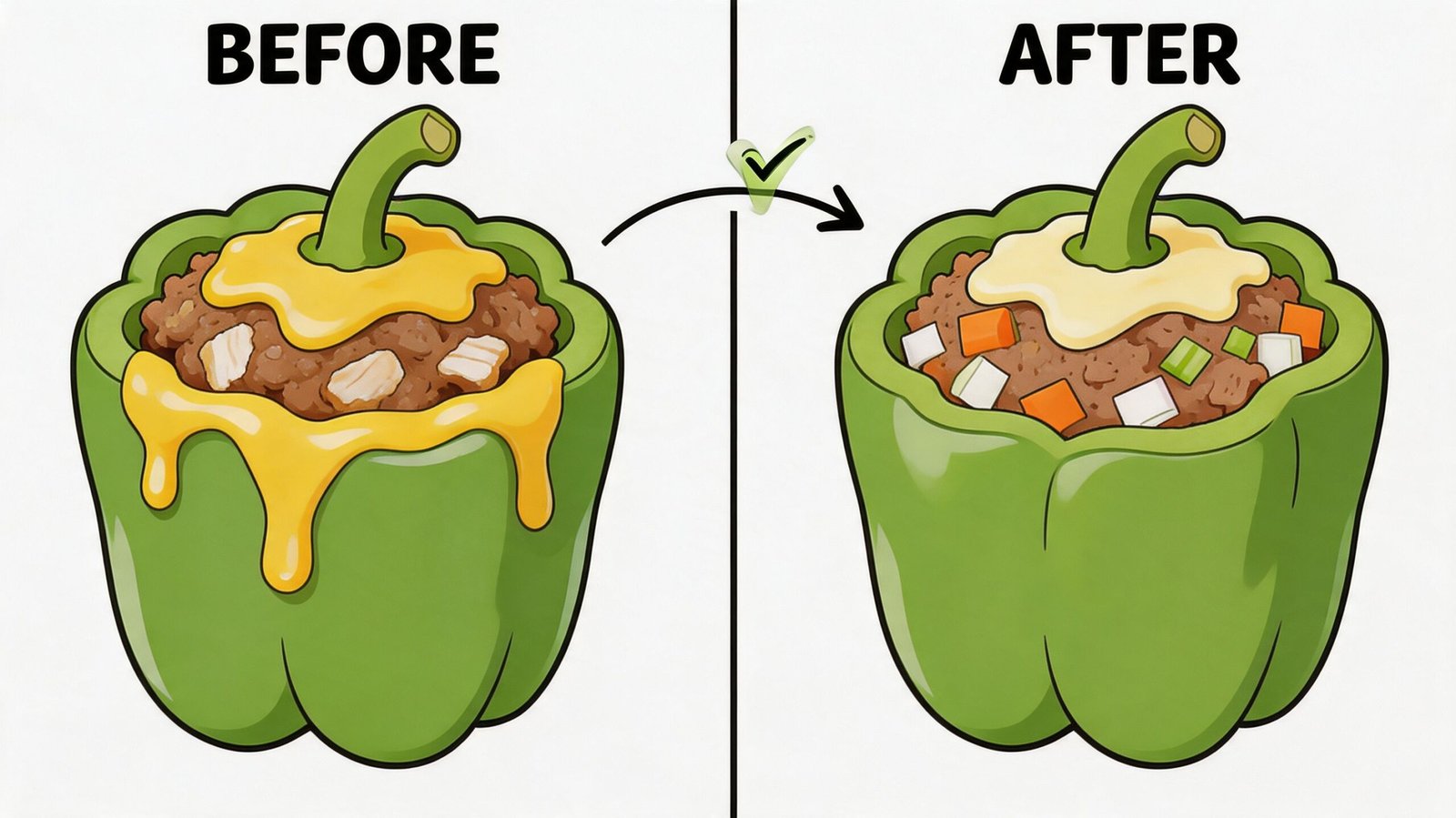
Build more volume into the filling
A lighter stuffed pepper shouldn’t feel skimpy. The easiest win is adding bulk from vegetables instead of relying on extra meat, rice, and cheese to make the pepper feel full.
Chopped onion, mushrooms, and extra diced pepper work well because they add moisture and texture. If you use less rice and more vegetables, the pepper still feels generous. It just becomes easier to fit into your day.
A lot of people also like changing the pepper color for taste. That can work well, but keep the difference in perspective. According to Wikipedia’s bell pepper nutrition summary, ripe red peppers contain about 2 g more carbs per 100 g than green peppers, which can add 15 to 25 calories to a finished pepper. That’s a small shift, but it matters if you’re following a stricter low-carb plan.
Use flavor strategically
You don’t need a pile of cheese if the rest of the filling tastes flat. The better move is to build stronger flavor earlier with seasoning, herbs, garlic, onion, and a good tomato base.
Try these swaps and upgrades:
- Choose a leaner base: Leaner ground meat can keep the filling satisfying without making it feel greasy.
- Shrink the rice portion: Keep some for texture if you love it, but let vegetables carry more of the volume.
- Use cheese as a finish, not the whole strategy: A smaller amount on top often delivers more satisfaction than mixing a lot throughout.
- Pick stronger flavors: Sharp cheese, tomato sauce, and savory aromatics help a lighter pepper still taste complete.
For some people, appetite regulation also improves when they focus on protein intake, meal structure, and recovery instead of obsessing over every bite. If that approach interests you, this discussion on how to increase your resting metabolic rate gives broader context on eating patterns and body composition.
Here’s a simple visual if you want cooking inspiration before your next batch:
Match the meal to the goal
Some nights you want a lighter pepper with a salad. Other nights you want a more filling dinner and that’s fine too. The key is choosing on purpose.
If you struggle with portions, reviewing practical serving sizes for weight loss can help you decide whether your stuffed pepper is the main event or part of a larger plate. That kind of clarity makes the meal feel flexible instead of restrictive.
Instantly Calculate and Log Your Stuffed Pepper with PlateBird
Tracking stuffed peppers gets frustrating for one reason. The generic database entry usually isn’t close enough.
That matters because, as noted in Nestlé Professional’s Stouffer’s stuffed green pepper nutrition information, a single stuffed pepper can range from 110 to 345 calories, and carbohydrates can vary from 11 g to 22.8 g. If you care about calorie targets, macros, or consistency, guessing isn’t much help.
Type what you ate like a normal person
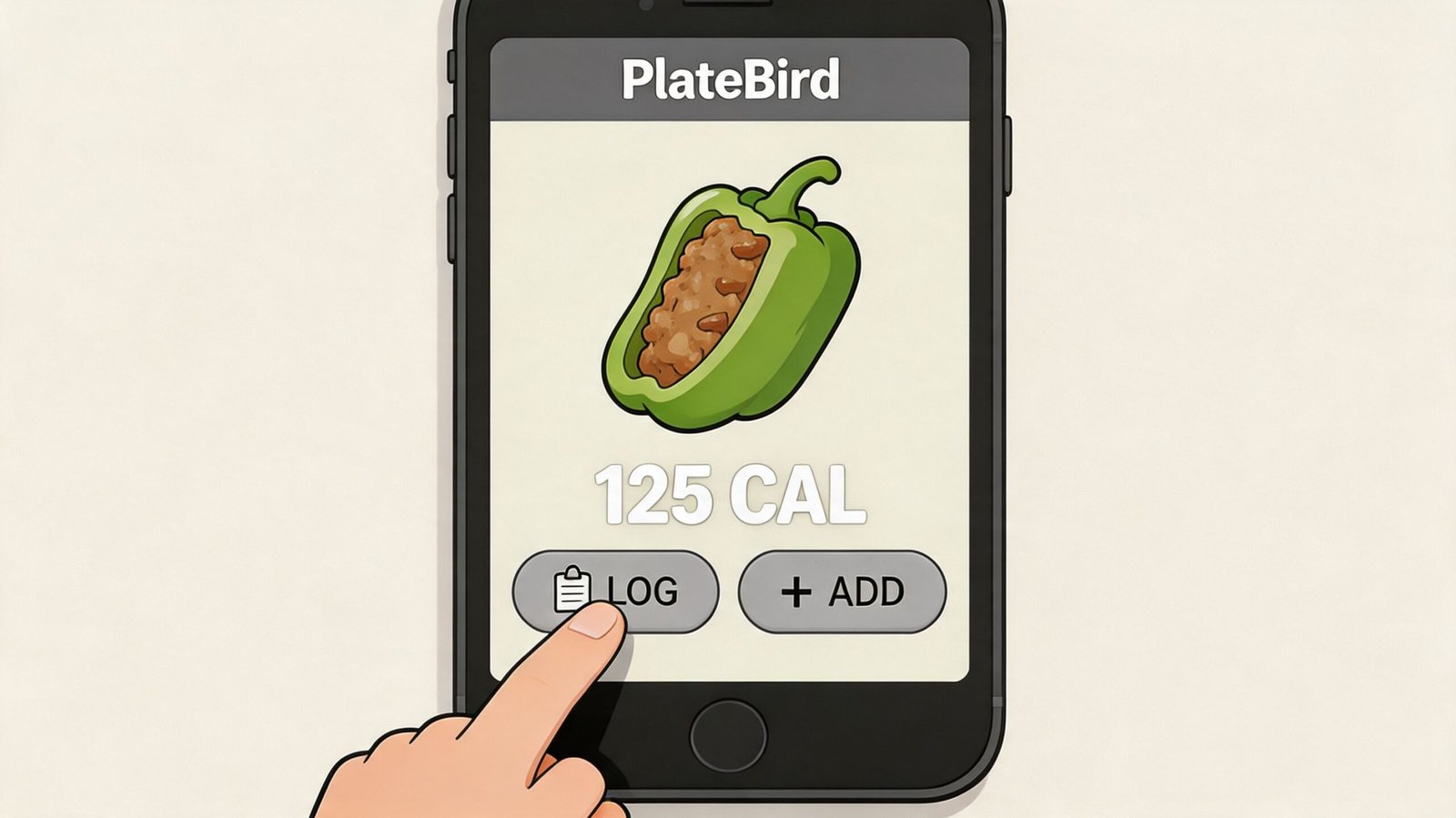
PlateBird works well for homemade meals because you don’t have to build everything from scratch in a clunky search menu.
You can type something natural like, “homemade stuffed green pepper with lean beef, a little rice, tomato sauce, and cheddar,” and the app calculates the meal from that description. That’s much closer to how people think about dinner.
A few practical tips make this even better:
- Mention the protein first: “Lean beef” or “ground turkey” helps the estimate match your version.
- Add the major carb source: If you used rice, include it. If you skipped it, say that too.
- Call out extras that change the meal: Cheese, sauce, and portion notes improve accuracy.
Snap a photo when you don’t want to type
Some nights you won’t want to think about ingredients at all. That’s where photo logging helps.
With a photo food diary app, you can snap the plate and log the meal visually. That’s especially useful when you meal prep a batch and each pepper is similar but not identical.
Logging works best when it feels easy enough to do every day, not just on your most motivated day.
If you like the broader idea of smarter meal guidance, tools built around AI-powered nutrition planning can also help you think through meals before you cook them. The advantage of PlateBird in this moment is speed. It turns a homemade dinner that normally takes several searches into a quick note or one photo.
Save the meal and stop repeating yourself
Stuffed peppers are a repeat meal for a lot of people. Once you’ve logged your version once, the next time gets faster.
That means your turkey-and-cauliflower-rice version, your classic beef-and-rice batch, or your extra-cheesy weekend version can all become easy to reuse. Tracking gets lighter when your app remembers how you eat.
Enjoy Every Bite with Confidence
Stuffed green peppers don’t need to feel like a nutrition riddle. Once you understand what changes the numbers, the meal gets much easier to work with. The pepper is just the base. The filling, toppings, and portion size decide whether dinner lands on the lighter side or feels more substantial.
That’s why I like this meal for so many different people. It’s flexible. You can build it around your goals instead of forcing your goals around the recipe.
There’s another reason stuffed peppers stay popular. Across most versions, they offer 17 to 24 grams of protein per serving, which makes them a reliable high-protein option, according to Think Healthcare’s overview of stuffed bell pepper nutrition. The main thing to watch in commercial versions is sodium, which can range from 610 mg to 950 mg per serving, or 26 to 41% of daily recommended intake in that same source.
So enjoy the classic version when you want it. Make the lighter version when that fits better. Add cheese without guilt. Skip the guesswork instead.
When you know what’s in your pepper and have a simple way to log it, you can stop treating homemade food like a problem to solve. It becomes what it should be. A good meal that supports your life.
If you want calorie tracking to feel as easy as writing a note, try PlateBird. You can type your homemade stuffed pepper in plain English or snap a photo of your plate, and the app estimates calories and macros without the usual search-and-scroll hassle. It’s a simple way to keep enjoying home-cooked meals while staying consistent with your goals.