You buy two big portobello caps with the best intentions. Maybe you're thinking burger night, maybe a fast meatless dinner, maybe something that feels lighter but still satisfying. Then they sit in the fridge while you wonder whether to scrape the gills, wash them, roast them, grill them, or stuff them.
That hesitation makes sense. Portobellos look sturdy, but they can go from juicy and savory to watery and flat if you use the wrong heat or too much moisture. Most frustration comes down to one thing. Texture. Once you know how to control that, portobellos stop feeling fussy and start feeling dependable.
The Meaty Mighty Portobello Mushroom
Portobellos earn their reputation because they behave like a center-of-the-plate ingredient. They're the mature form of Agaricus bisporus, the same mushroom family as white button and cremini, but at this stage the cap can reach up to 6 inches across and is widely described as the largest cultivated mushroom, with a dense texture that gets more pronounced when cooked, according to Specialty Produce's portobello profile.

That's why they work so well when you want a meal that feels hearty without leaning on a large portion of meat. They're not pretending to be steak. They're doing their own thing. Earthy, richly savory, and substantial enough to anchor a bun, a grain bowl, or a stuffed dinner.
Many people get stuck here. They treat portobellos like delicate mushrooms when they reward a more confident approach. High heat helps. Good browning helps. A little restraint with moisture helps even more.
Portobellos taste best when the outside gets color before the inside gives up too much water.
They also fit neatly into healthier eating habits because they make a plate feel generous. A roasted cap beside greens and grains doesn't read like diet food. A grilled cap in place of a heavy burger patty still feels like a real meal. If you're trying to build meals around satisfying texture and better balance, it helps to think beyond protein alone and look at the whole plate, including a broader protein quality chart for context.
How to Prep Portobellos for Perfect Texture
The prep decides everything. A properly prepped portobello browns, softens, and stays juicy. A poorly prepped one steams in its own water and turns slippery.
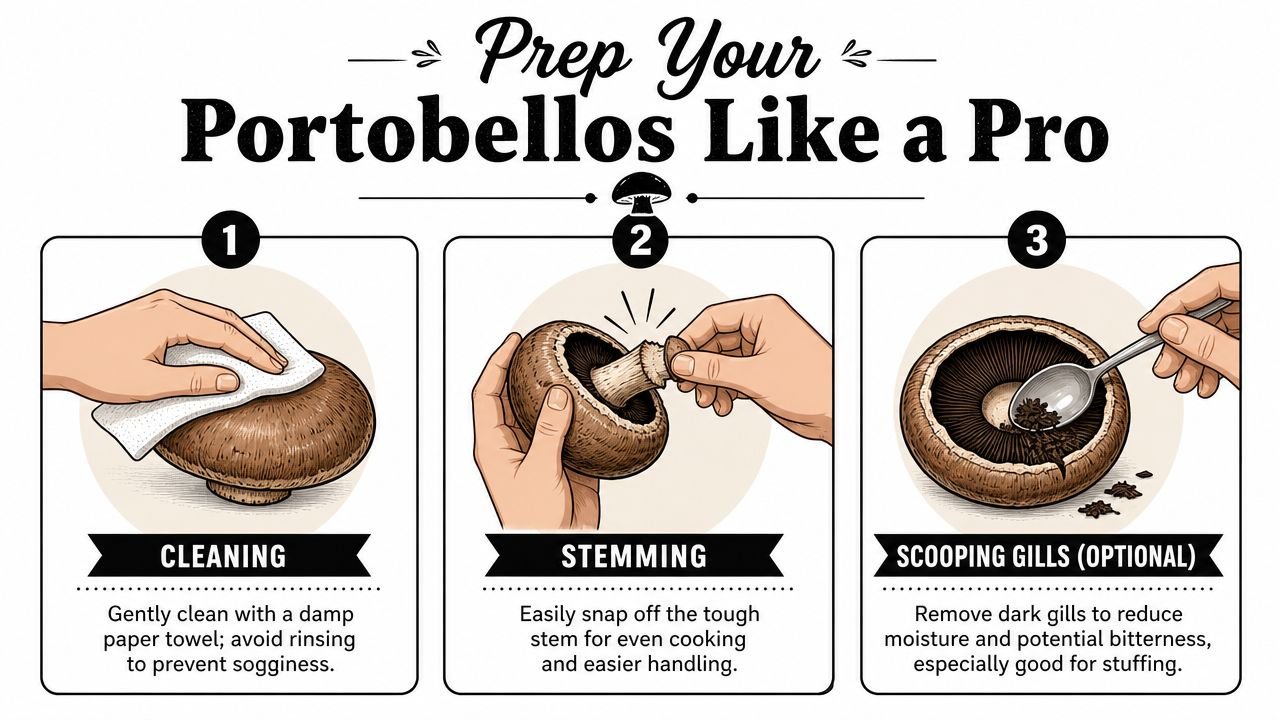
Clean them gently
Portobellos hold moisture easily, so I don't soak them. Wipe the caps with a damp paper towel or cloth and clean only what's needed. The goal is to remove surface grit without loading the mushroom with extra water right before cooking.
That one habit fixes a lot of soggy-mushroom complaints.
Remove the stem, but don't toss it automatically
The stem usually snaps off easily. That makes the cap sit flatter in a pan, on a grill, or in a baking dish. It also gives you a cleaner cavity if you're stuffing the mushroom.
The stem can be a little tougher than the cap, but it's still useful. Chop it for a sauté, fold it into soup, or cook it with onions for a grain bowl. If you already cook other mushroom varieties, these tips for preparing fresh shiitakes are a handy companion because they reinforce the same general idea: trim with purpose, and match prep to the final dish.
Decide on the gills strategically
The gill question confuses people because both choices can be right. Healthy Seasonal Recipes' roasting guidance notes that mainstream recipes split on this. Some cooks scrape out the gills to prevent dark juices and reduce bitterness. Others leave them in and use the cap itself to retain moisture.
Here's the practical version:
- Remove the gills if you want a cleaner-looking finished dish, especially for stuffing or serving over pale sauces, grains, or dairy-based elements.
- Keep the gills if your goal is a juicier cap and you're cooking in a way that lets the mushroom hold its own liquid.
- Think about presentation before flavor. The biggest difference for most home cooks is often visual and textural, not dramatic taste.
Practical rule: Scrape the gills for neatness. Keep them for moisture.
Dry before seasoning
After cleaning and trimming, pat the mushrooms dry again. Then season. If the surface is wet, oil and seasoning slide off, and the cap starts steaming before it sears.
A quick prep checklist helps:
- Wipe, don't soak.
- Snap off the stem so the cap cooks evenly.
- Choose gills based on the dish.
- Dry the surface well before any oil, marinade, or spice rub.
That's the part many recipes rush past, but it's where perfect texture starts.
High-Heat Methods Grilling and Sautéing
Dinner needs to happen fast, and portobellos can either turn out beautifully browned or disappointingly watery. High heat decides which direction they go. Get the surface hot enough, and the mushroom sheds moisture quickly, concentrates its flavor, and develops that meaty edge people want from a burger, grain bowl, or simple vegetable-forward dinner.
Grill for smoky edges
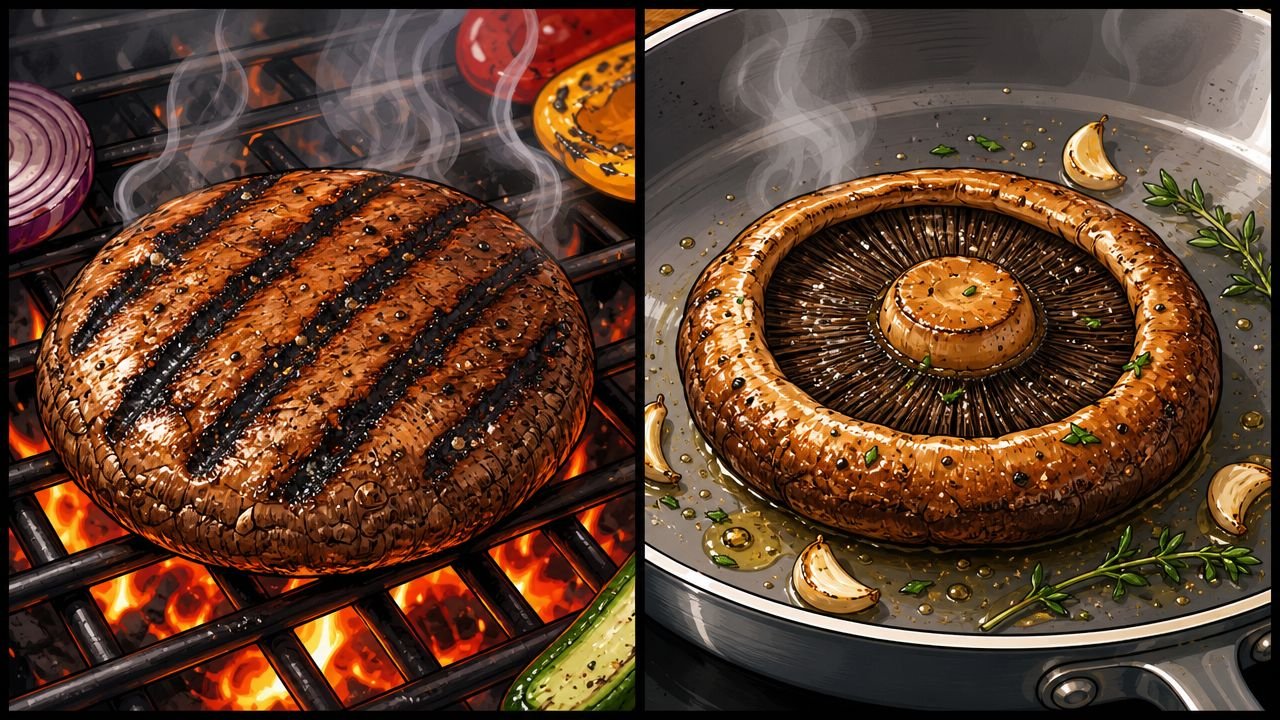
Grilling gives portobellos the boldest flavor. It also asks for restraint. A heavy marinade or a low fire makes the caps soften before they brown, so you lose the contrast between the charred outside and juicy center.
Use a light coating of oil, acid, garlic, salt, and pepper. Let the mushrooms sit briefly so the seasoning clings, then grill over medium to medium-high heat until the outside is browned and the cap is tender. I keep the caps on just long enough to mark and soften them. Portobellos hold a lot of water, and once they release it, they can go from full and juicy to flat and rubbery faster than many cooks expect.
Gill-side placement matters here too. Start gill-side up if you want the cap to hold onto more of its juices while the outside browns. Flip to finish and add color. If you removed the gills earlier, you'll usually get a slightly cleaner finish and less dark runoff on the grill.
If you're cooking over charcoal and want steadier control of your fire before laying down the caps, UrbanManCaves' grilling guide is useful background reading.
Sauté for the best control
A skillet is my default for weekday portobellos because it gives you tighter control over texture. You can watch the liquid release, adjust the heat, and pull the mushrooms the second they hit that sweet spot: browned on the outside, tender in the center, not spongy.
Heat the pan first. Add a small amount of oil. Then add the mushrooms with space between them.
That spacing is what keeps sautéed portobellos from steaming.
A good stovetop rhythm looks like this:
- Start with a properly hot pan so the mushroom sears on contact.
- Cook in batches if needed because crowded mushrooms release water and simmer.
- Leave the first side alone until it browns well.
- Flip once and finish the second side more briefly.
- Slice after cooking for bowls or salads so the cut surfaces stay firm instead of soaking up pan juices too early.
For strips or slices, the trade-off changes a bit. Sliced portobellos cook faster and give you more browned edges, which is great for tacos, pasta, egg dishes, or grain bowls. Whole caps stay juicier and feel more substantial on a plate. Choose based on the final dish, not habit.
Pale mushrooms usually mean the pan needed more heat. Rubbery mushrooms usually stayed in the pan too long.
Here's a quick visual before you try it yourself:
What works and what doesn't
| Method choice | What it does to texture |
|---|---|
| Hot grill or skillet | Builds browning and a firmer bite |
| Light, short marinade | Seasons the mushroom without waterlogging it |
| Long soaking | Softens the surface and slows browning |
| Crowded pan | Traps steam and causes sogginess |
For burger use, grilled caps shine because the edges stay defined while the center stays juicy. For bowls, sautéed slices are often the better call because you can brown them harder, portion them easily, and log them in PlateBird without much guesswork. That makes portobellos an easy fit for meals that aim to feel satisfying while keeping the ingredient list simple.
Oven Methods Roasting and Stuffing
A portobello can come out of the oven juicy and structured, or limp and waterlogged. The difference is usually a small handling choice, not the recipe.
Roast for concentrated flavor and a better bite
Roasting is the method I use when I want the mushroom itself to stay the star. A hot oven tightens the flesh, deepens the savory flavor, and gives you a cleaner texture than a crowded pan.
For whole caps, start with the cap cavity facing down. That helps excess moisture leave early instead of pooling inside right away. Then flip later so the mushroom can finish without drying out. If you removed the gills during prep, the interior stays a little cleaner and less muddy in color. If you kept them, expect a stronger mushroom flavor and a softer interior. Both are valid. Choose based on the final dish.
According to the Mushroom Council's roasted portabella guidance, roasting at high heat works well for tender caps with good flavor development. Use the clock as a guide, then judge the finish by feel. The cap should bend slightly, the edges should look relaxed, and the center should still feel juicy.
Roast until the mushroom feels tender but still full. Once it collapses and looks wrung out, you've gone past the sweet spot.
Roasted caps fit especially well in sandwiches, grain bowls, or on top of a simple dinner plate where you want a satisfying centerpiece without much prep. They also make easy meal prep ideas for busy weeknights because they reheat well if you stop cooking before they start shrinking hard.
Stuff for a full meal with more texture contrast
Stuffed portobellos work best when the cap and the filling cook at roughly the same pace. That means the filling should be seasoned and fairly dry before it goes in. If it is loose or watery, the cap steams from the inside and turns soft before the top has a chance to brown.
A good stuffing usually includes one ingredient for body, one for moisture, and one for sharpness. Breadcrumbs or cooked grains give structure. Cheese, beans, or chopped vegetables add substance. Herbs, garlic, lemon, or a little chile keep the filling from tasting flat.
Try combinations like these:
- Spinach, garlic, breadcrumbs, and parmesan for a classic savory version
- Diced peppers, herbs, and feta for a lighter, brighter filling
- Cooked farro, chopped stems, onion, and white beans for a plant-forward dinner
For stuffed caps, Better Homes and Gardens' baked stuffed portobello method uses a moderate oven so the filling heats through and the mushroom turns tender without falling apart. That trade-off matters. A hotter oven browns faster but can leave the filling uneven. A slightly gentler bake gives you a cap that still holds its shape on the plate, which makes portioning and PlateBird logging much easier.
Which oven method should you choose
| If you want | Better method |
|---|---|
| A burger substitute or simple side | Roasting |
| A knife-and-fork dinner | Stuffing |
| More concentrated mushroom flavor | Roasting |
| More variety in one serving | Stuffing |
Stuffed portobellos also pair well with pizza-style flavors. Tomato, herbs, cheese, olives, and onion all work inside the cap without much adjustment. For visual inspiration in that direction, this IFM Gourmet Dubai pizza image shows a topping mix that translates well to a stuffed mushroom.

Seasoning Storing and Meal Prepping Portobellos
You taste the mushroom before it ever reaches the table. Good seasoning sets the direction, but storage decides whether the cap cooks up firm and savory or damp and spongy.
Portobellos are the mature form of the common button mushroom, which helps explain both their meaty bite and their tendency to hold extra surface moisture. As noted earlier, that maturity affects how they should be stored. Keeping them dry before cooking gives you a better shot at the texture you worked for in the pan or oven.
Season for the texture you want
Seasoning should match the job. If the goal is a dark sear and a substantial bite, keep the surface fairly dry and use a light hand with oil. If the mushroom is headed for a bowl or wrap, a little more seasoning can make sense because other ingredients will soften the flavor.
A few reliable approaches:
- For browning: black pepper, garlic powder, onion powder, and salt
- For a cleaner, fresher finish: parsley, thyme, or rosemary added after cooking
- For sandwiches or burgers: oil and salt, then let the toppings do the rest
I learned this one late. Heavy marinades can taste good, but they often trade away texture. The cap absorbs moisture, then steams before it browns. If you want a juicy result, that can work. If you want a firmer, meatier chew, dry seasoning wins more often.
Store them so they stay usable
Portobellos keep best with airflow. A paper bag in the refrigerator usually holds them in better shape than airtight plastic, which tends to trap moisture and speed up that slick surface you want to avoid.
Use this routine:
- Keep them dry before refrigerating.
- Store them in a paper bag instead of a sealed container.
- Trim stems or scrape gills only near cooking time if you want the cleanest texture.
- Discard any mushroom that feels slimy throughout or smells off.
That little bit of restraint helps. The less extra moisture they sit in, the easier it is to get clean slices, better browning, and more accurate portions for meal prep.
Meal prep them without ruining the bite
Portobellos can be excellent for prep, but format matters. Roasted caps, grilled caps, and thick sautéed slices reheat well enough to stay satisfying. Heavily stuffed mushrooms are better the day they are made because the filling releases moisture as they sit.
Use cooked portobellos in a few different ways across the week:
- Grain bowls
- Wraps and burgers
- Egg scrambles or breakfast plates
- Salads that need a warm savory element
For reheating, the oven or air fryer does the best job of bringing back some edge and chew. The microwave is faster, but it softens the surface and makes the mushroom feel flatter.
If you want lunches that stay varied without cooking from scratch every day, these easy meal prep ideas help you build different meals from one batch of cooked portobellos. That approach also makes PlateBird logging easier. You can prep the base ingredient once, then track the add-ons like grains, sauces, cheese, or eggs based on the meal in front of you.
Portobello Nutrition and Easy PlateBird Logging
Portobellos are one of those rare foods that feel hearty while staying light. A standard serving is listed at about 22 calories, while also being described as rich in B vitamins, minerals, and antioxidants in Suzie the Foodie's guide to portobello mushrooms. That combination explains why they became such a popular plant-based burger option. You get chew, savoriness, and meal satisfaction without a heavy calorie load.

Learning how to cook portobello mushrooms well pays off twice. Better texture makes them more craveable, and that makes it easier to stick with meals that support your goals. A grilled cap on a bun, a stuffed mushroom with vegetables, or roasted slices over grains can all fit neatly into a balanced routine.
If you cook at home often, logging matters most when meals are mixed and homemade. A little oil here, a handful of breadcrumbs there, some cheese or tofu in the filling. Those details add up, and guessing usually gets less accurate over time.
A simple logging flow looks like this:
- Type the meal plainly such as grilled portobello burger with bun and tomato.
- Include the extras like oil, cheese, grains, or sauce if they were part of the dish.
- Use a photo when the plate is mixed and you want a faster estimate.
- Check homemade components with a practical guide to calculating calories in homemade food.
The point isn't perfection. It's removing friction so healthy meals stay easy to repeat.
PlateBird makes that part simple. You can type a meal like “stuffed portobello with spinach and cheese” or snap a photo of your plate, and PlateBird helps you log calories and macros without the usual hassle of digging through menus or barcode screens. If portobellos are becoming part of your regular rotation, that kind of fast tracking makes it much easier to stay consistent.